English edition
Parichayāmṛt
Paricayāmṛta
Śrī Charaṇāśrit — "Mahendra Bābā" (Mahendra Maharaj)

01
Translator’s Preface
The books gathered in this library belong to a living stream of devotion that has flowed, quietly and for a very long time, through the high valleys of the Kumaon Himālaya. At its source stands a figure whom his devotees have known by many names — Bābājī; the old Haiḍākhāṇḍī Bābā; Munīndra, the "Lord of Sages"; and, in the wider world, Mahāvatār Bābājī, the deathless master made known to the West through Paramahaṁsa Yogānanda’s Autobiography of a Yogi.
Between roughly 1800 and 1922, this great one appeared and moved among the people of Kūrmāñchal — the "tortoise land" of Kumaon — near the small village of Haiḍākhāṇ, on the banks of the Gautamī Gaṅgā, at the foot of a hill the local people call Kailāsa. He came and went as he pleased, in a body that seemed neither to age nor to sleep, teaching by presence more than by precept, and giving to whoever came the one gift he had seemingly come to give: the remembrance of God. Those who met him could not finally say who he was. The scriptures’ word for such a one is avatāra — a descent of the Divine into human form — and the tradition holds him to be a manifestation of Sāmba Sadāśiva, Śiva together with the Mother.
It was to this Bābā that the yogī Śyāmācharaṇ Lāhiṛī — Lahiri Mahāsaya — was drawn in the hills above Rānīkhet in 1861, and from him received the initiation that would pass, through Śrī Yukteśvar and Yogānanda, to seekers across the world. And it was for love of this Bābā that, in the last century, the saint-poet Mahendra Mahārāj — who signed himself simply Charaṇāśrit, "one who has taken refuge at the Feet" — gave his life to gathering and setting down in Hindi and Sanskrit the memory of his Lord, so that it would not be lost. Some of the books in this library come from his hand, or from that of his devoted disciple, the Alwar scholar Ācārya Viṣṇudatt Śāstrī.
The heart of what Bābājī taught can be said in very few words, and he often said it in very few: Satya, Saralatā, Prema — Truth, Simplicity, and Love — and, above these, the ceaseless remembrance of the Name, Om Namaḥ Śivāya. He asked no one to leave their religion, only to become truly human; he called work offered to God the highest yoga; and he promised that whoever remembered him would not be forgotten.
This library exists to gather the writings that surround Bābājī — some translated here afresh from the Hindi, others already in English and simply brought together in one place — and to offer them freely, wherever they may be shared. Its aim is a simple one: to carry these words across the bridge of language as faithfully as we are able, so that the culture that gave them birth may stay alive, and so that a seeker who cannot read Hindi or Sanskrit may read them and be blessed. In our own translations, sacred terms are kept in their original sound (the IAST transliteration, with a gentle gloss at first meeting), and the verses are rendered so that something of their music may survive — offered not as final scholarship but as a working bridge, made with care and reverence, and always open to correction.
May these books serve their one purpose: to introduce the reader to the living presence of the Lord of whom they speak.
02
Invocation — Śrīmanmunīndra Sūkta
On the fair and lovely summit of Mount Kailāsa He dwells, wrapped in perfect peace — to that Sage, forever the very form of compassion, I bow again and again.
By whose mere remembrance the aspirant attains perfection — to that Sadguru, the Dweller of Haiḍākhaṇḍ, I bow.
By a single sidelong glance of whose grace a man is made blessed — at His feet, my one refuge, I bow without ceasing.
Tender is His heart, tender is His speech, and tender even His chastening rod — to that Tender-limbed One I bow.
With a gaze all compassion He beholds every moving and unmoving thing — ever intent on the good of the world, free of passion, aversion, and their kind.
The Sadguru, ground of all virtues, attained through meditation, ever gracious of intent — that supreme Truth, that Consciousness-Bliss, I remember always.
Hari alone is the devotee of Hari, wholly given to the meditation of Hari; having drunk the nectar of Hari's name, He goes to the supreme abode of Hari.
You who bestow even upon little children that true knowledge so hard to win — though I am destitute of every means, You alone are my one support.
In the form of the great sun You destroy the darkness of delusion. You are the Self of all beings, and the very life of Mahendra.

03
A Humble Submission
Through the Śrī 108 Śrī Mahendra Bābā Memorial Trust, in a very short span, several books have been published, carrying far and wide the thoughts, precepts, and writings of our most revered Gurudev, Śrī 108 Śrī Mahendra Bābā — a truly worthy endeavour.
The publication, on Guru Pūrṇimā of July 2003, of four essays by the revered Charaṇāśrit Dev in the form of Parichayāmṛt is a work for the welfare of all. Through it, Mahendra Bābā's reflections on the revered Yogīrāj Lāhiṛī Mahāśaya and on the venerable Śrī Somvārī Bābā will reach every heart.
Blessed indeed is the soil of Bhāratavarṣa, where over countless years — from Bhagavān Śrī Rāma to Bhagavān Śrī Kṛṣṇa — the Lord has descended in incarnation, and where many great sādhus, saints, and yogīs have come to dwell in the caves of the Himālaya, guiding humankind from age to age and showing ordinary people the path of their welfare.
By the command of Śrī Charaṇāśrit Dev, I too was made to write of the venerable Somvārī Bābā in the Śrī Sāmba Sadāśiva Charitāmṛt — and this itself was a miraculous event in my life.
While I was composing the Śrī Sadāśiva Charitāmṛt, Śrī Charaṇāśrit Dev — Mahendra Mahārāj — came to Rājgarh to look over the manuscript. As we returned from the waterfalls, He gave me, in the horse-carriage, this instruction: that it would be well if, alongside the life of the Lord, the life of Śrī Somvārī Bābā were also included. I did not give the matter much attention, for I placed greater trust in the aspirant's single-mindedness; being constantly caught up in the world, my mind was clouded, and so I forgot that passage.
At the very place where that passage ought to have come, my writing halted of its own accord, and the next day the book was set aside for me to continue. Around one o'clock that night, I had a dream: on both sides rose beautiful, densely green hills, laden with flowers of every colour, and through the midst of those hills wound a narrow footpath, along which a lean and slender saint was walking. Just then, from my right side, a clear voice called out:
"Śāstrī! Behold — a saint is approaching." Joyfully I took the darśan of that noble saint, and turning again toward the side from which I had been addressed, I saw Śrī Munīndra Bhagavān, pointing with the forefinger of His right hand toward the saint, commanding me to look — "This is Somvārī Bābā."
Thus, obeying the grace and command of Śrī Bhagavān, the life of Śrī Somvārī Bābā was portrayed. How far can one describe the Lord's compassion, shown thus from time to time? One can only write this much, and be content:
— (Śrī Charaṇāśrit)
When this book Parichayāmṛt is in your hands and you study it, you will come to know how the most revered Mahendra Bābā, with his divine pen, has given guidance for the welfare of us all.
The person does not remain; the soul merges into the Supreme Soul — but words abide. Whether as the Rāmāyaṇa, the Rāmcharitmānas, the Gītā, the Bhāgavata, the Qur'ān, or the Bible, in whatever form, they keep granting to human life a vision of God, and, showing a true path, at times even compel one to walk it, so that one does not stray. The Śrī 108 Śrī Mahendra Bābā Memorial Trust and those associated with it are doing the work of a bridge between society and its literature. Let people say what they will: if a nation's literature is alive, and people read it again and again in ever-new forms, then its culture stays alive; and if its culture stays alive, then that human civilization will endure, and no number of storms will be able to destroy it — such is my faith. We print a book once and consider it finished; but a book is that very light of "knowledge" — the more easily it is made available to all, and the more cheaply it is made available, the further that current of thought will spread, and the greater will be the welfare of humankind. It is for this reason that the most revered Mahendra Bābā did two things: on the one hand he had temples built to Bābā (the Baba of Haiḍākhāṇ), and on the other he himself created literature, or had it created by blessing others — so that a person may go to the temples and remember the Lord, awakening faith, and, taking the Lord's darśan in image-form, may find peace of heart; and may read the literature daily and gather knowledge, so that the darkness of his life may be dispelled and light may enter it. For it is literature alone that can illumine a human life by showing it the way.
I have now grown very old — my age is about ninety-five years. Yet the grace of Bābā and the blessing of the revered Mahendra Bābā rest upon me and my family; and the service of my younger brother, the late Girdhārī Lāl, is a guiding light for our household. Therefore may every child of our family, receiving the blessing and grace of Bhagavān Śrī 1008 Śrī Haiḍākhāṇḍī, carry His work and the path He has shown to every heart — what better work could there be?
In closing, I give my words of blessing to Śrī Chandraprakāś Saksenā, resident of Duddhī (Sonbhadra) — the devoted one who, together with his whole family, is wholly given to the revered Mahendra Bābā, and who, in this dark age of Kali, despite the many responsibilities of his own family, both before and now has provided financial support for the publication of this book Parichayāmṛt. I pray to Bābā that the grace of the revered 1008 Śrī Haiḍākhāṇḍ Dev may rain upon his family moment by moment, and that, by the full mercy and grace of the revered Mahendra Bābā, all the affairs of you and your family may be fulfilled.
The servant of the Lord,
Aṭal Dās Jī's Temple
Rājgarh (Alwar), Rājasthān


04
Bhagavān Śrī Haiḍākhāṇḍī Bābājī
The unbroken flow of the Lord's divine play streams on forever, without hindrance. The surging wave of that play, woven of unequal qualities, is the natural form of the ocean of creation. By the mutually opposing powers of this play, all of us — the whole order of living beings — are ever held in check. Bound by countless nooses, the living being loses its way in the wheel of worldly existence and goes on spinning. Every creature desires happiness, yet abandons the very acts by which happiness would come. It becomes bewildered, unable to decide what to do; no settled awareness can find a resting-place in its heart. Just as, when a traveller falls into confusion about direction, it becomes utterly impossible for him to reach his destination, so too it is hard for the soul, borne along in the fierce current of this three-guṇa creation, to cross this impassable ocean of the world.
When the living being — "amṛtasya putrāḥ," a child of immortality — forgets its own self-awareness and begins to grow attached to the insentient, non-self objects around it; when the goal of human life comes to rest in physical enjoyment alone; then falsehood and misconduct reach their extreme. Aversion arises toward the sādhanās sanctioned by scripture, which grant every desired fruit; disbelief grows toward the true words of the great ones. Then Śrī Bhagavān, assuming various bodies, shows us the right path. Himself observing the scriptures, He makes plain for us the unerring road to both worldly welfare and final liberation. He gives us firm inspiration to obey the command of the great ones. In the hearts of beings devoid of sāttvic faith, He plants a devotion full of goodwill and lasting steadiness.
Just as His cosmic (gross) power is beginningless, imperishable, and undiminishing, so too is His power of play — inconceivable, imperceptible, and infinitely deep, ever flowing like a stream. It rests upon the developmental progress of the awakened inner being, how far it can assimilate the play-form of the Imperishable One. This divine, three-guṇa play is wholly subject to the One who impels it. Full realization and inward grasp of the power of play is possible only by the grace of the Wielder of Play. All the wise are of one mind in this: that the attainment of God, and the knowledge of Him, is achievable by grace alone.
Our eternal teachers, the great ṛṣis of dharma, have described four forms of Śrī Bhagavān — Name, Form, Play (līlā), and Abode (dhāma). In the divine Śrī body of the Lord, these four principles are, as it were, the fourfold inner faculty. If a fortunate aspirant comes to have faith and trust in even one of these four divine principles, he is made wholly fulfilled.
Both the aspirant and the goal are, in their moods, mutually dependent. As is the devotee's nature — "tad- vismaraṇe parama vyākulatā," that in forgetting Him is the deepest anguish — so, in forgetting the Supreme Soul, the devotee grows restless. In the same way, Śrī Bhagavān too, becoming as one bereft of His devotee, walks behind His heart's wealth, the wholly surrendered one. He takes the devotee's entire burden upon His own head. In the Śrīmad Bhāgavata there is the clear command of the Lord: "I am subject to My devotees." According to this generous vow, the sportive Lord — an ocean of compassion — chose the Kūrmāñchal region of the world-renowned Himālaya as the field of His play. Śrī Viśveśvara, pervading every atom of the universe, revealed a transcendent and beautiful character, full of majesty and sweetness. In the form of one particular person, the great Avatar, the Wielder of Play — by His boundless compassion, and by His inconceivable, indivisible power of play, was uplifting ordinary beings such as us, laden with degraded qualities. How could the naturally narrow vision of man be subtle enough to comprehend the play of this Maheśvara — the great Man, the transcendent Man, the Primal Being of the human creation? The transcendent character of that most glorious Maheśvara lies utterly beyond ordinary speech and ordinary sight. He dwells within the very world of men; His imperishable Śrī body too is like that of the world — and yet He is wholly beyond this world. For the welfare of the world, Śrī Viśvanātha takes on a world-body, an earthly body; yet, wearing that immortal, imperishable divine body beyond the five elements, He dwells unceasingly within the beings of the whole universe. And still it remains a supreme wonder that, to this day, no one has been able to say of Him, "It is precisely thus."
This is the fixed truth: "īśāvāsyam idaṁ sarvam" — this entire moving and unmoving world is the very dwelling-place of Śrī Bhagavān.
mattaḥ parataraṁ nānyat kiñcid asti dhanañjaya ǀ (Gītā)
With His own holy mouth, Śrī Bhagavān has said: O Arjuna! There is nothing beyond Me. In Me are all things, and in all things I am fully pervading. As thread runs through beads and beads upon the thread, so am I woven through the whole creation, through the endless universes. So great is our identity with Him, so complete our non-difference, as though He and we were utterly one. Know it for certain — we alone are His. That very Lord of Being-Consciousness-Bliss has given us too an inexhaustible treasury of Being-Consciousness-Bliss. He has fashioned suitable means for the fulfilment of all our needs; and yet we are not content — an intense longing for one particular fulfilment torments us always. Scripture, therefore, proves this: that until we have the vision of that Supreme-beyond-the-supreme, the knot of our heart, our mental doubt, and the dry burden of the deeds enjoined by śruti and smṛti will never let us find peace. The peace of God, the eternal peace, will be possible for us only when Śrī Bhagavān becomes the very object of our sight.
It is to fill this very lack that Śrī Bhagavān — the Wielder of Play, both manifest and unmanifest — descends, out of unmotivated compassion, before our very eyes, in one particular land and one particular age, in the form of a supreme man, a best among men. The community of the world calls Him "Avatar" and expresses its reverence. The moral order He proclaims in the world becomes, in the form of some particular faith — that is, a system of conduct supported by the perspective of the time — a means by which countless beings are made partakers of welfare.
The great Avatar of whom we here set out to speak is renowned among the common people especially by the name of "Bābājī." From what age, by what method, this Viśvanātha, the uplifter of the world, has been conducting His play — all these matters no one has yet been able fully to comprehend. The śruti says: "vijñātāram are kena vijānīyāt" — He who is the knower of all, by whom is He to be known?
In the lovely region of Kumāū̃, amid the pure and enchanting mountain-ranges of the holy Himālaya, the introduction to this great Avatar, Śrī Bhagavān "Bābājī," was found.
It was first in the latter half of the eighteenth century of the Christian era that, out of love for His devotees, He began to come and go among the community of people — though He forever moves in a body of light. Where the bounds of space and time do not reach — yet, from the later record of His deeds, it appears that from around the year 1880 He, in His grace, began to bestow the mercy of His darśan upon ordinary people as well. By that time He had already become greatly renowned in Kumaon. As a great saint, a supreme ascetic, an ūrdhvaretā celibate, a Yogīrāj possessed of the eight siddhis — under many names such as Droṇāchārya, Kṛpāchārya, Hanumān-Śiva, Tryambaka, Pahāṛī Bābā, Siddha Bābā, and Mṛtyuñjaya Bābā — He was worshipped. Sādhus, brāhmaṇas, accomplished ascetics rich in penance, and seekers and thinkers alike held the firm conviction that Śrī Bābājī was God; that this Avatar was altogether extraordinary. Just as the six divine majesties (ṣaḍaiśvarya) dwell naturally in Bhagavān, so in this Śrī body was the astonishing seat of all powers. Countless times they saw with their own eyes: the dead restored to life; the illiterate granted eloquence and the power of extempore verse; the childless blessed with sons; men beset by financial ruin made secure by the boon of provision and protection; the whole array of siddhis becoming handmaids to seekers who longed for divine bliss; beings afflicted by disease and scorched by the threefold suffering gaining great health and imperishable peace. And the seekers of liberation, the aspirants who longed for release, came not only from all across India, but from Europe as well (many a company of seekers from Western lands), and from the vast community of accomplished lāma-yogīs of Tibet — all came into His fearless and generous refuge and attained the fulfilment of their own hearts' desire. Great seekers of every differing school and sect, taking refuge at the feet of the perfected Lord, had their heart's aims fulfilled. After wandering for years through the holy play-ground of "Bābājī" in the Himālaya, and after meeting many noble souls, this much can be said of Him in brief: that the divine manner of living, and the atmosphere full of divine majesty, which the scriptures and Purāṇas describe of the Lord in His avatars — or as in the life-accounts of the God-devoted ones like Jaḍabharata, Lomaśa, and the sons of Brahmā (Sanaka and the rest) — in that same manner He remains ever and unceasingly absorbed, and fulfils those who take refuge in Him by granting His holy darśan.
His extraordinary personality, His vast form, His unheard-of harmony of compassion and power, and His boon-bestowing hand toward the poor and lowly, began of themselves to draw the mind of human society toward Him. From a secret mountain-cave of the Himālaya, the tiny particle of world-redeeming grace began to spread to the ends of the earth. Śrī Devarāj (Indra) with his retinue began to offer his reverence with showers of flowers; the King of Seasons brought all his splendour and abundance; men and women, beholding the tangible fruit of the merits of many lives, made their births fruitful. Accomplished ascetics rich in penance, attaining the radiant fulfilment of their sādhanā, were made wholly fulfilled; the piteous cry of the afflicted and the poor began to bear fruit. The wondrous and supernal play of this great Avatar, Śrī Bābājī, had stirred the whole region with a most extraordinary and holy spiritual movement. The earth grew full of wealth and grain; the threefold stream of truth, simplicity, and love began to well up in the heart of every person; sorrow, poverty, and disease began to flee.
His body is not of the earth. The Lord — the wish-fulfilling tree of His devotees' desires — has assumed this mysterious Śrī play-body only for the contentment of His beloved ones. His eating, sleeping, moving about, rising, and sitting are all unlike anything ordinary. Learned men and great seekers prayed to Him: "Bābā! Why does Śrī Bhagavān take on the form of a man?" Śrī Bābājī Mahārāj, in His grace, replied: "Man could never succeed in the knowledge, meditation, or remembrance-and-prayer of God, if God did not take a human form." And so the Lord — the very root of unmotivated compassion — for the ease of our path to God, being formless, assumes one particular form. To sit swiftly and easily upon the throne of our hearts, He takes on a body of the same shape as our own; the Lord beyond all principles appears as though subject to them. The purpose of all analysis of that Infinite One — of His nature and disposition, of inference and proof and the rest — is only this: that, whatever we may be, we should take refuge in Him.
After much inquiry into Him, this alone was the conclusion: that Śrī "Bābā" Mahārāj had no fixed programme. Wherever Śrī Mahārāj went, there, of themselves, without any kind of signal, thousands of men and women would gather. On hearing news of His arrival, rare was the person who could stay at home. There, no one could put a question; from His mere darśan the mind grew wholly serene. How many great scholars, ministers of state, great social reformers, and servants of the nation, and kings and nawabs, would come! The ultimate fruit of instruction, the very essence of sādhanā, the effortless companionship of the goal, and the Brahmic state of the knowers of Brahman — all these excellences, in His revered presence, were forever equally available to all. Ever a smiling face, compassionate eyes, generous conduct, a lean frame, childlike gestures, a kurtā, a cap, and a dhotī — these bodily features were a source of supreme joy to all. In food He took very little grain; buttermilk especially He would drink.
Bābā's aged loving servants related that in the month of Māgh, when snow falls here up to three feet deep, we had to beg buttermilk from house to house for Śrī Mahārāj. He would drink buttermilk as though it were water. In His waste there was a strange fragrance, and within an hour or two the excrement would turn to mere earth. When He opened His fist, the thousands of devotees present would grow intoxicated with a divine fragrance. His hair did not grow; He did not sleep; if a garment was thrown over Him, He wore it, and if not, He neither ever asked for a garment nor, when garments were present, ever used one of His own accord. Devotees would offer very costly garments, coin, and many other precious things. He would not even look at those offered objects. Yes — at times, for the devotees' delight, He would, like a child, play with those things for ten or fifteen minutes, and then, whatever might become of them, whoever might carry them off, He made no arrangement. Earth and precious things were all alike to Him. Foe and friend, slanderer and praiser, sinner and saint — in His compassionate gaze all were equally worthy of mercy. The many-formed Śrī Bābājī appeared before us in the form of a saint. This great Avatar, Śrī Bābājī, becoming the Sadguru, made the soil of Bhārata blessed throughout the world, and gave special glory to the Kūrmāñchal region. In the Divya Kathāmṛt it is written:
When even Śeṣa and the śrutis grow unable to sing His glory, what can I, the lowly "Charaṇāśrit," write? "Jo si so si tava caraṇa namāmi" — whatever You are, You are my adored one, my Supreme Lord. That most compassionate, most glorious Bābā Bhagavān, the redeemer of the world, moves about in the form of a Sadguru. His human and compassion-filled manifestation has taken on a sweet and merciful form; the tender-hearted, the uplifter of the fallen, Tryambaka Bābā, has — as one radiant jewel upon the string of the Sadguru's rosary, His own inseparable limb — granted to the blind and world-bound the simplest means of attaining the light of new consciousness, of Being-Consciousness-Bliss. Concerning Him, the sound rising today from countless throats is this: that Śrī Sadgurudev Jī Mahārāj is such a compassionate Lord, that upon taking refuge at His feet, the whole journey of life is happily made fruitful. However many the faithful, the surrendered souls of Śrī Mahārāj, that have thus far been met — all are seen to be happy and at peace. The world-renowned solitary sage, the ascetic who makes his home in a natural mountain-cave, the greatly famed and radiant celibate who sustains his life on the unasked-for roots and tubers given by Mother Earth, by the mere holding of whose foot-dust the threefold cravings — this-worldly, other-worldly, and all the rest — are destroyed; such is our redeemer of the fallen, the wise and brilliant One, wholly beyond space and time, by whose grace the science and raising of the five sheaths (pañca-kośa) and the six centres (ṣaṭ-cakra) happens effortlessly — He is the most radiant Sumeru-jewel of the famed rosary of the Sadguru:
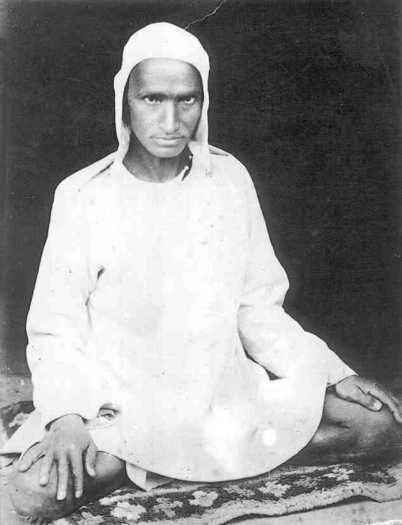
05
A Floral Offering at the Feet of Śrī Śrī Bābā
— by Śrī Charaṇāśrit
By whose mere remembrance the aspirant attains perfection — to that Sadguru, the Dweller of Haiḍākhāṇ, I bow. By a single sidelong glance of whose grace a man is made blessed — at His feet, my one refuge, I bow without ceasing. The Sadguru, ground of all virtues, attained through meditation, ever gracious of intent — that supreme Truth, that Consciousness-Bliss, I remember always.
When the Creator of the world perceives that within it the power of consciousness is waning and that darkness (tamas) and ignorance are ever increasing, then that same dense Being-Consciousness-Bliss — the Soul of the universe, the transcendent Power beyond the beyond, the boundless ocean of compassion, the Supreme Father, the Supreme Lord — manifesting in countless forms, raises up dharma and destroys the deeds opposed to scripture and society. Bhagavān Śrī Kṛṣṇa described this very truth in His most holy and beloved text, the Śrīmad Bhagavad Gītā, in these words: —
O Bhārata! Whenever there is a decline of dharma and a rise of adharma, then indeed I manifest My own form. For the deliverance of the good, and for the destruction of the evildoers, and for the establishment of dharma, I am born from age to age.
These same words Gosvāmī Śrī Tulsīdās Jī has put thus:—
Whenever dharma declines and demons, base and arrogant, increase, then, taking on various bodies, the Lord, the treasury of compassion, removes the suffering of the good.
Whenever dharma wanes, then Śrī Bhagavān, assuming countless forms upon this earth, protects creation and society. The welfare of every being will come only through the practice of one's own dharma (svadharma). The firm resolve of the authors of scripture is this:—
Dharma, when destroyed, destroys; dharma, when protected, protects. Therefore Śrī Bhagavān, taking the form of Sāmba Sadāśiva, established the whole world upon its dharma. The great sage Yājñavalkya, expounding dharma, has written: "That dharma which is intolerant toward other dharmas is, in truth, no dharma at all."
In the Divya Kathāmṛt, the universally honoured text of this great Avatar, a clear description is found:—
He set each one upon his own dharma; Sāmba Sadāśiva came,
The Lord's avatar has been occurring from beginningless time in endless forms. The purpose of all avatars has been the upliftment of dharma. That the establishment of dharma and the protection of dharmic persons be duly accomplished — this is the chief aim found in the avatars. As our revered, truth-knowing, and self-fulfilled great sages have offered praise of the full avatar Śrī Kṛṣṇa in these words:—
I bow to Kṛṣṇa, the teacher of the world. The world-teacher, Śrī Prabhu alone, is the one divine embodied Sadguru. Maharṣi Patañjali has a famous aphorism:—
He is the guru even of the ancients, being uncut by time. That God is the guru even of the forefathers of all, because He is not cut off by time. He is wholly beyond the bounds of time; time's reach does not extend to Him, for He is the Great Time (Mahākāla) even of time itself.
It is a universally known truth that Śrī Sarveśvara, adored by all, is Himself the Guru. But when Śrī Bhagavān's manifestation is in the form of a Guru — that is, when the very garb of the Śrī body accords with that of a great sage — then it becomes exceedingly easy for the living being to take the refuge of the Sadguru. Beings laden with degraded qualities the most compassionate Śrī Bhagavān, as it were, immerses in a boundless ocean of mercy and makes fulfilled. Among the Lord's infinite powers, the power of compassion holds a special place. It is only when overcome by compassion that the merciful Lord becomes visible upon the earth even to ordinary people. Attaining His divine darśan, an ocean of great feeling surges up in every being. From His divine Śrī body flows, moment by moment, the ceaseless stream of the auspicious, all-blessing river of mercy — and in the swift course of that unbroken, beginningless stream there is no power that could cast any disturbance or obstruction. In the divine Śrī body, endowed with all powers, all powers are fully present. The will alone of that most glorious Maheśvara is His existence. All the objects of this dual-natured creation are His followers. Toward the being who longs for the darśan of that Lord, all those powers give protection in every way, and all the obstacles and hindrances of the aspirant's path of practice they destroy. As the realization of the auspicious Lord is auspicious, so too — know it for certain — is His path of practice and His divine darśan auspicious, free of all obstacles. Here there is no need of any difficult sādhanā; on this path there is no secrecy, and no reckoning of the worthy and the unworthy is made. This alone does Śrī Bhagavān desire:—
"O My dear friend! O My very form of bliss!! O My dear portion, the living soul!!!
man-manā bhava — fix your mind on Me. Do not brood on what kind of being you are; come just as you are. Come with all haste. Today resolve firmly:— For my sake alone stands the eternal-bodied Lord of all, the Brahman pervading endless universes, and the embodied form of yoga and tantra, action, devotion, knowledge, and all virtues — He stands before us, and very near. He stands. Yes, He alone is; and He alone today, to grant us His fearless refuge, to still the hunger of birth after birth, to quiet the unbearable, burning agony of intellect, mind, life-breath, and body, is calling us with both His boon-bestowing hands — we must go. This alone is our resolve"
— He is ours, and we are His. This is the fixed truth. This is the drum-beat proclamation (ḍiṇḍim ghoṣ) of that Lord of compassion:—
"Bābā manasā phalaigī" Bābā, your heart's wish shall be fulfilled.
Who is this bestower of the all-fulfilling mantra? It has already been said that Śrī Bhagavān, in His grace, by His darśan makes every moving and unmoving thing fulfilled and blessed. Readers! Come, let us once more remember this great utterance:—
By these very aphorisms, in the sixteenth century of the Christian era, in Kūrmāñchal — a much-honoured part of Bhāratavarṣa — our most adored hero of this tale, the great Avatar Bhagavān Śrī Haiḍākhāṇ-vāle Bābā, appeared in the form of an ideal Lord of Yogīs. As, the moment the sun rises, all begin to say "This is Sūrya-nārāyaṇa," so the manifestation of Śrī Bābā took on the form of a great spiritual movement. Those who came for darśan, those to whom Śrī Bābā gave darśan, and those blessed men and women who heard the world-purifying account of His fame — all became transported in soul. Remembering His name, beholding the peerless beauty of the divine Śrī body, and hearing His nectar-sweet, most melodious speech, those most fortunate, pure souls became immersed in supreme bliss. By His most holy presence, the threefold stream of compassion, peace, and forgiveness flowed on every side — working the welfare of the world, quelling sin and suffering, and lavishing upon the seekers of liberation the inexhaustible treasury of devotion and knowledge — flowing now slow, now swift.
From which particular age did this world-redeeming play begin? From which region did the spread of this process come, and by what method are its world-redeeming paths of practice conducted? No one has been able to give a full account of these facts. The soul's natural curiosity made tireless efforts to find a proper answer to these questions, but to this day no one has attained success, nor is there any hope of it in the future. As a son is ignorant of the matters concerning his own father's marriage, so too is this being wholly incapable of knowing the glory of Sadāśiva. Yes — there is but one way: that the compassionate Maheśvara, out of unmotivated grace, may Himself grant His subtlest introduction.
Hearing the curiosity and the piteous cry of us helpless beings, the merciful Lord — seeing His children wandering in distress — revealed to all a most secret and profound truth. He whose darśan, knowledge, and love we remain deprived of even by great and arduous effort through endless births — that very One, to take heed of us wholly helpless beings, manifests in an ordinary state according to land and time, thus:—
That Lord, to bring happiness to the suffering beings of the world, has fashioned worldly plays of many kinds. That Lord, seeing His own pure portion — the individual soul — turned away from Him, comes from time to time to take heed of it. (Śrī Bhagavān takes avatar not solely for the protection of dharma, but also to show grace upon His own portion, the individual soul.)
He, effacing His own indescribability, becomes the object of our speech. The vast-formed Soul of the universe appears as a consciousness dwelling in a single body. All these acts are only to make that hard-to-reach divine principle available to all. With His holy mouth He affirmed this saying:—
By what means shall I become easy for all to reach? That very
Therefore, to take all beings into His refuge, the Lord has granted three unfailing means. Image (chitra), Life-story (charitra), and Contemplation (chintana) — these are the three jewels bestowed by the Lord. As it is impossible to express Śrī Bhagavān fully, so too the greatness of "contemplation" is supreme among sādhanās. The second means is the hearing of the "life-story" (charitra), and the third means is the "image" (chitra). In these three means alone are all means woven through. The divine sage Śrī Nārada, in his Bhakti Sūtra, has described eleven kinds of attachment toward Śrī Bhagavān, but among them image and contemplation are held to be chief. These two — the image of the Lord, and the contemplation, remembrance, and kīrtana of His holy Names — are found everywhere as the very means of sādhanā. Every single atom of the divine creation is filled with the Lord's presence. All means are beneficial; but from the standpoint of ease and excellence alike, the "means of contemplation" — that is, the remembrance of the Name — is unequalled. The remembrance and contemplation of the Lord's Name, Play, and Abode grants both the worthy (śreya) and the pleasant (preya). The world-teacher Śrī Kṛṣṇa has made this vow:—
Those devotees who, with undivided mind, are established in Me, and who worship Me, the Supreme Lord, contemplating Me unceasingly in a desireless spirit — of those who are ever united with Me in singleness, I Myself carry the getting and the keeping (yoga-kṣema).
Ah, brothers! When the transcendent Brahman, Bhagavān Śrī Kṛṣṇa, walks behind those contemplators, bearing their getting and keeping, then what can anyone sing of the glory of "contemplation," that emperor among the Lord-given means? Through contemplation the contemplator becomes a wish-granting jewel (cintāmaṇi). This is the command of the ṛṣis:—
discernment — when for even an hour or an instant one does
But it is the law of creation that the more valuable a thing, the harder its attainment. Therefore, to give contemplation permanence in our mind, we must take the support of "image" (chitra) and "life-story" (charitra). The means of the image grants, through the divine darśan of His Śrī form, the right of converse and acquaintance with the Lord. Present-day science is making unprecedented progress in the world of the image. Those of whom we take an image — whether insentient or sentient — we become bound not only to their body but also to something of their mental state at that moment; such sensitive plates are now available. Contemplation and image have a very close relation: by contemplation the divine form is fashioned, and by the darśan of the image-idol the stream of contemplation bursts forth. Śrī Bhagavān, in His grace, was working the welfare of beings through His darśan. In the sixteenth century of the Christian era, Bhagavān was known by such names as Śrī Haiḍākhāṇ-vāle Bābā, Śiva Bābā, Tryambaka Bābā, Pahāṛī Bābā, Siddha Bābā, Mahāmunīndra Bhagavān, and Brahmachārī Bābā. Certain of His lovers revered Him as Aśvatthāmā and Kṛpāchārya. In many circles of devotees He was worshipped in the form of the crown-jewel of Sadgurus, Śrī Hanumān Jī. In the final part of His Kūrmāñchal play, near Mount Kailāsa, in the Nainītāl district, at a place called Haiḍākhāṇ about fourteen miles from Haldvānī, He had a beautiful octagonal Śiva-temple built. By the name of that place He became renowned. To that Nameless One the devotees gave the name Śrī Haiḍākhāṇ-vāle Bābā. From Kashmir to Assam stretch the Himālaya mountains, where dwell many sādhus and great souls; how, there, could we remain without relating our adored Bābā to some name? For us — the beings of today, destitute of means — the Name alone is our one support. And so the devoted great souls of Śrī Bābā began to remember that Nameless — or many-named — Bābā of theirs by such names as Śrī Haiḍākhāṇ-vāle Bābā, Śrī Haiḍiyākhaṇḍī Bābā, and Śrī Haiḍiyākhānī Bābā.
Now, brothers! You have become acquainted with the Name of Bābā.
06
The Yogī Śrī Śyāmācharaṇ Lāhiṛī Mahāśaya
— by the most revered Śrī Brahmachārī Bābā
He fashioned the manifold play of the world, granting joys of every kind; seeing His pure portion turned away, Śiva comes to
Śrī Bhagavān fashioned plays of many kinds to make beings happy in every way; among them this too is one play — that for the protection of the living soul, His own portion, He takes on a human body. Just as, when at the appointed time a son does not return home, the father's natural paternal affection makes him anxious — abandoning all his tasks, he grows restless in the memory of his child — so too, when the living soul, a portion of the transcendent Lord of all, forgets Śrī Bhagavān, the Father of the world, the Supreme Soul, comes Himself, in body, into our society to call us beings back to Him.
In the state of the womb the being makes this very vow. Scorched by those indescribable, terrible torments, the anguished being cries out thus: "O Lord!—"
(I have eaten foods of many kinds — to lick, to chew, to suck, to drink — and, wandering through countless wombs, have drunk the milk of many mothers' breasts; mothers, fathers, kinsmen, and friends I have seen many times over. Now, if by Your grace I am freed from this fearful, impassable womb, then, O Maheśvara! with all my soul I shall worship You alone.)
The pain of the hour of birth is a source of great agony to both mother and child; the authors of scripture have written that at that time the pain is equal to the sting of sixty thousand scorpions. The being — in that moment sorrowful and restless with unbearable pain, scorched by endless flames — with deep anguish remembers Śrī Bhagavān, the protector of the afflicted. That utterly helpless, powerless being lays bare its piercing sorrow; but the very moment it gains release from that fierce, burning pain, it becomes ensnared in the endless and hard-to-cross wheel of delusion of "house and body" (deha and geha). Forgetting Śrī Bhagavān thoroughly, it becomes a confirmed worshipper of the transient, sorrow-giving, perishable world — of it the śrutis say, "parāṅ paśyati nāntarātmā": that ignorance-stricken being looks only outward, at the insentient, non-self objects; of the Self-principle, the very form of Śrī Bhagavān, it becomes wholly unaware.
All watch the puppet-dance, but no one sees the puppeteer behind the curtain. The being tries to forget the boundless power of the Supreme Soul. When the imperishable portion of God — the being that is naturally a mass of bliss — becomes tormented by ignorance, death, sorrow, and want, then Śrī Bhagavān, reckoning us as parted from Him, strayed from the path, and devoid of any effort at self-redemption, by unmotivated grace alone delivers us from this impassable ocean of the world. In that wretched state, only the grace of Śrī Prabhu is our support. Therefore the very body of the compassion-power of the rain-cloud-like Śrī Bhagavān — beholding today the fierce affliction and unbearable sorrow of creation — thrilled with feeling. The moment the compassionate nature of Śrī Bhagavān came to mind, firmness settled in the heart. With tear-filled eyes, She — the Mother of Mercy — began to pray to Śrī Bhagavān "Bābā":—
O compassionate Giver! This is no new nature of Yours; it is Your ancient way — that whenever a being is beset by ailments, diseases, and calamities, and the whole world begins to seem orphaned and unprotected, and the intellect declares its utter helplessness to solve any problem, then, O Lord of compassion! it is You alone who, hearing the piteous cry of those suffering beings, come running in haste, taking on the many true and beautiful forms of man or beast. Ah! the Mother of Mercy speaks truly to the Lord — being subject to grace, what work has Śrī Bhagavān not done? What form has He not taken? For that most glorious Maheśvara nothing at all is impossible. Moment by moment, those all-powerful, all-sovereign Śrī Sāmba Sadāśiva remain intent solely on the welfare of beings. That compassion-rooted Sadāśiva keeps waiting for the being. As a newly delivered mother is ever watchful for her offspring, so does Śrī Sāmba Sadāśiva eagerly await His children. That Supreme Guru reassures us with these generous words:— "sarva-dharmān parityajya mām ekaṁ śaraṇaṁ vraja." This is the eternal call of that Being-Consciousness-Bliss to every being: "Come to Me just as you are; I await you from My heart. O My child! With eager gaze I have long been waiting to behold you." In the Śrī Divya Kathāmṛt it is written:—
This is the natural way of Śrī Bhagavān; it is because of this generous vow that the immortal Guru, Śrī Bābā Jī Mahārāj, is today seated in serene composure in the holy valley of the Himālaya. Though indeed He does not stay in one place — now alone, now with a throng of people — He wanders through these mountain-ranges. This Bholānāth, Lord of Yogīs, goes on making all beings, according to their fitness, secure and provided for. Secretly assuming countless bodies, this all-capable Lord of Yoga remains intent on the universe-pervading play of world-protection; but today a shower of grace is about to fall upon one particular person. That most fortunate one is a young man of Bengal; his merit gathered over many lives, his intense and fierce sādhanā through birth after birth, and his knowledge of all these scriptures and Purāṇas, has borne fruit. He is the one blessed in his very name, Śrī Śyāmācharaṇ Lāhiṛī Mahāśaya. He was born in a small village in the Nadia district of the Bengal province. His father, Śrī Gauramohan Lāhiṛī Mahāśaya, was a supreme devotee of Śiva; he had even a Śiva temple built. Śrī Śyāmācharaṇ Jī's mother was named Śrī Muktakeśī Devī; she did much worship and adornment of Śiva. Śrī Śyāmācharaṇ found a most favourable environment. In Kāśī itself he studied Sanskrit, English, Persian, and the Vedas. Besides his studies, he had also this good fortune: that in the holy region of Kāśī he gained the darśan and company of great, accomplished saints, scholars, and seekers. Concerning Śrī Lāhiṛī Mahāśaya, his grandson Śrī Ānandmohan Lāhiṛī, B.A., and Paramahaṁsa Śrī Yogānanda Jī have written at length. The most revered, foremost of yogīs, Śrī Lāhiṛī Mahāśaya, himself related this holy episode to his disciple Śrī Yukteśvar Giri. An account most useful for aspirants is here given in very brief form.
Śrī Lāhiṛī Mahāśaya had the first darśan of his immortal Guru in his thirty-third year. In the autumn of the year 1861 C.E. he was working as an accountant in the military department at Dānāpur (Bihar). One morning the office superintendent called him and said: "Lāhiṛī! A telegram has just come for you from the head office; you must go to Rānīkhet (Almoṛā), where a military cantonment is to be built." On receiving this order Śrī Lāhiṛī Jī, taking one servant with him, set out on the long journey of five hundred miles. This journey took him thirty days; part on horseback and part by horse-carriage it was completed. Beholding the vast Himālayan region of Rānīkhet, Śrī Lāhiṛī Mahāśaya was greatly delighted.
Śrī Lāhiṛī Mahāśaya's office work was not much, and so he would wander for hours in serene composure among the magnificent mountain-ranges. Blessed is this region by the presence of great saints; here the great Śiva-like Lords of Yogīs forever move about. Many such unheard-of things began to reach the ears of Śrī Śyāmācharaṇ Jī; and so in his mind too this longing grew intense — that I too might have the darśan of such a great soul. One day at noon Śrī Lāhiṛī Mahāśaya was going toward Droṇāchal, crossing fearsome forests and difficult mountain-peaks, when suddenly he heard, from his side, such a sound as though some acquaintance were calling him by name. But Mahāśaya Jī paid no heed to these words and kept moving on ahead, for he had to reach his destination before evening. At last he came to an open place, where on one side some small caves too had formed. There the blessed Lāhiṛī Jī — what did he see? Upon a slab of rock a saint of great splendour was standing, gesturing for him to come near for converse. Śrī Lāhiṛī, taking his darśan, was struck with wonder; only in his copper-bright hair was there any difference — otherwise that divine great being had a form just like Śrī Lāhiṛī Jī's own.
"Lāhiṛī, you have come!" — thus the saintly person began to speak with Lāhiṛī Jī. "Rest in this cave. Take your ease; it was I who called you." Thereupon Śyāmācharaṇ Mahoday entered a small, open cave; inside that cave were many woollen blankets, a water-pot (kamaṇḍalu), and the like.
"Lāhiṛī, do you not remember your former birth? Did you never live here?" Hearing these words, Śrī Lāhiṛī Mahāśaya was stunned, and some fear too began to arise in his mind — that surely this might be a band of thieves. "Here no one knows my name, my dwelling, my particulars — how do these persons know me?" Seeing Śrī Lāhiṛī Jī troubled, Śrī Bābā Bhagavān gave the full account of his father, grandfather, and the rest as well. Hearing the account of his own forebears, Lāhiṛī Jī was left speechless; with a dry feeling he touched the feet of the great Avatar-Sadguru, and submitted to that great being: "Why do You speak these idle things?" Seeing Lāhiṛī Jī's inner struggle, the compassionate Śrī Sadguru granted, with His lotus hands, a touch to Lāhiṛī Mahāśaya; and the moment He placed His boon-bestowing hand upon his head, Lāhiṛī gained divine sight. The forgotten memories of countless births grew vivid and danced before him; all the things within the cave were things of Śrī Lāhiṛī Mahāśaya's own use. Now it took him no time to recognize that place, and the most capable Lord of Yogīs of his own former birth — the compassionate Śrī Gurudev, endowed with infinite majesty. With eyes anointed with love and brimming with tears, taking the most divine darśan of Śrī Bābā Bhagavān, Śrī Śyāmācharaṇ Jī now began to reckon himself wholly fulfilled. Again the revered Śrī Bābā gave the command: "Stay some while near Me. The office has come here for you; you have not come for the office." Bearing the command of Śrī Gurudev upon his head, Śrī Lāhiṛī Mahāśaya, having finished his necessary work, came here. This place lies at the source of the Gagās river, near Droṇāgiri. From Rānīkhet, Droṇāchal is about fourteen miles. In those days the way was very hard, but now a regular motor service runs.
Śrī Lāhiṛī Mahāśaya told his disciples that at that place many people used to be fed; whatever food a person wished to eat in his mind, that very food he would receive — yet no one could tell whence the food came. There was no kind of kitchen there. For Śrī Lāhiṛī Mahāśaya a small vessel used to sit in one corner of Śrī Bābā's cave; when Śrī Lāhiṛī Mahāśaya came for Śrī Gurudev's darśan, Śrī Bābājī would command him by a gesture: "This food is for you; eat it." For some days this order went on. One day, when Śrī Lāhiṛī Mahāśaya reached the vessel, he was astonished to see it — for every day Mahāśaya Jī used to receive pūrī, halvā, khīr, dāl-bhāt, and other desired foods; but today, what was this? The vessel was filled with castor oil. "Has this not perhaps happened through someone's carelessness?" As Lāhiṛī Jī was caught in this very thought, suddenly a voice came. Addressing Śrī Lāhiṛī Mahāśaya, in a keen tone Śrī Bābā commanded: "Śyāmācharaṇ, what are you looking at? This is for you alone; drink it down. Today is a good hour; this very day I shall give you yoga-initiation (yoga-dīkṣā)." Without any hesitation Lāhiṛī Mahāśaya drank that oil; thereupon Śrī Bābā gave the command: "Lāhiṛī, go to the riverbank." Lāhiṛī Jī came slowly to the river's edge; from drinking the castor oil he had such purging and vomiting that he became as one nearly dead. There on the bank of the Gagās river he lay in a half-conscious state, yet without the least trace of mental sorrow. By the power transmitted through the mighty Śrī Gurudev, he was cheerfully bearing the Himālaya's most severe cold and the terrible weakness of his body — in a being quickened by grace, all capacity comes of itself.
In the middle of the night, suddenly a person came near Śrī Lāhiṛī Jī; this noble one was a disciple of Śrī Bābā, endowed with the eight siddhis. Coming at once, he swiftly drew Śrī Śyāmācharaṇ Jī out of the water and gave him a dry garment to wear; that great being took Śrī Lāhiṛī Jī along with him, saying, "Śrī Gurudev is awaiting you, so come quickly." As Śrī Lāhiṛī Mahāśaya and that Guru-brother were both going along the way, Śrī Śyāmācharaṇ Jī said in wonder: "Has the sun risen? What is this light?" The Guru-brother replied: "It is still deep night. This is the light of a golden mansion. Śrī Gurudev has fashioned for you, out of His infinite yogic majesty, this beautiful and lovely palace of gold." Beholding that jewel-studded, beautiful edifice, Lāhiṛī Mahāśaya was enchanted. Entering the palace, he saw that it was full of lovely gardens, ponds, wells, and every kind of adornment and royal splendour; and in that very divine palace, upon a most radiant throne, Śrī Gurudev was seated. The mingled light of many kinds of gems was most beautiful and joy-enhancing. Many disciples were present there, of whom several had reached the rank of Siddha-Siddheśvara; many were ideal in the devotion marked by love. The sacrificer-nobles were great masters of the Vedic rites of yajña, havana, and the like; there, daily, in the Lord's presence, morning and evening, oblation was offered. To the Sacrifice-Being, Bhagavān Śrī Haiḍiyākhaṇḍī Bābā, sacrifice was very dear; He too was seated in the yajña. In Śrī Gurudev's yajña, in place of ghee, water was used more — His water-oblation (jal havan) is famous everywhere in Kumaon. (Even today there live such fortunate beings who have seen with their own eyes the water-oblation performed by Śrī Bābā Bhagavān.) Among these distinguished nobles, Śrī Śyāmācharaṇ Jī too made obeisance to Śrī Gurudev and sat down. Sadāśiva the Sadguru, in His grace, gave him yoga-initiation. The principle of initiation is supremely secret; this inconceivable bond between Śrī Gurudev and disciple is not a matter for pen or speech. The revered Śrī Śyāmācharaṇ Lāhiṛī Mahāśaya, today attaining the Full, became full. With great faith and compassion he prayed at the feet of Śrī Gurudev: "O Lord! Now grant me this command — that I may remain ever in Your service alone." Śrī "Bābā," with a smiling lotus-face, said: "Śyāmācharaṇ, you must go home; your marriage has taken place, so do your sādhanā while remaining in the householder's order. Remain within society in the form of a teacher of yoga; make the beings averse to sādhanā devoted to it." Hearing these words from the mouth of Śrī Gurudev, Lāhiṛī Jī grew much dejected and distressed; seeing his condition of sorrow born of separation, Śrī Bhagavān gave him the blessing of perfection in yoga, and granted this boon: "Lāhiṛī! Whenever you call Me, I shall come to you." By this boon the new aspirant Śrī Śyāmācharaṇ found much reassurance; making prostrate obeisance again and again, Śrī Śyāmācharaṇ Mahāśaya set out from that place. With folded hands and tear-filled eyes he bore the terrible, heart-rending pain of separation, and, offering his humble, heartfelt salutation to his heart's Lord — Śrī Gurudev, the circle of disciples, and the most holy king of mountains, the Himālaya — he departed from there.
After leaving Rānīkhet, Śrī Lāhiṛī Mahāśaya came to Murādābād (a district in Uttar Pradesh) to meet some of his friends. There some people were saying that now there is in the world no accomplished being, no incarnate form of Śrī Bhagavān. These words Lāhiṛī Mahāśaya could not bear; he said firmly to the gentlemen present: "This belief of yours is false; even today accomplished beings (siddhas) move upon this very earth." Those people began to press Śrī Śyāmācharaṇ Jī to grant them the darśan of such a great being. Śrī Mahāśaya said to them: "Show me a solitary place." Sitting in a lonely chamber, Śrī Śyāmācharaṇ Jī meditated on his mighty, immortal Guru, and by His grace Śrī Bābā Bhagavān appeared. The whole assembly present there took the divine darśan of Śrī Bābā and touched His holy feet; some prasād too was offered, and all the nobles partook of it. Seeing this event, all were astonished and began to praise Śrī Śyāmācharaṇ Jī; but to Śrī Bābā this conduct was displeasing. He said: "Śyāmācharaṇ, you were not given the boon to show this play; you have called Me in vain. Now I shall not come at your calling; when I see fit, I shall come to you Myself." By this event Lāhiṛī Jī felt boundless sorrow, and his friends too were pained that it was because of them that Śrī Śyāmācharaṇ Jī had come to this grief.
After the Guru's darśan, Śyāmācharaṇ remained in the householder's order alone; he set countless beings upon the path of truth. In his satsaṅga there were Hindu, Muslim, and Christian seekers too. Yogānanda Jī has done much to spread "Kriyā Yoga" in America. In India too, in several provinces, followers and seekers of Śrī Śyāmācharaṇ Lāhiṛī Jī are found.
Śrī Śyāmācharaṇ Lāhiṛī was a renowned saint of his time; by the name "the Bābā of Kāśī" too he was famous. In his satsaṅga were many eminent people. The greatest wonder came to people the day when the world-renowned Yogīrāj of Kāśī, Śrī Tailaṅga Svāmī, was seated with his eminent circle of disciples; at that very time Śrī Śyāmācharaṇ Jī, wearing a dhotī and kurtā, came for the Svāmī's darśan. The moment he saw Mahāśaya Jī, Tailaṅga Svāmī rose and stood up, embraced Lāhiṛī Mahāśaya to his heart with great honour, and seated him upon his own seat. When Lāhiṛī Mahāśaya had gone, the community of devotees asked Śrī Tailaṅga Svāmī Jī: "Why did You give so much honour to a householder, an enjoyer?" Śrī Tailaṅga Svāmī said in grave words: "That state, for the attainment of which an aspirant must renounce even his loincloth — that state, by the grace of the Śrī Guru, this householder possesses."
One day in Kāśī, Śrī Lāhiṛī Mahāśaya was seated in meditation, when suddenly, taking Śrī Rāmgopāl with him, he arrived at the Daśāśvamedh Ghāṭ. There a Śrī Mātājī, who was called the sister of Śrī Bābā, was also present. All made prostrate obeisance to Śrī Bābā Bhagavān. Śrī Bābā gave the command: "Now I shall leave this body." All the devotees prayed to Bhagavān: "For You, keeping the body and casting it off are both the same — keep it." By this prayer the compassionate Lord was deeply moved, and the command came: "So shall it be." It is our great fortune that Śrī Bābā, in that very body, dwells among us; by His unmotivated mercy, we all beings are protected moment by moment.
The revered Śrī Śyāmācharaṇ Lāhiṛī Mahāśaya said this very thing to the community of seekers: "Through meditation, taste the direct experience, and remain ever ready for the realization of Śrī Bhagavān."
07
Param Pūjya Śrī Somvārī Bābā
— by the most revered Śrī Brahmachārī Bābā
The happiness that the passion-free, solitary-dwelling sages attain — that happiness is beyond the reach even of Devarāj Indra and of the world-emperor (cakravartī).
The supremely detached, the Siddha of Siddhas, the world-adored great soul Śrī Śrī Somvārī Bābā — his name was Śrī Paramānanda Jī Brahmachārī. Every Monday a great bhaṇḍārā (feeding of guests) used to be held at his āśram, and so among the common people he was famed by the name Śrī Somvārī Bābā ("the Monday Bābā"). His birthplace was a place called Pīḍ Dādankhān, within the Rāval district of the Punjab province. In a most noble Sārasvata brāhmaṇa lineage he descended. From inference it appears that his scriptural education was but ordinary. In his very childhood Śrī Bābā Mahārāj left home and wandered as a detached one, free of all care, through all the places of pilgrimage. His speech was most sweet. Śrī Somvārī Bābā would sometimes, out of love, scold his own intimate disciples and devotees, calling them "sālā"; the devotees ever longed that Bābā might scold them too. In his holy āśrams there was this special feature: that there no one could stay without observing propriety. He gave the teaching of following the dharma of varṇa and āśrama. He was of a very generous nature; in that following of the varṇāśrama dharma there was not the least trace of narrowness. Śrī Somvārī Bābā was the blazing image of "sarva-bhūta-hite ratāḥ" ever devoted to the welfare of all beings. In his āśrams all creatures ever found happiness. Siddhas, seekers, and afflicted, curious beings came from far and wide into his refuge. Becoming acquainted with his great wealth of yoga, they reckoned themselves blessed. By the grace of the venerable Śrī Somvārī Bābā the spiritual upliftment of beings would surely come about; and along with it, the hopes of people who longed for worldly happiness too were fulfilled. He satisfied all beings with food. Man, cow, monkey, fish, and other creatures, who would gather in their thousands — all of them Bābājī would, with great affection, feed with beautiful and delicious foods. Śrī Bābā would explain, with great simplicity, even the hard and knotty, disputed matters of yoga and knowledge. Through speech Śrī Bābājī would talk, but the subject of which He wished to give understanding — the full knowledge of that subject He would impart, inspiring it heart-to-heart. Upon meeting certain nobles who had come into Śrī Mahārāj Jī's company, all these matters were specially confirmed.
Śrī Somvārī Bābā's place of play and place of sādhanā were especially the Narmadā and the Himālaya. In the Nainītāl district of the Kumāū̃ province there is a great and famous place of pilgrimage called "Padmaborī" (Padampurī). In this holy land he dwelt for years; that place in the region is a great, consciousness-filled cremation ground. Here too there is a wondrously beautiful sight of the triveṇī saṅgam (confluence of three streams). The world-renowned saint and reformer Svāmī Śrī Vivekānanda Jī came here; by the holiness, the beauty, and the blessed darśan of the spiritually great ones of this place, he was supremely delighted. Once the renowned saint of India, Pāgal Śrī Harnāth, too came to the Padmaborī āśram; seeing the strange condition of this love-intoxicated great soul, the people present in the āśram mocked him. Śrī Bābā, addressing all, said: "This is a saint — you do not know — one day he will be a great saint." Hearing the command of the venerable Śrī Bābājī, all the loving devotees began to cherish Śrī Harnāth.
Śrī Somvārī Bābā was a supremely ideal saint. His daily routine was a thing for seekers to emulate. The thrice-daily sandhyā, the worship of Śiva, and the havana-yajña took place daily in the āśram. Wherever Bābājī stayed for some time, there too He would have a Śrī Śivaliṅga installed. Wishing the welfare of all beings, this supremely detached great being was adorning this region by His presence. By His holy company and His simple, easily grasped teaching, beings of many lands began to make their births fruitful. Devotees would often ask Bhagavān Śrī Haiḍiyākhaṇḍī: "What sort of saint is Śrī Somvārī Bābā?" Śrī Haiḍiyākhaṇḍī Bābā would say: "Such a saint is rare in the world today; he is a peerless celibate (brahmachārī)." It was seen, too, that Śrī Somvārī Bābā Mahārāj dwelt in Kūrmāñchal for some forty or fifty years, yet took the darśan of no woman. The sight of a woman he did not take his whole life long; this great vow went with his very life-breath. Śrī Somvārī Bābā held Śrī Haiḍiyākhaṇḍī Bhagavān in great honour. Among the community of the learned and of seekers it is the belief that he was a disciple of Bhagavān Śrī Haiḍiyākhaṇḍī. When someone asked him, "Who is Śrī Haiḍiyākhaṇḍī Bābā?", he would, in great rapture, say: "Ah! He is God. Such a Siddha is not in the three worlds" — and many other secret things concerning Bhagavān Śrī Haiḍiyākhaṇḍī he would say, choking with emotion.
I was once in Nainītāl. There I met Śrī Hīrāvallabh Jī, a seeker who had gained the darśan of Śrī Somvārī Bābā; he related this most mysterious tale. Śrī Somvārī Bābā used to say to ordinary seekers that even a single morsel of a householder's food that goes into the stomach of Śrī Haiḍiyākhaṇḍī Bābā — that blessed one is praised even by the host of gods. To those seekers who were of special feeling and wholly surrendered to Śrī Somvārī Bābā, he would speak thus: "Ah! the Gaṅgā is flowing; take what benefit you can." This threefold-world-purifying celestial river grants every happiness. And to those seekers who were of the very highest state, Śrī Mahārāj would speak thus: "Ah! Will you believe my words?" All the devotees present would pray with folded hands: "Lord! Give the command!" Śrī Somvārī Bābā, in grave and gentle words, would say: "Ah! To Him all the gods of creation bow with folded hands." When the two great beings would come together, a scene like the confluence of the Gaṅgā and the Yamunā would arise. Soon many seekers of darśan would come there. Many nobles of that time say that upon Śrī Somvārī Bābā's seat, apart from Bhagavān Śrī Haiḍiyākhaṇḍī, they never saw any other noble sit. Śrī Somvārī Bābā would come to know that the Haiḍākhāṇ-vāle Bābā was arriving here; and so he would rise swiftly from his seat and go some distance forward. He would touch the feet of Bhagavān Śrī Haiḍiyākhaṇḍī, and after obeisance seat Him with great honour upon his own seat. By the divine darśans of that time, the whole assembly would be transported with bliss. Once Bhagavān Śrī Haiḍiyākhaṇḍī, at twelve o'clock in the dead of night, asked Śrī Somvārī Bābā for fresh, raw cow's milk. Śrī Somvārī Bābā sent a devotee to a village three miles away, where in the house of a brāhmaṇa there was a milk-giving cow. For some reason the household had not drawn the cow's milk. When Somvārī Bābā's man arrived, those people came to know of this matter. Swiftly they drew that cow's milk and gave it to the man. When Śrī Somvārī Bābā came bearing the milk, Bhagavān Śrī Haiḍiyākhaṇḍī, with tear-filled eyes and in a voice choked with emotion, began to praise the boundless yogic majesties of Somvārī Bābā.
The devotees of the venerable Śrī Somvārī Bābā hold this firm faith: that Śrī Bābā is able even to fashion another creation. A tale, too, is current among the devotees thus. A lawyer (vakīl) of Nainītāl was a supreme devotee of Mahārāj. For the darśan of Śrī Somvārī Bābā he would often come to the Padmaborī āśram. For Śrī Bābā's darśan he set out, taking a horse, from Nainītāl toward Padmaborī; on the way, because of rain, he had to halt, and so in the fearful forest evening came on. In these places there dwell many beasts of prey — tigers, bears, and the like. The dark night of evening, and the doubt of losing his very life — these two, evening and doubt together, broke the lawyer's courage. In great distress he began to remember his Śrī Guru, Somvārī Bābā, the wielder of inconceivable power. Suddenly — what does the lawyer see? A villager came near him, in his hand a burning torch of pine-wood. With insistence and honour he took the horse and the lawyer to his home. About a mile from there was a small, clear-water spring. There stood a two-storey house, very clean and tidy; in the lower part of the house he tied the horse, and in the upper storey he spread a seat for the lawyer. Thereupon he began to insist on food. The lawyer, out of laziness, was refusing, but the man would not accept a single refusal. In the end the lawyer prepared his food, and, having partaken of the prasād, rested there that night. In the early morning that same villager came again, and left the lawyer, along with the horse, upon that same road. When the lawyer entered the Padmaborī āśram early in the morning, all the people present were struck with great wonder; all asked him: "How did you come so quickly from Nainītāl?" The lawyer related the whole tale, but the people did not believe it. It was well known to all that around this region, for five miles on every side, there is no village and no house. To dispel the doubt of his own mind and of the other devotees, the lawyer, taking two or four persons with him, went in that direction; for very long distances and for a very long time they searched, but all effort was in vain. The true reason was this: that whole event was the affection of Śrī Bābā for His devotee. It was but a single, trifling particle of His inconceivable great power. At His compassionate, holy feet, our obeisance again and again.
08
Closing Invocation — Śrīmanmunīndra Sūkta
Haiḍiyākhaṇḍī, Haiḍiyākhaṇḍī, Haiḍiyākhaṇḍī — say it!
Sāmba-Sadāśiva, Sāmba-Sadāśiva, Sāmba-Sadāśiva —

09
A Note by the Translator
Bābājī's presence has blessed my life in countless ways, and this library and these translations are an offering at his feet.
Since my teenage years I have been drawn to the lives and stories of the saints, avatāras, and siddhas of the sacred land of India. The first time I saw Bābājī's picture, I had an experience I cannot truly put into words. The nearest I can come is this: as I looked into his eyes, I felt myself absorbed into the infinite. In that moment, before I had read a single line about him, I knew he was no ordinary saint. There is a reason people call him Mahāvatār — the great incarnation of God.
I have since read most of what has been written about Bābājī, and one thing appears again and again: when great gurus — even those held to be enlightened, or of the very highest station — came before him, they too fell at his feet. That alone says much. He is a living presence, as Christ is a living presence, and he has come again and again to lift us out of darkness, egoism, and ignorance, and to carry us toward the highest freedom, joy, and liberation.
This book was translated with the assistance of AI by Isaac Sian, a devotee of Bābājī. For inquiries, or to offer support or a donation toward this work, please visit babajilibrary.com, or write to the translator at Isaac@GreatnessGlory.com.