English edizione
Śrī Mahendra Mahārāj Smṛti-Granth
Śrī Mahendra Mahārāja Smṛti-Grantha
Twenty-one disciples and devotees of Śrī Mahendra Mahārāj
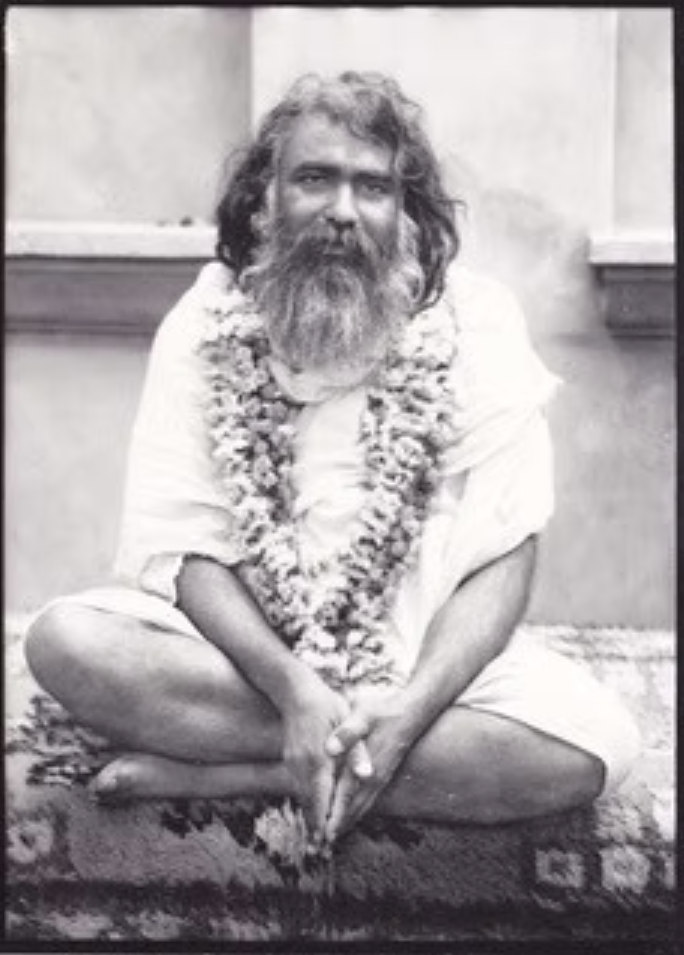
01
Colophon
© Publisher
First Edition
Guru-pūrṇimā
Vikram Saṃvat 2041 [1984]
Price: Rs. 24
Publisher:
Śrī Mahendra Mahārāj Smṛti-Granth Samiti,
Vṛndāvan
Manish Shah, Atul Doshi
Ajit Mudraṇālaya (Ajit Press),
Songaḍh — 364 250
02
Dedication
In the sacred memory of Param Pūjya Śrī Mahendra Bābā, "Śrī Gurucharaṇāśrit" — offered with love and reverence.
03
Preface
In our country there has been an unbroken line of great saints and mahātmās who, in history's difficult hours, have again and again driven off the despair and darkness that had settled on the public mind, kindled the light of hope and faith, shown the people the road their own time asked for, and given them guidance. In that line of saints and mahātmās given to the welfare of the world, Śrī Mahendra Mahārāj holds a foremost place.
Mahendra Mahārāj was an unearthly saint and a perfected mahātmā. He made the triveṇī of Truth, Simplicity and Love flow through the world; and by inspiring the devout to the worship of Bhūta-bhāvan Bholenāth — Śiva-Śaṅkara himself made manifest — Śrī Haiḍiyākhaṇḍ (the Bābā of Haiḍākhān) Bhagavān, he laid open the road to the welfare of the world. This book sets before the reader the pithy and heartfelt memoirs of the disciples and devotees of Mahendra Mahārāj — accounts of his life, his yoga, his austerities, his sādhanā (spiritual discipline), and the wondrous, miracle-filled līlā (divine play) in which his spirituality reached its full height.
As one devotee has said in his memoir: if Śrī Haiḍākhāṇḍī Bhagavān is Parabrahman himself made visible, then Mahendra Mahārāj, by revealing the Oṃkāra-form of Śrī Haiḍākhāṇḍī Bhagavān within a seed-mantra (bīja-mantra), rained down the nectar of Truth, Simplicity, and Love upon beings scorched by the wildfire of this Kali age, and bestowed on them supreme peace and the joy of the Self.
Śrī Mahendra Mahārāj was born in the village of Maṇikā, in the Darbhanga district of the province of Bihar. From his very childhood, devotion to God awoke in him. At the age of twenty he renounced the world. Mahendra Bābā was a wholly single-minded devotee of Śrī Haiḍākhāṇḍī Bhagavān, and in time it was he who became the inspirer and propagator of that worship. Already in his boyhood, Śrī Haiḍākhāṇḍī Bhagavān blessed him with darśan (the grace of beholding a holy one) and dīkṣā (spiritual initiation), and fulfilled him; and later too Mahendra Mahārāj received the Lord's darśan many times.
He spread the worship of Śrī Haiḍākhāṇḍī Bhagavān among the devout and set it in practice. Nor was this all: he strove tirelessly to make this worship accessible to everyone. In many places he had āśramas and temples of Śrī Haiḍākhāṇḍī Bābā built, and consecrated images of the Lord. No one else did as much as Mahendra Mahārāj to propagate and establish the worship of Śrī Haiḍākhāṇḍī Bhagavān.
Mahendra Mahārāj's learning was profound and his experience vast. He was a towering scholar of grammar, the Vedas, the Purāṇas, the Śāstras, the Upaniṣads, the six schools of philosophy (ṣaḍ-darśana), the Mīmāṃsā, and the science of yoga. He had also studied English, Bengali, Urdu, and other languages, and had equal command of them all. He journeyed on foot through nearly every province of India and made pilgrimages many times to Tibet, Nepāl, Mānasarovar, and Kailāsa. On these travels he came face to face with many great perfected yogīs (siddhas). Yet through all of this, material comfort and prosperity never once tempted or unsettled him. At such moments he would keep humming:
In Mahendra Mahārāj there was a wondrous harmony, a confluence, of knowledge and devotion. Although Śrī Haiḍākhāṇḍī Bābā ever dwelt enthroned in his heart, and he was the Bābā's utterly devoted follower, he nonetheless experienced the oneness of God in Śiva, in Kṛṣṇa, and in Durgā alike. He was a devotee of Śiva, a devotee of Kṛṣṇa, and a devotee of Durgā. He held unfathomable faith in the Rāmāyaṇa and the Gītā, and during his residence in Vṛndāvan he beheld Śrī Rādhā herself.
For the worship of God he showed each sādhaka (spiritual aspirant) the path suited to that seeker as he found him. If a seeker's inclination leaned toward Bhagavān Kṛṣṇa, he blessed him with a Kṛṣṇa-mantra; and if a seeker's taste lay in the worship of Rāma, Śakti, or Śiva, he showed him the path of worship of that very chosen deity (iṣṭa). To those devotees who revered Mahendra Mahārāj himself, he gave the command to worship his own venerable Gurudev, Śrī Haiḍākhāṇḍī Bābā.
For the redemption of the soul he held the remembrance of God's Name to be absolutely essential. Though he gave teaching of every kind — moral, social, and religious — he held devotion to God to be supreme above all, and toward this end he laid special stress on the discipline of the Name (nāma-sādhana).
Thus, in Mahendra Mahārāj's view, the Name of God is supreme above all. His first and his last books — Nāma-Sādhana and Āvaśyak Karma — are both awakeners of devotion to the divine Name.
For the welfare of the world Śrī Mahendra Mahārāj also composed many books. Foremost among them are: (1) Śrī Nāma Sādhana, (2) Śrī Puṇya-Smṛti, (3) Anupam Kṛpā, (4) Divyakathāmṛta, (5) Āśīrvād aur Ādeś, and (6) Āvaśyak Karma. Steeped in the līlā of Śrī Haiḍākhāṇḍī Bhagavān, the whole body of Mahendra Mahārāj's writing is a herald of the divine Name and a priceless treasure for humankind. In the many memoirs gathered in this book, readers will find glimpses of Mahendra Mahārāj's own compositions; and beyond these, they will also be given a taste of a number of his handwritten and hitherto unpublished works.
Mahendra Mahārāj also bestowed a supernatural and miraculous grace upon many devotees. Yet he gave the credit for all of it to his Guru, Śrī Haiḍākhāṇḍī Bābā alone. He used to say: "I am but a lowly peon of the Lord. What power of restraint or of grace could there be in me?" Mahendra Mahārāj possessed such wisdom (prajñā) that nothing in the world — no matter, no thing — was unknown to him. He would know of events yet to come before they occurred; he had foreknowledge of them. In this book the reader will also find the account of many episodes concerning his miracles and his foreknowledge of events. Of these I would like here to give only a few brief hints: his advance knowledge of the Dalai Lama's coming to India; the breaking-down of the motorcar of the then Prime Minister, Pandit Jawaharlal Nehru, as he travelled from Haldvānī to Nainītāl; and how, after the consecration (prāṇa-pratiṣṭhā) of the Lord's image at Kaṭdhāriyā, he let the devotees feel in the stone image the beating of a heart, just as in a living human being — and much else besides.
Another remarkable thing about Mahendra Mahārāj was his knowledge and prophecy of the manifestation of Haiḍākhāṇ Bhagavān. When exactly one year had passed since his own passing into Brahman (Brahma-līna), the Lord became manifest, and across the world the triumphal cry of Śrī Haiḍākhāṇḍī Deva resounded as a great awakening of consciousness. The great sacrificial rites (mahāyajñas) held by the Lord in various places, and the temples raised there, are a burning proof of Mahendra Mahārāj's divine vision and supernatural power. In June 1983 I had the good fortune to be present at the inauguration ceremony of the temple built at Chiliyānaulā (Rānīkhet).
Today, everywhere in the world, worldliness holds sway. This excess of worldliness cannot be called beneficial for humankind. For human welfare, there must be a balance between the worldly and the spiritual. I am confident that, through this book, devotion to God will grow among people and will help to establish the needed balance between worldliness and spirituality. Seen in this light, this collection of memoir-writings concerning the personality and the works of Mahendra Mahārāj will prove useful both to devotees and to the general reader alike. For its publication, I offer my hearty commendation (sādhuvād) to its editor, its writers, and its publishers.
C.P.N. Singh
[Governor, Uttar Pradesh]
04
Foreword
Paṇḍit Viṣṇudatta Śāstrī
It is a matter of the deepest joy that the memorial volume of Śrī "Charaṇāśrit", Śrī Mahendra Svāmījī Mahārāj, is now to be published — he who was the peerless jewel among the disciples of Śrī Bhagavān Haiḍākhaṇḍ-vihārī Dev (the supreme Brahman, Āśutoṣ, Śrī Kāśī Viśvanāth himself), and a boundless treasury of ṛddhi and siddhi (spiritual wealth and attainment).
In this world, great beings such as Śrī Charaṇāśrit Dev — worthy of the very name they bear, inexhaustible treasuries of yoga, wisdom, dispassion, renunciation and every allied virtue — arise only once in some thousands of years.
Blessed indeed is this age, in which the good fortune of the darśan of so great a crest-jewel among the perfected, so great a treasury of yogic majesty, and the happy chance of sitting in the dust of his feet, came within reach of ordinary people as well. Those most fortunate ones who beheld him even for the space of a moment — they are supremely blessed. To fill all beings of the whole world with that supreme bliss, the timeless, ever-unassailable supreme Truth and experience — attained by his devotees through his holy fellowship (satsaṅg) — have been gathered into this volume for the welfare of the world.
This effort is not made to entertain the crowd, but rather for those worldly beings who could not win the good fortune of the darśan and the satsaṅg of that great and luminous being: to fill their hearts with the felt experience of Truth, Simplicity, and Love, and so that they may receive his unconditioned grace.
The world's direct realization of Śrī Bhagavān — the transcendent-most Brahman, Śrī 1008 Śrī Haiḍākhāṇḍa-Vihārī Deva — is itself the great gift (mahāprasād) of his austerity and his grace. It is not merely my hope but my firm conviction that the company of devotees, meditating upon these episodes with full attention of heart, will realize the peace of the heart and supreme bliss.
The lowly servant at the sacred Feet of Śrī Bhagavān,
Pandit Viṣṇudatta Śāstrī
05
Śrī Mahendrāṣṭakam
Composed by Śrī Gopāl Prasād Pāṭhak
Thus is completed the Śrī Mahendrāṣṭakam, composed by Gopāl Prasād Pāṭhak, the humble servant of the venerable Guru-God Śrī Mahendra.
06
Plates
Invocation:
Salutations to Śrī Siddhāsiddheśvara — the venerable Master of Yoga (Yogāchārya), adorned with every perfection, who sports within the cave of holy Kailāsa — the great Munīndra (Mahāmunīndra).
(Absorbed in japa — repetition of the divine Name)
The supreme Guru (Param-Guru) of Śrī Mahendra Mahārājjī
Oṃ
(As the very form of Śiva)
Oṃ
Oṃ
(Absorbed in japa)
Oṃ
(Absorbed in japa)
Oṃ
Place: Śrī Tryambakeśvar Mahādev — Nāsik
Oṃ
Oṃ
Oṃ
Oṃ
Oṃ
Oṃ
Oṃ
Oṃ
Oṃ
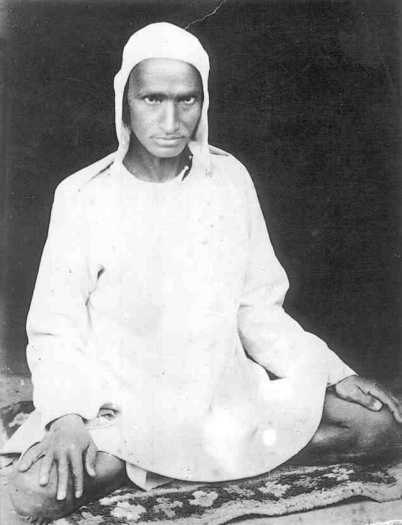
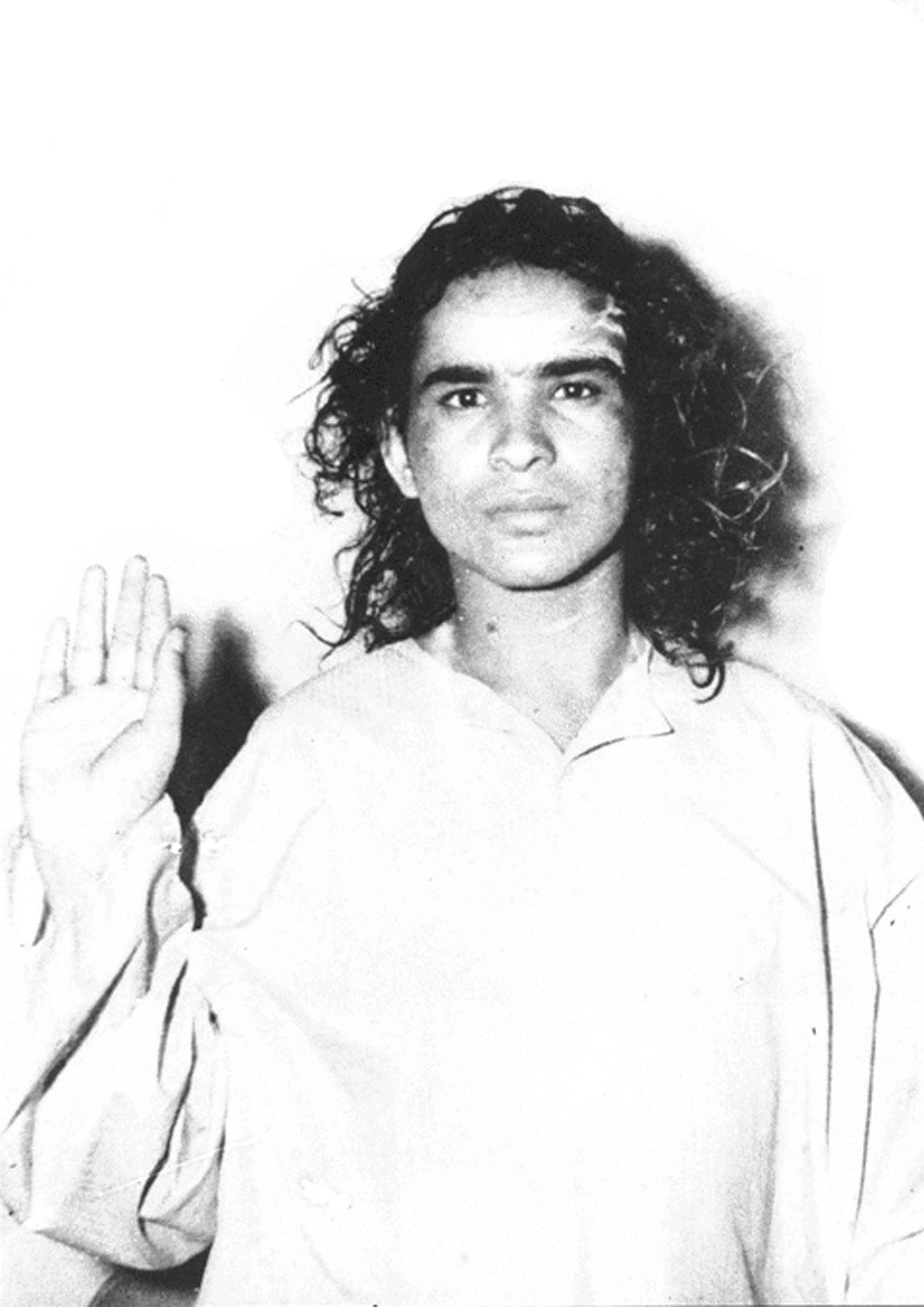
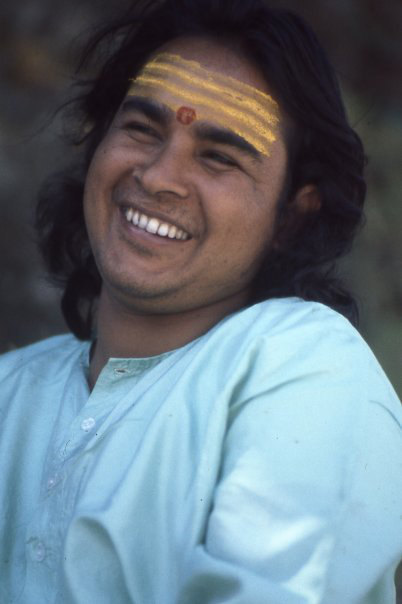
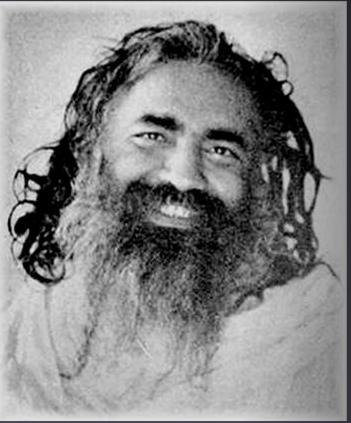
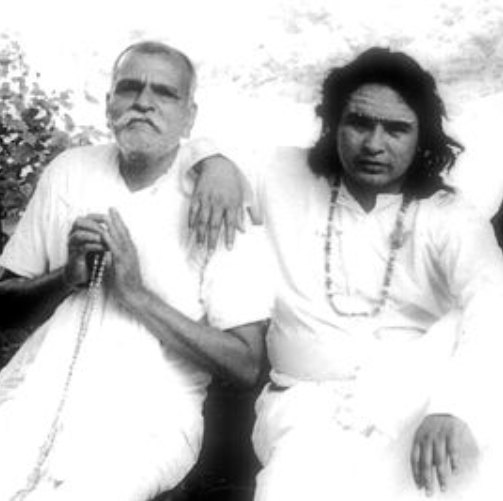
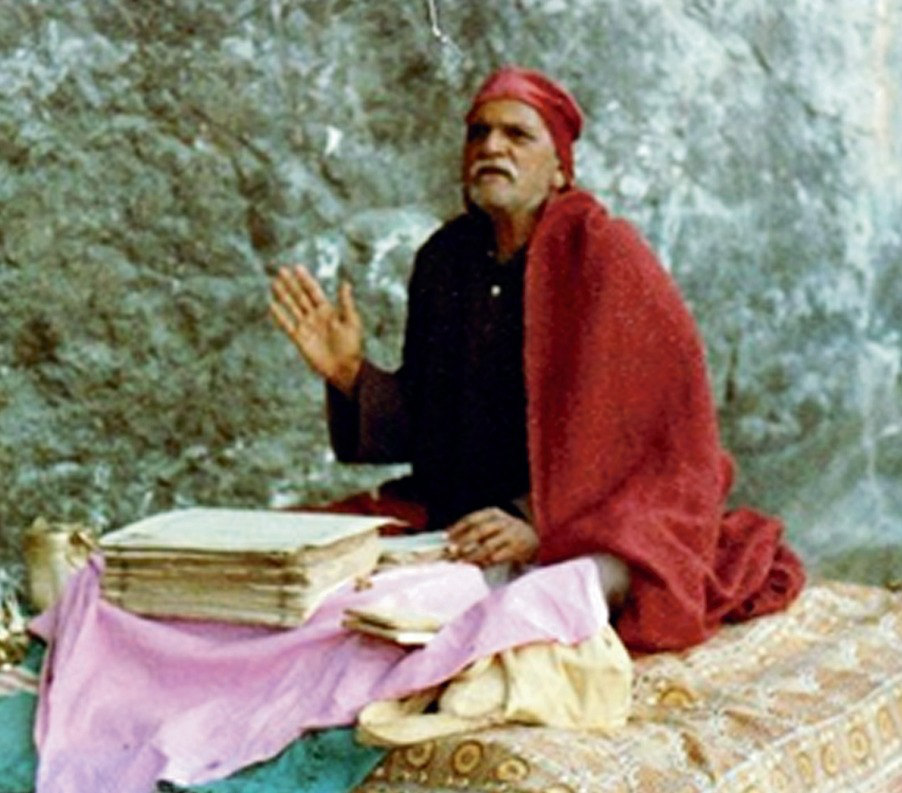
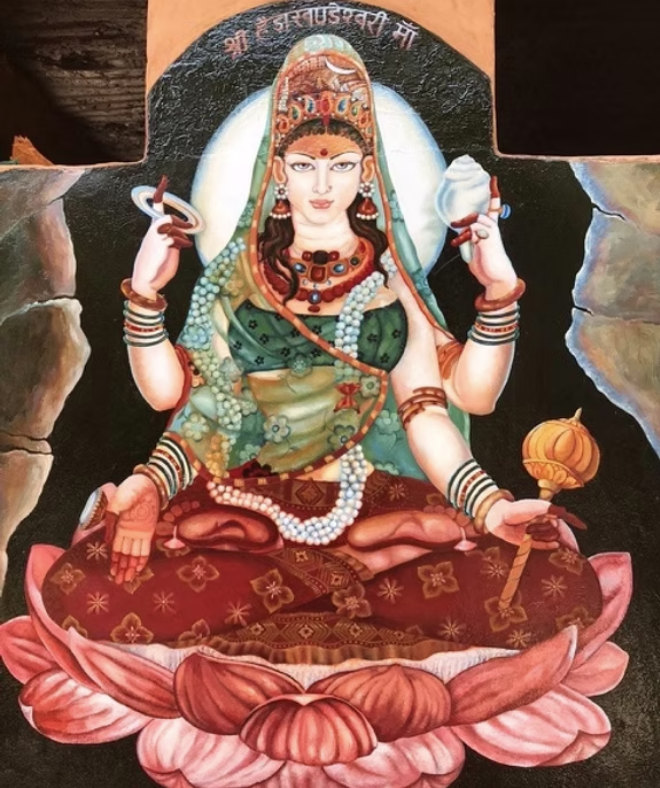
07
Some Memoirs
Śrī Ambālāl Īnāmdār
My friend Śrī Manaharlāl (Nānubhāī Vorā) — of Vora and Company, Publishers — and I stood waiting for the Punjab Mail to come in. As we strolled up and down the platform, Nānubhāī asked me, "Īnāmdār, when such illnesses come to perfected men (siddha-puruṣas), what are we to make of it?" Just as I was about to answer, the Punjab Mail drew into Dadar station; and the moment the train stopped, there stood the one we were waiting for, at the door of the first-class carriage, holding the handle-rail in one hand and a bucket in the other. As soon as the train halted we hurried up to him; and the moment we reached him, he lifted his hand from the rail, looked toward the bucket, and said, "Seeing this, do not lose faith in God." It was the answer to the very doubt we had been discussing. Mahendra Mahārāj stayed a short while at Nānubhāī's. After that he was admitted for treatment at the Sewri T.B. Hospital, which was in the charge of Nānubhāī's younger brother, Dr. Vorā. I used to go there to see him. Once I put to him the question of that very doubt of ours: "Even to men like you — just as with Śrī Rāmakṛṣṇa Paramahaṃsa — even perfected great souls (siddha mahāpuruṣas) suffer such illnesses; what, then, are we to understand?" To this he replied, most gently and lovingly, "Look, Ambābhāī — householders, when they pray to some sādhu or saint or to God, when they petition him and ask for something, their demands are of many kinds. From morning to evening they keep petitioning; they trouble us for the satisfying of their desires. And these desires, which we out of compassion fulfil — because of that, whatever faults arise, those faults we take upon ourselves; and for these faults, whatever suffering the householders would otherwise bear, that suffering falls upon us. That is the answer."
2
The seventeenth of September, 1959, proved a most sorrowful day for us. Bearing a thunderbolt-blow upon the heart, we had to sit stunned. The piteous event was this: my fourth son, Mahesh — in whom God had wrought a beautiful synthesis of the three, beauty, strength, and capacity for work — died in a car accident while returning from Khopoli. This whole tragic event shakes our heart even now. But in the eyes of the world we were expected to become free of grief. Where should we go for release from this grief — that was a great question, for in the whole family we were the eldest. At last we resolved to take refuge with Ambā Mātā, regarding her as the Mother in the flesh.
Then a doubt arose in my mind: if Mother Ambā stands in the place of our own mother, how good it would be if he whom we have taken as our guru, Śrī Mahendra Mahārājjī, were present there too! We had not informed him by letter that we wished to be freed of grief, nor sent any message; only this thought arose in our minds. And just then we went to Ambājī's place of residence — and there we were astonished to see that, out of the very room in which we had once met Śrī Mahendra Mahārāj, he came out and said, "Why, Ambābhāī, you've come?" For a moment I was dumbfounded. I said "Yes" and set down my luggage. The first question he asked us was, "What will you eat?" That day was Thursday (Bṛhaspati); it was on a Thursday that Mahesh had died suddenly. Because of that, were we not to eat on Thursdays? We told him that on Thursdays we would not eat. At once he said, "How long will you go without eating? You must eat." Straightaway he summoned the cook and had khichaṛī and vegetables made. In the evening we sat together to eat — Mahendra Mahārāj in the middle, and to either side my wife Kusum and myself. As the khichaṛī and vegetables were being served, he took a laḍḍū in his hand — the way a magician plucks something from the empty air — and said, "Look, Ambābhāī, I never keep leftover, defiled food; but today I have kept one laḍḍū of the Goddess's prasād. A little I take, a little you take, and a little let Kusum take."
3
The 23rd of June, 1969, was a sorrowful day for me, for the Vorā family, and for all who are counted devotees of Mahendra Mahārājjī. In the morning a telegram came to Vorā Sāhib's house that Pū. Śrī Mahendra Mahārājjī had passed away. Eleven of us went from here by aeroplane to Delhi, and from there, travelling all night by car, reached Haldvānī. From there Mahārājjī's body had been taken to Vṛndāvan, so we reached Vṛndāvan. There we were told that his body had been taken to the Yamunā ghāṭ for cremation. We went there at once. From afar Bāṅkelāl could be seen standing, torch in hand; only the kindling of the wood remained. The moment they saw us, everyone cried out, "The Bombay people have come! The Bombay people have come!" For a moment the giving of fire was halted. As soon as we arrived we touched Mahārājjī's feet. That such a glory (vibhūti) had departed from the earth — the thought filled us with deep sorrow. The cremation proceeded; the pyre was kindled. In the cremation ground (śmaśān) some two hundred of us had gathered. No one had been able to go near the pyre. In such circumstances the left hand came forth, and in the boon-giving (varada) mudrā, blessing all — remaining just so, sound and steady — it burned, while slowly the arm was consumed up to the elbow. But like a pillar the elbow-bone stood straight.
Among those who live on the Yamunā bank at Mathurā and Vṛndāvan there is a custom that a tenth or a twentieth part of the corpse is immersed in the Yamunā unburned — a portion determined by the tortoise (kachhuā). Whatever part remained was drawn out of the pyre and sent to be floated in Śrī Yamunājī; and when Śrī Miśrīlāljī took the wood in his hand, I saw that a part of the right hand — some two to two-and-a-half inches — was exactly as it had been. This body we floated in Śrī Yamunājī. Having lost the most precious, priceless thing of all, in such a despairing state we returned to Jaipuriā, where we were staying.
How was this whole event to be understood? Nothing came clear. It remained in my mind as a memory, and I gave this fact no special importance. Now, after Śrī Mahendra Mahārājjī's passing, the Somvatī Amāvasyā of the month of Śrāvaṇ was approaching. Whether it was 1969 or 1970 I do not exactly recall. That day Kusum and I resolved: had Mahendra Mahārājjī not passed away, we would have gone with him to Tryambakeśvar, performed the Laghurudra, and, bowing our heads before Śrī Bhagavān, returned. Today Śrī Mahendra Mahārāj is no more, and therefore our going is fitting. We will surely go to Tryambakeśvar — and go we did, and performed the Laghurudra rite. We remembered Śrī Mahendra Mahārāj, remembered Bābā Śrī Haiḍākhāṇḍī, and, giving gifts and dakṣiṇā to the brahmins, returned to the Highway Green View Hotel where we were staying on the Nasik–Tryambakeśvar road. On returning, we slept.
At night, at twelve o'clock, when I rose to go to the bathroom and lay back down on my cot, right then, close by my cot, I saw Śrī Mahendra Mahārājjī and Bābā Śrī Haiḍākhāṇḍī standing. In keeping with my nature I said to them at once, "You have died — what is this, now?" First he said gently, "I have not died." I said, "What does it help to say you have not died? With my own hands I burned your body and floated it in Śrī Yamunā." Between the two of us there used sometimes to be argument, and Śrī Mahendra Mahārājjī would speak very sternly and harshly; just so he said again, "I have not died." I thought there was no use prolonging the matter, so I said, "Śrī Mahārājjī, what is your command? Please speak." In reply he said first, "Tell Nānubhāī that I have not died." I said, "Very well, Mahārāj Śrī — and what else?" Mahārājjī said, "Look, the temple will surely come to be; do not doubt this. And thirdly, my bones (asthi) were not immersed; that immersion should be done — yes?" The fourth thing he told me is a private matter between the two of us, so I do not mention it here.
After that I began to feel: all day long I have done japa (repetition of the divine name) of Śrī Mahendra Mahārājjī's name and remembered him — is this, then, not perhaps an illusion? I sat up on the cot, and even in that state there was a chance of delusion. So I went out and stood; yet even then a doubt of drowsiness remained. So I asked my wife, "Kusum, what time is it?" Kusum lit the torch, looked, and said it was twelve o'clock at night. Then I became convinced that this whole event was no delusion but truth — that I had received the darśan of that great glory. And in that conviction I fell asleep again.
This episode came to be explained thus. When Śrī Haiḍākhāṇḍī Bābā was about to return from Bombay to Vṛndāvan, at that time a friend sat down in my car and, unbidden, began to speak: "Aha, ha! What boundless līlā is God's!" I asked, "Why — what has happened? Which līlā?" That brother told me: "Look — on this very Amāvasyā, when Mahendra Mahārājjī died — and then the Somvatī Amāvasyā of Śrāvaṇ that was coming — at that very time we were to go with Mahendra Mahārājjī to Tryambakeśvar. He himself had said, 'We will come to Tryambak with you; we will take you along. Well, Śivcharaṇ, will you come?' And Śivcharaṇ said yes."
4
Though on that Somvatī Amāvasyā day Śrī Mahendra Mahārājjī could not come to Tryambakeśvar in the flesh, yet the resolve (saṅkalpa) he had made — for the very fulfilment of that resolve, after his passing, remembering him we went to Tryambakeśvar and performed the Laghurudra. All this was by his own grace: that we received his darśan, and that what he had said to Śrī Śivcharaṇ — that he, Śrī Mahendra Mahārāj, would go to Tryambakeśvar — was made good; for, unable to come in the flesh, Śrī Mahendra Mahārājjī was present with us in his subtle body (sūkṣma deha). This fact stands established.
In the year 1952, at Divālī, we made ready to go to Ambājī. Every year at Divālī it is our rule to go to Ambājī; if it can be managed at all, one should go at Divālī — such is our resolve. As we prepared, there was the Goddess's coconut that the Panditjī gives us each year. When we go to the Panditjī's seat (gādī) and bow, the Panditjī gives a new coconut, and the old one we leave there; the new coconut we bring home we keep in our worship. This coconut, the next year when we prepare to go, we pick up and put in the bag. As I picked up the coconut and set it in the bag, a resolve arose in my mind, and inwardly I said: "O Mother Siddha-Siddheśvarī! For so many years I have come to your door; you are called Siddheśvarī, yet I have had the darśan of no siddhi."
Our going to Ambājī is not for the satisfying of any desire. In my heart is one feeling: that Mother Ambā is, for me, a very mother in the flesh; and to go once a year and make obeisance is the keen longing of my heart — a feeling of the heart. Because of this feeling I never need to ask for anything; yet, who knows why, this time this resolve rose up. Reaching Ambājī, we set down our luggage; at that time Bhagatjī was living in the garden dharmaśālā. Bhagatjī said that Mahendra Mahārājjī was coming. I had heard Mahendra Mahārājjī's name many times at Ambājī. The pūjārīs would speak of him, and the people from whose shop — Ambu Modī's — we bought our supplies would also say that Śrī Mahendra Mahārājjī was a most impressive person, a very great saint. With him the Mahārājā of Ambājī Mātā, Bhavānīsiṃh, would sit for hours discussing the scriptures and the inner meaning of the śāstras. He knew a great deal, they said, and such a sādhu is hard to find in this world today. And so my resolve, and the learning from Bhagatjī that Mahendra Mahārājjī was about to arrive, came together at once.
But my mind was not ready to accept it so readily. So I took a postcard from my things and wrote the Ābū address on it, for it was the day of Dhanteras; having taken darśan that very day, on Kālīchaudas I was to go to Ābū. On Dhanteras I would take darśan, and on Kālīchaudas set out for Ābū. To Bhagatjī I had said only this: "When Mahendra Mahārāj comes, tell him just this — that in a certain man's mind such a resolve has arisen; he wishes to come, and if you give the command he will come from Ābū. This letter he has left is to be posted." On the evening of Kālīchaudas, Mahendra Mahārājjī arrived. He spoke with Bhagatjī. In Bhagatjī's own words, Mahendra Mahārājjī smiled; and smiling he said, "Such a man ought indeed to be seen. Who makes such a resolve — and where does such a resolve ever arise? But who keeps the wish to behold a siddha, a god, in some sādhu? Post this card."
On New Year's day I received the card. I came back and stood in the garden dharmaśālā. In the courtyard lay the luggage; above stood Mahendra Mahārājjī; and below, in the window by the road, stood Maganbhāī Māṣṭar, who had greatly helped me finish my studies. Thus Maganbhāī's coming and the meeting with Mahendra Mahārājjī — these two events falling together at Ambājī — is itself a strange thing. But that we met is a fact. Mahendra Mahārājjī came down; he arranged our lodging; at night we took our meal, and afterward sat down for discussion. Before the discussion began, in keeping with my habit, I put to Mahendra Mahārājjī a thing meant to strike hard: "Look, Mahendra Mahārājjī — we are followers of Śrī Aurobindo, and, being of the Śrī Aurobindo way, if it seems right to you, then speak with us; otherwise do not."
I was astonished at his reply. In the midst he said, "What were you saying, Ambābhāī? Someone has written a book — The Thought-Current of Śrī Aurobindo — a book of his line of thought, of his philosophy (darśan); a very beautiful little book, full of complete metaphysical knowledge (tattvajñāna), which anyone can read as a daily discipline." He knew this book, and told me some things out of it. At first sight I felt that this man was fully conversant with the ideas of tattvajñāna. We held many discussions until two in the night. The next day we were to part, and at that time he said a thing that would make good the loss of my life. He said, "Look, Ambābhāī —
This matter… remained." This matter of the fault of miserliness (kārpaṇya) did not sink into the head of Maganbhāī, who was with me. He said, "You are not miserly at all — you use money with a fully open hand and open heart. Yet this sādhu calls you miserly!" I said, "The place from which he has called me miserly is a different place; it will not come into your thought." I had understood well why he had called me miserly.
After that I went to Vṛndāvan. There, once, as we walked and talked, I said to him that the reason he had called me miserly was this. He said yes, and said that Kapila Muni had spoken this word when imparting knowledge to his mother: "O Mother, you have much knowledge, but no use is made of it. A thing we possess in abundance but do not use — that is miserliness. You have so much knowledge, yet how much of that knowledge is used for the living of life? Have you ever considered this?" That was his answer. In this our very first meeting, the diagnosis he made for me was so keen and clear that — even though the intellect grow dull under every kind of doubt and misgiving — the ultimate goal of knowledge, the state of abiding in the Self (ātmastha), which ought to be attained, is even now held back in a state of coming and going: not steadfastly, wholeheartedly merged in it, the whole of life not being spent in Self-abidance. This fact is, even today, exactly that certain.
08
Śrī Mahendra Bābā, the Inspirer of the Śrī Haiḍākhāṇḍī Worship
by Śrī Gopāl Prasād Pāṭhak
By whatever God all beings were fashioned, and by whom this whole world is pervaded — worshipping that God through his own work (karma), man attains success.
It is an unshakable truth that the whole world is created by God and saturated through with Him; that Supreme Person pervades every atom, and for our watching-over He has a thousand eyes, ears, hands, and the rest. Yet, even so, that Ordainer has directed us to do our own work. Only when, through that very work of ours, we remember and worship the Ruler of the world (Jagannīyantā), will our deliverance come and success be ours.
For the worship and adoration of that same Ruler of the world, God Himself, in the forms of great sages, mahātmās, and great souls, has devised many rites of action (karma-vidhis). Take up any rite of action whatsoever — the destination of all is one and the same. And so, following the Gītā's rule, "sva-karmaṇā tam abhyarcya," I am making this small effort at the worship of that Supreme Lord.
The pure remembrance of the memorable līlās of the great yogī, the unbroken celibate (akhaṇḍa brahmacārī), Śrī 1008 Śrī Mahendra Mahārājjī, is itself included within the worship of that Supreme Lord. The remembrance of the revered Gurudev brings forth bliss in every pore of the body. Of that great yogī, the mere remembrance of whose name bestows the means to complete well-being — of those who have had his darśan, what indeed is there to say of the dawning of their good fortune!
My dear friend! Do not take it for exaggeration: in that great yogī Śrī Mahendra Bābā (Śrī Charaṇāśrit Bābā) there was truly such a power of attraction that any man who came before him even once became his forever. He would call each person who came before him lovingly, in that person's own language, and would lay upon him forever the imprint of his indelible love. And not love only: for the deliverance of the devotee who came to his refuge, he would grant full support to walk the path of devotional worship (upāsanā). In making the devotee's faith wholly firm — by causing the direct realization of the divine great powers — he left nothing wanting. He would say that for self-deliverance the remembrance of God's name (bhagavan-nāma-smaraṇa) is absolutely essential; without it, self-deliverance is impossible.
Although he imparted all teachings — moral, social, religious — yet his command for devotion to God (bhagavad-bhakti) was supreme. Concerning devotion to God, he would often recite this dohā of Mahātmā Tulsīdās:
For the worship of God, whatever sādhaka he found, he showed him a path suited to just that kind of aspirant. That is to say: if the sādhaka's leaning was toward Lord Kṛṣṇa, then, giving him the Kṛṣṇa-mantra, he made every possible effort to absorb him in single-minded devotion to Lord Kṛṣṇa. If the sādhaka's strength was engaged in the worship of Śiva and the like, he showed him the way to make progress in that very worship.
For those devotees who held to Śrī Bābā Mahārājjī alone, who were resolved to regard him as their all-in-all, who bore in their hearts the ardent longing to cross this fathomless ocean of the world by drinking the nectar of his feet (charaṇāmṛta) — for such single-minded devotees he gave the command to worship the revered Sadgurudev "Śrī Haiḍākhāṇḍī Bābā" (Śrī Haiḍākhāṇḍī). Following Śrī Bābā's command, Śrī Bābā's dear devotees took up the worship and adoration of Śrī Haiḍākhāṇḍī. In the worship of Śrī Haiḍākhāṇḍī's picture and image (vigraha), Bābā's devotees beheld Bābā's very likeness: in the worship of Śrī Mahendra Bābā they took Haiḍākhāṇḍī Bābā into their hearts, and in the worship of Haiḍākhāṇḍī Bābā, Śrī Mahendra Bābā.
This līlā of God is just such as, in the episode of the Govardhan worship, you will have read: it is Lord Kṛṣṇa himself who has Śrī Girirāj worshipped, and it is Lord Kṛṣṇa himself who is worshipped in the form of Girirāj. As the Vraja saying has it:
Thus the great yogī Śrī Mahendra Bābā set the worship of Śrī Haiḍākhāṇḍī into full, practical currency among the devotees, and made every effort to render this worship freely accessible to all people for their welfare.
2 · Śrī Bābā's Childhood (Hindi: Śrī Bābā kā Bāl-jīvan)
After the revered Gurudev's attainment of the Supreme State (paramapada), inquiry revealed that his mother's name was Śrī Dāījī and his father's name Śrī Kantū Jhā; it was learned too that Śrī Kantū Jhā is still living, but that his mother had given up her life in the grief of separation from him. Śrī Kantū Jhā is a resident of village Satalakhā, district Darbhāngā. Regarding Śrī Bābā's date of birth and the like, nothing could be obtained from the paternal home at Satalakhā or the maternal home (nanihāl) at Māṇikā.
During Śrī Bābā's lifetime a letter had been received from Śrī Jagdīś Prasād Śarmā of Ajmer, in which the space for the year (saṃvat) of birth was left blank. I asked Śrī Bābā about the saṃvat several times, but he never disclosed his birth-saṃvat. According to Śrī Jagdīś Prasād Śarmā's letter, the copy of Śrī Bābā's birth-horoscope (janma-kuṇḍalī) is as follows:—
Its purport: the birth falls on Phālgun Śuklā 13, a Thursday, at midday, with the degree-figures of the ascendant and Sun that follow. The Bhṛgu (Venus) period runs favourable for 18 years, after which comes the Sūrya (Sun) period; the lord of the sixth house, a malefic standing in the fifth, gives an inauspicious result; further on, the Sun and the lord of fortune well placed, together with Mercury, give a middling result.
"Janma Lagnam" (The Nativity Ascendant)
The birth-chart (janma-kuṇḍalī, North-Indian square form) carries the following houses, sign-numbers, and planets (moving anticlockwise from the top-centre lagna):
- Lagna (top centre): sign 9 — Bṛ (Jupiter)
- sign 10
- sign 11 — Maṃ (Mars)
- Bu (Mercury), Rā (Rāhu), Sū (Sun) — sign 12
- sign 1 — Śu (Venus)
- sign 2 — Śa (Saturn)
- sign 3
- sign 4
- Caṃ (Moon) — sign 5
- sign 6 — Ke (Ketu)
- sign 7
- sign 8
According to the above horoscope, the almanac-makers (pañcāṅg-kartās) have fixed Śrī Bābā's birthday as Phālgun Śuklā 13, Vikram Saṃvat 1965, corresponding to 4 March 1908 CE.
Śrī Mahendra Mahārājjī's revered mother, Śrī Dāījī, generally lived at her natal village, Maṇikā, district Darbhāngā. His birth therefore took place in village Maṇikā, and here he passed his infancy and boyhood. His maternal grandfather (nānā), Śrī Kānta Jhā, was a supreme devotee of Mother Durgā. By Mother Durgā's blessing the family was well-educated and prosperous in wealth and grain. As Śrī Nānājī's worthy son, Śrī Rāmchandra Jhā, related — according to him, Śrī Bābā's schooling here went up to high school, and at home he studied the Sanskrit language with Sanskrit teachers (āchāryas). Besides Sanskrit, he acquired at home a knowledge of many languages. At about eighteen to twenty years of age he left home and went away. He was searched for at length, but with no success.
I here set forth the memories of childhood that Śrī Mahendra Bābā related from his own holy lips:—
"While living at my grandfather's house (Maṇikā) I had no sorrow of any kind; and yet, as my boyhood passed on, my mind began to turn toward going to Vṛndāvan. My longing to go to Vṛndāvan and do bhajan grew ever more intense.
"Doing japa of the name 'Kṛṣṇa-Kṛṣṇa,' one day I made a plea to my mother: 'Mother! I must go to Vṛndāvan and do bhajan; I must seek out the Supreme Father of the world. O Mother!! Give me your leave.'
"A stream of tears flowed from Mother's eyes, and with a voice choked with emotion she said: 'Star of my eyes! Support of my life!! You wish to go off to Vṛndāvan, leaving me, to do bhajan? No, son — do not make me hear such a plea.'
"I gave Mother courage and reasoned with her; then my compassionate Mother, composing herself again, said: 'Son, first gain some education; then, for the grace of God and for spiritual progress, the path of the saints (sant-mārga) will be fitting.' That Mother's blessing would surely bear fruit — of this I had firm faith.
"In those days I used to go to study at a school about three miles from the village; it was the rainy season. Returning once, evening overtook me. The very stream in which, on the way to school, there had not been water even knee-deep, was at this hour flowing with fathomless water. Its size and its current were both fearsome. There was no boat to be had, no companion, and I did not know how to swim. 'God alone is the protector' — with this thought, taking God's name, I leapt into the stream. What happened after that I do not know. When consciousness returned to me, I found myself standing on the other bank. It seemed to me that some unseen power had helped me that day.
"After this event Śrī Nānājī arranged for my studies at home. My grandfather was himself a scholar of Sanskrit, astrology (jyotiṣa), and ritual (karmakāṇḍa), and a single-minded devotee of Mother Durgā. Lighting a ghee-lamp in a great vessel, he would recite the Durgā Pāṭh. Sometimes several recitations of the Saptaśatī would be completed. His worship-room was separate from the house; he always slept on a wooden plank (takht). At night, when the whole family was asleep, I would sometimes see him absorbed in the Durgā Pāṭh through the night. Seeing his rapt absorption in the Durgā Pāṭh, a thrill would run through me, and at that time, bowing my head to Mother Durgā, I would pray: 'Mother! Grant me devotion too, that I may do some worship, japa, and tapas.'
"Mother would surely hear my prayer — so I believed. Finding a fit occasion, I practised the method of worship with Nānājī. By Mother Durgā's grace I too began doing the Durgā Saptaśatī recitation every day. At any relative's house, or in a wedding procession — wherever I went, I never left off the Durgā Saptaśatī recitation.
"There is an event of one particular day. When I had gained some practice at riding a horse, I took Nānājī's permission and brought out a horse from the stable. I raced the horse hard, raced it hard; the thought even came that our horse should reach right inside the stable at full gallop, and we set about acting on that very thought. The height of the stable doorway was only a little more than the horse's own; the horse alone could go in — no person seated upon it could pass inside. Racing the horse at great speed, as I began to enter the stable it struck me that the doorway was not high enough — now, what to do, all at once? There was no recourse but to close my eyes and enter samādhi; and that I did — I closed my eyes. I do not know what happened; but on opening my eyes I found myself seated on the horse inside the stable. After this event I gave up the idea of riding a horse.
"After finishing my education, I found the occasion to sit with the followers of Mohandas Gandhi. Slowly, keeping company with many leaders, I took part in strikes, fasts, and the like. In the movement to break the salt law (satyāgraha) I even led the local crowd. Through these movements I got the chance to travel through several towns.
"In 1928 I resolved to renounce home. As resolved, in the morning, on the pretext of going to the city, I set out on foot toward Banaras. I walked continuously for some twenty hours. In Kāśī I took the darśan of Viśvanāth Bābā. In a town near Kāśī I ran a school. After some days a money-order came from the maternal home, with word that they were coming. Taking the money Nānājī had sent, I renounced my attachment to the school and moved on. At Triveṇī (Allahabad) I bathed and prayed to God that I might come to have dispassion (vairāgya, detachment) toward every thing of the world.
"Wandering here and there for some time, I came to Mathurā, and in Vṛndāvan made obeisance (praṇām) at the feet of Rādhārānī. Experiencing the grace of Śrī Rādhārānī, I made village Lohaban, within Mathurā district, the central place of my yoga-sādhanā."
The revered Śrī Mahendra Mahārājjī, in his youth, in the midst of his twenties, stayed mostly at Lohaban (Mathurā). Living there, he stirred up the people to the remembrance of God's name and to the study of the Gītā, Rāmāyaṇa, and the like. As is said in his brief biography (in the Śrī Mahendra Brahmachārī Mission literature):—
The well-wishing inspiration given by Śrī Mahendra Bābā while he lived at Lohaban proved beneficial to all. The readers of good books (sad-granthas), for the sake of gaining sons, grandsons, wealth, and grain, grew eager of themselves to be bound by that blessing-laden inspiration.
Concerning Bābā's inspiration to name-worship (nāmopāsanā) and to the remembrance of the name-mantra, some light will be attempted in the next chapter.
During his period of residence at Lohaban, Śrī Bābā had for the most part also travelled through Rajasthan, Gujarat, and Maharashtra; the saintly līlās performed at those various places will be published by the local devotees of those places themselves.
3 · The Awakening to Name-Remembrance (Hindi: Nāma-smaraṇa Udbodhan)
Śrī Mahendra Mahārājjī, while delivering discourses upon the Śrī Gītā and the Rāmāyaṇa, wholly commended the remembrance of one's chosen deity's name (iṣṭa-nāma-smaraṇa). He also wrote a booklet called Nāma-sādhan. In this booklet he wrote:—
"If the mind, abandoning its manifold resolves (saṅkalpas), becomes fixed upon the one Name, then at that moment the distinction between the Name and the mind is destroyed. To impart the pure knowledge of these three — Brahman, the soul (jīva), and Nature (prakṛti) — the Name, which is God himself, is supremely powerful."
From the japa of the Name the fulfilment of all longings is attained; this Kṛṣṇa himself has declared:—
That from the japa of the Name all attainments and blessings are had, Tulsī too has said:—
In this Nāma-sādhan Śrī Bābā set forth two kinds of japa: the muttered japa (upāṃśu-japa) and the mental japa (mānasika-japa).
The finest method of doing japa he taught thus: "The current of thought (chintan) must be turned back" — with the very mind-picture by which we think of worldly objects, let us instead contemplate our chosen deity. Turn about the direction of that horse which is the mind.
Śrī Prabhu commanded the ceaseless japa of only the chosen name (iṣṭa-nāma) given by one's own religious preceptor. For the japa of the Name he bound no restriction of any particular time or particular place. For those who cannot do ceaseless japa of the Name, Gurudev gave the command to remember the chosen name at a fixed place, at a fixed time.
4 · Śrī Bābā's Worship and His Inspiration to Japa (Hindi: Śrī Bābā kī Upāsanā evaṃ Japa-preraṇā)
That God is easily won by one who does japa of the Name — on this subject he would recite these words of Lord Kṛṣṇa from the Gītā:—
In his youth Śrī Bābā strove to subject his body to extreme austerity. If he began a fast, he would keep fasting for many days; if he began walking on foot, he would keep walking on foot for many months. At the time of reflection and contemplation he used little food, little clothing, and little speech.
Within the worship of Mother Durgā and Śrī Haiḍākhāṇḍī, he loved bhāng-bhavānī (cannabis, taken as the Goddess) exceedingly. No sooner had he put the mixture of bhāng, sugar, and milk into his belly than he would set off for his bathing and the like. After bathing and such acts, so long as the effect of the bhāng lasted upon the body, the practice of samādhi was the more dear to him. Besides samādhi, all his future creative plans, too, were thought over and pondered only in the wave of bhāng. Now and then, when devotees gathered in larger numbers, the giving of guidance, discourse, and so on would sometimes delay the bhāng observance. The bhāng was boiled down and made so potent that, to intoxicate many of the nearby devotees, the bhāng clinging to Śrī Bābā's beard (śmaśru) alone was enough.
After the taking of bhāng and the bath, besides samādhi, reflection, and contemplation, sometimes an observance of virgin-worship (kumārī-pūjan) would also be held. Only worthy worshippers took part in the kumārī-pūjan. For the attainment of devotion and knowledge, the worship of a brahmin virgin was the more beneficial (śreyaskar); for the fulfilling of the need for Lakṣmī (wealth), he would prescribe the worship of a vaiśya virgin.
His postures (āsana), breath-control (prāṇāyāma), meditation (dhyāna), and all his mudrās were astonishing. Until about the age of thirty he did japa with a rudrākṣa rosary (mālā). Although his command was to remember the chosen name ceaselessly, yet his special counsel was to do japa with a mālā at a fixed time each day. Just as, for a small child, study-tools are needful for teaching, so for one who does japa the use of a mālā is needful for the practice of name-remembrance.
Mother Durgā and Sadāśiva were, above all, the objects of his worship. For the remembrance of the fruit-bearing mantras of the Durgā Saptaśatī and other scriptures, he would command his loving disciples. For the obtaining of a son, wealth, and the like, he would give them—
He had unshakable faith in this śloka of the Chaṇḍī. Whoever came to him sonless or wealthless, to him he gave this very mantra. By the power of this mantra, women long called barren in due course soon bore children, and the poor became wealthy.
For the accomplishment of every kind of welfare-wish, he commanded most devotees to do japa of mantras such as "Śrī Mahāmunīndrāya Namaḥ" and "Oṃ Namaḥ Śivāya." For the fulfilling of all their worldly aspirations he also gave mantras for the worship of Śrī Bhairava.
In the final moments of his life he declared that the "Śrī Haiḍākhāṇḍī" mantra held the power to grant everything. Of this five-syllabled (pañcākṣarī) "Haiḍākhāṇḍī" mantra he had a collective kīrtan performed, by whose power countless people were blessed.
Your discourses were full of feeling (bhāvukatā) and saturated with the longing for the welfare of humankind. From among his discourses, one is here gathered and quoted. As follows—
Haldvānī
(dated 6 February 1946)
The Girl-Child Intellect— (Hindi: Buddhi Bālikā—)
In this city of illusion (māyā-purī) — in the vast garden that is the universe, where Viśvanāth has his eternal abode, and where the ceaseless stream of Being-Consciousness-Bliss (sacchidānanda) flows on — in that very holy city our pure girl-child, the Intellect (buddhi-bālikā), is distressed; she weeps; she is grown listless in the buffeting of agitation. A pure girl she is — but new, of tender years; you may even say she is a simpleton. The two blossoms of her ears — nay, what are her ears? Her ear-channel is the Veda, that is, knowledge. And her two jewels — what are they? "Jīva" (the soul) and "Śiva." The Veda is that same Veda; the śruti is that same śruti; the knowledge is that same knowledge — in which these two jewels are discerned, in which the right inquiry (mīmāṃsā) into jīva and Śiva is made; in which, through hearing and reflection and the rest, the seekers of the good, from time immemorial, by unshakable faith, may realize the eternal Lord of all (Sarveśvara) and be made fulfilled.
Therefore, O brethren! O sādhakas!! O sādhikās (women seekers)!!! If you would hear, if you would reflect — do so upon those good books alone in which the aforesaid jewels are set forth. If you reflect, reflect only upon those true principles (sat tattvas) in which the soul and Śiva are harmonized, in which the eternal friendship (sakhātva) of jīva and Śiva blossoms forth — by whose blazing light the faithful sādhaka may become able to dispel the heart's darkness: not his own alone, not the writer's or reciter's alone, not the hearers' and the speakers' alone, but that of infinite crores of souls.
5 · The Auspicious Beginning of the Worship of Bhagavān Śrī Haiḍākhāṇḍī (Hindi: Bhagavān Śrī Haiḍākhāṇḍī kī Upāsanā kā Śubhārambha)
In his infancy, in a state of illness, Śrī Mahendra Bābā had a direct vision of Mother Durgā. Then, upon his recovery, a mahātmā came to the house itself and gave him a mantra for the japa of God's name. About twenty-five years later that same mantra-giving great soul, when Bābā was gravely ill, gave him darśan at village Rūpāl (Saṃvat 1993) and restored him to health.
That same great soul's third darśan he had on Jyeṣṭha Śuklā 4, Saṃvat 2006 V., at Siddhāśram (Śītalākhet, Almoṛā). By the Lord's darśan received at Śītalākhet he was profoundly moved, for it was from this very place that the acquaintance with the pictures, the places, and the name-līlās of the aforementioned great soul (mahātmā) began. That great soul was Bhagavān Śrī Haiḍākhāṇḍī Bābā. Because he stayed much in the village called Haiḍākhān (Nainītāl), he was called Haiḍākhāṇḍī, or "Haiḍākhānvāle Bābā."
Now indeed Śrī Mahendra Bābā sounded the bugle far and wide for the worship of Bhagavān Śrī Haiḍākhāṇḍī. The worship and adoration of the Śrī Sadguru began in great force. In many texts Śrī Bābā's followers have written that — first of all, the following persons began worshipping Śrī Haiḍākhāṇḍī, regarding him as God:
1. Śrī Bāṅkelāl jī Pāṭhak
2. Śrī Sureśchandra jī Śarmā
3. Śrī Devkīnandan jī Mahāśay
4. Śrī Miśrīlāl jī Guptā
5. Śrī (late) Rāmchandra jī
In the publishing of the picture and the texts of Bhagavān Śrī Haiḍākhāṇḍī, the foremost cooperation was given by Śrī Manaharlāl Vorā (Bombay) and Jagdīś Prasād Śarmā (Ajmer).
On 24 January 1954, at the airfield (Haldvānī), the darśan of Bhagavān Śrī Haiḍākhāṇḍī came to Śrī Bābā once again. On this occasion, along with Bābā, was his grace-favoured disciple Śrī Bāṅkelāl jī Pāṭhak.
The foundation of faith had now been fully laid. Pictures of God were distributed to all the devotees, and worship began everywhere. Roaming from village to village in Nainītāl district and Almoṛā district, they searched out every kind of picture of Bhagavān Śrī Haiḍākhāṇḍī. The seven kinds of pictures of Śrī Haiḍākhānvāle Bābā obtainable up to then were made in large size and kept in a great hall in Haldvānī. In this hall the regular worship and ārtī of God's pictures was performed. Many disciples of Śrī Mahendra Bābā, and mountain-dwelling devotees (parvatīya premīgaṇ) too, would be present there at the daily praises (nitya-stuti). To all who came here, whether of the plains or of the hills, the method of Śrī Haiḍākhāṇḍī worship was taught by Śrī Bābā.
At the above-mentioned place in Haldvānī, too, Mahendra Bābā himself resided for many days. From here (the Ārya Samāj, Haldvānī) Śrī Bābā many times took his band of devotees to Haiḍākhān, Siddhāśram, Kaṭdhāriyā, and other places of the Lord. Whenever the devotee-community went to those āśrams, God would show some miracle or other. With Śrī Bābā went, for the most part, devotees of North India, Rajasthan, Gujarat, Maharashtra, and elsewhere, for the darśan of the Śrī Haiḍākhāṇḍī āśrams.
By the grace of Śrī Mahendra Mahārājjī, at Siddhāśram (1953 CE), the direct realization of Bhagavān Śrī Haiḍākhāṇḍī's divine light (divya jyoti) was granted, once, to me as well. That fortune-bestowing vision of light Śrī Prabhu gave for three days. On this occasion too, besides Bābā, my revered mother, and Śrī Jagdīśprasād Śarmā (Ajmer), and his sister Kapūrī Devī were present.
The aforesaid pictures of Haldvānī were carried off to Lohaban. One year after the conclusion of the Dharmotthān Yajña, all those pictures were installed with due honour in the Sāmba-Sadāśiva Kuñj at Vṛndāvan, in the month of Śrāvaṇ, Saṁvat 2015.
09
6. The Dharmotthān Yajña — A Sacrifice for the Uplift of Dharma
In Jyeṣṭha of Saṁvat 2014 Vikram, at Lohaban (Mathurā), Śrī Mahendra Mahārāj had a twenty-one-day "Dharmotthān Yajña" (a sacrifice for the uplift of dharma) performed. All the framed pictures of Bhagavān Śrī Haiḍākhāṇḍī were brought from Haldvānī and set in a single chamber here for worship. From the morning awakening (utthāpana) until the night's rest, the pictures of the Lord were worshipped with full ritual observance. The blissful daily programme of the yajña was arranged in a most orderly fashion. In the early morning all the devotees would circumambulate the village singing kīrtan, and thereafter join in the Lord's āratī. Contented by the prasād of the āratī, the devotees would then fix their minds on Bābā's discourse. After that, from 8 to 12 o'clock, came the joy of the Bhāgavat kathā (recitation of the sacred story). Once refreshed by the midday prasād and rested, at 4 o'clock all the devotees would again immerse themselves in listening to the story of the Śrī Bhāgavat Mahāpurāṇa. After the evening āratī there was Rāmlīlā, which the villagers themselves performed.
For this twenty-one-day Dharmotthān Yajña, all the saints and holy men of India had been invited. Word had also been sent to all of Śrī Bābā's disciples. Śrī Bābā's disciples arrived at the very beginning of the festival, but the saints bestowed their grace slowly, little by little. Among the wealthy disciples who came from distant places, Śrī Manaharlāl Vorā and Śrī Mansukhlāl Vorā had arrived; and among the visiting scholars, Śrī Bābā's new disciple Śrī Viṣṇudatt Śāstrī had become the centre of the villagers' fascination. Many of the village's learned men made his acquaintance and listened to his discourses. The local poet Śrī Dayāl Bābā also delighted everyone with his charming verses. By the final days of the yajña a great many holy men had gathered, and every one of them lent his peaceful cooperation to the appointed work.
An event of those very days: once, when everyone had already received the midday prasād, some new saints arrived. Seating them with all courtesy, Śrī Bābā told the chief manager of the meals to feed them all. Now the manager knew the true state of affairs within — that all the provisions were already exhausted — but out of hesitation he said nothing to Śrī Bābā, and, at a loss what to do, stood there scratching his head. Śrī Bābā understood everything. He said, "Go inside and grope once more through the empty baskets of pūṛīs — you will surely find some prasād." So it was done. When the pūṛī baskets were examined within, they were found filled with more than enough for the need. The manager's joy knew no bounds; with great love he served the saints.
10
7. The Installation of the Sacred Image at Kaṭdhāriyā
On the last day of this Dharmotthān Yajña festival a grand havan (fire offering) was arranged. Before the Śrī Bhāgavat pavilion and the Rāmlīlā stage the sacrificial altar was beautifully prepared. Together with various other eminent brāhmaṇas, Śrī Bābā himself offered the oblation of ghee to Agni, the fire-deity. All the devotees who had come were satisfied with prasād. The saints who had graced the occasion were honoured with meals and with gifts of cloth. In these days of the yajña the devotees experienced many of the Lord's miracles.
On Vasant Pañchamī of Saṁvat 2014, at 10 in the morning, the foundation-stone of Bhagavān Haiḍākhāṇḍī's shrine was laid by Śrī Bābā at the Kaṭdhāriyā āśram. On this day devotees of the hills gathered from far and near. The hill-folk who had come, overcome with joy, related to Śrī Bābā the events they had directly witnessed concerning Śrī Haiḍākhāṇḍī. Besides Śrī Bābā, his "five beloved ones" (pañch pyāre) and the astrologer Rāmdatt Jī Joshī were also especially engaged in this foundation-laying.
One month after the foundation-laying the temple stood ready. Phālgun Śukla 5, Saṁvat 2014, was fixed as the date for the installation of the Lord's sacred image. Notice of the installation was sent out to all the devotees. A full day before the installation, devotees reached Kaṭdhāriyā in the largest numbers their means allowed. From evening through the whole night, unbroken kīrtan, night-vigil, unbroken recitation of the Mānas, hymns of praise, and other observances were carried on by different groups of devotees. In a special chamber Śrī Bābā was having the robes and adornments of the sacred image prepared, and was conversing with some of the devotees.
On this very occasion (Phālgun Śukla 4, Saṁvat 2014) Bhagavān Śrī Haiḍākhāṇḍī granted darśan to thousands of devotees in the form of light. This wondrous light of Bhagavān Śrī Haiḍākhāṇḍī travelled from an empty niche of the newly built temple to the chamber of the image. The foremost among the devotees, Śrī Miśrīlāl Jī, was the first to behold the light and to alert everyone with his cry of joy.
On the next day, Pañchamī, at dawn, preparations for installing the Lord's image were made with great vigour. In a palanquin adorned with fruits, flowers, and various robes, the image of the Lord was decorated. Bearing the Lord thus resplendent in the palanquin upon their shoulders, thousands of devotees made three circuits around the āśram.
The sight of that procession was beyond describing. Before the palanquin an English band was playing. The hill devotees, overwhelmed with feeling, were dancing. The women were singing praises of the Lord in sweet refrains. A great host of children, leaping and bounding in their joy, outdid even the monkeys. Again and again the scene of āratī and the distribution of prasād could be seen.
Nor had any effort been spared in decorating the āśram. Banana trees had been planted all around it. With mango leaves and coloured paper flags the āśram had been richly adorned. A long red banner marked with the image of the devotee Pavanaputra (Hanumān, "son of the Wind") swayed in the breeze.
After the three circuits of the āśram, the Lord's sacred image was set upon the throne within the temple amid the Vedic chanting of great paṇḍits. Śrī Pūjya Gurudev Śrī Mahendra Mahārāj, Rāmdatt the astrologer, Viṣṇudatt Jī Miśra, Śrī Miśrīlāl Jī, Bāṅkelāl Jī, and Sureś Jī — all of them were absorbed in enthroning their beloved deity. The Lord was bathed with milk, curd, ghee, and the like; after being bathed in pure water and adorned with robes and ornaments, the āratī and prayers of Śrī Bhagavān were performed.
After japa, prayer, and various recitations, at midday arrangements were made to serve prasād to all the devotees who had come. No one was allowed to leave without eating. Until midnight the coming and going and the service of prasād continued unceasingly.
At 4 in the evening, beneath the banyan tree, Śrī Mahendra Mahārāj gave a discourse. Śrī Mahendra Bābā expounded upon the need for installing the Lord's image, and upon the blessings that come to man through its worship, meditation, contemplation, and japa. On the theme "The grace of Bhagavān Śrī Haiḍākhāṇḍī is upon us day and night," Śrī Viṣṇudatt Śāstrī (of Rājgaṛh) gave discourses, citing passages from his own works "Sadguru Stuti Kusumāñjali" and the "Sadāśiva Charitāmṛta." Śrī Rāmdatt Joshī (the astrologer), representative of the hill scholars, also spoke for a time of his own experiences of Bābā's līlā.
Śrī Manaharlāl Vorā (of Bombay) could not attend on this occasion, but he rendered a very great service: he had the press bring out a new second edition of the book "Puṇyasmṛti" and sent it by railway parcel at just the right time. Śrī Bābā had sent some money to Bombay to cover the cost of these books, but Seṭh Vorā sent it back. Not only in publishing books — the aforesaid Seṭh Manaharlāl Vorā spent lakhs of rupees in Śrī Bābā's various services.
Within about a week all the devotees who had gathered departed. Some of them, as they took leave of Śrī Mahendra Bābā, were seen weeping with tear-filled eyes and unrestrained grief.
Although the worship of Bhagavān Haiḍākhāṇḍī was being carried out by Śrī Gaurīdatt Jī Joshī, Śrī Bābā, wishing service to be rendered according to his own intent, entrusted the full charge of the temple's service to Śrī Bāṅkelāl Jī Pāṭhak and set out for Bombay. From there he went to holy Amarkaṇṭak and dwelt on the bank of the Narmadā. While residing there, Śrī Bābā remained anxious about the arrangements for the worship of his revered Gurudev Śrī Haiḍākhāṇḍī. Besides Kaṭdhāriyā, he wished to establish some further arrangement for the Lord's service at Vṛndāvan or elsewhere. In those days, from the bank of the Narmadā, Śrī Bābā wrote a letter to Śrī Bāṅkelāl Jī Pāṭhak at Kaṭdhāriyā, which runs as follows:—
(From the post-office seal stamped on the letter it appears that the letter was dispatched on 3-6-58 and received on 7-6-58.)
11
8. The Building of the Āśram at Vṛndāvan and the Installation of the Sacred Image
Returning from the bank of the Narmadā, Śrī Mahendra Bābā stayed some days at Vṛndāvan. In those days Bābā's dwelling was in the Śrī Rādhānivās quarter, at the house of Śrī Shāmlāl and the late Govindprasād Gupta. Śrī Bābā's daily routine included bathing in the Yamunā, darśan at Gopeśvar and of Bihārī Jī, and an evening stroll to Dāvānal.
In those very days (June–July 1958) Ambālāl Ināmdār came suddenly from Bombay to Śrī Mahendra Mahārāj. Though Śrī Bābā forbade it, he laid at Bābā's service a sum of money sent by Jamunādās Jī and departed. From this very sum the plan for building the temple was later drawn up.
In the Brahmakuṇḍ quarter of Vṛndāvan, a place with several rooms was purchased from a man named Rādhāmohan Śarmā for the temple. After the property was registered in the court, Śrī Bābā went off to Kaṭdhāriyā.
After staying some days at Kaṭdhāriyā, on Bhādrapad Śukla 3, Saṁvat 2015, in the evening, Śrī Mahendra Mahārāj set out for Vṛndāvan bearing the Śrī Haiḍākhāṇḍī image of Kaṭdhāriyā. Devkīnandan Gupta was also with Śrī Mahārāj. On Bhādrapad Śukla 4, Saṁvat 2015, at 7 in the morning, Śrī Bābā reached Vṛndāvan with the Lord's image. He installed the image in a room at the place fixed upon a few days earlier in Vṛndāvan. Three days after arriving in Vṛndāvan, from Rādhāṣṭamī (Saṁvat 2015 Vikram), Śrī Bāṅkelāl Jī took charge of the worship and service of the image, and from that day the service of the image proceeded in due order.
A letter came from the sculptor at Jaipur, and also from Girdhārīlāl Miśra at Rājgaṛh, saying that the second image of Śrī Haiḍākhāṇḍī was ready. On the appointed date the sculptor Śrī Chauthmal Śarmā set out from Jaipur with the second image of Śrī Gurudev. When he reached Mathurā, Śrī Gurudev Śrī Mahendra Bābā, I myself, Śrī Miśrīlāl Jī, and Rameshchandra all came to Mathurā station, and with the sacred image reached Kaṭdhāriyā the next day. Thus the second image of Gurudev was installed at the Kaṭdhāriyā āśram.
By Śrī Bābā's command I brought Śrī Chauthmal Jī to Vṛndāvan; having shown him darśan of the many temples of Bhagavān Kṛṣṇa here, I saw the good sculptor off toward Jaipur, while Śrī Bābā returned from the divine abode of Kaṭdhāriyā to Vṛndāvan.
Since Śrī Bāṅkelāl Jī was already managing the worship of the image, Śrī Bābā, reassured on that score, set the building of the temple in motion. Full responsibility for the temple's construction was entrusted to Śrī Miśrīlāl Jī. Those who sent money for the building were Śrī Ambālāl Ināmdār, Manaharlāl Vorā, and Girdhārīlāl Miśra. The one who disbursed the money was Śrī Miśrīlāl Jī. Those who kept the accounts of the money spent and oversaw the work were, respectively: Śrī Gaṅgāsahāy Jī Meḍh, retired mail guard; Devīcharaṇ Rāvat; the late Śrī Kṛṣṇalāl Saksenā; the late Śrī Dāūdayāl Śarmā; and the late Śrī Hetrām Jī Pārāśar.
In about three months some of the āśram's chambers were ready. The full completion of the āśram took six months. On Bihār Pañchamī, Agahan, Saṁvat 2015, the sacred image was enthroned in the new chamber of the āśram. On this day a feast for the brāhmaṇas and a Rāslīlā were also arranged. The āśram was named "Śrī Sāmba-Sadāśiva Kuñj." The name-plaque was fixed over the main gate of the āśram. Upon the lintel above the archway of the doorway, "Victory to the Bābā of Haiḍākhāṇ" was inscribed by the craftsmen. The word "mandir" (temple) was deliberately not used anywhere.
The second Anniversary of Manifestation, Phālgun Śukla 4, Saṁvat 2015, was celebrated at the Śrī Sāmba-Sadāśiva Kuñj. This Phālgun Śukla 4 was the very date on which, the previous year, Bhagavān Śrī Haiḍākhāṇḍī had manifested and given darśan at Kaṭdhāriyā. Thus it was the anniversary of that darśan that was being observed.
The Lord's āśram had been decorated in the loveliest manner. After the morning programme of the Lord's milk-bathing, āratī, worship, and food-offering, arrangements were also made for kathā-discourse, Rāslīlā, kīrtan, drama, and the like. The plays of Dhannā Bhagat and Mīrābāī were exceedingly beautiful. On this occasion the devotees had gathered with great joy. Those who had been unable to reach Kaṭdhāriyā, coming here, could scarcely contain themselves for delight.
By the time the second date of the Manifestation-festival came round, the temple had been built. Śrī Bābā depicted this in his "Divya Kathāmṛta" thus:—
(Footnote: Di. Kathā., Kai. Khaṇḍa)
On this same theme Śrī Viṣṇuprasād Jī Śāstrī has also written—
12
9. Word of the Dalai Lama's Coming to India
This is an event of the year the āśram was established at Vṛndāvan (2015 Vi.). China had invaded Tibet and begun a war of terrible ferocity. Within a few days it had brought Tibet entirely under its control. One day before China dropped bombs on Lhasa, the capital of Tibet, the Dalai Lama, the spiritual head of Tibet, set out with his household along secret routes for India.
Here in India the people too were anxious, wondering what the Dalai Lama might be suffering — if only he could reach India safely, then he would be secure. Reading in the newspapers of the news of China's invasion of Tibet, Śrī Bābā too had grown anxious, thinking it would be well if the spiritual head there, the Dalai Lama, could somehow come to India.
Śrī Bābā was still speaking in this vein when, at that very moment (6 in the evening), toward the open left side of the image-chamber a very large human figure appeared, coming from the northern direction, and going up onto the temple roof it vanished. Seeing that figure, Śrī Bābā said, "Look, who is that?" I saw that vast human figure moving toward the roof without any support, so I ran up the stairs toward the roof — but by then no one could be seen there. From below, Śrī Bābā called out and asked, "Did you see anything up there?" I said, "No." Śrī Bābā said again — "Now come down. Śrī Haiḍākhāṇḍī Bābā has brought the Dalai Lama safely to India. The news of the Dalai Lama's coming to India will come tomorrow."
And in fact the very next day the news announced by Jawaharlal Nehru was heard by all of India: "The Dalai Lama has come to India." Of such līlā of Śrī Bābā there are many instances.
13
10. The Composing of Books at Vṛndāvan
During his period of austerity at Lohaban (Saṁvat 2000 Vikram), Śrī Mahendra Mahārāj composed two books: "1. Śrī Nāma-sādhan" and "2. Śrī Puṇyasmṛti." When the Śrī Sāmba-Sadāśiva Kuñj had been built, the first work Śrī Bābā composed (Saṁvat 2015 Vi.) was the book named "Anupam Kṛpā" (Matchless Grace), about the Bābā of Haiḍākhāṇ. In this book Śrī Bābā described the divine darśan of Bhagavān Haiḍākhāṇḍī and the darśan of the holy places connected with him, and gave a glimpse of the Lord's grace as it manifested from time to time. In the place for the author's name in this book he wrote — "Kṛpāpātra" (one worthy of grace). In his other books he wrote "Śrī Charaṇāśrit" (one who has taken refuge at the Feet) in the place for the author's name.
In Saṁvat 2016, before the Manifestation-festival, Śrī Prabhu composed the book "Divya Kathāmṛta" in dohās and chaupāīs. This book is wholly a work of benediction. Even today thousands of persons recite it daily and attain their heart's desired fulfilment. In the "Śrī Divya Kathāmṛta" the descent of Bhagavān Śaṅkara in the form of Haiḍākhāṇḍī is described. After the descent, two chief episodes of Śrī Bhagavān are depicted, together with the installation of the image at Vṛndāvan and hymns of praise.
In Saṁvat 2018 Vikram, Śrī Bābā wrote the small book "Āśīrvād aur Ādeś" (Blessing and Divine Prompting). In this booklet Śrī Bābā set forth for us a matchless method of sādhanā taught by Śrī Haiḍākhāṇḍī Bābā, to which he gave the name — "Mansā Yoga" (the yoga of the mind). In this Mansā Yoga practice, the use of the mind-principle alone is prescribed. To steady the Mansā Yoga practice, two "feet" are named: endurance (sahan) and remembrance (sumiran). Concerning the success of Mansā Yoga, Bābā himself has said:
The English and Bengali translations of the present book "Āśīrvād aur Ādeś" have also been printed. The first edition of the book was published by the Śrī Sāmba-Sadāśiva Kuñj. A second Hindi-only edition was also published by Śrī Kanhaiyālāl Vorā of Bombay.
In Saṁvat 2019, Śrī Bābā composed "Āvaśyak Karma" (Necessary Action), a book for all mankind by one who is a supreme yogī. In this book, expounding the command of Bhagavān Kṛṣṇa as spoken in the Gītā — "Acts of sacrifice, gift, and austerity are not to be given up; that work must indeed be done. Sacrifice, gift, and austerity are the purifiers of the wise" (yajño dānaṁ tapaścaiva pāvanāni manīṣiṇām) — and setting forth a full explanation of the need for this command, he laid the whole emphasis on the practice of the Name. As it is said: "There is no sacrifice like the Name, no gift like the Name, and no austerity like the Name." In this way he declared the Name of the Lord to be supreme above all.
The first book he composed, "Nāma-sādhan," and his last work, "Āvaśyak Karma," both inspire devotion to the Name of the Lord. The literature of Śrī Bābā — proclaimer of the Lord's Name, filled with the līlās of Haiḍākhāṇ — is a priceless treasure for this world of men. By Śrī Bābā's inspiration the following further books were published within the Haiḍākhāṇ literature:
1. Sadguru Stuti Kusumāñjali — author: Śrī Viṣṇudatt Jī Śāstrī
2. Śrī Sadāśiva Charitāmṛta — author: the same
3. Haiḍākhāṇ Stotra Ratnāvali — author: the same
4. Śrī Haiḍākhānvāle Bābā — author: Śrī Girdhārīlāl Miśra
5. Śrī Sāmba Sadāśiva Bhajanāvali — compiled by: Śrī Chandrabihārī Gupta
6. Śrī Haiḍākhānvāle Bābākī Jagaduddhārak Līlā (Volume 1) — editor: Gopāl Prasād Pāṭhak
7. Śrī Haiḍākhānvāle Bābākī Jagaduddhārak Līlā (Volume 2) — editor: Viṣṇudatt Jī Śāstrī
Besides the above books, the līlā of Śrī Bābā has also been sung in Ālhād and Rasiyā metres.
14
11. Śrī Mahendra Bābā's Ill Health
The revered Gurudev would now and then have a cold or a fever, but from 15 May 1962 his body became gravely unwell. The physicians diagnosed an illness of water gathering in his lungs, so a tube was inserted at his side and the water was drawn off. Treatment for this illness was carried out over 26 days at the T.B. Hospital in Vṛndāvan. On this occasion many devotees served Śrī Bābā to the best of their ability. Staying in the hospital, Śrī Miśrīlāl Jī Gupta, the honourable Devkīnandan Jī, and Rāmachandra Jī of Haldvānī served him bodily. Miśra Girdhārīlāl Jī of Rājgaṛh, and Śrī Ambālāl Jī, Jamnādās Jī, and Manaharlāl Vorā of Bombay served the Lord by sending money. During Bābā's illness Śrī Jamnādās Jī sent a money-order of 500 rupees every month.
After being discharged from the Vṛndāvan hospital, Śrī Bābā rested some days in the Kuñj. During his stay in the Kuñj, Śrī Bābā took Āyurvedic medicines. Śāstrī Jī of Rājgaṛh (Viṣṇudatt Jī) and Śrī Girdhārīlāl Jī stayed with him in person and gave Bābā medicines they themselves had prepared. After a few days a Seṭh of Lashkar, spending his own money, also arranged for Śrī Bābā's treatment by a physician of Vṛndāvan. But the effect of the Vṛndāvan physician's treatment was adverse, and the illness began to worsen. One day his condition deteriorated badly; on that very day Śrī Ambālāl Jī Ināmdār came from Bombay, and with much insistence compelled Śrī Bābā to stay in the hospital. He had been in the hospital only a few days when Dr. Mansukhlāl Vorā and Śrī Manaharlāl Vorā came from Bombay and respectfully took Śrī Bābā to Bombay. In Bombay Dr. Vorā himself treated Bābā. All the devoted ones who had gone with Śrī Bābā also took Dr. Vorā's English medicines. Staying here (in Bombay), Bābā became fully well. A trace of diabetes remained, for which the regular taking of Tolbutamide and Rastinon medicines continued.
(Footnote: Ma. 4)
About two years later, in May 1964, an illness of pus in the ear and swelling of the face struck. He had treatment for about a month at the Kuñj, and then, going to Kaṭdhāriyā, used only natural (naturopathic) treatment for a month. Within a few days he grew well and returned to Vṛndāvan.
When some devotees asked again and again, "After you, how will the temple be managed? Who will look after it?"— to dispel this apprehension, Śrī Bābā presented a deed of resolution (a will) at the Sub-Registrar's office of the Mathurā court on Tuesday, 28-4-1965. The registration of that will was executed by the Registrar on 1 May 1965. According to the said deed of resolution (will), a council of eleven persons of faith (niṣṭhā-maṇḍal) would manage the temple.
In 1968 a boil suddenly appeared on Śrī Bābā's back. For about two months indigenous medicine was applied, but it had no effect. Dr. Mansukhlāl Vorā performed the surgery for this boil as well, taking Bābā to Bombay. A week after the surgery Śrī Mahārāj returned to Vṛndāvan. The wound of the boil had not yet healed, so Dr. Vorā had sent along all the medicines and materials to be applied to it. With daily application of the medicine for about a month the wound healed. Dr. Vorā had written that the treatment of the diabetes should be kept up, but Śrī Bābā took no medicine for that illness, saying, "Now I am not to be caught up in doctors' treatment; now I must go to Uttarākhaṇḍ."
15
12. The Management of the Āśram
The revered Śrī Mahārāj, seated in the āśram, would himself oversee all the tasks. When it was very necessary he would lend a hand in every kind of work. For instance, when the pūjārī took a day or two of leave, he himself performed the worship and āratī of the image; in the absence of the cook, he himself prepared the food and offered prasād to the Lord. If the accountant went on leave, he himself kept the accounts. Taking up a broom to sweep the floor of the āśram, Śrī Bābā taught me the work of cleaning over several days. In the beginning Śrī Bābā had assigned me only the work of sweeping and washing the āśram, which proved most beneficial for me.
Skilled in every task, Śrī Bābā made the management of the āśram so sound that even if he went away elsewhere for four months, no disorder arose behind him. In the āśram, Rāslīlā, the Bhāgavat Purāṇa, the Śiva Purāṇa, recitation of the Divya Kathāmṛta, Rudrī recitation, and other religious observances took place from time to time. But in Śrī Bābā's absence, gatherings that drew great crowds — such as Rāslīlā — were not held in the āśram. In the beginning the image was given āratī four times a day; later, after some years, the āratī was fixed at twice a day.
Just as Śrī Bābā had a deed of resolution (will) registered for the future management of the āśram, so too, for other practical arrangements, Śrī Bābā acquired three other properties. Of these he bought one place a little distance from the temple and arranged for the pūjārī's residence; and buying a house very near the temple, he arranged for the other temple staff to live there. The pūjārī's residence he named "Śrī Gopāl Bhavan," and the property bought closest to the temple he named "Manahar Kuṭī." For the āśram's supply of grain and provisions, Śrī Bābā bought ten bīghās of land as a "field" in a village called "Bhaiṁsā." Both the field in Bhaiṁsā village and Manahar Kuṭī were arranged with money given by Śrī Manaharlāl Vorā (of Bombay).
The account of the money given as offerings for the construction work was kept in a separate register. A separate ledger was maintained for the daily income and expenditure. Responsibility for the daily income-and-expenditure accounts lay with the chief pūjārī of the image. The account of Śrī Bābā's own expenses was kept only provisionally.
No arrangement was kept in the āśram for the lodging of visitors. If a person was called specifically for the āśram's work, then a suitable arrangement for his lodging was made within the āśram itself.
16
13. Śrī Bābā's Journey to Janakpur
In March 1969 Śrī Bābā went by car to Janakpur (Nepāl) with three of his devotees. First, reaching Allahabad and Prayāg from Mathurā, they halted at the āśram of Prabhudatt Jī Brahmachārī at Jhūṁsī. From Allahabad, going by way of Patna, they halted for a few hours at the village of Maṇikā in Darbhāngā district. This very village was Śrī Bābā's birthplace. Śrī Bābā pointed out the birthplace to the devotees with him, but did not let them reveal his identity to the villagers. Śrī Bābā and the devotees with him circumambulated the house of his birth. They drank the clear water from the well. Śrī Bābā's maternal uncle Rāmachandra was present there at this time, but could not recognize Śrī Bābā. He took all these people arriving by car for strangers, and was even frightened. One reason for his fright may also have been that Śrī Bābā had tried to keep the rest of his face covered, leaving only the region of the eyes.
Going on from Maṇikā, Śrī Mahārāj rested 24 hours at Jaleśvar. After the rest at Jaleśvar, reaching Janakpur, he took the divine darśan of Mother Sītā and passed one night there. At Janakpur the divine images of Mother Sītā Jī and Rāmachandra Jī are worth beholding, and the beauty of the sacred pools is truly enchanting.
Returning from Janakpur, in two days Śrī Bābā reached Vaidyanāth Dhām. Staying here some days, then on the way back, resting at Ayodhyā and Chitrakūṭ, he returned to Vṛndāvan in 13 days. This journey is significant because Śrī Bābā had begun to have a foreknowledge of his own death. Therefore, in his last days, he fulfilled his wish to look once more upon the land of his birth (which he had left some 42 years before).
17
14. Mahānirvāṇa — The Great Passing
In June 1969, wishing to reside for some days in the hill regions, Śrī Mahārāj set out for Haldvānī. With him went a woman disciple, Śrī Bhagavatī Devī, and Śrī Bāṅkelāl Jī Pāṭhak. From Haldvānī Śrī Bābā set out for Almoṛā. He saluted from afar all the holy places that came along the road. In the town of Almoṛā, Śrī Bābā stayed 12 days at the hotel of the lawyer Jagdīś Prasād. A gentleman of Rajasthan also came here into Śrī Bābā's service. After the stay at Almoṛā, he came to the house of Śrī Miśrīlāl Jī at Haldvānī. This place is in Bholānāth's garden on Karghaṭiyā Road.
During this same period, by a letter sent from the Vṛndāvan Kuñj, Śrī Bābā received the news of Śrī Girdhārīlāl Jī's passing. This news caused Śrī Bābā very great sorrow. To convey his condolences and sympathy, Śrī Bābā sent Śrī Bāṅkelāl Jī to Gaṅgāpur City, to Viṣṇudatt Jī (Girdhārīlāl Jī's brother).
At the very residence of Śrī Miśrīlāl Jī, on 23-6-69, at 8 in the evening, Śrī Bābā's condition grew much worse. Śrī Miśrīlāl at once called for doctors. Despite the doctors' utmost efforts, at 8:30 that night Śrī Mahendra Mahārāj left this impermanent body forever.
The devotees of Haldvānī sat sorrowing through the whole night beside Bābā's mortal frame. Śrī Devkīnandan Jī, the honourable one, sent this grievous news by telegram and telephone to Bombay, Vṛndāvan, Gwalior, and elsewhere. As soon as morning came, Śrī Miśrīlāl Jī and Raghuvardatt Jī Pāṇḍe arranged to bring Bābā's body to Vṛndāvan by truck. Twenty-four hours after the passing, at 9:30 on the night of 24-6-69, bearing the body of Śrī Mahārāj, Śrī Miśrīlāl Jī, Raghuvardatt Jī, Devkīnandan Jī, and many other hill devotees reached the Śrī Sāmba-Sadāśiva Kuñj, Vṛndāvan.
A brave young man, Śrī Śyāmlāl Gupta, went to Mathurā at 12 at night and returned by 2 o'clock with several slabs of ice. Upon the ice-slabs Śrī Bābā's body was laid out for darśan. They bathed Bābā, anointed him with sandal-paste, and dressed him in robes. With recitation of various scriptures, kīrtan, and, in deep emotion, keen weeping, the whole Kuñj was filled through the night.
The news of Bābā's passing had been sent from Haldvānī, so many good people had rushed off to Haldvānī as fast as they could; yet even so, all the devotees who came (returning from Haldvānī) reached Vṛndāvan by morning. In the night some youths of Lohaban reached the railway stations of Mathurā and, searching carriage by carriage through every train, found out Bābā's devotees and, giving them the correct news, spared them the fruitless labour of going to Haldvānī.
At 10 in the morning (on 25-6-69) a bier (vimāna) was prepared by carpenters. By now Śrī Bābā's mortal frame had turned blue in colour. A doctor very close to him, seeing the colour, had said it was the effect of poison; but no heed was paid to this, because 36 hours had passed since the ending of life, and so, on account of the length of time, a change of colour was natural. The bier was decorated with red silken cloths, and fruits, flowers, and a brass vessel (loṭā) were also used in the adorning.
Enthroning the Lord's mortal frame upon the bier amid the keenest weeping, they made a circuit of the whole town of Vṛndāvan. Śrī Bābā's lotus-face was kept uncovered, so that all the newcomers and those who came for darśan could behold him.
Meanwhile, on the bank of the Yamunā, between Ṭikārī Ghāṭ and Pānī Ghāṭ, preparation for the cremation was made. Because the sun was strong, a canopy had been stretched over the sandy bank. Arrangements for drinking water were also made. Śrī Śyāmlāl Jī saw to the arrangement of everything from the bier to the pyre. The burden of the expense was borne by the āśram.
At about 12 o'clock the grief-stricken community of devotees prepared a pyre of wood and, bathing Śrī Bābā's mortal frame in the Yamunā, placed it upon the pyre. They had just covered Śrī Bābā's body with kindling when word came that some devotees had arrived from Bombay — the poor souls were coming back from Haldvānī. These were Śrī Manaharlāl, Ambālāl, and Dr. Mansukhlāl, come with their families. Uncovering the lotus-face of the Lord, they gave darśan to the disciples of Bombay. Ambālāl Jī, beholding Śrī Bābā, wept aloud with unrestrained voice. Śrī Manaharbhāī Vorā laid sandal-paste and fragrant substances upon the pyre of his revered one.
Then, according to the direction of the officiating priest, my revered father Śrī Bāṅkelāl Jī kindled the fire in the pyre of the venerable one. From the midst of the blazing pyre Śrī Bābā's right lotus-hand rose up for a few moments in the gesture of fearlessness (abhaya-mudrā). All the devoted ones took this raised lotus-hand of their guru to be his very blessing.
After the fire-rites, having bathed and offered water-oblations, all the devotees returned from the cremation-ground with heavy hearts. The persons whose names were inscribed in Śrī Bābā's deed of resolution (will) began from this very time to oversee all the property and affairs of the Kuñj. By the council of faith (niṣṭhā-maṇḍal), all the rites of Śrī Bābā's śrāddha and brāhmaṇa-feast on the twelfth day and the rest were carried out. One year later the annual śrāddha was also performed on a grand scale by the Sāmba-Sadāśiva Kuñj. Offering their homage to Śrī Bābā, all his devotees observe his annual śrāddha every year to this day.
18
15. After the Mahānirvāṇa
After the revered Gurudev's mahānirvāṇa (a saint's conscious final passing), two stone images of him were made, of which one image has already been installed at the Śrī Sāmba-Sadāśiva Kuñj on 3 March 1973. The second image is under consideration for installation.
It is possible that still other images of Śrī Mahendra Bābā have been made, but knowledge of them is not available to the general public. Just as the darśan of the sacred image of Bhagavān Śrī Haiḍākhāṇḍī is greatly meritorious, so too is the darśan of the images of Śrī Bābā Mahendra Jī.
Śrī Mahendra Bābā made many devotees free of disease by his blessing, and blessed them with sons, wealth, and grain. Today not one of his devotees can forget his matchless compassion; that great soul is even now, day and night and without ceasing, showering grace upon us. The teaching he gave resounds even now at every moment. The proclamation of his Truth, Simplicity, Love will keep his memory alive for endless time.
To cross this fathomless ocean of the world, it is the Lord's grace alone that will serve as the bridge. For the attaining of that grace, which delivers from the fear of worldly existence, I too, among your countless unbroken suppliants, wait with folded hands.
19
Some Memories
Śrī Mahendra Mahārāj — Some Memories
Gaṅgāsahāy Meḍh (Railway Guard)
I remained in the company of the revered Śrī Mahendra Mahārāj for about 13 years. In the year 1956 I was a guard on the mail-train at Bāndīkuī. At that time Śrī Chandrabihārīlāl Jī Gupta said to me, "A very highly realized holy man comes from Vṛndāvan to Bāndīkuī." I said to Chandrabihārīlāl Jī, "Let me have his darśan."
Some days later Śrī Bābā came to Bāndīkuī, and I went to have his darśan. I had thought I would ask the holy man what the means is of bringing the mind under control. When I went and made prostration (daṇḍavat) to the holy man, he answered even before I had asked. Some time later he came again to Bāndīkuī and stayed at Śrī Chandrabihārīlāl Jī's quarters. I went there; there was a great crowd, and the one distributing prasād mistakenly did not give me any. After he had finished distributing the prasād, the holy man said, "Give Gaṅgāsahāy his prasād." That he should know, in so great a crowd, that I had not received prasād seemed most astonishing to me.
When the temple was built at Kaṭdhāriyā I went there too, and offered 501 rupees to Śrī Bābā. One night at about 11 o'clock everyone was reciting when I heard the voice of Kapūrī Bahan and Miśrīlāl Jī saying, "Take darśan of the Bābā of Haiḍākhāṇ, he is standing right before us." I ran there, but I saw nothing.
Once Śrī Bābā went with about 40 devotees from Haldvānī to Haiḍākhāṇ; they had carried flour, pure ghee, sugar, potatoes, and spices from Haldvānī on horses, and held a feast (bhaṇḍārā) there. At night many devotees saw a light in the river, which was of Bābā Haiḍākhāṇ. I did not see it.
We had gone to Haiḍākhāṇ by way of Ūkhaldūṅgā; on the road we grew thirsty, and Bābā said, "Go down a little here, there is a spring of water in the hill." We went there and drank water.
Once at Haldvānī many of us devotees were sleeping outside a temple, and at night a fire broke out nearby. I saw that Bābā was gazing that way in a tranquil posture, and the fire died down in 5 minutes.
When the Vṛndāvan temple had not yet been built, Bābā would stay at the house of Śyāmlāl the confectioner. He had spread a wooden cot in the sitting-room; on it Bābā slept, and there he took his meals. We went from Harsaulī to Vṛndāvan to have Śrī Bābā's darśan. There Śyāmlāl Jī said, "Bābā went to Haldvānī yesterday evening." We were disappointed and thought of going to Haldvānī by the night train. A little later a woman said, "Bābā is at Lohaban; I saw him there yesterday evening." We hired a tāṅgā and went to Lohaban, and there in the garden we found him, and he said to us, "Go back to Vṛndāvan; I too shall come to Vṛndāvan." So we returned to Vṛndāvan and stayed in the dharmaśālā near Śyāmlāl Jī's house, and for 5 days took the benefit of Śrī Bābā's satsaṅg.
Śrī Miśrīlāl Jī told me: "Śrī Bābā had set out from Vṛndāvan by tāṅgā to go to Haldvānī, but coming to Mathurā he said, 'I am not to go to Haldvānī; come, let us go to Lohaban.' So we came to Lohaban." Knowing our plan of coming to Vṛndāvan, the revered Bābā called off his own plan for Haldvānī. He knew everything beforehand. When the Vṛndāvan temple was being built, I did the work of keeping the accounts of expenses and the like, and stayed there. He slept beneath a reed screen. Then one day Śrī Bābā said, "Go and stay in Kundanlāl Jī Gupta's house; do not stay here." That very evening my wife arrived from my village. Then I understood why Śrī Bābā had sent me from his house to another house: Śrī Bābā had known in advance about my wife's coming. He had foresight.
Once Śrī Bābā said, "I shall go to the outer village; bring a tāṅgā." A little later he forbade it, and stayed on in the Vṛndāvan temple. At night a devotee came from Bombay for Bābā's darśan, and then it was understood why Śrī Bābā had cancelled his going. He knew beforehand.
Śrī Bābā used to say, "In the building of the Vṛndāvan temple, the body was Miśrīlāl's, the mind that of Ambālāl Jī Ināmdār of Bombay, and the money that of Jamnālāl Jī Lāḍīvālā of Bombay." This is entirely true. It was by Śrī Ambālāl Jī's inspiration that Jamnālāl Jī gave 30,000 rupees, and Miśrīlāl Jī managed all the arrangements of the construction. The temple was fully ready in 3 months. Śrī Bābā did not wear sandals or the like. Śrī Bābā went barefoot; when he went to some outer village he would take with him only his dhotī, loincloth, and water-pot (kamaṇḍal). Apart from these he kept no other belongings with him. He ate only bread and dāl or vegetables.
Śrī Bābā drank a great deal of bhāng. I asked him, "Why do you drink bhāng?" He said, "My fancy." His discourse was so enchanting that it would be listened to for hours, and it brought joy.
Śrī Lakṣmīnārāyaṇ Jī Gupta of Lashkar and Śrī Chetrām Jī Śarmā of Sāvā had only daughters, no son. When these came to Śrī Bābā's refuge, each of the two had a son, named respectively Śivkumār and Śivrām. Śyāmlāl the confectioner of Vṛndāvan had at first a very weak financial state. By serving Śrī Bābā he built a fine house, and the confectioner's shop is running very well. This is the fruit of serving Śrī Bābā.
Once, after a festival, I went to Śrī Bābā to take leave to go. He was lying on the cot with his face turned toward the wall. In that same state, his face still turned toward the wall, he gave me leave; he did not turn his face toward me. At that time I did not understand the secret of why he had not turned his face toward me. But some days later, when I heard of his passing away at Haldvānī, I understood the mystery — that it had been my last darśan of him.
When the Vṛndāvan temple was being built, I was there in Vṛndāvan. Śrī Bābā, seated on the cot, would compose verses and go on writing them down; he made no cuts or corrections. His poetic power was very keen.
Whatever he heard once, he remembered; any name told to him even once, he retained. Meeting someone years later, he would call him by name. His power of memory was quite extraordinary.
Once Śrī Girdhārīlāl Jī Miśra, the munsif, had a mattress and a quilt made for Śrī Bābā and offered them to him. Śrī Bābā said, "I do not use quilt or mattress," and taking them from him gave them to a poor woman. Śrī Bābā would spread a mat on the cot and in the cold season wrap himself in a blanket.
There was a woman, rather mad, whom Śrī Bābā used to call Mīrābāī, and he would tell all the devotees to serve her. There was an old man in Vṛndāvan, wandering here and there; he was known by the name of Gvāriyā Bābā, and he lived in some ruined house. Śrī Bābā would send us to have his darśan.
In Vṛndāvan, upon a small hill, there lived a saint named "Hāthī Bābā." He has since passed away; he was about 116 years old. Śrī Bābā used to send us to have his darśan.
In 1956 I was a mail-train guard at Bāndīkuī, and at that time I took him to my home at Harsaulī (Alwar district), Rājasthān. The house is two furlongs from the railway station. I said to Śrī Bābā, "Let me fetch a carriage; I shall seat you in it and carry you." Śrī Bābā refused and went to the house on foot. I washed his feet with water, and everyone took that water as charaṇāmṛta (the sanctified water of the Feet); the water that remained I stored in a bottle. To this day it has stayed perfectly clear, like water of the Gaṅgā. Once, at Bāndīkuī, Śrī Bābā was giving discourse to the devotees. The priest of the Rail-Mandir came there, and after a while began to say that the very question he had wished to put to Śrī Bābā had already been answered. Without being asked, Śrī Bābā would know the thoughts of one's innermost heart.
Once, travelling from Mathurā to Vṛndāvan, there arose a need to speak with a South Indian in the railway carriage. That man knew neither Hindi nor English; Śrī Bābā conversed with him in Sanskrit — for Śrī Bābā was a great scholar of Sanskrit. I was with Śrī Bābā.
20
My Gurudev
D. P. Chaturvedi "Dvārikeś"
From the title above, a glimpse of my presumption, my narrowness, or my self-interest may well strike you — yet it is the truth. You will think that Śrī Gurudev belongs to everyone. Upon all his devotees his compassion-melted and blessing-bestowing gaze rested always, and with equal feeling. Then from where did my ego-tinged narrowness draw the impulse to bind him within my own bounds?
The matter is somewhat like this. Whoever came into contact with Śrī Mahārājjī, or took refuge in him, was made wholly fulfilled by even a single instant's darśan. He would feel an indescribable supreme bliss. The wish simply never arose to leave him and go. The mind longed to sit thus, forever and always, in his nearness, at his lotus feet.
In his fatherly affection and love there was a supreme attraction; though it was equal for all, this conviction took up residence in the heart of every devotee: that Śrī Mahārājjī's love was greatest of all for me alone — that this place belongs to no one else; that it is for my welfare above all that Mahārājjī is most active; that he is mine alone and I am his. Toward Brahman-knowing great sages such a conviction naturally forms, and to establish in this way a "pride of relationship" is itself salutary. "Let me look upon no other, nor let any other be seen" — to bind one's beloved deity within one's own circle in this manner is the mark of undivided devotion (ananya-bhāva) and the emblem of a high sādhanā.
Impelled by this very feeling, I too have taken Śrī Mahārājjī into myself, into my innermost being, and am in a position to say that Śrī Gurudev is mine alone. This same experience must be shared by all the devotees of undivided love. Our goal is one and the same, and each devotee holds sole claim upon him.
The "humble request" of the great devotee Śrī Vorā, dated 30-12-79, reached me only some 7–8 days ago. Before this, word on the subject had already reached me from Dr. Śyām-bihārī Gauṛ, and he too had urged that I write down some of my experiences. In an absent-minded way I had said yes, but until the arrival of the above letter I had gone on wrestling with the resolve.
By the grace of Śrī Mahārāj's incomparable compassion, no desire now remains unfulfilled. "Having attained you, nothing was left over; every longing of the mind was fulfilled. I am forever immersed in the giving and receiving of love." Through essay or poem, the spread of name and fame indeed follows, and this is an obstacle to attainment. I have all but stopped meeting and mingling with people. In accordance with "Let me remain unseen, unknown," it is more auspicious to spend as much time as possible in the meditation and remembrance of one's Beloved — all the rest is false. Yet when the thought came that I had some flowers of devotion to offer at the glory of Śrī Gurudev, a new awareness arose in me, and I stand ready to sing his praises.
Which devotee experienced what — that is each one's own private realization. Into Śrī Mahārājjī's intimate divine play (līlā) too, some fortunate one may have received the supreme blessing of being present, the sweetness of which is beyond telling — there are not even words for its description. My first meeting with Śrī Gurudev took place in the railway waiting-room at Bāndīkuī, through the kindness of Śrī Chandrabihārīlāl. Śrī Mahārājjī was proceeding to Ajmer and was waiting for the train to arrive. I believe that moment was itself a waiting for me — the eagerness to take one of his servants into his shelter. It was the awakening of the good saṁskāras (impressions) of my many births that, without any effort, seated at home, Śrī Mahārājjī graced me for my deliverance by granting the dust of his feet and making me blessed. Drinking in, through eyes thirsty for ages upon ages, the nectar of love streaming from that otherworldly beauty, I could not be sated. It was as though with these mortal eyes I were beholding the very form of Brahman incarnate. "Bharata, gazing upon whom but once, bows and bows again in life." Upon each and every expression and gesture of Śrī Mahārājjī I was pouring myself out. Immersed in an indescribable supreme bliss, I was striving to gather his form wholly into myself. My heart was enraptured with devotion. I was thinking: he for whom I had wandered until today has been attained with such ease. When the train arrived, my spellbound state broke. Śrī Mahārājjī was departing — it was as though my very heart were leaving my body, and the cloud of my heart were carrying it away with him. Such an experience of separation I had never known before. So be it.
Śrī Mahārājjī gave the command that I should come to Ajmer. I went to Ajmer with Śrī Chandrabihārī, and there I sang one or two bhajans to Śrī Mahārājjī. Hearing them he was greatly pleased and said, "Go on composing bhajans just like these." Some conversation took place, and for a while kīrtan continued; then Śrī Mahārājjī became occupied with some other engagement. The devotees too were busy sketching out the plan to go to Puṣkarrāj. When I was left alone in that room, I thought I would sit and meditate on some bhajan. I closed my eyes and settled into meditation. After a while, what do I see but a supremely lovely Goddess, clad in a red silk sari and adorned with jeweled ornaments, present before me. I was unable to bear that radiant form — my heartbeat grew rapid, I broke into a heavy sweat, and I reached the point of nearly fainting. Just then, receiving the touch of Śrī Mahārāj's lotus hands upon my head, I opened my eyes — but, to my great astonishment, that very scene stood before my eyes still. Even seeing Śrī Mahārājjī before me, for some moments I went on gazing at him without blinking — beholding him in that very form. Śrī Mahārājjī said, "What are you looking at? This is that darśan by which one is never sated — do japa, do japa." Then Śrī Mahārājjī went away. By granting me darśan in the very form of my chosen deity, Śrī Mahārājjī made me blessed. I felt an unprecedented joy, and supreme contentment in this: that the fortunate chance for my highest welfare — at his holy Feet — had come to me effortlessly. This is my very great good fortune.
In the afternoon, we all, together with the attendants, proceeded with Śrī Gurudev to Puṣkarrāj. There Śrī Mahārājjī graced me by granting me a place at his holy Feet and gave me mantra-dīkṣā (initiation into the sacred mantra). That for which many devotees remain yearning for many years came to me too, without delay, through Śrī Mahārājjī's incomparable grace — there was no limit to my joy. I could not contain myself for gladness, that upon so lowly a creature as I, Śrī Mahārājjī had shown such compassion and carried me somewhere far. That supreme bliss cannot be described in words. From that day until now he has not allowed me to be parted from his holy Feet. And that ocean of compassion, established within my innermost being, from time to time gives direction in worldly and spiritual affairs, ever urging me forward along the true path.
Then Śrī Mahārājjī performed such a līlā that I was thrown into confusion. In truth it was a test of my faith and firmness — whether I was some mere sentimentalist who, swept away in a surge of emotion, was merely making a show of taking refuge at the Feet (charaṇāśrit). The test was an ordinary one, yet it shook me to my very roots.
The matter was this: before I took refuge at the Feet, I had wandered a great deal here and there. I came into contact with great sādhus and saints and fakīrs, but nowhere could a single word of true essence take hold in me. In that despairing state I accepted Śrī Rāmakṛṣṇa Paramahaṁsa as my mental guru, and thus the torment of my mind was quieted. A certain saint who came into close contact with me knew of this too. And when one day I told him about my dīkṣā, he did not regard the initiation taken through Śrī Mahārāj as proper. Taking the example of Mīrābāī, the saint set my mind wavering. His argument was that Mīrābāī had mentally accepted Lord Śrī Kṛṣṇa as her husband and, forsaking the husband obtained through worldly custom, had attained liberation. Therefore to abandon the guru one had mentally chosen and take initiation from another would not prove salutary.
At that time my state of mind was such that I could not answer this argument of his (now I can), and a certain confusion began to gain mastery over my mind. For two or three days my mind was greatly unsteady, and I began to sink as if into darkness. In distress I prayed again and again to Śrī Mahārājjī to graciously show me the way. On the third day, in a dream at night, Śrī Mahārājjī gave me darśan. His countenance was somewhat grave. In his brow was a slight furrow, which betokened a faintly wrathful expression. Seeing this look I grew afraid, for never before had I seen him angered. As soon as I moved to touch Śrī Mahārājjī's feet, he signaled with his hand to stop. I halted there, a little distance off. Śrī Mahārājjī said, "Saṁśayātmā vinaśyati — 'the doubting soul perishes.' Even after coming into the refuge of Paramaśiva, are you gripped by doubt? Let this evil impression be destroyed — look! Am I not Rāmakṛṣṇa? Look well and understand: I am indeed Rāmakṛṣṇa." Saying this, Śrī Mahārājjī took on the very form of Śrī Rāmakṛṣṇa Paramahaṁsa. Then two separate images — of Śrī Mahārājjī and of Śrī Paramahaṁsa — became visible, and the two images, merging into an intensely luminous mass of light, became one. Then from the single unified light of the two radiances Śrī Mahārājjī appeared once more. At that moment Mahārājjī was seen in an intensely joyful aspect. My fear vanished, and I bowed at Śrī Mahārājjī's holy Feet. Again and again I bow at his Feet, and Śrī Mahārājjī, first raising me up, presses me to his heart — this happened three or four times, and in the end, with effort, I fell at Śrī Mahārājjī's holy Feet.
After this wonder my dream broke, and my mind was feeling great sorrow. Those moments of supreme bliss had passed. With deep gratitude I remembered Śrī Mahārājjī and prayed: how compassionate you are, who at every moment remain at work for the welfare of your devotees — ever keeping them in mind. My doubt had been dispelled, and I began to feel such self-contentment and supreme fulfillment as if I had attained some unattainable thing.
The above account is of a dream. But keeping in mind the events that followed, try to draw your own conclusion — was this a mere dream, which scientists never accept as true?
In spiritual matters science finds itself helpless. The workings of the subtlest of subtle principles are beyond its grasp. So be it. (In my view, through the medium of a dream Śrī Mahārājjī imparted the truth, which he himself afterward confirmed.) And hear now that great wonder, seeing which I was overwhelmed and made wholly fulfilled. Mahārājjī gave me a glimpse of his infinite power, and I counted myself blessed — my brow lifted with the pride of having taken refuge at the Feet of that source of great power, a state which rare ones indeed attain.
After that miraculous dream, when I went to Vṛndāvan for the manifestation-festival of Paramaśiva Śrī Haiḍākhāṇḍī Bābā, the first thing Śrī Mahārājjī asked was this: "Dvārikeś, has the doubt been dispelled or not? — the doubt is gone now, isn't it?" And then he repeated that very line of the śloka spoken in the dream: "Saṁśayātmā vinaśyati — one must not doubt." Dumbstruck, lost in wonder, I gazed upon Śrī Mahārājjī's boundless līlā — beholding his true form. Regarding myself as an offender, I stayed silent out of contrition. Lifting my head high and peering into my eyes, Śrī Mahārājjī smiled and said, "Go, have the darśan of Śrī Govindjī; your soul will gain strength." I submitted, "Mahārājjī, your līlā is beyond all measure — for me, Govindjī is right here." Mahārājjī said, "No; go, have his darśan first and come back."
When I returned after taking darśan of Śrī Govindjī, the incident of the dream had been forgotten, and the whole program I had made — of who knows what all I would ask Śrī Mahārājjī on that subject — that too was forgotten. Very likely it was precisely Śrī Mahārājjī's intent — for my welfare — to divide my attention by sending me for the darśan of Śrī Govindjī.
My third experience concerned brahma-dīkṣā (initiation into the knowledge of Brahman). Once a yearning arose in my mind to take brahma-dīkṣā, and several days passed in indecision as to whether or not I should pray to Mahārājjī, and in this vacillation the time came to depart from Vṛndāvan. When I went to take leave of Śrī Mahārājjī, I resolved that today I would certainly make the request, and if Śrī Mahārājjī said yes, I would stay on here for a day or two. The moment he saw me, Śrī Mahārājjī said, "Dvārikeś, do you remember that hymn to the Mother, 'Namāmi… para-brahma-svarūpiṇīm'? See — that is the Supreme Brahman, none other." Whatever yearning was in my mind was resolved even before my prayer. Śrī Mahārājjī smiled and said, "If you have a mind to stay, then enjoy Vṛndāvan a while longer." Now there remained no meaning at all in my staying, and so I took my leave. This time I had the impression that Śrī Mahārājjī, not deeming me a fit vessel for that abstruse knowledge, had beautifully deflected the subject.
From these three incidents it is clearly proved that Śrī Mahārājjī was endowed with supreme power, a source of great powers, knower of the three times, and indweller of all — yet he did not let this form of his be revealed publicly. From time to time, as need arose, he would give his devotees commands and also render them help. Even today his compassionate shelter stands open to all. His boon-granting hand we still feel upon our heads. From time to time inspiration comes too, and will keep coming — but for this experience firm faith is needed. Waver even a little, and the work is spoiled. By trust and devotion the path of self-elevation is made smooth. Śrī Mahārājjī used to say, "The false semblance of pleasure is the very root of sorrows." His capacity to impart great teachings in the form of aphorisms was boundless.
What more shall I say? We should all take pride that, having gained the shelter of such an all-capable Sadguru, we are all fulfilled, assured, blessed with gain, and complete in our aims. Apart from his grace we now need attain nothing else — in this alone lies the welfare of us all.
Experiences are many, but the experiences of other devotees too must be included. So this much, then. In closing, offering this prayer, I beg the grace of Śrī Mahārājjī, for which my longing endures without cease:
(O Gurudev in the form of my chosen deity —) uttering Your name, my eyes shall be filled with streaming tears, my mouth with a faltering voice, and my body with rows of thrills. ‖ Śrī Sadgurudevāya namaḥ ‖
—Om—
21
Gurudev's Discourse
By Dīpendrachandra Lekhāru
Om Śrī Sadguruḥ
Before I write, I wish to declare this: that between Śrī Śrī Gurudev Mahendra Bābā and Śrī Śrī Bhagavān Munīndra there is no difference. "The Guru alone is the chosen deity, and the chosen deity alone is the Guru."
We came to Vṛndāvan with our father in the months of February–March of 1960. The Government of Assam had sent my father to Vṛndāvan as a research guide. My father was a most gentle, religious man, one called a ṛṣi (sage), on whose account we too came to be drawn toward God and toward holy and good men. As soon as we reached Vṛndāvan we set about seeking out sādhus and great souls. The younger of my elder sisters came in the evening and said that Śiva Bābā dwelt right nearby here. On hearing this, I went with Rādhe (the younger son of the household in whose house we lived), who was near my own age, to Śrī Śrī Bābā. After his darśan I began to feel a very great joy. It seemed to me as though he were one very much our own, and I began to speak with an open heart. In practical terms, that is the first and last time that I spoke to him with an open mouth. Little by little our bond with him grew, and little by little this conviction took firm hold in my heart: that this very one is Śiva himself, and I became his refuge-seeker. Inwardly, accepting him as guru, I went forward. This did not remain hidden from him. In my mind at that time there was a very great attraction toward yoga. He understood that thought of my mind, and by way of instruction told me that yoga is bestowed by God. "Remember His name. There is no other means greater than japa. The Name is above all. The repetition of the Name is an independent means; moreover, it is the protector of all other means." He told me, "Perform the japa-yajña (the sacrifice of repetition)." Japa can be done anywhere; in it one need perform no outward act. Within, of itself, the action goes on. The guru-power abides in a wakeful state. From then on the desire to receive the Name began to gather strength in my mind, but being somewhat shy by nature I could not open my mouth and say anything. Inwardly, day after day, I began to pray to him for the granting of the Name. This did not remain hidden from him. One evening after the ārtī he called me and my father, took us aside, and, reciting two Names to me, said, "Do japa of whichever pleases you." But my mind would not accept that arrangement. Yet inwardly I had accepted him as guru, and so, holding the guru's command upon my head, I went forward. In dream and in waking I began to have most astonishing experiences, which are connected with my Gurudev and the supreme Gurudev Śrī Śrī Haiḍākhāṇḍī Bābā (the Bābā of Haiḍākhāṇ), who is God himself. In this way, when I had become inwardly ready, one day Bābā called me to a solitary place and, showering nectar into my ear, said, "I shall give you dīkṣā on Śivarātri." I was overjoyed and began to await Śivarātri. Bābā told me to keep a fast on Śivarātri. I kept the fast, and when it was a little before nine at night, I went and lay down in bed and began to think that Bābā had not kept his word — perhaps he had forgotten — and I grew a little troubled. Just then, when it was five minutes to nine, Gopāl, the son of Bāṅkelāl the priest, knocked at the door of my room. I leapt up, went and opened the door, and saw Gopāljī standing there. Delighting me, he said, "Bābājī Mahārāj is calling you." I too went running and reached him and made obeisance. He uttered the mahā-mantra (the great mantra) in my ear, and I too was made blessed. After this, little by little I pressed inward and began to have direct experience of many otherworldly things, and my attraction toward the religious world steadily grew. At that time he would often say, "The Bābā of Haiḍākhāṇ is about to manifest." Then, after a very short time, he laid down his body. But he did not forsake us; now and again, when need arose, he came and set matters right — sometimes in a dream, and once even in reality.
A few months before Haiḍākhāṇḍī Bābā manifested, Gurudev came in my dream and led me by a path through the sky to a certain place and told me, "I shall show you the darśan of God." Astonished, I began to wonder what sādhanā I had performed that he should so quickly show me the darśan of God. At one place he hid behind a door and sent me on ahead alone. Going on, what do I see but a most charming youth with beautiful, lovely hair, seated upon a throne. He was gazing straight ahead with a very grave yet softly smiling look. That vision I went on experiencing for three days in a kind of intoxicated state, and the memory of it is engraved in my heart even today. Afterward, when Haiḍākhāṇḍī Bābā manifested in 1970, I saw that there was no difference between that youth seen in the dream and this Bābā — which is enough for my faith. And after this too, in the month of May last year, 1979, some fifteen or twenty days before my father's passing, I gained with my own mortal eyes, for but an instant, the blessing of the darśan of Śrī Śrī Gurudev. Śrī Śrī Gurudev is with us even now, and, protecting us and carrying us forward, is bearing us onward. His command to us was: "One should take refuge in Truth. There is no need to pray to God — He gives of Himself. You need practice no other means. Stay fallen at God's feet, and God will of Himself enter your heart. Tantra, mantra, yoga, jñāna — no means need be practiced. All knowledge will come to you of itself."
22
Some Sayings of Mahārājjī
Nānakchand Varmā
I, Nānakchand Varmā, taking Śrī Śrī 1008 Śrī Bhagavān Mahendra Svāmījī — my guru, that is, God himself — as ever-present and witness, am attempting to write down whatever I have heard about him from him or from those close to him. First of all I humbly entreat that God to grant me the strength, faith, and worthiness to write truthfully about him. As I write these words, my heart today has filled at the memory of him, and I am unable to hold back my tears. Even so, even today he guides us though he is in our midst, and keeps us walking upon the good path, for he is Sat-Cit-Ānanda (Being-Consciousness-Bliss).
Once his sister told me in Vṛndāvan that Śrī Mahārājjī was a native of a village called Satlakhā in Darbhāngā district, and that he was born in a village named Navahāl Manakā. My meeting with him was arranged in Vṛndāvan in 1958 by my father-in-law Śrī Gaṅgāsahāyjī, a Mail Guard. In those days the temple that now stands in Śrī Vṛndāvan had not yet been built, and Śrī Mahārājjī used to stay at the house of a confectioner named Śyāmlāl. And in the month of Sāvan he used to reside in Vṛndāvan. The moment I met him, an attendant was ordered: "Go and take him for the darśan of Bihārījī and bring him back." As Śrī Mahārājjī spoke, he used a word of a divine sort, whereupon my father-in-law said, "He is an Urdu-speaker; Hindi or Sanskrit will not be understood by him." At once he made use of the phrase "Khudāī Nūr" ("Divine Light"), by which it became evident that he knew Urdu as well. I was asked whether I was of the Sanātana Dharma or of some other faith. I answered, "Mahārājjī, I know nothing at all, but yes — wherever there is any good instruction, I go to hear it." I asked Śrī Mahārājjī whether I might bring my wife and children too for his darśan.
In those days I was in Service at the Delhi Cantonment. On receiving orders at short notice, I reached the holy abode of Vṛndāvan together with my children. It was the month of Sāvan. My wife Sukhadādevī had it in mind that today we would ask Bābā some new thing.
Bābā was seated upon the roof of the confectioner Śrī Śyāmlāljī's house when I arrived with all the children. The time would have been about half past seven or eight at night.
We all made obeisance at his holy Feet and were given the order to sit. As soon as we sat, Śrī Mahārājjī began to speak in this way: "Once, in America, Swami Vivekānanda gave a religious address. An elderly Bengali gentleman, who had lived in America for a good many days, rose and said that Swami Vivekānanda had said nothing new; all that he had said was the same old things. At this Swami Vivekānanda rose again and said, 'What this gentleman has said is a true word. What I have is indeed only that same old thing, for a new thing is contrived and false — so from where should I bring a new thing? What I have is only those same old things.'"
Hearing this at the very first meeting, my wife was greatly astonished — that I had not yet asked my question, and Śrī Mahārājjī had already given the answer.
By this first darśan and this little conversation alone, Śrī Śrī Bhagavān Mahendra Mahārājjī made us his own, and, granting us his shelter forever, made us fearless. At every meeting that God would impart some teaching-filled word or other.
He used to say, "You people should not run after siddhi (occult attainment). Those who seek siddhi do obtain siddhi, but they do not obtain God; and our aim is to attain or to meet God. To make God manifest, we must become like God ourselves; only then, somewhere, can we love God and attain Him — just as when we love some child, we too in a manner become a child and begin to speak in baby-talk, and only then do we win the child's love."
Śrī Mahārājjī used to say that he had a devotee in Chandausī, U.P. Whenever Bābā went to Chandausī, that man would say in jest, "So you've come to eat the barfī of Chandausī?" (We hear the barfī of Chandausī is very famous.) And when Bābā began to depart from there, that devotee would weep so bitterly, as though someone of his had died. The meaning is that that devotee could not bear separation from Bābā.
Once Śrī Bābā went to Firozābād, where bangles are made, on the occasion of Janmāṣṭamī, and was staying with people of the Sanātana Dharma at a temple. Some people of the Ārya Samāj came to Śrī Mahārājjī and requested that he give an address on the day of Janmāṣṭamī, which the Ārya Samāj people were observing. Śrī Bābā agreed to their request and consented to come to their program and give the address. When those Sanātana Dharma people learned of it, they said to Bābā, "Why did you consent to go to these people's program? For these people are very bad, and after inviting one to their place they later dishonor him." Bābā said to them, "Now I have already consented, and I will go." So Bābā went where the Ārya Samājists' Janmāṣṭamī program was. Behind him, all the Sanātanī people who had tried to stop him from going had also gone, carrying staves. There an elderly gentleman said to Bābā, "Speak on the subject of japa." Then other people — that is, people from among the Ārya Samājists themselves — said, "Who are you to tell him to speak by assigning the subject matter? Let Bābā speak whatever he wishes." Bābā related: "A kind of fancy came over me, and I spoke for about an hour or an hour and a half on japa alone, coming to where in the Gītā Lord Kṛṣṇa has declared, 'Among sacrifices, I am the japa-sacrifice.' I ended the address." (Now in Bābā's own words:) "Then, Nānak Bābū, those people garlanded my neck with so many garlands that my whole face could not even be seen." Seeing all this, those people (the Sanātanīs who had come with staves) said, "If anything is said to Bābā, we shall beat these Ārya Samājists" — and they were left astonished. When Śrī Mahārājjī set out to leave, those Ārya Samājī people began to offer Bābā some money as well, but in those days Bābā took nothing from anyone, and he refused; and from Firozābād he went off to some other place.
(The Posture of Surrender) Śrī Bābā had told me: Lie flat upon the ground and place both hands as they are when a frog lies overturned and its two forelegs are in that posture. Meditate on Bhagavān Śrī Haiḍākhāṇḍī, and hold this thought in the mind: "I have come into the refuge of Śrī Bhagavān." The mind will of itself grow calm.
(Meditation) Śrī Bābā had told me: Sit upright and meditate thus — that at a distance of about one hand's-length toward your right hand, and at a height of about ten inches above you, Bhagavān Śrī Haiḍākhāṇḍ is seated and is bestowing upon us all his power and grace.
Much depends upon oneself. Śrī Mahārājjī used to tell that there is a verse of the Gītā whose meaning is that one should regard honor and dishonor, fame and infamy, as equal; and Bābā was trying to put this very thing into practice in his own life. Somewhere in Gujarat a rāsalīlā (the sacred dance-play) was being held. The man in charge of the arrangements there came and said, "Hey Bābā, get up from here and sit over there in that other place." In this way that man raised Śrī Mahārājjī from two or three places two or three times and seated him elsewhere, yet Śrī Mahārājjī felt not the least anger, and again and again sat wherever that man seated him. So Bābā related that all this is simply the grace of Śrī Bhagavān — otherwise, in being raised again and again and seated in another place, anger could surely have come; but by God's grace nothing happened.
23
Om, Salutations to Śrī Sadguru · Guru-Initiation
Pralhādrāy Pāṭhak
In 1935 I was appointed to the service of the state of Dāntā. The personality of the Darbār Sāhib, Śrī Bhavānīsiṁhjī Mahārāj, was like a many-faceted gem. As a gem shines resplendent through its many facets, so the personality of Śrī Darbār Sāhib was illumined through its many aspects. He was a skilled statesman, a fine sportsman, versed in dharma, a lover of society and family, devoted to his mother, and above all a knower of the ultimate Truth. For all that, his inclination toward dharma and metaphysical knowledge was the greater. Even during affairs of state he would many times call me into his private chamber; and when, thinking there would be some matter of state business, I arrived there, he would with great affection command:
"Were you running some case or other? Here! Take 'Īśāvāsya' [the Īśopaniṣad] out of that cupboard and recite it." I would be astonished. This happened many times. Sometimes he would himself command the sentry, "Oh, brother, go to Pāṭhakjī's office and tell the clerk to get an adjournment on the case — I have set him to some other work." And what other work? Just this — "Recite the thirteenth chapter of the Gītā — recite the Muṇḍakopaniṣad" — and so on. I too counted it my supreme good fortune that I had gained the company of such a soul-treading royal sage.
He would say again and again, "Pāṭhakjī, take a good guru — you have read much, but without a guru there is no true knowledge. Oh brother, it is the guru alone who is our ferryman at the crucial hour; otherwise, 'in the untimely hour, who is friend to whom?'" I would plead, "But I am a Brahmin, and my initiation into the Gāyatrī mantra has already taken place. So what need is there now of a further guru?" He would say, "Oh brother, the upanayana initiation is given to all of us, but this initiation is another thing; so take a mantra from some good saint or mahātmā." He pointed me toward several mahātmās, saints, sannyāsīs, scholars of scripture, paṇḍits, and the like, but my entangled mind would not agree. At the holy abode of Śrī Ambājī there was a certain "Bhagatjī" Mahārāj. He had told him to meet any saint or mahātmā who came there and, if he found him worthy, to send word to the Darbār. Whenever some yogī, mahātmā, or saint came, he would take me with him to Śrī Ambājī and set the bow and arrow upon my shoulder for the discussion.
One day just so, word came to Śrī Bhagatjī that a fine saint had come, and we hastened to reach Śrī Ambājī. At that time Śrī Bhagatjī lived in a cow-dung-thatched room of an old dharmaśālā to the east of the Mānasarovar. We reached there. As soon as I entered the room I saw a young, radiant, celibate Bābā clad in white cloth. His large lotus-like eyes, shaped like a slit lemon, his round clean-shaven face, his firm body, and the luster of his captivating personality were spreading in all directions. We all made obeisance. He too returned the greeting, because the Darbār Sāhib was with us. Half an hour passed in silence. Then Śrī Bhagatjī could bear it no longer. He pressed that person to say something. Then he raised toward us the lotus-eyes that had been fixed upon the ground, and in a steady, gentle voice narrated several episodes of the Rāmāyaṇa. It was as though he spoke in a voice bound tight with modesty. He made a fine impression upon the Darbār Sāhib. As soon as we reached the palace he commanded me, "Pāṭhakjī, now do not miss the chance. Such a person is not met again and again. If you say the word, I will make arrangements for the initiation." I said nothing. I had a taste for God, a taste for attaining Him, a taste for knowledge, but I did not feel any need to take initiation. Even so, I made inquiries about him from Śrī Bhagatjī. What he told was as follows —
He had come to Śrī Ambājī from the direction of Udaipur. He would stay at Bhairavjī's small shrine on the Mānasarovar. He did not beg for alms or anything of the kind. When he had gone to sleep at night, he would go off into the little hills toward Koṭeśvar Mahādev, and return as soon as the sun rose. Sometimes he would stay two or three nights upon the Kailāsa hillock. In those days no temple of Mahādev had been built there; there was only the forest-clad mountain. Bhagatjī, coaxing him at length, entreated him to come and stay in the dharmaśālā, and one day he consented and began to live in the dharmaśālā. The Mother-form of the Supreme was his object of worship. He did japa and recited the Saptaśatī. And his blessed name was Śrī Mahendranāth. To look at, his age seemed no more than thirty to thirty-five years. Nothing came of my initiation.
After a year he again came to Śrī Ambājī, and as soon as word came we reached there. Then the same satsaṅg and discussion of the Rāmāyaṇa and the Bhagavad Gītā from evening until night, and again the Darbār Sāhib's same instruction — take initiation. I thought, why does the Darbār Sāhib take such interest in my initiation? What am I to him? This is my own private affair. Even so I thought — well, let me at least make some inquiry of Mahendra Bābā. Thinking thus, the next day I went to him alone in the afternoon. I made obeisance, and with a smiling face he told me to sit. I sat, looking toward him. My mind was in a quandary — whether to ask or not to ask. At that time my age too was around thirty. I had no particular experience of the world either. Yes, I had certainly studied — up to B.A. (Honours), LL.B. But of what use was that? At last the Vivekānanda matter came to mind, and I put the question — just as he had put it to Śrī Rāmakṛṣṇa Paramahaṁsa:
"Have you seen God?" He smiled gently and, in a steady manner, said, "Look, brother, one should not ask in that way. One should take initiation from whomever one's own mind accepts. If I were to say that I have had His darśan, would you believe it?" Now courage came into me and I said, "It is like this, Lord: if you say that you have had His darśan, what difficulty could I have in believing it? What reason to hold your word untrue? You have renounced all and come forth — then what could you gain from me by speaking untruth?" He said nothing. Another year passed.
He again came to Śrī Ambājī. We reached there. The Darbār Sāhib was after me: "Pāṭhak! Do not let the chance go now, or you will be left behind." The same old matter — I said nothing. Perhaps this time I had nothing to inquire about. Then the same satsaṅg of the Rāmāyaṇa. No incident occurred. Neither did he say anything about initiation, nor did I speak. Six more months passed. He returned to Śrī Ambājī. A telephone call came from Nāthūsiṁhjī, the treasury officer, that Mahārājśrī had come and had asked that Pāṭhak Sāhib too come, bringing the cloth and other things necessary for the initiation. I fell to pondering. I had said nothing about initiation, so how had this tangle arisen? Well! Taking all the materials, I reached Śrī Ambājī. As I came into the courtyard to have darśan of Śrī Mā, Mahārājśrī (Śrī Mahendra Bābā) was climbing the temple steps. The moment he saw me he stopped still. I made obeisance. In a gentle voice he said, "Just now I am going into the temple. If the Guru Mahārāj commands and the Mother orders, the initiation will take place. Until then, do bhajan." He went into the temple. In the temple there are marble seats; sitting upon one of them, he made obeisance to the Mother and sat down to do japa. I too, having taken darśan of the Mother, came outside and sat down at a certain spot, awaiting Mahārājśrī. After about an hour Mahārājśrī came out of the temple. This time he had let his beard and mustache grow, which made his countenance appear most majestic, lustrous, and yogī-like. He was very grave. As soon as he came near me he said, "Pāṭhakjī, do not take it ill. I have received no instruction concerning you from the Mother's side or from Gurudev's side; so for now, increase your bhajan further, and go on doing whatever religious observance you do." Saying this, he departed.
Tears filled my eyes. I felt it a grievous humiliation, for I had never made any proposal to take initiation. If the Darbār Sāhib had made it, then why should I bear the punishment of this humiliation? At once I went into the Mother's temple and wept, utterly overcome, sobbing bitterly. There was a considerable crowd around me, but I had no awareness of it. Weeping, I prayed to the Mother —
"Mother, what harm have I done to anyone? Then why this humiliation? I will now take initiation from no one. From no human being will I now take initiation. If initiation is necessary, then give it yourself, but do not let me be humiliated in this way by any person. This is your own humiliation, for I am your very child." Saying this I set off and returned to Dāntā. The Darbār Sāhib asked about the initiation. I told him everything. "Oh! He was only testing you," he explained. I said, "Now I do not wish to take initiation from anyone. It would be well if there were no more mention of initiation."
Another year passed. I went on doing japa of my Vāsudeva mantra and went on performing the Chaṇḍī-pāṭh, homa-havana, Navachaṇḍī, and the like.
After a year Śrī Mahendra Bābā again came to Śrī Ambājī. This time too it was he who sent the message that I should reach Śrī Mātājī bringing the materials for the initiation. I was vexed. I had absolutely no wish to take initiation. I gave no reply. The Darbār Sāhib called me and said, "Mahārāj himself is asking; you ought to go." What argument could one make with the Darbār? The line of Bhartṛhari came to my mind —
I set off with a heavy heart. This time I would surely have to quarrel with Mahārāj. As soon as I arrived, I reached the dharmaśālā where he was staying. The moment he saw me he smiled. "So you've come, Pāṭhakjī? Are you keeping well? This time the initiation will take place. Last year, after returning from Ambājī, I wandered in many places, but every night you would come in my dream. Sometimes the dream would come as though I were seated on the bank of the Gaṅgā at Haridvār, the whole company of disciples reciting the Śrī Rādhā-aṣṭottara-śata-nāma [the 108 names of Śrī Rādhā], and you too seated among them, reciting. My mind grew so restless and entangled that I thought, when shall I go to Ambājī and give the initiation?" I was listening quietly. Now I spoke: "Has the Mother's command come, then, and Gurudev's order been received?" He laughed. "Oh brother! From before you and I were even born, these matters were settled."
But I was bent on quarreling. I said, "What is the proof of this?" Now he grew grave. "You want proof? Then listen! The proof is just this: that you did not wish to take initiation and still do not wish it, and I did not wish to give initiation and even now have come, under compulsion, to give it. Some tremendous power is at work. To take initiation and to give it is in no one's hands — otherwise it would have happened last year itself."
The matter began somewhat to sink in. It seemed that only by a [divine] command had Mahārājśrī had to come; otherwise the Darbār Sāhib had several times invited him to come to Dāntā, but he had not gone. Once my initiation had taken place, the very next year he came to Dāntā. The Darbār had made every arrangement in the palace for his stay, his meals, and so on. But he did not stay. He said, "Pāṭhakjī is here — then what need to go anywhere else?" And he stayed in my very hut. After a bath in cold water, japa, recitation, and afterward satsaṅg and food.
One day, about two years later, he said, "Mahāmunīndra Śrī (the Haiḍākhāṇ Bābā) has accepted you." I said, "But he has vanished from sight — so how did the meeting take place?" He laughed. He would speak of many such things which I do not think fit to tell before everyone.
But Śrī Bhagatjī had told many things about him. Upon the Kailāsa hillock he had had a direct realization. Earlier there was no temple there, but from the time the Guru Mahārāj performed sādhanā there, that spot became like a pīṭha (a seat of power). A merchant of Calcutta had a dream that in Ambājī there is a hillock upon which he should build a temple. His name I do not know; he was a tea merchant. He came to Ambājī and set out searching for the hillock seen in the dream. When he saw the Kailāsa hillock, at once it appeared to him as the hillock seen in the dream. Plans were drawn up and a Śiva temple was built, and afterward a small dharmaśālā too was built.
His sādhanā was the very one that Bhagavān Śrī 1008 Śrī Haiḍākhāṇḍī has taught. He laid great stress upon Truth, Simplicity, Love. He had great faith in japa and again and again laid stress upon japa. "Japāt siddhi, japāt siddhi, japāt siddhi varānane" ["Through japa comes attainment, through japa comes attainment, through japa comes attainment, O fair-faced one"] — this saying of Śiva he ever uttered. A guru-devotee like him I have never seen to this day. In his absence [Haiḍākhāṇ Bābā's], he made such propagation of Bhagavān Śrī 1008 Śrī Haiḍākhāṇḍī Bābājī as no other person could. Śrī Mā was his adored deity, yet the temple he built was Gurudev's. To me he would say again and again, "Pāṭhakjī, whatever there is, is that alone. Surrender yourself utterly to Him. I am but a peon of those holy Feet." I would say, "For me, you yourself are everything. Of Śrī Haiḍākhāṇ Bābā I have only heard the name. Acquaintance will come only when you bring it about." Then, laughing, with great sweetness he would say, "You people will surely have the darśan of Śrī Bābājī. Now the time has come. In my mind too an intense impulse has arisen. Now he will surely manifest." And his lines would come to my mind and tears would well up from my eyes. What feeling, how much yearning, how much of the pain of separation is filled in those lines —
Once he commanded, "Pāṭhak Bābū! Do write down some of your own experience of the Lord's līlā. Everyone is writing." I grew downcast, for I had gained no experience of God, no sign, nothing at all. So I pleaded, "Lord! I have had no experience — what should I write? If you permit, let me write something about you." Then, laughing, he said, "Very well, do so." And that episode — of how, at the time of the merging of the princely states, a fierce storm had come into my life, and how Śrī Guru Mahārāj had protected me, and when there was darkness, only darkness on every side, how he gave me courage and established me in the knowledge of God — that episode I had written and sent to Śrī Gopāljī Pāṭhak, who was at that time the priest of the private temple. Perhaps — I do not know — whether it was printed or not. Now that the occasion has come, let me write this very thing.
In 1947 the merging of the princely states took place. Dāntā's own merger came about, on account of some state matter of policy, in November of the year 1948. At that time I was Deputy Dīwān and Sessions Judge. The Darbār Sāhib appointed me Dīwān and ordered me to hand over charge of the state's administration to the Chief Administrator. My work had mostly to do with judicial and political affairs; I had nothing to do with the civil-revenue and finance accounts, so I petitioned His Highness that, being wholly unversed in civil matters, it would be better to give that charge to someone experienced in them. But he had faith in me, and in the end I had to take charge after all. There are several things it would not be proper to mention here. The Darbār Sāhib pressed me hard to stay on among his servants, but I was helpless. My children had all grown up, and there was no arrangement for high-school education in Dāntā, nor was there anyone in my home place to look after them and see to their studies. So I had to refuse, and I was ready to go into whatever department the Government of India might post me. My own wish was to go into the judicial department, since my training and experience were in that line. But this sorrowful thing came to pass: although our political relations had been with the Jodhpur Political Agency, on geographical grounds the state of Dāntā was merged into the state of Bombay, where we had no acquaintance at all, and so many small and middling states had been merged into Bombay that before the Bombay Public Service Commission the task fell of interviewing several hundreds of officials. And they had only two kinds of posts: that of Mamlatdar and that of Resident Magistrate. Their time, too, was short. In such a rush it was perhaps difficult to make a thorough scrutiny of every officer's qualifications. The result was that all the interviews became mere formalities, and they appointed one man here and another there. I do not think it fitting to write down many of these things here, for today it has become quite certain that all of it was the līlā of my Mother. It all came about out of her supremely compassionate wish to bind me fast to her sacred Feet. How my Mother, mistress of illusion, deceives, how she grinds the ego to powder and grants the knowledge of one's own true nature — all that will come further on. In any case, my own appointment too was made to a very ordinary post. My ego flared up. Here was I, the Dīwān of Dāntā — and there, an appointment to some tiny little post! Thirteen years of service gone into the water. But the cause of it all was my own false pride, and of that I had no notion then. Today it all appears plainly: an accomplished destiny (prārabdha) and the honeyed līlā of my compassionate Mother. At the time of the merger I had made a vow to Mother — that if my appointment turned out well I would offer a sacred meal-tray (thāl) to Mother at Śrī Ambājī, and that if I had to resign I would take it that Mother had freed me from these entanglements, and even then I would offer her the thāl.
That very turn of events came to pass. I resigned, and I offered Mother the thāl as well, and gave a feast to my circle of friends at Śrī Ambājī. I returned to Dāntā. I had no friend, no counsellor, no one at all. Having packed up my things and so forth to go to Ahmedabad, I set out by bus toward Ābū Road. On the way came the temple of Śrī Ambājī. My wife said, "Let us take darśan as we go." I told her to go and take darśan and come back, and I also said that I myself would not go. Tears came to her eyes. I said, "Do not weep. Before this I regarded her as my Mother, but I have seen that she can do nothing, and if this is the recompense for service rendered in truth and faith, then why bring her into it? I took her for my Mother, but that was my blind credulity. All this is a sham; for me all this is mere pretence. I shall take my own hand in hand, and if this is the fruit of truth and loyalty, then now I shall do with my life whatever there is to be done." Even at the moment of leaving Dāntā, I had put my books of worship, and the pictures of the Lord and of Mahārājśrī, all of them into a bag without performing any worship. My wife began to weep again and went into the temple. When Śrī Bhagavatjī came to know of it, he too came out and asked me to come into the temple. I said nothing. His daughter also came and pressed me most earnestly to go into the temple. I had refused, saying that I would take darśan nowhere. From Bhagavatjī I only asked the whereabouts of Guru Mahārāj. He said that Mahārāj had gone off toward Aruṇāchala, to the āśram of Śrī Ramaṇa Maharṣi, and there was no knowing when he would return; but on his way back he would pass by way of Manaharbhāī Vorā's place in Bombay, and by way of Ambājī he would go on to Vṛndāvan. I noted down Manaharbhāī's Bombay address, and I also wrote down for him the question that was revolving in my mind, and begged that, when Mahārājśrī came to Śrī Ambājī, he should ask him to resolve that question. The question was this: I have no want of faith in the existence of God, but when every person has, after all, to reap the fruit of his own deeds (karma), then what need is there of worship of God, of devotion? Whether one believes in God or not, there is no escape from the fruit of one's deeds.
I resolved that I would not rest until I had taken darśan of Mahārājśrī and had from him the resolution of this question. We reached Ābū Road. Seating my wife and my youngest little girl in the waiting room, I went off to see to the luggage. My wife asked me to eat. I refused. She began to weep again. I said, if she wanted to eat she should eat; I would not. I had come away after quarrelling with Mother. I had left Ambājī calling her a stone — how could I eat food now, without taking darśan of Mahārāj and without finding the resolution of my doubt? Just then the Delhi Mail, which had left Ahmedabad in the morning, came in. I went from the waiting room onto the platform to buy a newspaper. The train stopped. And a wondrous, unimaginable thing happened that changed my whole life.
I had gone on performing worship and so forth ever since my sacred-thread ceremony (upanayana), from the age of ten or eleven — but there was no impetus in it. I did it thinking it was a daily obligatory rite, without gaining any acquaintance with the reality of God. But today I had set out without taking darśan, after scolding Mother and speaking my mind to her. So how would Mother let me go? From the door of a first-class compartment Śrī Guru Mahārāj was alighting — a water-pot (kamaṇḍal) in his hand and, under his arm, that same rolled bedding for his seat. The moment I beheld him, tears welled up in my eyes. There on the platform itself I made full prostration (sāṣṭāṅga daṇḍavat praṇām). Only when he raised me up did I come to my senses.
"Where are you going?" he asked. I told him the whole thing. "Come — it is well that this happened," he said. I spoke to him about my question. He told me, then and there, to go to Śrī Ambājī. I brought him into the waiting room. My wife too, seeing him, burst into tears and began to say, "Well! Is there a Mother, or is there not?" I kept silent. Then Śrī Guru Mahārāj said, "For a mere glimpse of Mother we wander in the mountains and the jungles, but you are sitting right in her very lap. It is Mother's boundless grace upon you — otherwise how would your meeting and mine have come about? I was to have left Bombay tomorrow along with the Darbār. He had even had my ticket cancelled. But in the night it came upon me that I must reach Ambājī at once. So I had another ticket taken out and set off. Who knows, I thought, but that you might be waiting. Mother's līlā is a great wonder. Had there been the least difference in timing, we two could not have met. That is why I was saying that Mother's boundless grace is upon you. Mother must have thought, where will this child wander hungry?"
I begged leave to first drop these people at Ahmedabad and then to come to Ābū Road by the morning train and go on to Ambājī. After sending them off by bus, I reached Ahmedabad by the local. I had thirty-nine pieces of jewellery with me — otherwise we would all have gone with Mahārāj to Ambājī then and there. In any case, the next day I went again to Ambājī. How could Mother let me go without taking darśan? I met Mahārāj. In the evening he asked me to come to the temple and said, "You have fallen into a kind of delusion. Your faith is never going to break. And delusion, too, is but a form of Mother — as much as knowledge is; and the command of the Guru must indeed be obeyed. Come, into the temple."
I went along. He became absorbed, according to his rule, in japa upon that same glass seat, and I sat gazing fixedly toward Mother.
As if from within came a voice —
"Then why have you gone on worshipping me all this while?" I answered, "Yes — why did I worship? To become like you."
"Then why did you give it all up and grow angry? You had asked for nothing. And how much ego there is — 'even if I resign I will offer the thāl.' So you resigned, and in your pride you offered the thāl too; and now, why this anger at me? Had you asked for something, what difficulty would there have been in giving it? For everything is myself, and everything is mine."
I had my answer. I was to have direct vision of my own true form; that is why the whole show of worship had to be built up. I who was becoming one who had taken refuge, one who was becoming a worshipper, a sādhaka — there was, after all, nothing but the one Mother, and yet, clinging to my petty ego, I kept crying "mine, mine." As soon as Mahārājśrī's japa was complete, we made our obeisances and came out. I told him that I had received the answer to my question. I told him everything. Greatly pleased, he said, "Did I not say so? The one who raises the question is the very one who will answer it, for both delusion and knowledge are her forms." And afterward, going to the dharmaśālā (rest-house), he began to say, "Look — if Mother wills, she can make you the Brahmā, Viṣṇu, and Maheśvara of a whole universe; and yet over a matter of a mere job you have grown so angry with Mother! So listen: by the end of March all will be set right, and then, from wherever you are, write me a letter." And so indeed it came to pass. A few days after I reached Ahmedabad, a telegram came from the Bombay Government that a second interview before the Service Board had been fixed for me on the 11th of February and that I was to present myself for it. My heart had sulked away from such employment, yet I went and gave the interview. The members of the Commission too felt that an injustice had been done to me in the first interview. In any event — on the 27th of March, 1950, I took charge of a gazetted post.
This was my first and greatest experience — concerning Mahārājśrī and concerning Mother. Afterward many experiences came, and today the fruit of their grace and of Mother's grace and blessing stands manifest. One blessing of his, which he gave at Vṛndāvan and which he had perhaps given to no one, has to this day utterly transformed my life. He had said, "Pāṭhakjī! Your resolve shall be true (satya-saṅkalpa)." I had submitted that I had no resolve at all; then, laughing, he said, "Even so, whatever it may be, all of it will come true." For the rest, after the above event no resolve of mine remained — and yet, even the desires I had formed earlier all came true. And the supreme desire, for which my sādhanā was undertaken, that too was fulfilled.
The last time we met at Śrī Vṛndāvan, he began to say before all who were present, "What is left for this Pāṭhak Bābū to do now? Everything of his is accomplished — even Self-realization and the attainment of nirvikalpa samādhi have come to pass. Now there remains the work of Haiḍākhāṇḍī Bhagavān to be done." I said, "But when have I ever had his darśan?" Then he declared, "All shall have his darśan. Your knowledge has become complete; now there remains one thing..." I said that that was not a matter in my own hands — without your grace this thing cannot come about. Then he said, "The vision of the Chosen Deity (iṣṭa-darśan) too shall come. But increase your devotional singing (bhajan) further. Do not rest content with the nirvikalpa state. Without the vision of the Chosen Deity there will be no contentment."
Afterward I had holy fellowship (satsaṅg) with many teachers and saints, and the path to the vision of the Chosen Deity that they showed was the very one he (Śrī Gurudev) had shown. In the end, the 1008 Bhagavān Śrī Haiḍākhāṇḍī sanctified my hut with his sacred Feet, and when I asked for his blessing he said just this: "Everything of yours is fulfilled." Then I was reassured — yet even now I go on shedding tears for the vision of the Chosen Deity, and I trust that by the blessing of Mahārājśrī and of the Lord this desire too will surely be fulfilled. Om, bliss, bliss, bliss, Om.
Postscript — I feel an inspiration to write a book like a "Ladder of Sādhanā" (Sādhanā Sopān), in which there is a wish to set forth many of the intimate matters and experiences of the field of sādhanā. If Mother's grace is there, this resolve too will be fulfilled.
24
Some Episodes of Mahārājjī
by Miśrīlāl
[1]
When I, Miśrīlāl, came to my shop at Haldvānī, I suffered heavy losses here. I owed 300 rupees, urgently, to a certain Punjabi. Śrī Guru Mahārāj was staying at the Ārya Samāj. Morning and evening I would go to him. When that Punjabi came there and spoke some harsh words to me, my Guru could not bear it. When I went to him, he understood the whole matter from my very expression, and said, "A man should keep his patience. All things come right." And he told me, "It is all right now; do not worry." I could not believe it, and I came back to the shop. Here everything is done with money, after all. A little while later, at six o'clock in the evening, a dark-skinned man came carrying about a kilo of old waste paper and said to me, "Take this." I refused him and threw the waste paper aside, for I was sunk in the distress that the Punjabi would come demanding his money. Then that waste-paper man said, "Lālā, I do not want money. Just give me a little jalebī." I gave him 27 paisā worth of jalebī and took the waste paper. Now, as I take up that waste paper and begin turning over the pages, out of it come three 100-rupee notes! Even so I could not believe it. I went to the bazaar and gave them to that Punjabi.
The Punjabi was very pleased. When I told Pūjya Mahārājjī, he scolded me and said, "You take fright too quickly."
[2]
Once I, Miśrīlāl, together with Devakī and Bāṅkelāl, went with Pūjya Mahārājjī to Banāras. From there we then came to Ayodhyā. Then Mahārāj said, "Come, let us go and bathe in the Gaṅgā." There, on the bank of the Gaṅgā, were wooden platforms. All four of us sat on a platform, and I was told, "You come along with me and bathe. Bāṅke and Devakī will sit here." I went with Mahārāj, and the two of us went together. Śrī Guru Mahārāj took a plunge, and I took one too. Guru Mahārāj's form became like that of Śaṅkara Mahārāj. His body was covered with serpents and snakes. I began to sing his praise. With a gesture of one hand he bade me stop. After the bath in the Gaṅgā, all set off from there. Afterward we went to a dharmaśālā. And a little while later my life-breath went out of me. Mahārājjī, standing over me, placed a finger in my mouth and said, "While I am with him, even Death cannot look upon him." A little while later I came to my senses, and Mahārāj said, "What a boon I have granted you at Ayodhyā!" Then from there, by way of Vindhyāchal, we came to Lohaban. There we bathed in the Gaṅgā. Then, on the way to Haldvānī, we fell short by 5 rupees for the fare. I took off my ring and was about to give it to Bābujī. He said, "Keep it with you, and give the ticket." Śrī Mahārājjī understood, and he called me and asked, "What is the matter?" I told the truth. At that Śrī Mahārājjī took out a five-rupee note and gave it. I knew that Mahārāj had not so much as a cowrie on him, so I was greatly astonished.
Once, four or five of us went from Lohaban to make the circumambulation (parikramā) of Govardhan. Going there, we began the parikramā at night. We had gone halfway when we lost the way ahead. Rain was falling hard. There, roughs (loafers) were making a great uproar. So everyone grew afraid and began to weep, and to remember Guru Mahārāj. That very moment a voice came out of the jungle: "Do not be frightened, I am coming." Then he came and, from five or six paces off, began to make the way clear. We walked along a path. When Khatīpurā came up ahead, he said, "Here you will find the dharmaśālā empty. Stay in it. In the night the rain will fall hard." And we went into the dharmaśālā. When we looked here and there for Śrī Mahārājjī, there was no sign of him. Until nine in the morning the rain fell. At this time Śrī Mahārājjī was at Haldvānī. When we came to Lohaban, he scolded us severely and said, "You should never come like that."
[3]
Once at Haldvānī Śrī Mahārāj was at home. We were grinding bhāng (cannabis drink) for him. Just then Mahārājśrī, having bathed and washed, sat down. We had put his dhotī out to dry on the roof. When Kṛṣṇādevī went to fetch it, she fell down there along with the dhotī and landed right beside Mahārāj.
[4]
One day I went with Guru Mahārāj to the āśram of Śrī Uṛiyā Bābā. A satsaṅg was going on there. Śrī Hari Bābā was seated in front, and a discussion was going on with Paṇḍit Sundarlāl. Akhaṇḍānanda too was present. Sundarlāljī was speaking about Haiḍākhāṇ Bābā, and saying that the Brahmachārī Bābā had made him out to be God. Sundarlāljī's question was, "How can this be proved?" Then Guru Mahārāj rose and said, "This is an assembly of fools. Not one of you has any knowledge. We will give you a book; read it and understand." Saying this, Guru Mahārāj set off. The next day Guru Mahārāj and I went to Uṛiyā Bābā's āśram and gave the book to Hari Bābā, and he placed it before that same satsaṅg. Hari Bābā and Akhaṇḍānanda sat silent. Paṇḍit Sundarlāl laughed. Mahārājjī said, "As much as you laugh, so much will you weep." And from that very morning Paṇḍit Sundarlāl went mad. Sundarlāljī was a man of great learning. Everyone asked him, "What is happening to you, that you weep?" He said, "Grant me the darśan of Haiḍākhāṇ Bābā." A little while later Guru Mahārāj arrived at Uṛiyā Bābā's āśram, and Paṇḍit Sundarlāl clasped Guru Mahārāj's feet and said, "Mahārāj, forgive me." Hari Bābā and Akhaṇḍānandajī said, "Saints, like God, are as soft as can be. Now you will have to forgive him."
[5]
One day Mahārāj had gone to Badrināth. On the way he met many saints. One was named Buddha Bhagavān. Mahārājjī stayed in his hut. In the night he served Mahārājjī and said, "I have made so many gurus, but not one has granted me the darśan of Śrī Kṛṣṇa." Then Mahārāj said, "Darśan of Śrī Kṛṣṇa does indeed come about." So Buddha Bhagavān said, "When does the darśan come about?" Then Mahārāj said, "Come to Vṛndāvan in the month of Sāvan, and you will have the darśan of the Lord." Buddha Bhagavān said, "When will you be found?" Guru Mahārāj answered, "I will be found at the Ārya Samāj in Haldvānī. There is Miśrīlāl's shop in the Railway Quarters — ask there." That saint came as soon as Sāvan set in, and coming to my shop he asked the way to my shop. I said, "This is Miśrīlāl's shop." He asked, "Where does Brahmachārījī stay?" I took him to the Ārya Samāj and introduced him. The two of them stayed at Haldvānī for four days, and within two or four days his heart was not at ease. He said, "I have come to take the darśan of Lord Śrī Kṛṣṇa. Grant me the darśan of Śrī Kṛṣṇa Bhagavān." Mahārājjī said to me, "Take him to Vṛndāvan, and give him darśan of the Lord in five or ten temples." I took Buddha Bhagavān and came to Vṛndāvan, and the two of us stayed in a dharmaśālā named Dāūjī Paṇḍā, near the temple of Śrī Bihārījī. There I gave him darśan in five or ten temples, but he found no peace. He said, "I will take the direct darśan of Lord Śrī Kṛṣṇa, or else I will give up my life." Hearing this, I grew alarmed, and I had a letter written in his own hand to Haldvānī. In it Buddha Bhagavān wrote, "If you do not come within three or four days, I will give up my life." Reading the letter, Mahārājjī at once took Sureśjī and reached Vṛndāvan. The next day was Hariyālī Tīj, when one has the darśan of Bihārījī's swing. Śrī Mahārājjī, Buddha Bhagavān, Sureś, and I were seated up on the roof. And at twelve o'clock at night the darśan of a radiance came from the sky — the very darśan of Lord Śrī Kṛṣṇa was taking place. Mahārāj gestured to Buddha Bhagavān to take the darśan. Then from my mouth broke the cry, "Victory! Victory to the Lord!" Then Sureś and I too took the darśan. Then Buddha Bhagavān found peace through the darśan, and he clasped Mahārājjī's feet.
[6]
In the new temple of Haiḍākhāṇ Bābā that had been built at Vṛndāvan, my brother's financial help was considerable. I was ill. Śrī Guru Mahārāj used to give me sweet-lime juice to drink, but my health did not improve. In the night he gave me a red medicine in a large bottle. Śrī Mahārājjī had set off that very night. Coming to me in a dream, he said, "Drink this and you will be well." I drank a great deal of the medicine and became well. I had been ill for six or seven months, and I had stayed in the house at Śyām. Then I said, "I am going to look at this very place; make some medicine for me." Then the doctor said not to give me anything to eat, or I would get a serious pain. Then I said, "I am well, and I am going to look at the place." A little later, the matter of the house for the children was settled. Meanwhile Bāṅkelāl arrived from Lohaban, and the two of us, taking the children along, went to Mathurā for the registration. There I had the registration done. Having got the house registered, I handed it over to Śrī Mahārājjī. The very next day Pūjya Mahārājjī had an image (mūrti) brought from Kaṭdhāriyā. He had the image placed in a good room and had the old house pulled down. He began to have two rooms of the new house built. He had Gārḍ Bābū seated to keep the accounts. And I was one of the builders, and Pūjya Mahārājjī was a builder. Ten men worked every day. During this time Mahārājjī wrote the "Divya Kathāmṛta."
One day Mahārājjī was seated, and, calling me, he said, "Miśrī, have you had darśan of Kāla Bhagavān (God as Time/Death)?" I said, "You yourself are my God. Where else should I take darśan?" Then, taking my hand, he led me into the temple of Śrī Bihārījī and said, "Look." The āratī was going on, and during it I saw the one hand of Śrī Bihārījī, which had lain against his shoulder, being raised up — and the words broke from my mouth, "Victory! Victory!" That very moment Pūjya Mahārājjī pressed his hand over my mouth and scolded me, saying, "Hush — take darśan. Speak of it to no one."
[7]
One day at Haldvānī we were seated in the temple of Kālī Māī. Then he told Rāmchandra, who was his disciple, "Go to Raghuvar Dayāl's place and call him here." Śrī Raghuvar Dayāl had died only a little while before and was now no longer alive, and wailing and lamentation were going on all around. Then Mahārājjī said, "Mohandās, come quickly." Mahārāj and I went to his house, and his wife, who was weeping, fell at Pūjya Mahārājjī's feet and began to weep.
Then Pūjya Mahārājjī said, "May you be ever-wed and blessed (saubhāgyavatī bhava)," and passed his hand over her forehead. At this the people cried out, "But Raghuvar Bābū has passed away!" Then Pūjya Mahārājjī went to Raghuvar Bābū and passed his hand over his forehead three or four times — and Raghuvar Bābū opened his eyes.
[8]
One day, after the Vṛndāvan temple had been completed, at eleven o'clock Pūjya Mahārājjī was lying outside on a platform. Just then I was pressing Pūjya Mahārājjī's feet. Then, upon the iron grille that had been made in the temple, some faint furtive sound came. Pūjya Mahārājjī said, "What is that?"
I got up and looked; it ought to be a little bird. Then Mahārājjī looked and said, "That is not the sound of a bird. Look again." When I looked again, the form of Śrī Hanumānjī too appeared, seated in a posture. Then Pūjya Mahārājjī said, "Make obeisance to him." The moment we bowed, it flew away. That same morning, in the early hours, a boy of ten or eleven years came to the temple carrying an image of Hanumānjī. That image is present in the temple even now.
[9]
While the temple was being built, Śrī Mahārājjī picked up a stone and said, "This is Kāla Bhairava." The labourers took it for a joke, and when one went to lift the stone he fell down; but he took no injury. Then Pūjya Mahārājjī said, "Do not take this for a joke; this is Kāla Bhairava in very presence (sākṣāt). Make an offering (bhog) to him."
[10]
One day we were seated with Pūjya Mahārājjī at Nainītāl. Then Pūjya Mahārājjī said, "Mohandās, are you my disciple or not?" Then I said, "I am indeed truly your disciple." Then Pūjya Mahārājjī said, "Will you do whatever I say?" "Yes," I answered.
Then he said, "Two miles away, along this road, there is a bael tree. Go there and bring back two bael fruits." Now he knew that it was a jungle of thieves. Who had the strength to go there and come back alive? Even so, remembering Guru Mahārāj, I set off. When I looked all around, it was Guru Mahārāj alone who met my eye. As soon as I reached the bael tree I plucked the fruits and came back. Then Mahārājjī was pleased, and he distributed the bael to everyone.
25
Śrī Mahendra Bābā
by Jānakī Rānī
[Lisetta Carmi, Casella 16 F 2014, Cisternino (Brindisi), Italy]
It was the season of summer, and we were just beginning to raise up Bābājī's āśram in southern Italy. In that time I was anxious over the many obstacles that had arisen in the path of completing this great and beautiful work of ours. One day, at the hour of dusk, I was walking from the house of my friend Fakiruli toward my own house, when suddenly, on that little lane, I saw two sources of blue-coloured light. On my other side no one at all was walking. So I looked up toward the sky. There I saw a long luminous orb (a comet), standing as if it were a clear message — and I began to know that it was Bābājī's sign. Greatly delighted, I went home, and after bathing I lay down to sleep.
As I lay in my bedroom, a man appeared to me in the left corner before me. He said nothing; with a most divine, love-filled, sweet gaze, and in perfect simplicity, he stood silently watching me. It was as if a river full of love flowed from him toward me, and as if he had this to say to me: "Do not worry; be at peace and be happy. God is with you, and everything, above all else, will be well." And he vanished.
In my heart I was so glad, as if truly some divine power had come into my room; and yet I did not recognize who it was that had stood before me.
In February 1980 I came to the Haiḍākhāṇ āśram in India. We went to Vṛndāvan on the occasion of the Manifestation Festival (Prakaṭotsava). On the last day I sat on in the temple, gazing at Mahendra Bābā's photograph. From the picture the same love came to me — the same message of love and peace, the presence of that same divine power between me and him. And suddenly, in that very moment, with a heart full of overflowing feeling, I knew that the man who had come to me at Cisternino had been none other than Mahendra Bābā.
26
In the Company of Pūjya Śrī Mahendra Mahārāj
by Manaharlāl Vorā
In this dohā all the feelings of Pūjya Mahendra Mahārāj's heart are gathered: his humility, his taking of refuge, and his spirit of self-surrender are in these four lines.
From the year 1944 Pūjya Mahendra Mahārāj used to come to my house constantly. At that time I lived at Māṭuṅgā (Bombay), and he never wrote a letter before coming. He would simply arrive, and call up from below; and I would know at once that this was Mahārāj's voice, and I would run quickly down.
Whenever he came, a great festival of satsaṅg would open up at our place. I would stop going to the office. He would answer many questions, and in them there would be illustrations from the Rāmāyaṇa, the Bhāgavata, the Mahābhārata, the Upaniṣads, and so on. Keeping company with many contemporary saints, he would minister to and heal. Now many years have passed, and many things no longer remain in my memory. But whatever I do remember, that I write. From his lips I heard many things of satsaṅg.
One day my late friend Śrī Maganbhāī Desāī — who had been Chancellor of the Gujarat Vidyāpīṭh, and afterward became Chancellor of Gujarat University as well — came to our house, and at that very time Pūjya Mahārājjī had also come. Then Śrī Desāī asked a question. The question was: "When Self-realization takes place, where then do the mental modifications (vṛttis) remain?" Pūjya Mahārājjī answered at once: "When the fruit comes, or emerges, all the petals (leaves) fall away; in the same way the vṛttis too fall away." Hearing this answer, Śrī Desāī felt boundless satisfaction.
When Pūjya Mahārājjī was much afflicted with diabetes, a boil had come out on his back. He was advised to have it removed. At that time I reached Mathurā station, and before going on to Vṛndāvan I had two tickets for Bombay reserved; and when I reached Vṛndāvan and said to Mahārājjī, "This very moment I will take you to Bombay, and the operation will be done by Dr. Vorā (my younger brother) himself," then he answered, "This very moment I am ready, and I will come along with you." I was greatly astonished — how had the thought come to me to buy two tickets!
Coming to Bombay, we had the operation done, but he never took chloroform! In such an operation there is great pain, but Mahārājjī bore all of this. A few days later, at the time of parting from Bombay, when I went to touch his feet, he said to me, "Look, Nānubhāī — liberation (mokṣa) is not to be had in a single birth. Many births will be needed. But the true Guru (sadguru) will never abandon you; he himself will carry you across."
In the year 1952 he went to Siddhāśram, and afterward, when he reached Ambājī, he called me, and there was talk of getting a small book, "Puṇyasmṛti," printed. As I listened, on and on, to the accounts of Pūjya Haiḍākhāṇ Bābā, tears began to flow from my eyes; and after this event, whenever I had the good fortune to meet him in Bombay, Vṛndāvan, and Ambājī, each time he would relate many accounts of Pūjya Haiḍākhāṇ Bābā.
This must have been in the year 1952. At that time I had to go to Mysore in connection with my work. Once he said to me, "I will come along with you, and I will put a question to Śrī Ramaṇa Maharṣi (who was a saint of a very high order)." The two of us set out. At every station, seeing this pair of ours, a great crowd would gather. By way of Madras we reached Tiruvannāmalai, and we were lodged in the hall of Śrī Ramaṇa Maharṣi's great āśram. On one mat I slept, and on the other he slept. At that time the belief was current that questions that arose in the mind at night, Śrī Ramaṇa Maharṣijī would answer. We fell asleep. When I rose in the morning and stood up, Pūjya Mahendra Mahārājjī was laughing. I asked, "Did you get the answer to your question?" He said, "Yes, it is done. All my perplexities have been destroyed." Pūjya Śrī Ramaṇa Maharṣijī came and said to me, "Why have you come here? Your Guru is very powerful indeed." I bowed my head. The next day the two of us went to where Śrī Maharṣijī was washing his face, to take his darśan, and sat down; and we saw that there was no steadiness at all in Śrī Ramaṇa Maharṣijī's eyes. Pūjya Mahendra Mahārājjī told me, "Now he is in the yoga of dissolution (laya-yoga) and in a very high state." At that time he (Śrī Ramaṇa Maharṣi) had cancer of the hip. Afterward, having taken darśan, we set off.
Concerning the Durgā Saptaśatī he used to say that every day one should recite the Devī-kavacha, the Argalā-stotra, the Kīlaka, and the eleventh chapter.
Without Mother's grace, spiritual success cannot be had. If one is to conquer lust (kāma), it will be destroyed by Mother's sādhanā.
At Ambājī (Rajasthan) one day he spoke of his own anguish: "I have belonged neither to the householder's life nor to the renunciate's. Whenever the row of diners was laid out, the beggars would tell me, 'You are a renunciate (sannyāsī); go and sit in that row.' The renunciates would say, 'You are not a sannyāsī' — because there was neither the staff (daṇḍa) nor the ochre robe. So they kept me apart from both of these." Mahārājjī always wrapped himself in a single white cloth and wore a dhotī.
He must have made the pilgrimage to Śrī Kailāsa-Mānasarovar two or three times. When I asked, "Why do you make so hard a journey?" he answered, "The devotional singing that takes place there takes place nowhere else. All around was snow and stillness. In such a place meditation and samādhi come very sweetly. I made an attempt to climb the peak of Kailāsa. The moment I set foot, a voice came, 'Go no further,' and I stopped."
My younger brother Dr. Vorā and I would leave off all our work and give ourselves to his service. Once the two of us brothers had gone to Vṛndāvan. Then he seated the two of us brothers close by, Pūjya Mahārājjī sat behind, and a photograph was taken, and he said to everyone, "These two brothers have never asked us for anything at all."
One day a noted author, who has written a fine book in English about the Gopīs, came with some friends, and he asked a question: "What is the difference between an avatāra (divine descent) and an āchārya (a teacher)?"... The answer came instantly: "The āchārya propagates, expounds his own devotees' doctrine, and engages in refutation and affirmation as well. The avatāra does nothing. His teaching comes about through his very being (his work)."
One day he began to say, "I am the son of a great Father, and whatever I have received, all of it I have received by grace alone. I did sādhanā, took great pains, but got nothing. When grace came, then bliss came about."
One day Pūjya Mahārājjī said to us, "I do not understand why I come to your place. You have neither wealth nor knowledge." Then I answered, "Mahārāj, we are but stones. If by the Name of Rāma even a stone can be ferried across, then ferry us across." Then he said, "From a lamp a lamp is kindled. However far down we may go for your sake, you too will have to come up a little. Only then will the lamp be kindled."
His fervour and intensity showed themselves in the bhajan of Nānak. Many times he would say, "One should feel a thirst for the darśan of the Lord. Just as a student who must pass his examination should not waste even a single moment, so too at every moment of life take his Name and remember him." This bhajan of Nānak was very dear to him, in which, calling out to the Lord, he says: "O Lord, take everything of mine, but do not take my two eyes, by which I may take your darśan. Who knows when the darśan will come."
Many people take measures to slay the mind, but his reasoning was that one should never attempt to slay the mind. The mind of him who himself dies, dies; but he who stays alive should surrender the mind at the Feet of the Lord and dissolve it there. That is the very fulfilment of the mind.
"The path of the great souls and that of little men are different. Only he who sits upon the roof can reconcile them. He who sits down on the ground floor can never reconcile them."
"This matter — 'one should understand all religions' — is not for the common people. Because to them (the common people) no sense of belonging can come by this teaching, until they make some one thing their own."
"Do not run after miracles. This is a kind of magic." He always laid great stress on remembrance of the Name. He gave one illustration: "In a palace a king was seated. On all four sides his walls are shut. So the beggars sit outside and keep calling out his name, and only after many, many days does his darśan come." In the same way this world is all the searching of a blind man. There was a blind man. He had been shut up in a fort and told that when the doorway came he should go out through it. Now the blind man, walking along by the support of the wall, kept searching for the doorway; but just when the doorway came, at that very moment an itch would come over him — and the doorway was always missed, and passed by. Thus he kept going round and round the circuit of the fort. This illustration applies to the world; the living being (jīva) forever keeps going round and round, and never gains liberation through the doorway of holy company (sant-samāgam).
One day Pūjya Mahārājjī became so pleased and said to me, "Bring your Chaṇḍī-pāṭh," and on its next page he wrote out a mantra:
Even now this mantra is present in my recitation-book, and it is in his own hand. This very book was carried off in the Haiḍākhāṇ flood of 1976. But the next day it was found again, and, drying it out, I put it back into use.
Because of many years of satsaṅg with Pūjya Mahārājjī, many conversations took place. Much I have forgotten. Whatever I remember is written here. One conviction dawned on me: that this great being was an accomplished (siddha) saint, and spoke of things established by experience. He possessed a wisdom (prajñā) by reason of which no thing in the world was unknown to him.
One day Pūjya Mahārājjī was talking, and he said, "Self-realization is only for the direct experience of it; afterward, for the coming of complete knowledge, many years pass by."
By the grace and inspiration of Pūjya Mahārājjī we had the darśan of many saints — among whom we had the darśan of Śrī Hāthī Bābā, Śrī Nīm Karolī Bābā, Śrī Pāgal Bābā, Śrī Devarīyā Bābā, Śrī Āsām Bābā, and others.
Q: "How is God to be attained?"
M.M.: "God is attained only through remembrance of the Name and self-surrender (śaraṇāgati)."
Q: "Where does God dwell?"
M.M.: "He dwells in his own glory."
"In the tree of the spiritual life, knowledge is the fruit. And in it, works (karma) are the worship (upāsanā)."
"Those upon whom the grace of God falls — their worldly life simply does not take shape."
"We are certainly poor, but we are not wretched."
Pūjya Mahendra Mahārāj was such a saint: in him there was a wonderful harmony of knowledge (jñāna) and devotion (bhakti). Though a votary of knowledge, he found contentment in worship as well. Devotion and knowledge were joined in him in an unbroken union — as if to gold were added fragrance. He was a devotee of Śiva, a devotee of Kṛṣṇa, and a devotee of Durgā as well; in all of them he experienced the oneness of God. The path of knowledge he would explain by the figure of digging a well, and he would say, "How long will you go on digging the well? Sometime drink the water!"
His father was a paṇḍit versed in karmakāṇḍa, and so scriptural knowledge came to him naturally.
Once he said: "Even Arjuna, who lived at Bhagavān Kṛṣṇa's side, and whom Śrī Kṛṣṇa called his friend — even he did not himself recognize the Lord. That is why the event of the Mahābhārata came to pass."
Of the Gītā he would say to me, "Nānubhāī, all that is written in it is true." His meaning was this: "The Gītā is pure ghee, which the ordinary man cannot digest; but the Rāmāyaṇa is halvā, which everyone can eat."
He has a singular book, Anupam Kṛpā, in which he set forth the discrimination of jñāna and bhakti at the very outset. This is most worth reading.
Extracts from several of his writings and letters are given at the end of this book. And the discourse that he gave on the Pūjya Haiḍākhāṇ Avatār — that complete discourse is given at the beginning of this book.
Om Peace, Peace, Peace.
27
Reminiscences of Śrī Guru Mahārāj
Raghuvardayāl Upādhyāya "Rāghavendra"
|| Salutation to the Guru (Guru-vandanā) ||
Śrī-guru-charaṇāśrit — "Rāghavendra"
A loving offering at the Feet of Śrī Sadgurudev Śrī Mahendra Mahārāj.
28
Some Reminiscences of Śrī Guru Mahārāj
Begun: date 4-3-80 (Tuesday), Chaitra vadī tṛtīyā, V.S. 2036.
Completed: date 8-3-80 (Saturday), Chaitra vadī ṣaṣṭhī, V.S. 2036.
There is a passage in the Gopālottaratāpanīya Upaniṣad of the Atharva Veda that, just as upon the peak of Meru there are seven cities (of the seven world-guardians, apart from Yama), which men who perform meritorious deeds with desire attain, so too in this terrestrial sphere there are seven cities — Ayodhyā, Mathurā, Māyā (Haridvār), Kāśī, Kāñchī, Avantī (Ujjayinī), and Dvārakāpurī — which are fit to be resorted to by all kinds of people, both the desireless and the desiring. (Because they fulfil the desires of men of desire, they are "with desire" [sakāmyā]; and because they grant liberation to the desireless, they are "desireless" [niṣkāmyā].) In the midst of them all is Mathurā, the city of Gopāla, who is the Supreme Brahman in very presence; therefore it is, for all the gods and for all beings alike, both desire-fulfilling (sakāmyā) and liberation-bestowing (niṣkāmyā).
Assuredly, just as a lotus stands in a lake, so does this city stand upon the earth. (This city stands at the place of the lotus's pericarp, and at the place of the petals are the woods of Madhuvan and the rest.) Surely the city of Mathurā is guarded by the very eye of Lord Gopāla; therefore it is famed by the name of Gopāla-purī. The vast Bṛhadvana (Mahāvan); Madhuvan, famed after the Madhu demon; the Tālavana, adorned with palmyra trees; Kāmyavan (Kāmavan), the pleasure-ground of the lovely Śrī Kṛṣṇa; Bahulāvan, famed after Bahulā beloved of Kṛṣṇa; Kumudavan, marked by kumud trees; Khādiravan, famed for its abundance of khadira trees; Bhadravan, where Balabhadrajī roams; Bhīṇḍīravan, marked by the banyan named "Bhāṇḍīra"; Śrīvan, the dwelling-place of Lakṣmī; Lohavan, the place of Loha's austerity; and Vṛndāvan, made blessed by Vṛndā-devī — by these twelve woods (shining like the petals of a lotus) is the city of Mathurā encircled. There, within this Mathurā-maṇḍala, in the woods aforesaid, the gods, men, gandharvas, nāgas, and kinnaras (grown intoxicated with love of Śrī Kṛṣṇa) sing and dance. There the siddhas have performed austerity and attained perfection (siddhi).
It was around the year 1934 that a young holy man came to my village of Lohaban, whose age at that time must have been about 20 or 21 years. And I must have been about 13 or 14 years old. It was evening time, and it was the hot season. That holy man sat down outside the room of Rāmajīt Bhagat. Throughout the village the word spread on every side that the holy man's age was nothing, and that from the lustre of his celibacy (brahmacharya) his body shone like gold. At that time I was busy playing with my friends at the tank. When I heard this, I too set off to the place where the holy man was. Going there, I saw that in his piercing eyes there was a special allure, and it seemed to me as if Lord Kṛṣṇa himself had come and appeared in my village. After this, some devotees of the village arranged for his stay in the upper tidarī (third-storey room) of Durgā Seṭh's house, which stood in the middle of the village and was lying completely empty. The villagers made inquiries about his name, and people began to call him Pramudatt Brahmachārī, or simply Brahmachārī Bābā. Later he became renowned by the name Mahendra Mahārāj.
Bābā stayed there and for a few days went about the village begging alms (bhikṣā). One householder would give him a roṭī in alms; another would shoo him off — "A grown young man, and yet he begs!" But Bābā had not the slightest care for this, and felt no sorrow whatever. When the devotees learned of it, they stopped him from begging and would bring roṭī to him themselves.
I was only a mischievous boy of tender age, absorbed in games and play with my companions — though I had already become especially drawn to Bābā. So it happened that, some days later, one evening I set out alone toward the jungle for ablutions (śauch), having filled a loṭā (small pot) with water. On the way I kept thinking about Bābā, and this feeling rose up strong in my heart: "You are a great fool — such a great, realized mahātmā is staying in your very village, and you do not go to him." This urging of the heart took hold of me — or say rather that Bābā himself planted such a prompting in my heart. I came back from my ablutions, ate, and, taking one roṭī with a little vegetable placed upon it, set off to Bābā.
By now darkness had fallen. When I climbed up to Bābā's place, I saw him seated on a wooden plank (takht) in the dark. I touched his feet, and he said, "Raghuvar, you have come." Hearing this I was astonished — how had he come to know my name? I set before him the roṭī I had brought and sat down quietly on the ground before him. This incident ripened my feeling still further, and I firmly resolved to go to him every day at that same hour, when he was usually alone. I sat silently for some fifteen or twenty minutes, gazing at him without pause. Though it was dark, it seemed as if rays of the sun were shining in a halo about his face. Neither did Bābā say anything more, nor did I say anything to him; and, touching his feet, I returned home. This was my first meeting with Bābā, and the blessed opportunity of thus beholding him (darśan).
Now it became my unfailing daily rule: as soon as the sun went down I would leave all my companions, come home, eat, and, taking one roṭī and a little vegetable, reach Bābā. This became my firm and unbroken practice — whether storm or gale or torrential rain, I would go to Bābā, and, silently touching his feet, sit down beside him.
For some days it went on just so: I would go in the dark, keep silence beside Bābā, look at nothing, and Bābā too would remain silent and speak nothing — yet at those times I felt an unearthly (alaukika) bliss. After some days I would find a candle burning beside Bābā, and the moment I arrived he would give me the monthly magazine Kalyāṇ to read. But I did not find in it half the joy I found in beholding Bābā silently in the dark. Within a few days Bābā understood that I felt more bliss sitting mute in his darśan than in reading Kalyāṇ, and so he stopped [having me] read. Now a little talk and conversation also began. One day I asked him, "Do you follow the Buddhist faith?" — for in those days I had been reading in history about Gautam Buddha, and looking at Bābā I got something of the semblance of Gautam Buddha. At this Bābā laughed and said, "I follow all religions. All are my religion, and I belong to all religions." When I would reach Bābā, about half an hour later my tāūjī (paternal uncle) Pt. Segījalāl-jī and Kanhaiyā Bhagat would arrive; hearing the sound of them climbing the stairs, I would touch Bābā's feet and slip away.
On Sundays and other holidays I also began to reach Bābā in the daytime, at noon, at twelve or one o'clock — and the evening rule was of course unbroken. One day I was sitting near him when Bābā's meal arrived: vegetable, dāl, roṭī, buttermilk, some sweet. Bābā gathered them all into an earthen vessel, mixed them together, and began to eat. Seeing this, I asked, "Bābā, why have you mixed it all? You could taste each thing separately." At this Bābā laughed and said, "A sādhu should not eat for taste. There should be only the filling of the belly."
Some days later I saw that Bābā had given up food for forty days. He would have a devotee bring him buttermilk (maṭṭā) in an earthen vessel of one, two, or three ser — which in the Braj tongue is called a bhallā — and all day long he would drink only that buttermilk. Seeing this I was amazed. After forty days he took grain again. In the winter days Bābā would have a screen of thatch set in one doorway of the tidarī, while its other two doorways remained open. At the head of his plank was a niche (tikhāl, ālā) in which was seated a photograph of his Śrī Kṛṣṇa — playing the flute, wearing the peacock-feather crown. One day he told me about that photograph. Once, he said, he lost his way in the Himalaya. For two days he wandered in the dense forest, but, because he kept climbing ever upward in one direction, he could not find the path. Grieved, he told me, he took up a stone and made to break that photograph — when a hill-man came, bringing some food and water.
Bābā would tell that at that time he was tormented with hunger and thirst. That hill-man came, fed him, gave him water, and showed him the way as well. This photograph was kept in the niche; some food and drink also lay before it, and there too lay Bābā's kaupīn (loincloth), kurtā, and so on. In his absence the red-faced monkeys — which in those days were very numerous in the village — would roam about there. Monkeys are especially mischievous, yet they would not so much as touch any of Bābā's belongings. That creatures whose very nature is snatching and grabbing should do no harm of any kind there — seeing this, I was stunned. Truly there is a special power of attraction in that photograph. It is this very photograph that is with me, which Bābā gave me in the year 1938 along with his other books and handwritten copybooks. That photograph is kept in my worship (pūjā) even now.
One night it was about seven or eight o'clock. I, Bābā, and another saint named Yārbābā — the three of us — were sitting on the platform (chhan) in front of the tidarī. Yārbābā, looking at me, said, "Hey, boy, why do you come here? What do you get here? Do you know what God is, and where He dwells?" At this it suddenly came out of my mouth: "God is sitting right here before us, and He dwells in this very place." Hearing this Bābā laughed, and I, who was sitting close to him — he pressed me with his foot. The instant he pressed, a divine light appeared in the sky. Bābā asked, "Did you see something?" and both Yārbābā and I cried out, "A divine light in the sky!" Bābā said to us, "Enough — keep silent. This is not a thing to be told to anyone."
Bābā would also go off for a while now and then to wander abroad. At those times I felt out of sorts, and my mind would not settle; but after a time he would return, and up until the year 1947 he lived for the most part in the village itself. Above his niche he had written in charcoal Truth, Simplicity, Love. Reading it one day, I burst out:
At this Bābā laughed and said, "Ah, bravo, Raghuvar — you have grown quite sharp now" — and I was left rather abashed. In 1939 I was stricken with typhoid (motījharā), and the condition grew grave. I became unable to go to Bābā. But Bābā's grace upon me was boundless. At just this time, hearing news of my illness, he came to my home, and, coming, sat down on a low stool (pīṛhā) beside me. He passed his hand over my head and spoke something like a mantra. At his doing so, my eyes opened and I felt relief. In the same way Bābā came to me daily and, sitting, passed his hand over my head, murmured something like a mantra, and after ten minutes went away — and I too grew well. A renowned Āyurvedic vaidya was also treating me, yet it seemed to me that I was regaining my health from Bābā's coming alone. Within a few days I was fully recovered, and that same first rule resumed.
When Bābā went, morning and evening, to the garden of Seṭh Kundanlāl for his ablutions, the little children would surround him from all sides along the way and lie down at his feet. "Bābā, Rādhe Rādhe," the children would say, and Bābā too, saying "Rādhe Rādhe," would free himself of them. Sometimes he would take us along for the darśan of Rāval Śrī Rādhā. His devotee Bāṅke Bhagat brought him daily a pitcher of Yamunā water from Yamunājī. Pleased with his devotion, Bābā had made him a priest (pujārī) in the temple of Śrī Sāmba-Sadāśiva-kuñj, Brahma-kuṇḍ, Gopīnāth Bazaar, Vṛndāvan (Mathurā).
In 1940 I used to say to Bābā, "Bābā, I have come to some hilly place — and I see you there with me too — where within the mountain there is a waterfall, and it is the abode of a Goddess." Bābā would answer, "Go — your posting will fall at just such a place."
In March of 1939 Bābā was not in the village; he had set out on his wanderings, and my mind would not settle. Some days later he returned. I said to him, "Bābā, make me too a bābājī [an ascetic]." At this he said, "Come with me to the garden in the morning. I will give you the guru-mantra, but I will not let you become a bābājī and leave your home. I shall see you married and lead your wedding procession (bārāt)." And so he did: the next day, in the garden, he gave me the Mother's root-mantra; and only a few months later he took part in my wedding rites and led the procession himself. One day Bābā said, "Now I shall not stay in the village many days more, and shall come but seldom. How long am I to keep hauling these books about from place to place? Keep them carefully." Many a time in the village Bābā roused the people to yajña, to unbroken recitation (akhaṇḍ pāṭh) of the Rāmāyaṇa, to Rāmlīlā, and the like. Thus, a few days later, he gave into my keeping — as a sacred trust (dharohar) — the following books and three of his handwritten copybooks, together with the photograph of Kṛṣṇa:
(1) Dhyān se Ātma-chikitsā (Self-Healing through Meditation) — edited and published by Durgāśaṅkar Nāgar, Kalpavṛkṣa Office, Ujjain, C.I. On it is written: "An affectionate gift from Swāmī Mahendrajī — Durgāśaṅkar Nāgar, 23-8-40."
(2) Thiyāsofī Parichay (An Introduction to Theosophy) — by Rāi Bahādur Paṇḍyā, Baijnāth B.A. Kāmdattā, Banaras.
(3) Three books — one in the Gujarati tongue, and two others in Hindi.
Note — But these are now no longer to be found with me. Someone carried them off.
(4) Three handwritten copies — copybooks written by Pūjya Mahārāj Mahendrajī himself:
(i) One copy containing a stotra and a kavach written by Bābā, which differs from the stotra and kavach of the Durgā-Saptaśatī. Of it Bābā would tell: "These were dictated to me by my Gurudev — the Bābā of Haiḍākhāṇ who wore kurtā and cap. They are secret. Whatever I have attained, I have attained by these very mantras. Keep them secret; reveal them only when the time is right; and keep them safe."
(ii) A second copy, in Bābā's hand: "The Philosophical Exposition of the Meeting of Śrī Bharat and Guha," a transcript of which will be presented in this very book for you all to read.
(iii) A third copy, likewise in Bābā's hand, mostly in the Sanskrit tongue; a transcript of some portion of it will also be presented in this book for your reading.
Note — On the back of all three copies is printed "Rāmāyaṇa-Parīkṣā-Samiti, Barhaj." This confirms that Mahārājjī had some connection with Barhaj too. Besides these, there are still other books given by him, which are safe with me.
Pūjya Mahārājjī had bidden me keep a diary in which I should compile the devotional compositions of poets and poetesses such as Sūr, Tulsī, Kabīr, Rahīm, Dādū, Mīrā, Bībī Tāj, and others — which I began writing on 3-1-37. From this diary Bābā would from time to time have me read out those devotional compositions. He also had many things set down in this diary, of which a transcript follows. Bābā had ordered me to write a daily diary every night before sleeping, whose columns he had me note down thus:
1. Did I read bad books, or not?
2. Did I talk without cause, or not?
3. Did I keep company with bad men, or not?
4. Did I keep restraint in eating, or not?
5. Did I keep restraint in sleeping, or not?
6. Did I take regular exercise, or not?
7. Did I bind the kaupīn or laṅgoṭ, or not?
8. Did I move my bowels and bladder regularly, or not?
Write such a diary every night at bedtime — but write the truth — and show it to Bābā once a week or a fortnight.
1. The flowing of the breath. 2. The pondering of the mind.
3. The subduing of the senses. 4. The forming of the soul.
Morning Prayer to God (Hindi: Prātaḥkāl Bhagavān kī Prārthanā)
1. My being (sattā) is unfailing.
2. My command is inviolable.
3. My resolve is firm.
4. My hope is strong.
5. My will-force is mighty.
6. My work is extraordinary.
7. My feeling is charged with pure emotion.
8. My vow is unshakable.
9. My stature is wondrous.
10. My imagination is marvellous.
11. My nature is free.
12. My heart is pure.
13. My life is full of joy.
14. My conduct is truthful.
15. I am Mahendra.
16. I am a true Mahendra of the empire of Śrī Mahendra.
17. Now I am the Śrī Mahendra of Mahendra, and the Mahendra of Śrī Mahendra.
18. Eternal identity —
Flooded in the fierce current of intimate kinship and of an utterly unbroken, compassion-laden love, [the self] has become Mahendra-of-Mahendra. I am but a single drop of that ocean of bliss; a single mote of that mass of bliss; an eternal, particular portion of that all-pervading Sovereign Being. I am not hungry, not sorrowful, not weak, not wretched — I am the beloved refugee (āśrit) of that supreme, all-pervading Paramātmā. However many my calamities, however many the thorns upon the path of welfare (kalyāṇ), all shall swiftly be removed by the mere glance of His grace. Deep is the bond between Him and me: He is mine, and I am His.
Now the Hymn of Supplication for Offenses against the Goddess (Hindi: Atha Devyaparādha-kṣamāpana-stotram)
Thus is completed the Devyaparādha-kṣamāpana-stotra composed by Śrī Śaṅkarācārya.
— March 1943 —
Then this song of Śiva:
Five Songs to Awaken the Mind (Hindi: Manaḥ-prabodha Pañcaka)
[1]
[2]
[3]
[4]
[5]
Note — The above Manaḥ-prabodha Pañcaka was dictated into the diary by Śrī Mahārājjī in March 1943, on the day of Holī, in the Śiva temple beside the temple of Gopīnāth Bābā. It was past noon. He kept speaking and I kept writing it down. At that time I had taken leave from Ajmer and had gone to celebrate the village Holī. This was Bābā's extempore (āsu) verse, flowing straight from his lips.
It was before the year 1949 — daytime, the summer season. A bead of sweat upon Bābā's upper lip glistened so that it seemed the pearl of Lord Kṛṣṇa's besar (an ornament worn upon the nose) were shining there. That his eyes were as enchanting as Kṛṣṇa's, there is no doubt whatever; and if anyone should doubt it, the doubt may be dispelled by looking at his photograph from that time — kept with me made up as a small badge (billā).
One day Bābā told an astonishing, secret thing. He said that once he had gone for the darśan of Dāūjī (Baldevjī), wearing only a dhotī — and even that half-wrapped [about his waist], with the other half thrown over his upper body. While he was worshipping in the temple, from his breast, as with Chaitanya Mahāprabhu, a stream of milk was seen by the priest to flow. Afterward the priest fell at Bābā's feet and asked how this milk had come forth. Bābā left the place, and one day in the village told me this mystery, saying, "Do not speak of this to anyone." As he bade me, I kept the incident secret.
In the last week of December 1941 the letter of railway employment came from Ajmer, and, setting out from the village on 20-12-41, I joined the railway service on 22-12-1941. Mahārāj too now stayed but little in the village, and whenever he went to Ambājī he would lodge with me, and there was the very same bliss — as though I were sitting beside Bābā in the village itself.
After I came to the Ajmer post, the rule and routine of being with Bābā came to an end. Now, whenever I went to the village and found Bābā there, I would enjoy his holy company (satsaṅg) for a few days as before. But whenever I learned that he was in Haldvānī or Ambājī, I would go each year to those places and, coming into his presence, know the fullness of bliss. In Haldvānī he stayed at the house of Devakī Mahāśay, and Bāṅke Bhagat too was employed there. Both these devotees are natives of Lohaban and are supreme devotees of Mahārājjī — of this there is not the least doubt. Both would serve Bābā and drew the whole benefit of their lives, and Bābā too kept a special affection for them.
There is this one Haldvānī incident. In January of 1952 I took some leave and went to Mahārājjī in Haldvānī, reaching there about the 23rd of January. At that time Bābā was at Devakī Bhagat's very house. I went, touched Bābā's feet, and sat down beside him. It was afternoon; after eating, I sat by him, gazing at him without pause, drinking in the bliss of his unearthly darśan. Just then Tulsīdāsjī's chaupāī came to my mind, and I spoke it aloud —
In these lines lay my hidden wish: that I might obtain such a photograph of Mahārājjī as would show the toe of his foot in darśan. And Bābā, ever the Inner Knower, understood my feeling; a little while later he said to Devakī Mahāśay, "Bring the photographer here." Mahāśayjī went and fetched the photographer. Bābā, leaning against the cupboard, seated himself in siddhāsana upon a blanket, and the photographer took a picture in which the darśan of the great toe of Mahārājjī's right foot was obtained. About three o'clock Bābā said to Devakī Mahāśay, "Take Raghuvar to the darśan of the Bāsurī (Flute) cave and bring him back." The two of us set off for the cave, and, reaching it, saw two extraordinary birds fly out from within. We were both amazed, and by evening returned to Haldvānī.
The next day I prayed to Bābā — indeed, insisted — that he grant me the darśan of Siddhāśram. That day clouds gathered. Bābā said, "See, clouds are forming. This is the mountains — if it rains there will be great trouble." But my prayer was joined with insistence, and in the end I got Bābā ready to go to Siddhāśram. After a light meal, Bābā and I went to the bus stand, Devakī Mahāśay coming along to see us onto the bus, and he seated us both aboard. The bus set off, and the clouds too were gathering strength. We had taken tickets for Garmpānī, for Bābā had said the way to Siddhāśram lay from Garmpānī. Reaching Garmpānī we got down, and had barely sat in a hotel at the stand when a fierce rain came down and dashed my hopes. Now Bābā said plainly, "It will not be possible to reach Siddhāśram now. Come, let me show you Almoṛā." Seeing how the time stood, I agreed. From Garmpānī we took another bus, bought tickets for Almoṛā, and reached it, taking a room in the Royal Hotel. We had arrived in Almoṛā on the evening of the 24th of January. From there, by the morning bus of 26 January 1952, [we returned] to Haldvānī; I stayed two days more with Bābā, and on the 28th set out for Ajmer. In that interval Devakī Mahāśay had the photograph prepared, and Bābā, giving me a copy of it, smiled. Having obtained the photograph — which was also just to my heart's wish — I took my leave of Bābā and set off for Ajmer. To leave Bābā was cause of sharp anguish to the heart, yet by force of circumstance I returned to Ajmer on 30-1-52, and, coming home, placed the photograph in my worship.
Once again I went to Haldvānī for Bābā's darśan. I do not recall the month or year, but I remember this much — that it was summertime. Two days after I arrived, Bābā said, "Come, let us go wandering on foot in the hills." Early in the morning Mahārājjī, I, and Devakī Mahāśay went on foot to Nainītāl, and enjoyed the bliss of wandering with him as far as Bhīmtāl, Rānīkhet, Rānībāgh, and Suvālo. On the way we rested one night at a certain place. I remember, as we were coming along the road on foot, a truck driver called out loudly, "Viśvāmitrajī is passing by!" We stayed a night in Suvālī too, and the next day set out from there for Haldvānī. On the way, at night, we stayed in a cell on the bank of the lake at Bhīmtāl, where I had the good fortune of the darśan of an aged Bengali mahātmā. Thus, having enjoyed a week's bliss, I returned to Ajmer.
In Ajmer, from 1942 to 1955, I lived alone, having rented a single room in the Rāmganj quarter, and I dwell in that same quarter still. Mahārājjī too, in his grace toward me, would keep coming to me. One night — it was nighttime — I had gone out for a walk. When I returned, I saw from afar that someone was sitting at the door of my room. Somewhat afraid, I called out loudly, "Who is it?" Bābā answered, "What — are you afraid?" Recognizing the voice, I was abashed and rebuked myself: "Fool — your Bābā sits here, and you go roaming about here and there!" Touching Bābā's feet, I opened the lock, and Bābā and I went inside. Then and there I cooked food for Bābā upon the brazier (aṅgīṭhī), and, having fed him, we fell to talking of holy things. He stayed with me some fifteen or twenty days.
In Ajmer, at Jonsganj, there was a Gītā-Saṅgh whose administrator was Śrī Jagdīś Prasādjī, who worked with me in the office. Between us was a special affection, each for the other. In those days a Gītā festival was being held at his place. I told Jagdīś about Bābā, and he said, "You must bring him this evening, without fail, to the Gītā-Saṅgh." I said very well. On reaching home I told Bābā about the Gītā-Saṅgh. At first he declined to go, but at my earnest prayer, saying, "You wish to lose me from yourself," he gave his consent. About nine o'clock I brought him to the Gītā-Saṅgh, where preparations for the festival were under way. On his arrival the members welcomed Bābā and begged him to accept the office of President of the festival, which, with great reluctance, he did. When the ceremony ended, they prayed to him to give his address. Mahārājjī began his speech, and all were struck with his learning. We returned to our room in Rāmganj.
From the next day on, every evening a fair-like throng would gather at my house: all the members of the Gītā-Saṅgh would come and take the benefit of holy company. After four or five days they begged Bābā to make them his disciples, and somehow he granted their prayer, and all the members became disciples. They then requested Mahārājjī to stay some days at the Gītā-Saṅgh itself, where every arrangement would be made. This grieved my heart — was the very thing Bābā had said, "You wish to lose me from yourself," now to come to pass? I opposed it. But the people fell upon my neck too, insisting he be lodged at the Gītā-Saṅgh. Bābā said to me, "Very well — you come there in the evenings; all will take the benefit of satsaṅg there." So they took Bābā to the Gītā-Saṅgh, where satsaṅg was held each night, and I too would go there, bringing a roṭī. My bringing a roṭī for Bābā was unwelcome to those people — perhaps they took it as an affront — and they said to me, "From tomorrow do not bring the roṭī; everything is provided for here." Because their words were somewhat graceless, they did not sit well with me; and, remembering Bābā's words, tears suddenly began to flow. When Bābā came to know of it, he commanded all the people and said, "I shall eat your food afterward; first I shall eat one roṭī — and only from Raghuvar's hand." To me he said, "Son, do not grieve; bring me one roṭī every day." Hearing this, my heart found solace, and at night I would stay there beside Bābā. Such was Mahārājjī's matchless compassion, remembering which the heart is overwhelmed even today.
Mahārājjī would take us all along to Puṣkar, and to the ancient Śiva temple beside the waterfall near Puṣkar. At Puṣkar and at the ancient Śiva temple of Baijnāth there was also a program of Rāmāyaṇa recitation, and all attained great bliss. Whenever Mahārājjī came to Ajmer, we would all be swept away with joy.
Mahārājjī would often go to Ambājī, near Ābū, and I too would reach there for his darśan. There he stayed with Bhagatjī of Jāmnagar. Śrī Bhavānī Siṁhjī of Dāntā-Darbār was also a supreme disciple of Mahārājjī, and would come every evening by car from Dāntā to take the benefit of Mahārājjī's darśan and satsaṅg. I saw that when he came to Mahārājjī, he came bowing from some distance, and, the moment he reached him, would fall full length upon the earth (daṇḍavat) before Mahārājjī. Having received the blessing, he would sit before him, and after a while of holy company would go back, retreating backward on his feet, offering his obeisance (dhok) to Mahārājjī. This too was seen: that the moment the food-offering (bhog) was made to Ambā Mātā, an offering would also arrive for Mahārājjī, upon a great silver platter, with silver bowls and a glass. Once, as I was returning to Ajmer, Mahārājjī gave me a photograph of Ambājī and, sitting with me on the bus, came to Ābū. There a Parsi gentleman, a supreme devotee of his, arranged his own car and driver for Bābā to see Mount Ābū — and I was along too. There we stayed two days in the temple of Raghunāthjī and, having seen all the sights worth seeing of Mount Ābū, came [back] to Ābū. I boarded the train straight for Ajmer, while Mahārājjī went off to Ambājī.
Once, when Mahārājjī came to Ajmer, he gave me the Durgā-Saptaśatī published by Gītā Press, Gorakhpur, and, marking check-marks in it with a pencil, said, "Recite these daily." Upon the accurate Tulsī-composed Rāmāyaṇa of Venkaṭeśvar, Bombay, which I possess, he has written in his own hand:
Phā. Su. 7, Saṁvat 2005 — Mahendra — Date 7-3-48, Ajmer.
Of the three handwritten copies by Pūjya Śrī Mahārājjī that are in my keeping, in one of them he has written a certain thing, a transcript of which is given here:—
— The Philosophical Exposition of the Meeting of Śrī Bharat and Guha — (this is written on the front page of the copy). "Mahendra."
29
Oṁ — Victory to the Beloved of Jānakī!
The Philosophical Exposition of the Meeting of Śrī Bharat and Guha (Hindi: Śrī Bharat-Guha Milan kī Tāttvika Vyākhyā)
Preface — It is the chief duty of the lovers of the Mānas to remain forever girded to draw from this holy, truth-laden scripture as much profitable matter as they can. I set before you a new ideal, on the basis of the Rāmāyaṇa. By "new" I mean that no commentator to this day has expounded this episode. Often the lovers of the Mānas, seeing a novel theme, will feel astonishment, and even ridicule; but every effort will be made, so far as possible, to dispel such feelings through the chaupāīs of the Rāmāyaṇa itself. The success of the reading and teaching of the Rāmāyaṇa is to be reckoned achieved only then, when —
Therefore the aim of every commentator, reader, and preacher must surely be this: that from each episode, each chaupāī, each word of the Mānas, the mighty current of love for Śrī Rāma's feet may flow with fierce speed in every direction through the world of men. In that current let us drown our worldly, inauspicious, ill intentions. "Love for the Lord's feet is that very river" — and then there will be no delay in the rising of the sun of our happiness. Its keen rays, destroying the darkness within us, will grant us divine light; and in that light alone shall we see Rāma's feet. Becoming lovers of those feet, the taint of the Kali age will depart, and we shall become true sharers in blessed fortune.
Oṁ — Salutation to Śrī Gaurī-Śaṅkara! (Hindi: Oṁ Śrī Gaurī Śaṅkarāya namaḥ)
The occasion — At the time when Bharatlāljī was journeying to Chitrakūṭ, with the longing for the darśan of Śrī Rāma, there went with him the Guru Vaśiṣṭhajī and various kin and subjects. At that same time, the Niṣād whom the sin-purifying Lord had uplifted, and to whom He had granted the rank of His own friendship — that Niṣād too, holding Bharatjī an object of the Lord's grace, has come to meet him with love. The meeting and converse of those two great souls of that hour shall now be set before the loving reader.
When the Niṣād-king, having arranged the objects of his offering, set out, he met with the auspicious omens that are the root of all blessing — that is, "The root of all blessing is love for Raghuvar's feet." Yet it was not love for Śrī Rāma's feet alone: he received the darśan of Bharatjī, the very embodiment of Rāma's love. Then why should the auspicious omens, the root of blessing, not be his?
That is, the Niṣād-king, seeing the sage from a distance, and declaring his name, offered his obeisance.
The lord of sages, Vaśiṣṭhajī, knowing him dear as Rāma, gave his blessing, and spoke to Bharatjī with explanation. A doubt may rise in men's minds: even knowing him as Rāma, why did the sage Vaśiṣṭha, on seeing him offer obeisance from afar, not clasp him to his heart? The resolution is this: through his divine sight the great sage Vaśiṣṭha saw him in the form of Rāma — but the Niṣād-king did not hold himself to be Rāma. And secondly: so long as Rāma appears to me in [another] form, it is fitting that I too should keep the rule proper to the lowliness or the eminence of that particular form. Consider, at Chitrakūṭ:—
This is the state of a time when the heart is drunk in the wine of love, and in that intoxication the rule is undone. Now let the reader mark "kaheu bujhāī" (he spoke, explaining). What is the sense of "speaking with explanation"? From the sage's "kaheu bujhāī" this very sense gleams forth: "O Bharat! This crest-jewel of saints, in the guise of a Niṣād, is Rāma Himself, dear to us and to you; and Śrī Bhagavān, at the time of His going to the forest, granted him His own likeness and made him a friend." When Śrī Bharatjī asked after his welfare, the Niṣād-king himself said —
That is: from when Śrī Rāma took me for His own, from that very time I attained devotion endowed with every virtue, and became an ideal in the world. The dwellers of Ayodhyā too had this same feeling in their hearts:—
This crest-jewel of saints, in Niṣād's guise, is Rāma Himself. Hearing this, the Mānas-lover may perhaps exclaim that this is the sage's overstatement — but it is not so. In Avadh, when Rāmachandrajī bade his companions offer obeisance to the Gurudev, the people at that time also touched the feet of Mother Kausalyā and offered their obeisance:—
Śrī Bharatjī too held this very view [as a settled principle]:—
When Bharatjī was distraught in his waiting for Śrī Rāma, at that very time Śrī Hanumānjī, bringing the glad tidings of Rāma's coming, removed his sorrow and made himself known as "the servant of the Friend of the lowly, Raghupati." Then what — love came surging up: "Hearing it, Bharat rose and spoke with reverence."
If "rāma-pirīte" were to be read as "today Rāma's beloved has met me," that would not be right; for in Avadh — let alone men — even the beasts were lovers of Rāma, and Rāma's separation was unbearable to them:—
By this proof the meaning is just this: "Today my own beloved Rāma has met me." And then, "all sorrows are past," O dear one! — and what sorrow was there anyway? It was no sorrow of bread and clothing, but only the measureless sorrow of separation from Rāma, which the Lord Himself described to Vibhīṣaṇ:—
Now, besides the example above, I cite also some sayings of scripture — and what greater example could there be? Even the great devotee Kākabhuśuṇḍijī, though he received so terrible a curse from the Brahman-knowing Lomaśjī, brought no grief of mind upon himself. Telling this dialogue to Garuḍjī, Kākabhuśuṇḍijī says:—
And again —
Seeing this pure conduct of the saint [devotee], Śrī Bhagavān Śaṅkara declares His own doctrine:—
From this too it is established that the vision of Rāma's devotees does verily become Rāma-formed. First there is the saying from the Lord's own holy lips: "In every way I behold the whole world as filled with Me; yet the saints I hold higher even than Myself." — "The knower of Brahman becomes Brahman itself; for one who has understood the truth of Vedānta, there is no sense of difference" (Nārada) — and, "Devotion is the healing herb for the mighty disease of worldly existence; devotion itself is the physician's medicine." Such a seer of non-duality (advaita-darśī, one who beholds nothing but Śrī Rāma) knows that between the saint and the Lord there is kimapi — not the slightest difference at any time whatsoever.
From these cited proofs too it is established that, jāni rāma priya — Śrī Vaśiṣṭhajī understood that very Niṣādarāj to be Rāma Himself, and, explaining it to Bharatajī as well, told him that in the guise of a Niṣāda this is none other than Rāma. This is no exaggeration but rather conveys the vision of divine sight, the vision of true knowledge. And why is such a feeling needed?
Then in the Gītā the Lord says:
Therefore the foremost duty of people eager for their own welfare is to make their eyes fruitful by beholding, in every created thing of this life, only the lovely glimpse of the all-merciful Lord. The separate existence that appears through our ignorance must be removed, and instead —
Now it remains to consider: from "bharata hi kaheu bujhāī munīsā," how did Bharatajī observe the initiation described above — that is, with what feeling the saint beholds the Lord. This has already been discussed. Now we must consider how the Lord, in turn, beholds His devotee. Come! That very Bharatajī, whom Maharṣi Vaśiṣṭha calls aside to tell the supremely secret truth — "in the form of a Niṣāda this is Rāma Himself" — of that same ācārya Śrī Bharatlāljī I shall now briefly describe the attainment of Rāma. First, see the view of the people of Ayodhyā —
Then at Prayāga too the sage Bharadvāja says:
And how far can it be told? —
A glimpse of how great was Śrī Bharatajī's love toward Rāma has been shown from the Mānas. Then, on the strength of that same Mānas, how great was Rāma's love for Bharata is worth considering. On this side is Śrī Bharatajī — "kahat rāmasiya rāmasiya, umā magi anurāg" (O Umā, sunk in love, forever saying "Rāma-Sīya, Rāma-Sīya") — while on that side is the devotee-cherishing Śrī Rāmajī:
"ye yathā māṁ prapadyante tāṁs tathaiva bhajāmy aham" — as men approach Me, so do I favor them. In keeping with this holy vow —
The gods' preceptor Bṛhaspati explains to Indra: who is a lover of Rāma equal to Bharata? — that very Rāma whom all the world reveres repeats Bharata's own name. From this you will have grasped how keen a connoisseur of love Śrī Rāmacandrajī is. But we must not halt here; we must enter still further into the Mānas. Only then will it become plainly known that, just as the devotee beholds the Lord embodied in all things moving and unmoving, so too the Lord ever beholds His devotees everywhere, at all times. Śrī Maharṣi Bharadvājajī narrates this episode to Bharatajī most charmingly:
The sage says: O Bharatajī! I came to know the secret of the Lord's profound tenderness for you — and when? While bathing at the Triveṇī (Prayāga), seeing the waters of Śrī Yamunā the very hue of your body, Śrī Rāmacandrajī became so absorbed in love for you that all awareness of the outer world fell away.
The chief aim of this lengthy discussion was to acquaint devotees with the mutually dependent bond of devotee and Lord. Now let us proceed further — after the sage's "bharatahiṁ kaheu bujhāi munīsā," after Bharata had received that profound initiation —
From every character of Śrī Rāmāyaṇa I draw instruction. We must see what instruction we receive from Śrī Bharatlāljī's "rāma sakhā suni spandan tyāgā." Hearing "this Niṣāda is Rāma's friend," he forsook his chariot. From this we should learn to honor the deeds our forebears have performed. Śrī Bharatajī gave up his chariot with this thought: since Śrī Rāmacandrajī has made this man His friend, he must surely possess good qualities; therefore this greatly blessed Niṣāda king is certainly worthy of honor. There is, too, the maxim "mahājano yena gataḥ sa panthāḥ" — the road great souls travel, that is the road of renown.
The path enjoined by the Vedas and trodden by the impartial sages — by following it alone are a person's worldly and otherworldly upliftment made possible. When Rāma Himself had granted the Niṣāda such honor — "bhayauṁ bhuvan bhūṣaṇa tava hī te" (I have become the ornament of the worlds through you alone) — then in what rank stand I? So, for the Niṣāda's honor, Śrī Bharatajī forsook his chariot, and rightly so — for that One is my supremely worshipful Lord, unequaled in knowledge, strength, majesty, and glory.
2. Śrī Bharatajī heard that this Niṣāda is the friend of Śrī Rāma. From "kaheu bujhāī" one gains acquaintance with many matters and secrets. One of them is this: Vaśiṣṭhajī also told Bharatlāl of the Niṣāda's former misdeeds. And Niṣādarāj himself has said —
— on one hand his wicked deeds and base lineage, and on the other the Lord's redeemer-of-the-fallen nature, His mighty valor. What a beautiful union it is: I the fallen, You the redeemer of the fallen —
Now, good reader, attend closely: though the noble ācārya Bharatajī heard of the Niṣāda's past evil deeds both from guru Vaśiṣṭha and from Niṣādarāj himself, he paid them no heed. The reason: he was wicked then; at this moment he stands beside Śrī Bharata in the form of Rāma's friend. Herein they signal the supreme worth of relationship with the Lord — for even Maharṣi Vaśiṣṭhajī, rather than calling him "Niṣādarāj," called him "friend of Rāma." Seeing his present saintly life, Śrī Bharatajī did not spurn him on account of his former misdeeds but, on the contrary, treating him as worthy of reverence, forsook his chariot. For us, this act of the ācārya is a great teaching. Through bad company some being may have spent much of his life in sinful acts; yet when he attains good company and passes the remaining hours of his life in righteous conduct, at that time he is fit to be regarded as a sādhu (a good and noble person). Examples of this are that Niṣāda, the Bhīl huntress, the courtesan, Raidās, Kabīr, and Dādū. These people, though born in low castes and once given to conduct contrary to human nature, upon taking refuge in the Lord and becoming firmly established in righteous living, are today held up in the world as ideals. Take scriptural proof of this too. Nowadays these very faults are found in large measure among us: merely because a worthy, humble, saintly, and benevolent person is born in a low worldly caste, we do not shrink from treating him with contempt. See what Bhagavān Śrī Rāma says —
Then Bhagavān Śrī Kṛṣṇa says in the Gītā that, once one has come to My refuge, I destroy all sins. "O Arjuna, abandon all dharmas and come to My refuge:" —
3. From this the utter freedom from pride and the sense of non-difference (abhedatva) of Śrī Bharatlāljī is established. It would have been possible for such a thought to arise in his mind: that Śrī Bhagavān Rāmacandra is God, in whom is all power; He can make the trivial great and the great trivial — "rājā rāma svayaṁ bhagavān" (Rāma the king is the Lord in person) —
By this saying of Maharṣi Vaśiṣṭha there is no doubt at all that Bhagavān Rāma possesses the full power that is called the all-powerful God. Then Bharatajī himself declares with his own mouth:
Yet Bharatajī gave no place in his mind to such a doubt. Do not imagine he thought: "the Lord has taken upon Himself the task of purifying the fallen; I, for my part, ought to keep to the station of a king." No — just as the all-capable Lord uplifts and purifies those who take refuge in Him and makes them worshipped by the world, correspondingly it is the duty of the Lord's devotee as well:
By this principle the supremely un-proud Śrī Bharatlāljī, giving honor, forsook his chariot.
4. The meaning is this: to love every living being is the very nature of man. One who is deprived of this holy feeling of love — of him we may say that he stands far indeed from humanity, that the touch of human virtue has never reached his beast-ridden heart. That we shun the company of some wicked, false-speaking, cruel man — or that the framers of scripture have forbidden his company — by no means implies that we should treat that being with malice, enmity, or hatred. Even were we to give him the harshest of punishments to wean him from his vice, still our heart should be full of compassion and love. Just as physicians give a patient very bitter medicine — with what intent? For the destruction of the disease, not out of any wish to torment the sick man. In administering that bitter draught there dwells only the physician's compassion, that the patient may swiftly be freed of his illness and made well. From this holy conduct of Śrī ācārya Bharata this very teaching is obtained. On one side the lowly Niṣādarāj; on the other, the son of the lord of Ayodhyā, Mahārāja Daśaratha, and the supremely beloved brother of Bhagavān Śrī Rāmacandrajī. Though between the two there yawns a gulf as wide as that between earth and sky, yet that Bharata should forsake his chariot and meet him with honor betokens the eternal non-difference. I wish especially to draw the notice of those gentlemen who are forever pointing out, as a fault in the holy scriptures of the eternal (sanātana) dharma, that here there is much discrimination. Discrimination (bheda) and delusion (bhrama) — these two alone are the root of worldly bondage. Today in the world there is no caste or nation where perfect non-difference prevails. If certain gentlemen suppose that non-difference is proved merely by dining together or by contracting marriage alliances, they are mistaken. Difference is a matter of the heart, not of outward custom. Come, and you shall receive an introduction to Śrī Bharatajī's heartfelt non-difference.
How is one to describe "asked lovingly of his welfare"? The very effect that this loving inquiry had upon Niṣādarāj — by pondering it alone we obtain a clear picture of Śrī Bharata's loving disposition —
And then what was his conduct? "cale sakhā kar so kar jore, sithil sarīr sanehan thore" (The friend went along, hand joined in hand, his body slack with no small love). It is the foremost duty of us all that, following our above-described hero of the tale, we lessen our pride and hold ourselves ready to meet every creature with love and to deal kindly with them. It is because of this very non-difference that everyone acknowledges the greatness of Indian philosophy.
5. Then I lead the readers to —
Drawing attention to this caupāī, I proceed:
Its construal (anvaya) may be taken two ways. First: "Bharata, the friend of Rāma, hearing 'Rāma,' forsook his chariot; welling with love he went." Second: "Bharata, hearing 'the friend of Rāma,' forsook his chariot; welling with love he went." The first reading means: brother Bharata, hearing "Rāma" (whose exposition by Vaśiṣṭhajī has already been given above), gave up his chariot and, surging with love, went forth to meet him. The second reading means: Bharata, hearing "friend of Rāma" (thus explained), gave up his chariot and went with his heart billowing on the river of love — that is, went with heartfelt affection. Now let us weigh a few of its separated words. Who was Śrī Bharatajī? The answer — his very introduction — I receive from the mouth of Śrī Bhagavān Himself. Granting His boon to Śrī Manu and Śatarūpā, He said:
Then, at the naming ceremony, Vaśiṣṭhajī said:
By these sayings you have grasped the meaning of the name "Bharata"; but Śrī Gosvāmījī added the epithet "friend of Rāma." Everyone knows that "jāti svabhāva na mucyate" — one's inborn caste-nature is not shed; yet, more than caste-nature, lineage-nature exerts a special influence. And more than the influence of lineage, by a far greater measure, falls the influence of the conduct of one's mother, father, and elder brother. The great devotee Śrī Vibhīṣaṇajī too, when introducing himself to the Lord, said:
O protecting Lord of the gods! I am the brother of the ten-headed one — that is, I too am a chief sharer in that same demoniac endowment whose king is Rāvaṇa; for it is only natural that I should be, having been born in the race of night-rangers. This is the humility of devotees, and for such humility one should pray to the Lord. By this same reasoning, if the reader would grasp something of Rāma's own nature on the basis of the Rāmāyaṇa — though even so "rāma atarkya buddhi man bānī" (Rāma is beyond the reach of reason, mind, and speech) — nevertheless, in keeping with His human play (nara-līlā), it is fitting to glimpse a few of His qualities, whereby the virtues of Śrī Bharatajī will be effortlessly disclosed to us as well. Śrī Bhagavān Vaśiṣṭhajī says:
At the guru's word that "this is Śrī Rāma in the guise of a Niṣāda," Śrī Bharatajī accepted it at once. As for the truth that none other rightly knows righteousness, love, the supreme good, and true self-interest as Rāma does — indeed, who could even claim to know it? — the ācārya Bharata, supremely skilled in the path of the supreme good, the very moment he heard, overwhelmed with love, forsook his chariot: that is, he set off on foot to meet the Supreme-Good-embodied Śrī Bhagavān. And by such swiftness — "umaṅgat caleu anurāgā" — in accordance with "rāma janam jag maṅgal hetu," Śrī Bharatajī's very act is a bestower of the highest auspiciousness. By following this holy "caleu anurāgā," it is certain that we too shall very soon obtain blessed good fortune.
—The Need—
If every reader would, with a tranquil mind, attend for a little while to his own inner disposition, he would discover, effortlessly and with great clarity, that some thing remains unattained by him — and that surely for this reason his mind, moment upon moment, wanders hither and thither in search of some long-familiar, supreme friend. In what manner, at what pace? Not slowly — the mind, this Lord Rāma within, with its own swift velocity outraces even the enchanting, restless wind. So great is the measure of its yearning that, without attaining its cherished goal, all the good fortune of the world tastes insipid. What, in the end, is the cause of this restlessness? Reader! It is that very One who is your own true Self, without attaining whom the satisfaction of your very life-breath is utterly impossible. The unceasing strivings of every creature — the one and only for whose sake, from time eternal, ever-mounting without pause, they make this field of the world flourish. Knowledge, strength, wealth, and glory — for whose attainment these are all reckoned more trifling than a straw and cast aside. Yet the path marked out by the great souls — which for us is an inexhaustible treasury for the fulfillment of every longing — from that path we turn away and go astray. What is that thing? With one voice comes the answer: "happiness" (sukh), which, in the broadest and most truth-laden philosophical terms, we call "bliss" (ānanda). Remember this well! It is certain: until we attain this our chosen goal, my life will remain steeped in sorrow, and my journey through the world will remain incomplete.
The question arises: there are, after all, many means of happiness in the world, and, on attaining them, people commonly appear happy enough. But what is the mystery that these pleasures are fleeting — that they cannot endure? For example: a man is very fond of sweets. He is hungry for half a ser of them; you press upon him and feed him three-quarters of a ser of rasgullā. There — he is sated. Now, however much you set before him that same sweet — kalākand, bālūśāhī, amṛtī — all of it will look to him like poison. Yet four hours later, the same hunger returns. From this you will have understood that in truth he was never satisfied at all.
An attempt is made to explain the answer to the above question by an illustration, that the reader may grasp it easily and take it to heart. A certain professor was a lecturer at some university on a salary of 500 rupees. By some turn of fate, on account of taking part in the Congress, he was removed from his post. Helpless, he became a schoolmaster in a village on a salary of 50 rupees. Over this change there is great grief in his heart. What grief? That his salary has shrunk. He who dwelt in the bright, well-appointed, lofty mansion of the university has been given a hut. Where philosophy, economics, logic, and political questions were pondered and discoursed upon, there now reigns the "me-and-you" clamor of the villagers. These are all the great causes of the professor's sorrow. But brother, consider — where is the sorrow in this? Not to speak of fifty rupees, many men remain schoolmasters their whole lives on 25 rupees a month; grand palaces are very few, and most people pass their days in huts. Yet these people are content. The gloom of despondency can never so much as dare to stain the bright moon of their cheerful faces. And the reason is simply this: they are all steeped through and through in this very environment, and have no acquaintance with any condition other than their own. But the professor's case is not so. Until he regains his former surroundings, he will find no peace.
Dear readers! Understand — precisely such is our own condition. Until we attain the bliss of happiness, our wandering will not end. From bliss alone is the world born — "ānanda brahma" (Bliss is Brahman) — and only on attaining that same bliss, the Sac-cid-ānanda, the Rāma who is the repose of the whole universe, will life's journey reach its end. And what does "attaining" mean? Nothing else — there is no need to go or come anywhere at all. "In the mirror of the heart the images are held in memory; whenever I wished, I bowed my neck and beheld them." So — bow your neck. Do not, in your pride, hold your neck stiff and high like a camel's, and so become a camel. Learn humility; humbly repenting your misdeeds, go to God, the "suhṛdaṁ sarva-bhūtānām" (the friend of all beings). If you do not, the Śruti warns of "mahatī vinaṣṭi" — a most grievous loss. Bear in mind what will befall when the moment is let slip. Ah! You feel no grief that from a living man you are becoming a mere skeleton — and, wonder upon wonder, by your own hands! Does the eager cakor bird, sporting entranced in the pure, tender moonlight of the lovely, gentle moon, feel no anguish and dread on beholding the hideous form of the dark-veiled, venomous eclipse-serpent? Surely just such a fate will be yours. Recover yourself quickly; take refuge in the ever-unbroken, unobstructed Light. It may be that you will then even come to see the falseness of the world. But —
Therefore strive to accomplish this through devotion to Raghubar and the company of saints. And how far can it be told? — "umagat caleu bharat anurāgā" — in this very way, go swiftly to the Lord; else —
—Mahendra
The "Tattvic Exposition of the Meeting of Śrī Bharata and Guha" was set down by Mahārājjī in one of his handwritten notebooks (kaupī); its transcript has been reproduced here in this booklet letter for letter, in full. In this way one notebook written by his hand has been completed. Now some portion of a second handwritten notebook runs as follows:—
"Om"
"Prem" (Love)
O my Beloved, who sports ever afresh among the ever-new lovers; who, at every instant, by His swift motion outraces even the free coursing of the restless wind; who governs the resolve and doubt (saṅkalpa-vikalpa) that stir within — O ever-devoted Manīrām, today be gracious and grant me quiet for a little while, that I may reflect somewhat upon the theme of "Love," or listen to it with attention.
Brother! What a beautiful, feeling-laden word is "Love" (prem). And why should it not be, when upon it rests the entire business of the world's working — when it is, as it were, the mighty axle-pivot of this turning wheel of the world; the sole and sovereign emperor, reigning unchallenged in every human heart. Not humans only — every species, bound fast in its noose, endures many torments for its sake. In such "Love" there must surely dwell a natural sweetness and power of attraction. But what thing is "Love"? The subject is very deep. Still, according to my own capacity I shall attempt to expound it. "Love" is a thing beyond all telling; to this day no one has been able to define it fully. Yet the great souls, whose hearts were fathomlessly pure and brimming with love — whatever they, by way of hints, have tried to show us all — that I now quote in order. The Model of Propriety (maryādā-puruṣottama), the love-embodying wisdom that is Bhagavān Śrī Rāmacandra, at the time He sends His message to Mahārānī Sītā through Śrī Hanumānjī, speaks thus from His holy lips: O beloved —
The essence of the love that is between me and you — my mind alone knows it, and that mind is ever at your side; by this much, understand the love my heart bears you. With what mind — for it is emptied and gone — shall I tell the anguish born of separation from you? Not finding you alone, all this beauty of the natural world now appears to me a cremation-ground; in what words shall I utter it? Ah! Truly it is like the tasting of one struck dumb — a bliss beyond all speech. Now you will have understood what love is. The brief definition of love is just this: where all duality shrinks and gathers into one — there alone is love. Devarṣi Nārada too says that, on attaining this nectar-formed love, "premarūpaṁ... yal labdhvā... ānandī bhavati" — having gained it, one becomes ever blissful. But it is a most secret matter: only one who is a sincere, guileless supplicant, taking refuge in love before the Lord, can attain the essence of love. In truth, Love itself is God. God is love and Love is God. Only the greatly fortunate become worthy of it. Bhagavān Śrī Rāma says: "kāh kahauṁ yah jānan koī" — "What shall I say? Scarcely anyone knows this."
Note. — Mahārājjī wrote only this much. It appears that perhaps, for some reason, he was able to write only this incomplete piece, for the entire page below it was left blank. What is written further on in this notebook cannot be read, the notebook having grown worn and decayed. It is therefore a heartfelt sorrow to me that I am unable to transcribe the further material. There is, however, a bhajan of Sahajobāī that he had dictated — one especially dear to Mahārājjī — which has been found on a separate sheet; it is this:—
|| Om — Salutation to the holy Sadguru ||
Finally, with the aim of preserving the readers' goodwill toward this booklet, I consider it most essential to make one thing clear: whatever has been written herein was either spoken by Śrī Mahārājjī, or written by him in his notebooks, or dictated by him into my own notebook — set down as I myself stayed at his side. The events that came to pass and the bliss that I experienced — that alone has been written. Nothing said or heard from any other person has been set down here. I therefore have every hope that readers will place their full trust in it.
30
Some Miraculous Episodes
by Śrī Rāmgopāljī Śarmā, Sadar Bazaar, Mathurā
I served at the Mathurā main post office. It is a matter of one day: having finished my morning duty, I was coming home. Somehow — as I came near the Ārya Samāj, my bicycle, of its own accord, turned toward the Bengali Ghāṭ, and instead of heading home I found myself pressing on toward the ghāṭs of Śrī Yamunājī. Then I saw Śrī Mahārājjī and Chetrāmjī coming along. Mahārājjī said, "How did you come to be here?" I answered, "I have no idea how I came; I ought to have gone home." At this Śrī Mahārājjī said, "Park your bicycle somewhere here and come with me to Dāūjī." And he sent Śrī Chetrāmjī back to Vṛndāvan. Śrī Mahārājjī and I crossed the bridge to the far bank. From there we boarded a motor and set off for Dāūjī. I had only a little money on me — some two ānā or four ānā, I do not exactly recall. When the driver asked for the fare, I came to myself with a start: I had no money at all! Now what was to be done? This anxiety arose because Śrī Mahārājjī never kept any money. I let my eyes rove about the vehicle, in case there were some acquaintance from whom I might borrow — but no one was to be seen. Knowing me flustered, Śrī Mahārājjī said, "What is the matter?" Then I said, "I have no money; I made a mistake in not taking any from Chetrāmjī." At this Śrī Mahārājjī said, very lovingly, "Why do you fret? Look — some devotee has tied something into my dhotī. Undo it." When I loosened that knot at the end of the dhotī, I trembled all over: out came a brand-new ten-rupee note, and I paid the fare. In this way Śrī Mahārājjī bestowed his grace upon this poor creature many a time.
I was still working at the main post office. It was a Saturday. In the evening Śrī Mahārājjī came to the post office and asked, "Is your work finished or not?" I said it was. Then he said, "Put me on the train from Mathurā Junction for Rājgaṛh." I said, "Very well." Śrī Mahārājjī went by tāṅgā and I on my bicycle. Reaching the junction, I parked the bicycle at the R.M.S. office. The train had already drawn up at the platform. I bought Śrī Mahārājjī a first-class ticket and seated him in the first-class compartment. As the train began to move, he said to me, "Sit down. See me off at Achnera and come back on the Kāṭhgodām Express." I said all right, and got in beside Śrī Mahārājjī in the first-class compartment — though I had no ticket of any class. They were the days of summer heat. We reached Achnera. From there the Rājgaṛh train left at two o'clock. At Achnera station two T.T.I.s from Bāndīkuī met us — whose names, too, I no longer remember. Those two brothers and the station master gave Śrī Mahārājjī a very warm reception. At train time we came out onto the platform. The train arrived, and it was terribly crowded. The two brothers and the station master tried their hardest, forcing their way into a first-class compartment, but they could not get Mahārājjī seated. A railway employee was sitting inside; being without a ticket, he would not get down for them. At this Śrī Mahārājjī said to me, "What have you come for?" I said, "To seat you." Then I lost all sense of myself — I gathered that railway employee up in my arms, set him down on the platform, and installed Śrī Mahārājjī. The train started at once, and Śrī Mahārājjī said, "You sit down too." And I forgot completely that I had no ticket. Without a ticket I sat beside Śrī Mahārājjī and reached Bāndīkuī.
From Bāndīkuī the train had again to be changed for Rājgaṛh. I was seeing Bāndīkuī for the very first time. Here too those same two brothers came up to Śrī Mahārājjī and said, "Mahārājjī, the Rājgaṛh train has already gone. Now you will have to go in the morning." And they urged, "Do come home for the night." But Mahārājjī said, "I will not go. You people go to your own homes." The Bāndīkuī men pressed him hard, but Śrī Mahārājjī would not budge; he went and sat in the waiting room. At that, all the devotees, disheartened, went back. Then Śrī Mahārājjī said, "Bring a bucket of water, and look — Rājgaṛh lies in this direction. Whichever train has its engine attached at this end, know that it is bound for Rājgaṛh." I said all right. As I was fetching the water and returning in my own carefree mood, what do I see but the engine's face pointing toward Rājgaṛh, exactly as Śrī Mahārājjī had said — yet, not realizing it, I took the passenger train for a goods train and came along at a leisurely pace. When I looked up, Mahārājjī was calling out, "Run, quick — the train has come!" I ran, snatched up the luggage, and hurried on. The train was packed beyond measure. So I said to the guard, "We hold a first-class ticket, but there is no room at all in the train, and it is most urgent that we reach Rājgaṛh." Then the guard said, "If you will sit with me, I will take you." I said, "Yes," and we both sat down beside him. When the train started, I came to my senses: here too I had not taken a ticket! We got down at Rājgaṛh station and set off. It was night. I was afraid Śrī Mahārāj would be very angry with me this time, for by my own fault I had not bought my ticket. But Śrī Mahārājjī said, "Come along behind me." And we both walked straight past the ticket collector, who did not so much as challenge us. When I had hired a tāṅgā to the Aṭaldās temple, Śrī Mahārājjī said, "Lālā, go and give that ticket back to him." I took the ticket and went up to the ticket collector — and he said, "Both your tickets already came to me some while ago; what is the matter now?" Then I, silently beholding this play of the Lord of Play (līlāmaya), came and took my seat in the tāṅgā. Such happenings kept occurring throughout my life.
At the very first, the image (mūrti) of Bhagavān Śrī Haiḍākhāṇḍī Bābā was installed at the Kaṭdhāriyā dhām. I was a young man at that time. On that occasion Śrī Mahārājjī organized a vast feast (bhaṇḍārā), a banquet of halwā, pūrī, and vegetables. From the evening of the day before, the cooking-furnace was lit, and only a little semolina halwā had been made. Early the next morning Śrī Mahārājjī gave the order: "You alone shall stay inside the feast-kitchen; no one else is to enter. Keep filling and handing out the food from within." Throughout Haldvānī and the surrounding villages a proclamation had been drummed, so that on the day of the feast an immense throng came for the meal. Devotees in their thousands took food. At one point the halwā seemed to me to be running short. But in a little while Śrī Mahārājjī came and said, "Son, just let the halwā stay covered." And I kept drawing it out from beneath that cover. Each time I ladled it out, piping-hot halwā came forth. It began to feel to me as though, in just a little while, blood would drip from my hands [worn out with the endless ladling]. And that very halwā we all ate our fill of, right through to the next day, and plenty besides was given as prasād to the departing pilgrims. Such was the play of the Lord of Play.
Once, at Lohaban, Śrī Mahārājjī performed a yajña. The program of the yajña ran for twenty-one days, and every day there was a feast. One evening some saints — seven or eight of them, I should think — arrived. The feast had already ended. Munnī Devī used to work in the kitchen. Śrī Mahārājjī told Miśrīlāljī, "Have the saints served prasād." Miśrīlāljī then told Munnī Devī that the saints were to be served prasād. When Munnī Devī and Miśrīlāljī looked in the kitchen, they saw that only two or four pūrīs were left, and both were seized with panic — now what was to be done? Just then Śrī Mahārājjī too came right there and said, "Do not worry. Look again, carefully." Then Munnī Devī set about looking a second time — and what does she behold but a basket heaped high with well-made pūrīs! At the sight she was struck with wonder and turned her gaze toward Śrī Mahārājjī. Then Śrī Mahārāj said, "This is all the Lord's līlā. Serve the saints their prasād." Such līlās of that Lord of Play kept unfolding day after day.
This is the story of Govind's birth. Before Govind was born, one boy and three girls had already been born, of whom the boy had died. Govind was born in the month of Bhādoṁ. In the month of Jyeṣṭha a yajña had been held at Lohaban, and in Sāvan came this image which is now enshrined in the Sāmba-Sadāśiva Kuñj. At the time of the delivery, my wife saw Śrī Mahārājjī himself and Śrī Haiḍākhāṇḍī Bābā, staffs in hand, standing to one side in that very room — at a time when she was in especial pain, and the son had just then been born. It was four or five o'clock in the morning. Govind lay covered with a cloth; Śrī Mahārājjī uncovered him with his own hands and gave three names: first Govind, then Girdhārī, and Prabhākar.
Then he said, "Kiran, do not be afraid." Saying only this, the two of them vanished from sight. After this Kiran lost all consciousness and fell gravely ill. At every hour men kept watch at the door of the house, for who could say when she might die. This illness ran on unbroken for three months. Not for a single day did Govind take her milk. Every day, through Lohaban, he would send word to Munnīdevī — who was especially devoted to me — telling her, "Do not worry." One day Mahārājjī himself came to the house. When I had brought some pedas from the market and drawn and carried water from the well, he went to the cot where Kiran lay and said, "Kiran, get up, then" — she who had been ill for three months. All at once Kiran sat up, and Śrī Mahārāj himself, as if by my measure, ate one or two of the pedas, gave one peda to Kiran and said, "Here, eat it, Lālī," and having drunk a glass of water he handed her that very glass and said, "Drink it down." Then Śrī Mahārājjī said, "Now, Gopāl Bābū, stop all the treatments — you have had her treated quite enough. She will be completely well now. Do not worry." By his grace it was that after Govind came Girdhārī, and after him Prabhākar was born — and their names too were given at his own command. In this way Śrī Mahārājjī has bestowed, and goes on bestowing, such grace upon this household.
31
The Peerless Grace (Anupam Kṛpā)
by Dr. Rāmgopāl Śarmā, Vṛndāvan
How and when I came to the feet of my most revered and all-powerful Gurudev, Śrī Śrī 108 Śrī Mahendra Mahārāj — this whole matter is made plain in the brief life-account of that most revered and all-powerful Gurudev, Śrī Śrī 108 Śrī Mahendra Mahārāj, which I set forth on 1 July 1966 at Śrī Sāmba-Sadāśiva Kuñj, Brahmakuṇḍ, Gopīnāth Bāzār, Vṛndāvan, District Mathurā. From it, it becomes clear when and how I reached those holy feet. And how that brief life-account itself came to be written and came to be printed — this too is one of the peerless graces of my most revered and all-powerful Gurudev, Śrī Śrī 108 Śrī Mahendra Mahārāj. Otherwise, for an ignorant one such as I even to think of writing about my revered Gurudev — let alone actually to write — would be like holding up a lamp to the sun. And on top of that, the burden of money? In such a plight, the publishing of that brief life-account is, along with being a peerless grace of his, nothing less than a peerless event.
In the month of January 1980, through the supremely loving Śrī Nānubhāī, I learned from Vorā and Company, Bombay, that the experiences of the beloved brethren of my most revered and all-powerful Gurudev, Śrī Śrī 108 Śrī Mahendra Mahārāj — the things they had witnessed with him or before him — were being gathered together and brought out in the form of written accounts. So notice of this was given to nearly all the beloved brethren. And among those brethren I too received word that I should write down some of my own experiences of the līlās (divine play) of my most revered and all-powerful Gurudev, Śrī Śrī 108 Śrī Mahendra Mahārāj. So I wrote out the peerless account of how the brief life-story of my most revered and all-powerful Gurudev, Śrī Śrī 108 Śrī Mahendra Mahārāj — published on 1 July 1966 — had come to be written and come to be printed, and I sent it off by post to Vorā and Company, Bombay. But great was my grief when I learned that the said account had not reached Bombay at all, even by the 19th or 20th of July. This news was given to me by Śrī Nānubhāī himself when he came to Śrī Vṛndāvan-dhām for the festival of Śrī Guru-Pūrṇimā. My heart was much grieved, and inwardly I laid the matter before my most revered and all-powerful Gurudev, Śrī Śrī 108 Śrī Mahendra Mahārāj — whereupon a clear command was received: "You are never to write anything about yourself. Yes — write of the grace that has been shown to others, the grace you have seen with your own eyes." And let me make this plain too: it is likewise clear that it was for this very reason that those written experiences never reached Bombay — nor did they ever come back to me. Where they went is a mystery in itself. If ever his mercy and command should so allow, I shall make the matter plain and lay it before you. For now this much only is certain: that only my most revered and all-powerful Gurudev, Śrī Śrī 108 Śrī Mahendra Mahārāj, knows where they went. As for writing and speaking of oneself, I have already, in the brief life-account of my most revered and all-powerful Gurudev, Śrī Śrī 108 Śrī Mahendra Mahārāj, set down my plea for forgiveness before the beloved brethren. Yet the attempt I made to write, out of my own paltry intellect — or say rather, out of my own foolishness — bore its fruit before my very eyes: along with the labour of writing came, into the bargain, the cost of the postage. That event left my mind in a great restlessness. At times the thought would come, "Write again"; at times, "What is the use of writing, when there is no command for it from my most revered and all-powerful Gurudev, Śrī Śrī 108 Śrī Mahendra Mahārāj?" I was in the midst of such thoughts when, all of a sudden, on 29 February 1980, a letter came once more from Vorā and Company, Bombay, asking me to write. My mind was in great unrest; I could make nothing of it — what should I do, what should I not do? The brethren were pressing command upon command. To disregard a command is not seemly either. And yet from the Lord, my most revered and all-powerful Gurudev, Śrī Śrī 108 Śrī Mahendra Mahārāj, no command whatever was coming. What can a lowly creature like me do? So once again I began to plead with my revered Gurudev alone, and resolved in my heart that whatever the command should be, that alone I would do — whether the beloved brethren be displeased or pleased. I was in just this deliberation when suddenly into my heart there came a feeling that if the beloved brethren were, again and again, asking a lowly one such as me to write, then surely in this repeated command of theirs there must lie the command of my revered Gurudev himself. The moment that thought arose, I resolved in my heart: not to write of my own doings, but to write only of those events that took place before my own eyes. With these thoughts, I am once again making the attempt to write. I trust that my most revered and all-powerful Gurudev, Śrī Śrī 108 Śrī Mahendra Mahārāj, and all the beloved brethren will forgive this ignorant one — and forgive too this presumption of mine and this delay.
He — my most revered and all-powerful Gurudev, Śrī Śrī 108 Śrī Mahendra Mahārāj — enacted such a līlā through his own illness that, to this very day, no one has been able to fathom what līlā it was. Only this much could dawn upon a few of the beloved brethren: that he had taken this illness upon himself from some devotee, and by doing so had bestowed his grace upon that devotee. He carried out this līlā from the month of May 1962 through November 1962, and in that interval he swelled the pride of lowly creatures like us — so that we too might be able to bear the thought that we as well, in that time (the season of the illness), had rendered service to him and had remained in the sevā (service) of Śrī Mahārāj. Thinking thus, we may take, along with our pride, a certain satisfaction too: that we had served my most revered and all-powerful Gurudev, Śrī Śrī 108 Śrī Mahendra Mahārāj. Yet, in truth, even this was but a single drop of his own peerless grace.
How I came to be present in his service — that whole account I have already, at the very outset, laid before all of you beloved brethren in the brief life-account of him (my most revered and all-powerful Gurudev, Śrī Śrī 108 Śrī Mahendra Mahārāj): namely, that I should neither write nor speak anything about myself. And yet, if out of my own foolishness I sometimes let slip some word to the beloved brethren, that is, along with being a grievous fault of mine, sheer foolishness. And so, again and again, I beg forgiveness of all of you beloved brethren, and of my revered Gurudev, for the offence — and shall go on begging it as long as I live. Before him (my most revered and all-powerful Gurudev, Śrī Śrī 108 Śrī Mahendra Mahārāj) I used indeed to say plainly, "Mahārāj, that saying which has been written — 'Forgiveness befits the great; mischief befits the small' — is written altogether wrongly. It should have been written thus: 'Forgiveness befits the Guru; mischief befits the disciples.'" Hearing this, sometimes you would put on a mock show of anger and scold me, and sometimes, in a mood of great delight, you would even grant me plain permission, saying, "You go and make all the mischief you like — we shall always go on forgiving you," and so on. From all this it is plain that I was a fool from the very start. And now the foolishness has grown greater still: just as a bicycle without brakes cannot keep its balance, so too did I lose my own balance — and the grief of that will remain in this life. Forgive me, beloved brethren — where have I wandered off to?
I was to write about his līlās, and I have fallen to writing about my own līlā! Whereas what I should do is attempt to write of the līlās of that illness, from the month of May 1962 through the month of November 1962 — of upon whom, and in what ways, he (my most revered and all-powerful Gurudev, Śrī Śrī 108 Śrī Mahendra Mahārāj) bestowed his mercy and his līlā, and so his grace upon those beloved brethren, and of the grace that a lowly creature such as I beheld with these very worldly eyes.
(1) Grace upon the Peon
On the very first day, 18 May 1962, at about 4 or 5 o'clock, you were admitted, in your ailing condition, into the Sanatorium at Śrī Vṛndāvan. No sooner had you arrived than you were taken into the operating room. There the doctors wished to make you inhale a drug to render you unconscious, but you flatly refused. And there, before our very eyes, your doctors inserted a tube into the lung on the right side, and you did not so much as sigh. This too was, from the very first, that great endurance of yours at which even the doctors were struck with wonder. Once the tube had been inserted, you were brought by stretcher to Room No. 1 (in the private ward), which had already been kept vacant for you. Along with this, the doctors had fixed to the tube a bottle below it as well, into which, through the tube, the fluid would come drop by drop. And Śrī Dr. Śāṇḍilya had given a strict warning that if the dripping should stop, we were to inform them at once. So it was necessary to keep watch on the bottle. The day was drawing to its close. A little while later the room's electric light was switched on. But after only a short time your command came: "Switch off the light." So the room's light was switched off and the outside light was switched on, and the bottle was set in such a place that the light would fall upon it and the dripping could be watched.
At that time we were three or four brethren there. So we agreed among ourselves to keep watch by turns, two hours each. I took from 10 o'clock to 12. When midnight came, I woke the other brother (who had himself said, "Wake me at 12"). The brother said, "You rest now; I am awake." I went and lay down to one side and was just settling to sleep when, from within, you called out — lying there upon your bed. First you said, "Rādhe." When no one answered, the call came again: "Śrī Rādhe." I lay there listening, thinking too that the brother would go. But instead of waking, the brother had begun to snore. Again you said, "Rādhe." Now I went over to that side, into the room, to you. You asked for water, and I gave you water to drink. Coming out, I lay down again. After only a little while you again said, "Śrī Rādhe." I got up once more and went into the room, and you, in that same familiar smiling manner of yours, said, "Premi has not slept. Go, go to sleep." I came out, woke the brother again, and lay down in my place. I do not know why, but sleep would not come to me. I lay there, and that brother snored on in great comfort. When sleep would not come, and the brother went on snoring, a thought arose in my mind, and I got up and began to pace the outer terrace (which lay in front of the room's veranda). As I paced and wandered about, a thought came into my mind: if, as in earlier days, I still smoked bīṛīs and cigarettes, I would have passed the whole night awake with ease. But smoking bīṛīs and cigarettes I had given up on the very festival of Guru-Pūrṇimā, when a beloved brother had said that His Honour Śrī Lakṣmaṇ Siṅghjī of Bhavānagaṛh had given it up. Indeed, Śrī Rājā Sāhib had even offered up his costly cigarette-case to Śrī Yamunā Mahārānī — that is, cast it into Śrī Yamunājī. But after only some time, it was Śrī Mahārājjī himself who, on his way to Śrī Ambājī, gave Śrī Rājā Sāhib leave to smoke once more; and so he (Śrī Rājā Sāhib) had taken it up again from that very time. I was still only pondering the matter of smoking bīṛīs and cigarettes — or say rather, still turning it over in my mind — when at that very instant you again called out from within the room, "Rādhe." I was standing already, so I went in at once, and you, again putting on that same smiling manner of yours, said, "Premi, have a smoke." Helpless before my own habit — or my own foolishness — even then I answered with presumption, "What, Mahārāj?" Again in that smiling manner you said, "Premi — a cigarette." Hearing this from you, I was greatly astonished: how had you come to know that a longing to smoke a bīṛī or cigarette was rising in me? I stood there in silence, when your command came again: "Premi, go and have a smoke." Again I was presumptuous and said, "Mahārāj, it is one o'clock in the night now — where will one be had at this hour?" Again in that smiling manner you said, "Premi — outside you will get one." Without a second thought I set off outside, and what do I see but the peon at the Sanatorium gate opening the gate. Without a word I came out through the gate, and looking to the right hand I saw a shopkeeper seated on a cot with his shop's lamp (light) lit. The moment he saw me he said, "What do you want?" I said, "Have you cigarettes?" He said, "Yes." I said, "Give me a packet." And a box of matches too. Paying for both, I drew out a cigarette and stood there smoking it. Now, smoking my cigarette, I started back inside, and that watchman said, "The Bābā who went along ahead of you — where is he now?" I said, "There is no Bābā of any kind with me; I came alone, and had gone outside to buy cigarettes." At this the peon began to say — he began, "Sir, what are you saying? It was a Bābā who came along ahead of you, and it was he himself who told me to open the gate." Hearing this, I was greatly astonished: my Bābā is ill, he lies upon his bed in the room, and, with the tube inserted, he cannot even rise — so how could he have come here? Saying this to myself, I could speak with the man no further at that moment, and I came back to the room. When I had finished my cigarette, you called out again, "Rādhe." I went in, and you, in that same smiling manner of yours, said, "You've got it then, Premi." I submitted, "Yes, Mahārāj, I got it — and I smoked one too." Again in that same manner you said, "So soon?" Then I laid the peon's words before you, and at first you laughed, then said, "Premi, the peon must have fallen into some confusion." After a little while you said again, "It must have been some other Bābā." I was still turning it over in my mind when you said again, "Premi — say nothing of this to anyone." I too said nothing at the time. I merely made my obeisance at your feet and came out, and sat to one side smoking my cigarette. The cigarette had come to me after a long while — or perhaps it was because Śrī Mahārāj's command had come — and so smoking it just then felt very good indeed. And all the while I kept thinking about the peon: whether this grace upon him (upon the peon) had come about because of me, or through some past deeds of his own, and so on, and so on. Thinking it over, I decided this much: not now — but tomorrow, in the daytime, I would surely talk with him. The next day, at somewhere between one and two o'clock, I reached the gate, and the peon told me plainly: "Your Bābā Mahārāj came and, laying his hand upon me (rousing me), woke me from sleep and said, 'Premi, open the gate for a little while.' I got up and opened the gate, and I saw" — the peon said — "Śrī Mahārājjī going along ahead, and you going along behind him. Both of you turned to the right from the gate. Coming back, I saw you, but not Bābā Mahārāj. That was the very reason I asked you, 'Where is Bābā?'" Hearing his words, I caught hold of his feet and said, "Brother, you are most fortunate, that darśan was granted to you in this way." At this behaviour of mine the poor peon was flustered, and began to say, "Sir, what are you saying? The darśan I was granted, I was granted because you went outside. So it is you who granted me the darśan." In just this mood he came with me to Śrī Mahārājjī. Coming, he (the peon) first made his obeisance from a distance, then made his obeisance bowing at the feet. And you, with that same smiling manner, said, "Premi — say nothing to anyone." The peon, making his obeisance again, went outside. And now, whatever beloved one came to the gate and asked about Mahārāj, he would point out the room in the most gracious manner, and he was heard to say too, "Here is a Bābā — for many a Bābā has come here to be treated, but never such a Bābā as this, one at whose side a line of the beloved is forever forming," and so on. After only a few days, that peon who had been at the gate became the in-charge of the laboratory; and now it was only natural that his faith should grow. So whenever he found the time, he would come for the darśan of Śrī Mahārājjī and make his obeisance at his feet. And I would notice that whenever Śrī Mahārājjī and that peon came face to face, the two of them seemed to be conversing in a strange smiling manner, in a wordless tongue. Several times I tried to learn about this from that brother (the peon), and sometimes he would say, "Śrī Bābā Mahārāj has shown mercy upon me because of you," and sometimes he would say, "Whatever has come about (that is, the advancement in his employment) is all the mercy of Śrī Bābā Mahārāj — otherwise, who here would have taken any notice of me?" In this way you showed him (the peon) mercy before my very eyes, and I, after my habit, would sometimes say to you, "Mahārāj, no one can fathom your māyā. Why, that poor fellow has become the in-charge of the laboratory from a mere peon. Were you to wish it, you could make of him whatever you pleased." And you, in that same familiar smiling manner, would say, "Premi, there is no māyā of mine. Whatever is happening is but the peerless grace of Bhagavān Śrī Haiḍākhāṇḍī Bābā. I am but his — Śrī Bhagavān Śrī Haiḍākhāṇḍī Bābā's — one sole peon, and nothing more. It is Bhagavān alone who shows mercy upon all the beloved," and so on, and so on.
(2) Grace upon the Nurse-Sister
In your service there was a nurse, appointed on the Sanatorium's behalf, who would give you your medicine and would go to administer the injection of insulin. There is a certain day's happening. You were lying upon your bed, and some part of your body had slipped outside the sheet (with which you kept yourself covered). That nurse came, and, seeing this, came over to me and said, "Sir, tell Mahārāj that it is time for the medicine. We have to give the medicine." I went in, set the sheet right, and the nurse — who was a shy woman — came inside, and the very moment she came in and looked upon Śrī Mahārājjī, she began to weep most bitterly. I understood nothing. The nurse is weeping, and you (Śrī Mahārāj), with eyes closed as though you had entered samādhi (deep meditative absorption), lie there silent. After some time, when you opened your eyes and, looking at her with your eyes alone, then looked toward me, I gathered my courage and asked the nurse the reason for her weeping; but she said nothing, and went on weeping. After a good while the nurse said, "Sir, go outside; I have something to say to Śrī Mahārājjī." Without a word I came out of the room. I do not know what all passed between the two of them. Many days later, after much inquiry on my part, this much only could I learn from you (Mahārājjī) and from the nurse: that the nurse's husband had abandoned her. And so she was obliged to take up service there, on account of which she was very much grieved, and so on. She was, by the way, a woman of Kerala, dwelling there. Only four or five days had passed since that event when one day the nurse came to give Bābā the injection of insulin — as it was administered to you every day before you took your prasād (consecrated food), because the doctors had diagnosed you with diabetes (madhumeh). The moment she (the nurse) put the needle in to give the injection, the needle broke off inside with a snap. Now the nurse was thrown into a panic. At once I was called. I came into the room, and what do I see but that today, once again, the nurse stands there weeping. At first anger rose in me, and I said, "Are you giving the injection, or are you weeping?" and the like. Weeping, she said, "Sir, what are we to do now — our very fortune is ill-starred; what are we to do? Look — the needle has broken off inside!" Hearing that the needle had broken, I too was thrown into a panic, and said, "I shall call the doctor-sahib right away." Hearing me say this, the nurse began to weep all the harder, and as I was starting to go out to call the doctor, Mahārājjī's command came: "Go nowhere." I stood still. The nurse stood there weeping too. At that moment I saw that you had closed both your eyes and had laid one hand upon the spot where the needle had broken while it was being administered. I could make nothing of what līlā was about to take place. After only a little while you opened both your eyes and looked at the two of us. The nurse was still weeping — when you, putting on that same smiling manner of yours, said, "Do not weep. Here — take this broken needle. This is the very one that broke." Taking the broken pieces into your hand, you began to show them to the nurse. The nurse looked carefully: the whole part of the broken needle that had broken off inside had come out entire, every bit of it. At this the nurse fell at your feet and, crying "Pitājī, Pitājī" ("Father, Father"), caught hold of your feet with both her hands and began to say, "Pitājī, today you have given me back the gift of my livelihood. Otherwise, today my employment would have been lost," and so on. Only two or three days after that event, her husband came from Kerala to fetch her. Now, what is there to say of that nurse's joy! The moment her husband arrived, the nurse came running to Śrī Mahārājjī and said, "Pitājī, your word has come true. He (her husband) has come to take me back. This very night we shall go away from here. This alone is my prayer to you: that as you have shown mercy so swiftly, so may you go on doing hereafter as well." Saying this, she drew out a five-rupee note, laid it at your feet, made her prostration once more, and, going out of the room with a smile, beckoned me outside and said, "This Bābā Mahārāj —like the very Lord in visible form. He revealed everything to me the night before, in a dream — all that now stands before us. So you too, brother, serve Śrī Bābā Mahārāj with a whole heart. He will fulfil your every wish as well." And she added, "You, after all, stay near him always. So now and again remind Bābā Mahārāj of me too." Saying this, she folded her hands and departed. When I went inside, he asked me, in that same smiling manner, what she had been doing. I laid the whole matter before him, and he laughed and said, "Good — now serve with a whole heart." True to my nature, I replied, "And if I do not serve with a whole heart, what then?" He (Bābā Mahārāj) laughed and said, "Come here, I will show you now." I drew near, and he said, "We will press you to our breast, dear one! What else do we have, after all?" So saying, though lying down, he drew me to his breast, while I kept protesting, "Mahārāj, what are you doing — the tube will come loose!" Even so he held me to his breast, and what he said to me at that moment I can neither speak nor write. I trust all my devotee brethren will forgive me.
Mahārājjī used to call him Dāūbābū. His younger son, whose name is Śrī Girdhārīlāl Śarmā, was in those days (in May 1962) working as a typist at the sanatorium. Being the typist, all the mail of the entire sanatorium came to him first. He would look it over and deliver the letters to whomever they belonged — among them the letters of the sanatorium staff and of all the patients there. And so he had been instructed to bring our mail (that concerning Śrī Bābā Mahārāj) himself, and to read out the letters that arrived to Śrī Bābā Mahārāj. Śrī Bhāī Dāūdayāljī was already a most ardent devotee of his; so it was only natural that Girdhārī too should feel boundless reverence toward him. Taking it as sevā, he began to perform this duty with a whole heart and great attentiveness. Being his uncle, I had also given him a small task of my own — that when he came to the office, he should bring my meal from home as well. So he began bringing my meal daily too. Now, whether letters came or not, he had to come to the room without fail. Things went on this way, day by day, until an advertisement appeared in the newspaper for railway T.T. (Ticket Collector) vacancies. He (Girdhārī) said to me, "Uncle, vacancies for T.T. men have come out in the railway; shall I fill out a form too?" I said, "Certainly, fill it out — you may get the job. A government post is a real post. What sort of job is this one — here today, gone tomorrow. So my advice is, definitely fill out the form."
Hearing my words, he (Girdhārī) said, "According to the notice my age is already too high — who will take me now?" To this I too replied, "Just see — if it comes through, so much the better. If you get a government post, your life is made." He said, "Put in a word for me to Śrī Mahārājjī — perhaps his grace will fall." I said, "You go to him every day too; you yourself should ask. And I will say whatever I can." He said, "But before him (Śrī Bābā Mahārāj) I feel too shy; so please, you ask." To comfort him I said, "All right, I will speak of it." Having said this, I came to him, and before I had said anything at all, he began to say, "A vacancy has come out in the railway. Tell Girdhārī to fill out the form." At this I submitted, "The vacancy has indeed come out, but his (Girdhārī's) age is too high — who will take him? How is he to get in?" With great assurance he said, "How will he not get in? Tell him to send for the form and fill it out." At once I went to Girdhārī, told him everything, and brought him along too. Girdhārī came and bowed at his feet, as he did every day. The moment Girdhārī arrived, he commanded, "A vacancy has come out in the railway, so fill out the form." Girdhārī said nothing; he made his bow and went off again. Now the form was sent for, filled out, and dispatched. A summons came for the first interview. And although his age, by his certificate, was over the limit, he was taken on. And Girdhārīlāl Śarmā, with no recommendation and no backing, became a T.T. in the railway — the very work he still does today at Kotā Junction. This līlā too I saw with these very eyes of mine. When Girdhārī had been taken on and had gone off for his training, one day he (Śrī Bābā Mahārāj) spoke in that familiar smiling manner of his, "Dear one, so Girdhārī has got into the railway after all. You kept saying his age was too high, yet he got in all the same." Hearing his words, first I laughed, and then, true to my nature, I said, "Mahārāj, your māyā only you can know — how am I to know it? By his certificate his age is too high, yet if by your māyā you blind everyone there, what can I do? And the interviewers may do as they will, when no one could fathom your māyā, how could I fathom it? You showed your grace, and Girdhārī got his post in the railway." Hearing this, first he laughed and said, "All right, all right, don't spin tales," and so on.
32
4. Your Grace upon the Doctors
In the month of May 1962, enacting the līlā of illness from Śrī Gaṅgājī onward, he arrived at Śrī Sāmba-Sadāśiva Kuñj in Vṛndāvan, Mathurā. Just then (after his coming), the late Śrī Bhāī Girdhārīlāljī, a munsif (subordinate judge), was in those days at Ḍīg. So word was sent to him, and on hearing it Śrī Bhāī Girdhārīlāljī came that very night to Śrī Vṛndāvan Dhām, to Śrī Sāmba-Sadāśiva Kuñj. In the morning, for the treatment, he first brought the doctor from the women's hospital. He (the doctor) examined him, and it was he who first gave him an injection. Later, once the treatment was under way, one day he (the doctor) brought along his friend Dr. Śrī Śāṇḍilya, who in those days worked at the sanatorium. Only after the opinion of them both was he taken to the sanatorium. Once he was admitted to the sanatorium, Śrī Śāṇḍilya's responsibility grew all the greater. Now everything was referred to Śrī Śāṇḍilya, and whatever he said was done. He too (Śrī Śāṇḍilya) — whenever anyone came and said anything at all about Mahārājjī, he would come running. He would even leave the operating room to present himself in his service. Such was Śrī Śāṇḍilya's reverence for him that the moment he arrived he would first lay his hands upon his holy feet. Instead of feeling the pulse at the wrist, he would grasp the holy feet of him (Śrī Mahārājjī). Several times Śrī Bābā Mahārāj himself stopped him. Śrī Bābā Mahārāj would say, "Doctor Bābū, what is this you are doing?"
He would say with great conviction, "Mahārāj, you are the patient and I am the doctor. So the doctor will examine the patient as he sees fit." Then Śrī Śāṇḍilya would say, "Mahārāj, every doctor has his own way of examining a patient. And so I will treat your illness only by grasping your feet." He would say nothing, only smile a little and fall silent. Hearing it he would merely smile, and the doctor too would fold his hands and bow his head. At such times I too, true to my habit, would say, "Bābā Mahārāj, you have only just come here — otherwise, when did you ever heed anyone? And you give us the chance to have our own way." Hearing this, he (Śrī Bābā Mahārāj) would laugh a little and say, "All right, dear ones, do as you please." Now hear the outcome of rendering such service: the doctor who had been earning ₹250 a month at the women's hospital rose to ₹900 a month; and Śrī Śāṇḍilya, who had been earning ₹300 a month at the sanatorium, became a senior doctor at ₹1200 a month and went off to Madras. This was the fruit of grasping his holy feet. How much can be told, how much written? If all his līlās were set down in full, a book greater even than the Mahābhārata would be made. Such at least is my faith. What his līlā holds hereafter, he alone knows, or those he wishes to let know.
(5) How the Water Was Stopped
Śrī Bābā Mahārāj was admitted to the sanatorium on 29 May 1962. That very day a tube was fitted to draw the water from him, through which the water kept trickling out, drop by drop. With that same tube still in place, he set off for Bombay on 25 June 1962 for treatment under Dr. Chorā. It was heard that there, one day, he pulled the tube out with his own hand, and afterward forbade its being fitted again. On 14 August 1962 he returned once more from Bombay to Śrī Vṛndāvan Dhām, though up to then his treatment had still been by the doctors. Some days later his treatment began under a vaidyarāj (physician of āyurveda). The vaidyarāj's treatment went on for about a month, but no benefit came of it. Then one day, suddenly, along with a cough, the place burst open (where the tube had been fitted on 28 May 1962) and water began to flow, and his condition was seen to worsen. So he was admitted once again to the sanatorium. How the whole event unfolded I have tried to set down in full in my Sūkṣma Jīvancharitra (Subtle Life-Story) of him. My devotee brethren will have read it; otherwise, let them take the trouble to read it — a copy of the Sūkṣma Jīvancharitra is available at Śrī Sāmba-Sadāśiva Kuñj in Vṛndāvan. This time the doctors, too, did not fit a tube. The water began to be drawn off every other day by a syringe and needle. On the day the water was drawn he felt great pain, yet he never so much as groaned. On the contrary, like a child, whenever he was told the water was to be drawn, he would put it off — "tomorrow, not today," "in the evening" and then "in the morning," and "in the morning" and then "in the evening." Even so, the water was drawn off every second or third day. At last, true to my nature, one day I said outright, "If drawing off the water is such trouble, why not simply stop the water?" At first, hearing this, he fell silent. Then after a while he said, "All right, dear one, this evening we will stop the water." So saying, he came out onto the terrace and sat on the cot outside. And we three or four brethren too sat beside him on the terrace. Before long word came from the doctor that he was coming to draw off the water. Hearing this, at first he fell silent. We too sat silent. But when the doctor was seen coming to draw the water, he was requested to go inside to the cot. Hearing this he laughed, and laid his left hand upon the place where the tube had earlier been fitted, and said, "Here, brother, take your water — now go." Saying this he raised his left hand upward three times and said, laughing, "Here, dear one, the water is gone — if you don't believe it, see for yourself." The doctor tried to draw the water with the needle, but not a single drop came out, whereas only two days before, 20 cc of water had been drawn. All the brethren and the doctor were astounded to see this līlā. And he said, laughing, "There's no water now, is there? So don't put in the needle again." Hearing this, I once more submitted, "Mahārāj, you can do anything; yet you make yourself suffer and so make us grieve." Hearing this he laughed again and, assuming that familiar expression of his, said, "Dear one, we perform no līlā. Whatever līlā Śrī Bhagavān Śrī Haiḍākhāṇḍī Bābā has us enact, that we must enact." In this way, the water that had been flowing steadily for five or six months never came again — not one drop from that day on. Thus, before the eyes of all, the līlā of the water was brought to a close. How far can one tell of your līlās?
33
6. Your Freedom from Greed
When he had recovered somewhat and had come to Śrī Sāmba-Sadāśiva Kuñj in Vṛndāvan, a devotee brother sent him a draft for ₹2000, drawn on the Haldvānī Maṇḍī branch. It was decided that the draft should be sent to Haldvānī Maṇḍī. Then a devotee brother submitted, "I will go to Haldvānī and bring the money." At first he (Śrī Bābā Mahārāj) forbade it. But the devotee brother thought himself very shrewd — and indeed he was shrewd enough — and would now and then skim off some sum of money for himself. So, despite Śrī Mahārājjī's prohibition, in his pride he took the draft and set off for Haldvānī. At this Śrī Mahārājjī sent another devotee brother along with him. The two devotee brethren reached Haldvānī, drew the ₹2000 in cash, and were returning from there (Haldvānī) by rail when, right near Lālkuā station, some ruffian cleaned out the pocket of the devotee (the brother who was carrying the money) — that is, his purse was cut (picked) — and along with the ₹2000, the devotee's railway ticket was gone as well. When the devotee realized that his purse had been cut (picked) and that the ₹2000 and the ticket too were gone, he grew very distraught, and only then did it strike him why Śrī Bābā Mahārāj had forbidden it in the first place. But what could be done now — the purse was cut, and along with the ticket the ₹2000 too were gone. In the end the two devotee brethren came back; you said only this much — "The two brethren have come." Seeing them both weeping, he asked in a most serene manner, "Why, why — what has happened, dear ones?" Weeping, the two of them told the whole tale, and even showed the purse that had been cut. Consoling them (the devotee brethren) with great tenderness, he said, "It is only money that is gone. The rascals didn't strike or beat you, did they? God's mercy is great, that no worse befell." And along with this Śrī Bābā Mahārāj commanded me to bring dahī-peṛā (curd-sweets) from the market and feed the devotees. Peṛā was sent for from the market and served. As prasād, some dahī-peṛā came to us too, and while eating it, true to my nature, I said, "Well, the money's gone — gone it is — but the devotee brethren have come back safe and sound." And on this happy occasion we too got to eat dahī-peṛā along with him. This is the līlā of your generosity and freedom from greed, which I witnessed along with those two devotee brethren — that the loss of ₹2000 gave him not a moment's concern; on the contrary, at the safe return of the two devotee brethren, he (Śrī Bābā Mahārāj), with gladness, kept declaring the incomparable grace of Śrī Bhagavān Śrī Haiḍākhāṇḍī Bābā and consoling everyone (especially those devotee brethren).
Many such wondrous incidents of yours my devotee brethren too must have witnessed, while the incidents above are ones that I, a lowly and unknowing soul, saw with these very worldly eyes through your (Śrī Bābā Mahārāj's) incomparable grace. Other līlās of yours besides these I have also seen with these very worldly eyes — all of it is your incomparable grace alone, that upon one so lowly and unknowing as I, you lavished such love, and taking no notice of my impudence, showed me only grace. Were a full account of all those līlās to be written, a mighty book would be made. And I submit further that your līlās can be written of only when your incomparable grace is granted — otherwise, what power has a mortal to write or say anything at all? Whatever incidents above I have tried to set down, all of it is your incomparable grace alone. And I humbly submit that if any error has crept in, or anything been left out, in writing of the incidents above, all you devotee brethren will consider me unknowing and forgive me, and by correcting the faults show me your favour. So of all you devotee brethren, and of the most revered and all-powerful Gurudev Śrī Śrī 108 Śrī Mahendra Mahārāj, I am, and shall ever remain, a seeker of forgiveness. That you will all be gracious enough to forgive me — of this I have not only faith but firm conviction.
Bol — Śrī Śrī 108 Śrī Mahendra Mahārāj kī jai! ("Cry aloud the victory of Śrī Śrī 108 Śrī Mahendra Mahārāj!")
34
My Most Revered Sadguru (Mere Param Pūjya Sadguru)
by Śrī Revatī Prasād
Śrī Siddha Siddheśvara, Śrīmad Yogāchārya, adorned with all titles, Śrī Śivāvatāra Bhagavān — the supreme disciple of Śrī Haiḍākhāṇḍī-vāle Bābā, and the most revered, most adored Śrī Sadguru Dev even of this humble servant at his feet: Pūjya Śrī 108 Śrī Brahmachārī Mahendra Mahārāj (celibate ascetic). He who, for the welfare of the world, let the thousand grief-dispelling streams of Truth, Simplicity, and Love flow forth, delivering therein countless fallen souls; who raised the banner of Śrī Haiḍākhāṇḍī Bhagavān and of sanātana dharma (the eternal law) aloft across the universe; who by the power of his austerity bound Śrī Haiḍākhāṇḍī Bhagavān in the snare of his love and made him pledge to manifest for the deliverance of the beings of this Kali age — in the presence of that supreme Guru, sheltered at his holy feet, I have passed my life. In those moments, dwelling beside him for the welfare of the world, the marvels I beheld I have set down in true and faithful account, under the title Śrī Mahendra Avataraṇa, through my own broken wit and speech and with a broken pen, calling Śrī Sāmba Sadāśiva Haiḍākhāṇḍī Bhagavān to witness. Every episode recounted therein is true. And on the great festival of Mahāśivrātri, on the day of 14 February 1980, Phālgun Kṛṣṇā 13, Thursday, Saṁvat 2036 — in memory of my most adored Sadgurudev Śrī Brahmachārī Bābā, and for the welfare of the world, this humble offering of the last and lowliest servant.
— Śrī Charam Kiṅkar, Revatī Prasād (Charam Kiṅkar — "the last, humblest servant")
Śrī Sadgurave Namaḥ
First Darśan of Śrī Brahmachārī Mahendra Bābā in the Village of Lohaban
I was sitting one early morning in the village garden. The Sun-god had, with his thousand rays, banished the demon of darkness, and was pressing forward on his path from the east to swell the austerities of the ascetics. At that very moment, a smile of innocence upon his lips, moving with a slow and gentle gait, he came before me and asked, "Is there a place in your village where sādhus (holy ascetics) may lodge?"
The instant I raised my eyes to look upon the one asking after a place for sādhus to stay, I could only go on gazing, unable to look away. Before me stood one altogether in the bloom of youth, of slender frame, wearing upon his body the robe of a mahātmā (great soul); whose long arms reached to his knees; the lustre of whose toenails was enchanting, the soles of his feet a reddish hue; in whose bare lotus-feet dwelt a very tenderness; his countenance shining with the rare radiance of brahmacharya (celibate discipline); upon his broad brow the tripuṇḍ tilak resplendent; from his eyes a rare effulgence shining forth; from his whole body a divine spirit made manifest. From his person there issued a fragrance so sweet that, entering me through my nostrils, it left me as though intoxicated, and the gentle smile upon his lips passed on and on into my heart, and at that very moment my soul grew eager to surrender itself at those holy feet. Filled with boundless bliss, I gave myself up utterly at his holy feet. The moment Bābā laid his blessing-bestowing hand upon my head, a lightning-flash ran through my body from crown to heel, and in that instant I offered up my all at his lotus-feet.
With folded hands I said, "Lord, in this village there are temples, a tank, a cave, and other places where sādhus may stay." Taking Bābā's bucket in my own hand, lost in bliss, I led the Lord ahead of me into the village. In the middle of the village, the jharokā — the upper chamber (the two-storeyed room) — of Seṭh Śrī Raghuvar Dayāl Madanlāljī stood empty, and I took Mahārāj there and lodged him in it. Seeing that a mahātmā had come, the leading men of the bazaar — four or five gentlemen — came at once for Bābā's darśan, and having his darśan, a wave of joy ran across their faces in their great gladness. After conversing with Bābā a while, they went away rejoicing. Once they had gone, the whole village came pouring out for Bābā's darśan — the wives of good families, mothers, sisters, daughters, children, the aged, men, all thronged for the sake of Bābā's darśan. Day by day the devotees began to come in ever greater numbers. They marked neither night nor day; at every hour there was a crowd of those come for darśan. Seeing the devotees coming and going at all hours, Mahārāj fixed a set time, up to nine o'clock at night, for giving the devotees darśan; after which only Śrī Brahmachārī Mahendra Mahārāj remained in the jharokā. In the brāhma-muhūrta (the sacred hour before dawn) Bābā would set off for his bath in the Yamunā, and would return only by evening. Śrī Mahārāj walked at so swift a pace that none could keep up with him; and so full of tejas (radiant power) was he that no one had the courage to make conversation with him. Yet Mahārāj was of a most simple and gentle heart. He was the living image of Truth, Simplicity, and Love. This is a matter of forty-five years ago — that is, around Saṁvat 1990, or about the year 1934 — when I first had Mahārāj's darśan. I was but a boy then, about fifteen years of age, and that first darśan of Mahārāj became the very lord of my life. My inmost heart was given up utterly at Mahārāj's feet. My father's shadow had already been lifted from over my head; I was free of cares at home, anxious for nothing; my whole time was spent at Śrī Mahārāj's holy feet — at every hour I would walk behind Mahārāj, carrying his bucket. Without a thought to spare for my mother, my sister, my uncle, or anyone, I would gaze forever upon Mahārāj's gentle form; I did not wish to be parted, even for an instant, from his gracious glance. Mahārāj had been brought down from the jharokā and lodged in the garden. Here in the garden Mahārāj stayed with greater gladness. And whenever he went out from the garden, I too would take up his bucket and set off along with him.
One day Śrī Mahendra Mahārāj made ready to go from Lohaban to Haldvānī. I too made earnest entreaty at Mahārāj's holy feet: "Mahārāj, I too will go with you to Haldvānī." With his soft, gentle smile, Śrī Bābā gave his consent to take me along. And in joy and eagerness I ran home, told my mother of going to Haldvānī with Bābā, and, running, came back to the garden, took up Bābā's bucket, and set off behind Bābā for Mathurā Junction.
From Mathurā Junction, seated in the Haldvānī train, in Bābā's company and lost in bliss, I reached Haldvānī. Arriving at Haldvānī, we rested a while, and after resting Bābā said, "Revatī, now we must go on foot to Bhīmtāl." At Bābā's word I took up the bucket, made ready, and we set off on foot for Bhīmtāl. As we walked and walked along the road, a desire arose in my heart to know about Mahārāj's life. For at that time Mahārāj's radiant form, on account of his celibate, youthful state, was so full of splendour that it shone brighter even than the fierceness of the noonday sun. So, hesitant, I made known to Mahārāj the thought in my heart: "Lord, why did you leave your own home and come away? Why did you not marry, and how did you come to think, even in your boyhood, of taking up sannyāsa (renunciation)?"
Mahārāj showed not the least displeasure at my question, and in a most simple, gentle voice he said: "When I was studying in my village of Maṇikā (Maṇikpur), it was in the school itself that Śrī Haiḍākhāṇḍī Bhagavān gave me dīkṣā. And by the time I came into the tenth class, my samādhi would last as long as two hours. Now my mind no longer settled to my studies at all... and always, every waking moment, I would think: this body was not given me to spend in the life of a householder.
"In my heart the nectar-words of Śrī Haiḍākhāṇḍī Bhagavān surged without cease, and every instant I thought of getting far away from home; and one day I found the chance to flee, and slipped away quietly from home to Haridvār. But some days later my people came and took me back from Haridvār, and after I reached home they began to keep the closest watch over me. My people's watchfulness only kindled fresh zeal in my devotion, and day by day the state of samādhi grew upon me. Seeing me mostly in samādhi, my people slackened their watch. And whenever I came from the state of samādhi back into ordinary awareness, I would watch for the time to forsake my home — that if this once I got the chance, I would never again come within my people's sight. In time I got a full opportunity one day. The whole house had become empty of souls; where they had all gone, I do not know. I seized the moment, and some money of the household's — ₹1500 in cash — came to my hand,
"and taking this money I made my silent bow to the house and slipped away, and pressed on along the road to Jagannāthpurī. On the way I met four or five sādhus; I bowed to them and asked where they were bound. When I asked, they said, 'We are going to Śrī Jagannāthpurī, to the Rathayātrā, for the darśan of Śrī Jagannāth Bhagavān.' Hearing from their lips that they were going to Śrī Jagannāthpurī, I too set off along with them; and having money with me, I rendered them abundant service on the road. Pleased with the service, those mahātmās took me gladly along. And I fell in with the mahātmās on my unhindered journey. Halting at the many resting-places along the road for the night, we went on to see the Lord's Rathayātrā. Whatever thing the mahātmās had need of, I would buy and give it to them; and so the mahātmās were most pleased with me.
"One day on the road, finding a good spot, the mahātmās rested, and I stayed near them too... When I went to relieve myself, I had a certain habit — to take off my clothes to go, and to go, moreover, far from the place. I took off my clothes, and taking my bucket set off to go and relieve myself; and having gone, I returned somewhat late. By then the sādhus, done with their morning rites, had sat down each on his own seat for worship. I too, having bathed, went to my clothes to put them on,
"when the sādhus said, 'Brahmachārī, take up your clothes with some care — there seems to be a serpent among them.'
"At their words it came into my mind that the sādhus must have meant to search my clothes. That was why Bhagavān Śrī Haiḍākhāṇḍī had shown them, in the form of a serpent, a vision of Death itself. I thought within myself: what pains Bhagavān has taken to guard this money! And so I said nothing openly to the sādhus... and, showing it to them, took up my clothes carefully. And in only a little while I distributed all that money among the sādhus and became free of it, wholly detached... The sādhus, seeing me now penniless, set off by another road. And I too, remembering and singing the Lord's praises, reached Jagannāthpurī in only a few days.
"When I reached Jagannāthpurī I was very hungry. I had grown faint with hunger; and seeing a mother coming toward me, I said, 'Mother, I am hungry.' The mother cast her eyes upon me and said, in her sharp voice, 'Dwelling in Jagannāthpurī, and still you go hungry!'
"— and with that I moved on, and climbing a hill I went and sat upon a rock, and began to remember the Lord. At that very moment a brāhmaṇ appeared, bearing a platter of food in his hand, the platter covered with a clean cloth. I looked at the brāhmaṇ in wonder. Seeing me look, the brāhmaṇ said, 'Mahātmā, I have brought this food, this prasād, for you! I am the pujārī of the temple of Śrī Bhagavatī that stands upon this very hill, and by the mother's command I have brought this mahā-prasād for you.' In an absent frame of mind I said to the pujārī that I had not yet bathed, nor had I any wish to eat, for it was not yet even midday. The pujārī said at once, 'Mahārāj, I will fetch water for your bath right now; bathe and take the food, the prasād. If you will not eat, then I too, with my children, will not eat. For such is the mother's command.' Seeing the pujārī's insistence I fell silent, and the pujārī went at once and brought two bucketfuls of water in his two hands. Having bathed, I took the prasād of Śrī Bhagavatī Jagadambā.
"But from that day onward I never wanted for food. Whatever thing my heart desired to eat, that very thing would be found — even were it in the depths of a wild forest, there too food would come to me. I was so headstrong by nature that whatever
"thing I could not see in the markets, that very thing I would set my heart on eating — and that very thing, by the grace of Bhagavān Haiḍākhāṇḍī, would come to me to eat.
"When I was returning from Jagannāthpurī, a desire arose in me, in the forest, to drink buttermilk — if only I could get some buttermilk today, how good it would be, I thought; and walking on, I had gone only a little way into the forest when what do I see but a mother sitting in a little thatched hut of grass and straw, an earthen pot full of buttermilk set beside her. The moment she saw me the mother called out, 'Mahārāj, ease the weariness of the road and drink this cool buttermilk.' At the mother's call I went to her, drank buttermilk to my fill, and eased the weariness of the road; and after resting a while beside the mother I made ready to go, when again the mother said, 'Drink a little more buttermilk, so that you will not feel thirst on the road.' And at the mother's word I drank a little more buttermilk and set off. Revatī, by the grace of Śrī Mā Annapūrṇā I never again had need to ask.
"Journeying on from Śrī Jagannāthpurī, in the course of several days I had to leave the soil of Odisha and pass into the land of Bengal. One day, coming near a small Bengali village, the darkness of night had come on. I was pressing on along the road when, at the roadside, of that very village
"a noble Bengali brāhmaṇ stood, and he made obeisance. When he made obeisance I turned toward him, made obeisance in return, and looked, wondering why he had barred my way and stood there. Seeing me look, he said, 'Śrī Brahmachārī Mahātmā, seeing you from afar making your way with such swift, austere pace, and longing for your darśan, I was barring your way; and now my prayer to you is that the night is drawing on. Of your grace, make this poor brāhmaṇ blessed by granting him the boon of your holy company today. Rest here for the night and sanctify a poor man's hut.' Seeing the boundless humility in the heart of the noble, aged Bengali brāhmaṇ, I could not refuse, and accepting his hospitality I went along with him. In the village he had a fine two-storeyed house, with a lovely tank behind it; he held a good estate in the village and stood in good repute among the villagers. I had no belongings of any special sort — nothing by way of goods but a Rāmāyaṇ and a Durgā-Saptaśatī, which I read every day. To cover my body I had only a length of cloth. When the brāhmaṇ reached home he welcomed me with great joy, and in his own study-room he laid out a cot for me to rest upon. I passed the night in rest, remembering the Lord.
"Rising at dawn, when I made to set out onward, the brāhmaṇ, bowing his head, said, 'O
"Brahmachārījī, rest here just a day or two — you have come from very far, you are much wearied; give me at least a chance to serve you. The moment your weariness is gone, you may go on your way.' I could not put aside his great insistence, and stayed on there; and he left no lack in his hospitality.
"One day the Bengali gentleman said, 'Mahārāj, I have no son, only a single daughter, and now I have grown old. Mahārāj, you are still of no great age, you are in your boyhood, and to pass one's whole life is a very hard thing. So, Mahārāj, marry my daughter and take charge of this house, this estate, and my business, that I too may be freed of the debt I owe as a father.' No sooner had these words fallen from his lips than my heart sank to hear them; I felt as though the beating of my heart were stopping. The Bengali gentleman kept his gaze fixed intently upon my face, watching the workings of my mind.
"After keeping silent some moments, and composing myself, I said to him, 'Sir! Give me a little time to think, and then I will give you my answer.' He said, 'Very well, rest yourself. Tomorrow morning I shall have your darśan.' And he went out of the room. Shutting the room, I fell to thinking: as yet I have not so much as done any devotion,
"and already this much wealth has begun to come my way — if devotion be done, who knows what all may come.
"When I would go out to relieve myself in the daily round, I would leave my books here, and, done with the daily round, would come back and read them.
"So, resolving in my mind, I rose at dawn and, setting my books carefully upon their shelf, slipped out of that house on the pretext of the daily round, and straight out of the village I ran hard and came to a halt at a railway station. A railway man was coming toward me; I asked him about the train's arrival, and he said, 'The train is about to come. The tickets are being issued.' I went at once to the ticket-window and asked for a ticket to Haridvār, and the clerk handed me a ticket for Mathurā Junction — and so I came back to the land of Braj, to Mathurā, to Vṛndāvan.
"That is why, Revatī, I left the householder's life." And by evening we reached Bhīmtāl. When we reached Bhīmtāl, a devotee met us on the way and, entreating Mahārāj, took him home. Reaching home, he made arrangements for a meal, and when the meal was ready the devotee fed Bābā and me with great reverence.
While we were eating, I began to feel very cold indeed, and I said to Mahārāj, "Mahārāj, here it
is very cold; my body had begun to shiver with the cold." Then Mahārāj gave me his own blanket to wrap myself in, and himself passed the night in but a single thin sheet. Rising at dawn, Mahārāj said, "Revatī, you cannot bear the cold at Bhīmtāl. So let us go back to Mathurā." And at that very time we set off on foot from Bhīmtāl to Haldvānī. Reaching Haldvānī by evening, Bābā first fed me, and then came and sat at the station. From Haldvānī we came straight to Mathurā Junction, alighted, and by tāṅgā came to the garden of Lohaban village and stayed there.
The Filling of Śrī Mahendra's Begging-Bowl
One day Mahārāj said to me, "Revatī, come — let us go for the darśan of Dāūjī." At once I took up Bābā's bālṭī (bucket) and made ready, and set off behind him for the darśan of Dāūjī. Having taken darśan of Dāūjī, we were on our way back when Mahārāj halted near a village. He said to me, "Take this bucket, go into the village ahead, and bring back bhikṣā (alms)." I took the bucket and set off to beg, thinking to myself all the while: until this day I have never begged alms from anyone — how, by what manner, shall I beg them now? Turning this over in my mind I entered the village and went up to the first large house I saw. The very moment I reached the door of the house —
the door opened, and I did not have to say a single word. The woman who opened the door spoke first, of her own accord: "You have come to fetch alms for Mahārāj — bring it here, give me the bucket, let me put the alms in." I gave the bucket to the mother, and fell to wondering: had Mahārāj already spoken to her beforehand? But no — I had been with Mahārāj myself the whole time. I was left in bewilderment: what strange līlā is this that I am beholding? Just then the woman placed the alms-filled bucket back in my hands. I took the alms and reached Mahārāj, and the very instant his soft, gentle smile and his gracious glance fell upon me, they carried away all the disquiet of my mind. And after that day Mahārāj never again sent me to fetch alms. In this form of alms he had granted me the vision of the boundless grace of Śrī Annapūrṇā.
Śrī Mahendra Bābā's Spreading of the Mānas, and the Direct Miracles of the Mānas
At Lohaban, Mahārāj had formed a bāl-sabhā (children's assembly). Its chief members were Seth Kundanlāl, his son Śrī Devakī Nandan, Śrī Kanhaiyālāl Darjī, Śrī Bāṅkelāl Pāṭhak, Śrī Sāheb Śarmā and his wife Śrīmatī Muniyā Devī, and myself — we would, by Mahārāj's command, recite the Rāmāyaṇ (Tulsīdās's Rāmcharitmānas) daily. And Mahārāj had carried the spread of the Rāmāyaṇ into house after house. He had told us that any devotee who wished to have the Rāmāyaṇ recited in his home should provide a seer and a quarter of milk (a seer being a traditional weight, a little under a kilogram) for the Lord, eight garlands of flowers, five chhaṭāk of ghee for the lamp, and half a seer of oil for the light — the whole of these materials came, in those days, to two and a half rupees in all — and each person would take his meal in his own home before coming. In whosever's house all this was arranged, there the unbroken recitation of the Rāmāyaṇ would be held. In this way the recitation was performed in nearly every home. And the rule of recitation was this: no single person would read the Rāmāyaṇ for more than two hours; one after another, in due order, we would read, so that the continuity of the recitation should never break and the reading should be brought to its full and auspicious close. In those days we completed the unbroken recitation of the Rāmāyaṇ some three hundred times. Many a time Mahārāj showed us the miracles of reciting the Rāmāyaṇ.
Once the whole membership of the bāl-sabhā was reciting the Rāmāyaṇ in the garden. One devotee, Śrī Bāṅkelāl, was reading the Rāmāyaṇ, and I myself was sitting before him, listening. Mahārāj said, "Revatī, I am going into the inner room to rest; you keep sitting and watch over the lamp. If its oil begins to run out, add more — see that no obstacle comes to the recitation of the Rāmāyaṇ. Do not fall asleep." Having given this instruction, Mahārāj went into the room, and for a while I sat listening to the reading with a blanket wrapped about me. That my eyes had closed I did not notice in the least — I had no awareness at all of whether the lamp was burning or not. My eyes opened only when Bābā himself was gently waking me, and in a voice steeped in tenderness he said, "Revatī, even after I told you, you fell asleep. Now see with your own eyes the power of the Rāmāyaṇ — the oil in the lamp ran out long ago, and yet see how much light the charred wick-tip of the lamp is giving, so that the reader of the Rāmāyaṇ has no notion at all whether the lamp is burning or not! Now at once pour oil into the lamp and light it, so that no obstacle comes to the recitation." At once I clasped the Lord's feet, and begging forgiveness again and again, straightaway poured oil into the lamp and lit it.
Once, during the unbroken recitation of the Rāmāyaṇ, my turn to read came at the point where the Sundar Kāṇḍ was to be read. It was three o'clock in the night. Bowing to Śrī Bābā, I sat down to read the Rāmāyaṇ, and blissfully I went on reading the Sundar Kāṇḍ — when suddenly, in the garden, the rādhāśrī tree began to shake very violently. At that moment there was not the faintest breath of wind, and for a single tree to shake, alone, in the depth of night, held a marvel. Bābā came out and, together with all the devotees, saw that a very small, beautiful vānara (monkey) was gripping the tree and shaking it hard. Monkeys there are aplenty — but this one was so beautiful that the golden sheen of its fur shone plainly even in that darkness, and the brilliance of its tawny eyes was so bright that it gave to our hearts a joy beyond all reach.
Bābā said, "O son of Añjanī [Hanumān]! We desire nothing at all — only keep your grace upon us." No sooner had Bābā uttered these words than, with a sudden bound, the creature vanished — and we in our eagerness searched the whole garden, but did not get to see so much as a glimpse of him.
By then, through Bābā's grace, the recitation of the Rāmāyaṇ had begun in house after house. Those who had never once so much as picked up the Rāmāyaṇ to look at it had, by Bābā's grace, become profound scholars of the Rāmāyaṇ. And great and small in the village — mothers, sisters, daughters, all — came to love Bābā very dearly; and whenever the villagers came to the garden for Bābā's darśan, they would sit and gaze unblinking at Bābā's lotus face, becoming, as it were, so many bees drinking at it.
In the garden, beneath the morthalī tree, a recitation of the Rāmāyaṇ was arranged. It was three o'clock in the afternoon. At that very time a devotee of Bābā's acquaintance, Śrī Kānūngo Sāheb, came, bowed at Śrī Bābā's feet, and prayed to him: "Bābā, I have come to take you for the darśan of Govardhanjī." Bābā, after some thought, said to us, "Revatī, all of you keep up the recitation steadily, and do not drink bhāng — otherwise an obstacle will come to the reading. So let no one drink bhāng behind my back." Having said this, Śrī Bābā seated himself with Kānūngojī in the tāṅgā (horse-cart) and set off, before our eyes, for Govardhanjī.
Children we were, after all, and the moment Bābā departed we gave no thought at all to the reading — and we had all been meaning to take bhāng. At once one of our company said, "Bābā has gone now anyway — and without bhāng what joy will there be in the reading?" So one companion ran off and fetched a chhaṭāk of bhāng from the village, and having ground and strained it we all drank the bhāng, and it stayed in no one's mind that only a little while later darkness would fall, and what would happen without lamp and oil. Without thought or reckoning we formed a circle beneath the morthalī tree and began to read the Rāmāyaṇ. Everyone's attention was fixed on the reading.
Suddenly, gripping a branch of the morthalī tree, Bābā leapt down into the middle of our circle. At this happening so abruptly we fell backward in fright. And we found Bābā in our midst, saying, "Look — even after I forbade it, you have taken bhāng, and gave no thought to the reading, that night is coming on — how will you read at night without the lamp?" At Bābā's word the lamp came to mind, and at once I ran off into the village and brought back oil for the lamp; and moment by moment we kept thinking that Bābā knows everything, all that is in everyone's mind, and that to keep any concealment from him is itself an offence. Thinking thus, remaining ever close to Bābā, day by day I advanced toward the speaking of truth. For the most part we would recite through the whole night in the open ground of the garden. Yet throughout our reading the lamp never once went out, however hard the wind might blow. All this is the glory of the Rāmāyaṇ and of Bābā's devotion — that a lamp left open in the wind kept burning the whole night through.
Śrī Mahendra Mahārāj's Former Austerities at Śrī Priyājī
From time to time Bābā would go from the village to Vṛndāvan, to Dāūjī, to Priyājī, and on the parikramā (circumambulation) of Govardhan. One day Bābā said, "We shall go to Priyājī." At once I said, "Yes, yes, Bābā, let us go," and taking up the bucket I set off behind him. When we had gone about five miles from the village, three or four devotees met us on the road and, saying "Śrī Rādhe Rādhe" to Bābā, fell down at his feet. Seeing such devotion in them I too was left astonished: here Bābā has only just arrived, so since when have these people known him? Bābā was asking after their welfare with great affection, as though he had a long-standing acquaintance with them. I could not restrain my curiosity, and going up close to one of the devotees who was gazing unblinking at Bābā, I said to him, "Śrī Rādhe Rādhe." At my saying "Śrī Rādhe Rādhe," he drew his attention away from Bābā and turned toward me — and the moment he turned, I could not help asking him: since when do you people know Bābā?
Then he said: "Arre! Many years ago Bābā did tapasyā for three years in this pit here before us — it was very wide and deep in those days — and he never once came out of the pit. We used to leave food for Bābā at its edge, and this forest rang always with Bābā's 'Śrī Rādhe Rādhe.' And Bābā then was just as we see him now, after all these years. So now, taking darśan of Bābā's enchanting feet, we are made blessed." Seeing their holy love for Bābā, my heart was near to leaping from my breast: "Revā, look well — what unearthly joy there is between the devotee and the devotees' Bābā!"
Taking leave of them we came to Priyājī, and I bathed with Bābā at Mānasarovar; and after the bath I thought to myself: today I shall offer Bābā a bhog of barfī, and joyfully. So, with Bābā's leave, I went to the bazaar and brought back barfī; and on Bābā's arriving at Śrī Priyājī, who knows how many children came up crying "Śrī Rādhe Rādhe," bowed to Bābā, and sat down; and Bābā, caressing them, gave all the children his blessing with great tenderness. Watching the children, I thought in my mind: in a moment Bābā will share out all the barfī to the children as prasād — and then what will Bābā and I eat?
In just that little while, what do I see but all the children lying down where they sat, without the least shyness, as though they had come in quite worn out and lain down to sleep.
Bābā said, in a suddenly sharp voice: "Revatī, what is that you have with you? Out with it quickly — what have you brought?"
I took out the leaf-cup of barfī, and Bābā said, "Set some apart for the bhog." A little was set apart for the offering; then he took some of it himself and gave the rest to me.
Then Bābā said to me, in the gentlest voice: "Revatī, children are all the very form of Haiḍākhaṇḍī [Bābā]. Where in ourselves is gentleness and simplicity like theirs?" And by the time we had taken our prasād — at that very moment — all the children sat up, saying as they rose: "How did such a sleep come over us all of a sudden, Bābā?" And Bābā, caressing all the children and saying "Śrī Rādhe Rādhe," was sharing out the barfī as prasād.
Seeing this wondrous sight, I tied a knot in my ear once and for all: Bābā knows what is in every mind. Therefore I will never again harbour regret in my mind — it gives Śrī Bābā pain. And we came back from Priyājī to Lohaban.
Kings and Emperors as the Pieces on a Saint's Game-Board — Shown Before My Eyes (Hindi: Rājā-Mahārājāko Santkī Chaupaṛkī Goṭh Pratyakṣa kar Dikhānā)
After a week's stay at Lohaban, one day Śrī Mahendra Bābā said: "Revatī, I wish to go to Haldvānī, and to wander that side for some days, and then come back." I said, "If you are going to Haldvānī, then I too will go with you." The next day he gave the order that I be taken along, saying, "We leave at once." Delighted, I took up the luggage and the bucket and set off behind him; and from Mathurā Junction we left by rail for Haldvānī.
Getting down at Haldvānī station, Bābā went straight to the Kālī temple in Haldvānī and stayed there. After a day there, giving darśan to devotees, he set out for the temple of Śītalā Mātā. Śrī Śītalā Mātā's temple stands on the hill at Kāṭhgodām. When, the climb made, Śrī Bābā reached Śītalā Māī's temple, the pujārī prostrated himself full-length before Bābā and spread a seat for him facing Śrī Māī; and who knows how word of Bābā's coming reached the hill-folk, for within a very little while hill-people in their numbers had come and bowed at Śrī Bābā's holy feet. Mahārāj talked with all the pahāṛī devotees with great gladness.
Once Mahārāj asked the pahāṛī devotees: "Do you know Śrī Haiḍākhaṇḍī Bābā? Have you ever seen him?" At the bare name of Śrī Haiḍākhaṇḍī Bābā a strange light came into the hill devotees' eyes, and within moments tears of joy had welled up. They said: "Mahārāj — his gentle bearing, his simple glance, his look of love, and his face — so much of it is like yours. To us it seems that it is you yourself who are Śrī Haiḍākhaṇḍī Bābā, come in another garb." Śrī Bābā turned the subject, said "Śrī Rādhe Rādhe," and gave them all his blessing; and, touching Bābā's feet, the devotees began to tell: whenever Śrī Haiḍākhaṇḍī Bābā did tapasyā in the hills, or performed a yajña, thousands of hill devotees would gather, and they would bring fruits of every kind, flowers, milk, curd and provisions and heap them up. Śrī Haiḍākhaṇḍī Bābā never gave discourses. By his glance of grace alone the devotees' good was accomplished, and the doubt in each one's mind found its answer of itself. So speaking, the hill devotees, overcome, their throats choked, sank into remembrance of Śrī Haiḍākhaṇḍī Bābā; and after resting a while in silence, they touched Śrī Bābā's feet and went their way.
This was in about the year 1953. When the devotees had gone, Bābā and I sat before Śrī Śītalā Mātā, facing one another across the yajña-altar, in silence. Suddenly it came into my mind to ask Bābā about that saying of Śrī Rāmatīrtha which I had once read in a book: "Kings and emperors are but the pieces (goṭh) on my chaupaṛ board; I move them wherever I will." I was still turning over in my mind how I would ask Bābā to make Svāmī Rāmatīrtha's saying plain, when Mahārāj spoke of himself: "Revatī — in the morning, go to Haldvānī, read the newspaper, and come back."
Having said this much, Mahārāj fell silent; and the question that had risen in my mind settled down where it lay.
At break of day I went down the hill, bathed in the fall of the Kauśalyā river, and set off for Haldvānī. Reaching Haldvānī, I first, as Mahārāj had ordered, read the newspaper. On its front page it was written that Paṇḍit Jawāharlāl Nehrū, the Prime Minister, would arrive by rail at Haldvānī station, address the people here for five minutes, and go on by motor to Nainītāl. Having read that much, I took the necessary provisions and walked back to Kāṭhgodām; and reaching Śrī Śītalā Mātā's temple I gave Śrī Mahārāj the newspaper's word of Paṇḍit Nehrū's coming — the five minutes' halt at Haldvānī and the address to the people. Hearing of Paṇḍit Nehrū's coming, Mahārāj said: "For his darśan the people of these parts, from far and near, will leave their work and gather — and for them he has allowed only five minutes? If a pahāṛī mahātmā so wished, he could hold him up an hour in the forest." With that Bābā lay down to rest; and I too, bowing to Bābā, lay down, and remembering the Lord passed into sleep.
Rising at daybreak we went with Bābā to bathe in the fall of the Kauśalyā river; the daily round done, we bathed, and all through the bath I recited praises to Bābā at the top of my voice. When the bath was over, Bābā asked me: "If you have any doubt, ask it." The Rāmatīrtha question had gone clean out of my head. I said to Bābā, "May it be from the Rāmāyaṇ…?" Bābā said: "Whatever your doubt is in, ask." And from my mouth came out:
Understanding what was in my mind, Mahārāj went bounding over the piles of great boulders lying in the river, running at great speed until he was far away. I ran behind him; and long after, coming up to where Bābā had stopped, I halted, catching my breath. When I reached him Bābā said: "Look, Revatī — see the pile from which you began your run; now see this pile on which we stand." The rock from which we had started was a good deal bigger and taller than this one; yet seen from here it now looked no more than a very small stone. "In this chaupāī the saint Tulsīdās has described Śrī Hanumānjī's gait: in his stride was the swiftness of the wind itself, and the mighty rush of his running — that is what is told there."
My doubt thus resolved, Bābā had gone only a little farther when, seeing a torn scrap of newspaper lying on the ground, Mahārāj said: "Revatī, look — how does this paper come to be lying here?" I picked it up and looked: on its back was a torn picture of Paṇḍit Nehrū. Seeing this I said to Bābā, "Bābā, Nehrūjī's picture is printed on it." At that Bābā said abruptly: "So — he has come." Even then I understood nothing; and in silence, following behind Bābā, we climbed to the temple on the hill and sat down by the havan-kuṇḍ.
In a very little while two hill-men came, bowed to Bābā, and said: "Svāmījī, Paṇḍit Nehrū is standing below the hill, and his broken-down car stands to one side. When a second car comes from Haldvānī, he will go on to Nainītāl." Bābā said to them, "Very well — Śrī Rādhe Rādhe," and sat on in silence.
Like lightning, the happening of three days before flashed across my mind: my mind's unspoken doubt — Svāmī Rāmatīrtha's chaupaṛ pieces — known to him mind to mind; my being sent to Haldvānī on the pretext of reading the news; and, the news once heard, Mahārāj's utterance that a pahāṛī mahātmā, if he wished, could hold him an hour in the forest. For the love of his countrymen, five minutes — and on the road, let it take what time it will! In very truth, Śrī Bābā had turned Svāmī Rāmatīrtha's saying of the chaupaṛ pieces into visible fact. My mind grew eager to see Paṇḍit Jawāharlāl Nehrū. I asked Bābā's leave; he gave it at once. I ran down the hill, and there I saw Paṇḍit Jawāharlāl Nehrū, the Prime Minister of the land, gazing up toward the temple on the hill, standing and toying with the pebbles with the stick in his hand; and the many leaders and officials of his party stood to one side, looking this way and that. Their disabled car stood apart. Taking one long look at them all, I ran back, climbed the hill, and returned to my Bābā's feet. My throat was full with joy: see how visibly Bābā had answered the silent question of my mind! And when I told Bābā all that had been in my mind, he only caressed me with affection, and remained silent.
Śrī Brahmachārī Mahendra Shows His Disciple the Āśram of Mārkaṇḍeya Ṛṣi (Hindi: Śiṣyako Mārkaṇḍeya Ṛṣi Āśram Dikhānā)
On rising at daybreak Bābā said: "Revatī, a little way from here, up the hill, is the āśram of Śrī Mārkaṇḍeya Ṛṣi. It is a most natural and lovely place. On the day of Mahāśivarātri the hill-people hold a fair there; from far and near they come to make their vows to Śrī Mārkaṇḍeya Ṛṣi, and by the Ṛṣi's grace nearly every vow is fulfilled. So if you wish to come, come; otherwise stay here at Māī's place — for there is a long climb up the hill, and you will tire. In the old days I knew of a natural water-kuṇḍ up there, brimming with water sweet as amṛt and cool; and apart from it there is not so much as a trace of water on that hill. And if by now it has been swallowed up in wild trees and brush, no searching will find it — and Revatī will be put to trouble."
I said: Lord, I have taken the shelter of these lotus feet; wherever these holy feet go, there, behind them, Revatī will go. With Bābā's sweet smile for answer, I took bucket and blanket and set off behind him by way of Chitraśilā for Śrī Mārkaṇḍeya Ṛṣi's āśram; and, drinking in the country as we went, we reached the Mārkaṇḍeya āśram at about three in the afternoon. There we found that nothing stands there in the āśram's name: only a single long, broad slab of rock lay there, and near it a havan-kuṇḍ; the whole place was thick with wild trees and undergrowth, and the cries of every kind of beast of prey could be heard. Yet the most unearthly thing of all was this — the moment we arrived, such peace fell upon the mind that the heart, surging up again and again, wanted to dance.
The moment Bābā sat upon the śilā, he passed into a state as of samādhi. I had never yet seen Bābā in this state of sādhanā. I thought Śrī Bābā was resting; so I said, loudly enough for Bābā to hear: "I too shall sleep a while on the śilā. If I sleep, then I too shall have darśan of Śrī Mārkaṇḍeya Ṛṣi — in my sleep." So saying, I quickly spread my blanket and lay down. I could hardly have lain there a moment when suddenly, with a terrible roll of thunderclouds, the crack of lightning sounded in my ears — and with it, in the lightning's flash, I heard Bābā saying: "Revatī, no sleeping! Up, sit up — this place is not for sleeping, it is for bhajan. Madcap, sit up and read the Rāmāyaṇ. Look, the clouds are thundering; if the rain sets in, there is nowhere here even to cover your head. Sit up and do the recitation."
I sat up at once, took out the Rāmāyaṇ, and began to read, reciting at the top of my voice. Bābā said: "You read the Rāmāyaṇ very loud; it disturbs my meditation and my rest. Go farther off and read." Saying "Very well, Bābā," I gathered my things at once, went some way off, and sat reading the Rāmāyaṇ in the shelter behind a great rock — still good and loud, so that Bābā should go on hearing it. Great was my joy in that hour, thinking how much love Bābā bore me: what hardship he was taking upon himself only to give me the darśan of an ancient tīrtha!
While I was reciting, there came suddenly to my ears a rustling of leaves; and when my eye went to the sound, what do I see but a black serpent, long in the body, hood spread wide, coming straight toward me. I began to read the Rāmāyaṇ louder still, saying within myself: O simple-hearted Bābā, this form of yours frightens me! If you come even a little nearer, I shall run straight back to my Bābā. If you wish to hear the Rāmāyaṇ, hear it from afar — only do not show me this form, for it frightens me. The serpent-god heard my mind's cry, turned back, and vanished; and I read on. At that very moment Bābā's voice came: "Revatī — frightened, are you? Come, come over here." But no sound had even left my lips! How did Bābā come to know of my fear? Beyond all doubt, it was my Bābā himself in the serpent's form, come to see whether this one takes fright or not; he did this thing only to draw the fear out of my mind.
I ran that instant and clasped Bābā's feet, and Bābā stroked my head with love. When I had steadied a little, Bābā said: "Look — night is coming on. Gather wood and set the havan-kuṇḍ alight; the fire must be kept burning the whole night. Tigers do not come near a fire. So light it." I ran and gathered wood and set the havan-kuṇḍ ablaze; and from the rasbharī bushes there I picked and brought fruit, and the two of us ate it with delight, and drank the kuṇḍ's delicious water, sweeter than amṛt itself. And all night long Bābā sat before the fire reciting the Śrī Durgā-Saptaśatī. From Bābā's holy mouth the recitation of the Durgā-Saptaśatī came so beautiful, so sweet to the ear, that it cannot be told — as though Śrī Mārkaṇḍeya Ṛṣi himself were reciting it to Bhagavatī. To me it seemed that every single syllable of that recitation was sinking, through the doorway of hearing, straight into the heart; and such a recitation it has never once been my fortune to hear again, to this day.
At the brāhma-muhūrta, bowing to Lord Bhāskar — the Sun — we came down the hill toward the village of Bhuvālī. When we reached Bhuvālī, at the sight of Bābā's gentle form and shining face the soul of every villager leapt up to do him honour; and seeing how many pressed him, Bābā accepted the hospitality of one devotee's house. We stayed at the devotee's house till noon, and then set out for Haldvānī. Night overtook us still on the road — a jungle road, and a dark night. When we had gone a little way, a hut showed itself off the road, and from within came a sound as of kathā being read. Bābā said: "Revatī, night has fallen, and this is some sādhu's place. Go in to the sādhu and ask him for a night's rest."
I went to the door of the hut, bowed to the mahātmā, and said: "Mahārāj, I and my Bābā — we two souls — ask rest for the night, if you will give leave." The mahātmā asked: "What is your akhāṛā?" At his asking my akhāṛā I fell silent, and thought in my mind: what is an akhāṛā? I am with Śrī Brahmachārī Bābā, the very form of Bhūta-bhāvan Bholenāth — and he himself is my akhāṛā. Thinking this —
— I answered the mahātmā: "The Bhūteśvar Akhāṛā." No sooner had he heard it than the mahātmā cried out: "Bring your Bābā in, that he may rest."
I went back and asked Bābā to come inside; and then Bābā asked, "Revatī, what did the mahātmā say?" I said, "Bābā, no sooner had I gone in than he asked me, 'Which akhāṛā is it?'" Bābā asked, "And what answer did you give?"
I told him the whole of it, and said: "I answered, 'The Bhūteśvar Akhāṛā' — and hearing that, the mahātmā told me to bring you inside."
When Bābā had heard it all out he said: "Revatī, what akhāṛā had Devarṣi Nārad, or Śrī Śukadev Muni, or Sanak, Sanandan, Sanatkumār and the rest of the great ṛṣis, that this mahātmā should ask about akhāṛās? This whole business of akhāṛās is no more than a contrivance for waking up the ill-feeling of one sādhu against another. Well — you gave the right answer." And we rested the night through in the sādhu's hut; and rising at the brāhma-muhūrta, we bowed to the mahātmā and set out for the hill of Chitraśilā.
By two o'clock in the day we had reached the hill of Chitraśilā, and the moment we arrived Bābā said, "Revatī, grind and strain the vijayā." At once I ground and strained it very fine and made the bhog-offering of it to Bābā, and afterwards took my prasād. So delightful was the vijayā I had strained that Bābā sat down to do bhajan; and when the bhajan was over he said: "Revatī, look down below the hill and see whether some tāṅgā is standing there — shall we go on to Haldvānī?"
I said, "Bābā, it is evening; who will bring a tāṅgā to the foot of the hill at this hour?" Then Bābā said, "Go and look, all the same!" At Bābā's word I climbed down the hill — and what do I see but a most beautiful tāṅgā, with a fine tall white horse, full-grown, harnessed to it; and the driver, a well-built man of tall and commanding presence, sitting on it with the horse's reins in his hand. I went up and said "Rādhe Rādhe" to the driver; at which he smiled and gave me back "Śrī Rādhe Rādhe" with great reverence and devotion. And at once he said, "Well — is Svāmījī coming down, or will he stay up there for the night?"
Hearing this from a man altogether new to me I was struck dumb. How had he come to know whether Bābā would travel or not? Who is this man? I, who have never once been parted from Bābā as a cloth is never parted from the body — and here is this good gentleman speaking as though Bābā himself had summoned him. Seeing me at a loss he spoke again of his own accord: "Tell Svāmījī the tāṅgā stands ready and waiting for him."
I came away from the tāṅgā in two minds, and yet feeling a gladness with it, and climbed the hill again; and reaching Bābā I laid it at his feet, that a most beautiful tāṅgā stood below the hill. And I was on the very point of laying my perplexity about the tāṅgā before Bābā when Bābā, understanding the trouble of my mind, with a heart full of gladness passed his hand over my head and said: "Revatī, today on Chitraśilā you have strained a most delightful vijayā in the juice of bilva fruits and given it me to drink. Come, gather up the things; it is getting late. Let us go down from the hill." And the eagerness of my question stayed unasked inside me. Picking up the baggage I came down the hill behind Bābā.
At the sight of Bābā the horse whinnied loudly and reared up on its two forefeet, as though Bābā had reared and fed it himself. And the man driving the tāṅgā ran and bowed at Bābā's holy feet, and having taken Bābā's blessing climbed up and took the reins. Bābā seated himself on the front seat of the tāṅgā; I stowed the baggage and sat down behind. As he took his seat Bābā said to the driver, "Go to Śrī Laṭuriyā Bābā's āśram in Haldvānī."
The moment Bābā fell silent the horse began to talk with the wind. It ran so fast that the speed of machines would have looked pale beside its speed, and it seemed as though the tāṅgā were swimming through the air — for the road was made rough and uneven with great stones and gravel, and sitting in the tāṅgā one had not the least sense of crossing the road's ruts. In about an hour the tāṅgā set us down at Śrī Laṭuriyā Bābā's āśram, outside the town of Haldvānī.
As soon as the tāṅgā halted Bābā got down and went straight into the āśram; and I, unloading the baggage, took a ten-rupee note from my pocket and began to give it to the tāṅgā-man. At which the tāṅgā-man said, "Brother, what is this?" I said, "Your fare." The tāṅgā-man smiled and said: "As you are Svāmījī's servant, so am I. Give me too some chance to do Svāmījī service." And turning the tāṅgā about at once, he drove away in the fitting direction. Watching in silence this show, that was like some unearthly chariot of the gods, I took up the baggage and went into Śrī Laṭuriyā Bābā's āśram. Setting the things down in a corner, I bowed at Śrī Laṭuriyā Bābā's feet and sat down beside my own Bābā. For a while the two saints talked together in a happy mood. A little later he said to me: "The night is far gone; rest now. In the morning we shall go to Lohaban by the Mathurā train." At Bābā's command I lay down to rest on the platform-seat of the āśram.
From Haldvānī we set out with Bābā for Lohaban by the eight o'clock morning train. The next day, getting down from the train at Mathurā Junction, we reached the garden at Lohaban. When the villagers learnt that Bābā had come from Haldvānī a wave of joy ran through them, and a kind of fair gathered in the garden; and touching Bābā's holy feet, the men and women felt themselves blessed beyond measure. Bābā caressed them all and gave them his blessing.
By the majesty of Śrī Brahmachārī Mahendra the devotees' boat is brought across without ferryman or oar
In those days my shop was in Karachi, and my uncle Śrī Pannālāljī was at the shop. Many days had passed since I came away from Karachi, and I was not going back. One day I was sitting in the garden before Śrī Mahārāj when my mother sent, by the hand of a boy from the house, a telegram that had come from Karachi; and the boy put the telegram into Bābā's hand and went away. Bābā took it and read it, and having read it said: "Son, your uncle has called you to Karachi at once. So go to Karachi."
At Bābā's telling me to go, I burst out: "Bābā, never will I leave you and go to Karachi." Bābā said, "And what does your refusing accomplish? Presently your mother and your wife Kiśorī will be displeased — who knows what state Seṭhjī is in at Karachi; some urgent matter must have arisen, and that is why he has called you by telegram." I said, "Bābā, let anyone be displeased as much as he pleases — I will not leave you and go." Bābā said, "Revatī, your going can be stopped only if a telegram comes from your uncle forbidding it." So saying, Bābā fell silent.
I too touched Bābā's holy feet and came home; and no sooner was I home than my mother and my wife began pressing me to go to Karachi. In one way and another they began hinting that I should go — who knows, Seṭhjī may have fallen gravely ill; who knows into what other calamity he has fallen, that he should have telegraphed. Voicing every sort of misgiving, they set themselves upon sending me to Karachi.
But I refused in plain words: I would not go to Karachi. And I told the household that my uncle had called me on the pretext of a telegram only because so many days had passed since I left Karachi; so I would not go. As long as my Bābā stayed at Lohaban, I would not leave my Bābā and go anywhere.
My mother and my wife — indeed the whole family — had complete faith in Śrī Mahārāj. At the mere sound of Bābā's name they all fell silent. But my mother sent word to Śrī Bābā to have me sent to Karachi. Bābā called me from the house to the garden by the hand of Śrī Devakīnandan, and seating me before him gave me my mother's message. Hearing it, I gazed at Bābā without blinking; before Bābā I had not the courage to say either yes or no.
Understanding the trouble of my mind, Bābā began to look at me with love. Oh — to describe the compassion-melted form of Mahārāj at that moment is impossible. Bābā said, "Well then; the boy does not wish to go." Bābā had uttered no more than this when the village postman came into the garden itself and said, "Revatī, there is a telegram for you." Bābā took the telegram.
Reading it, Bābā said: "Revatī, you are not to go to Karachi now. Your uncle has sent a telegram forbidding it."
And that telegram he sent to my mother by the hand of a child, with word that a prohibition had come against Revatī's going to Karachi. The moment the forbidding telegram came, my mind began to rise in waves of joy. Bābā said, "Now go home; and tomorrow we shall bathe in Yamunā Maiyā and take the darśan of Bhagavān Śrī Dvārkādhīś."
The next day I, with Śrī Devakīnandan and Śrī Bāṅkelāl — all of us together with Bābā — came to bathe in Śrī Yamunā Maiyā. At Bābā's command we crossed by boat to the far bank of the Yamunā, and doing bhajan in bliss we plundered the merit of bathing with Bābā. Then we climbed into the boat to be set down at Viśrām Ghāṭ. Bābā sat in the boat in a mood of most unearthly gladness, and shone with beauty.
The ferryman, instead of rowing, laid the oar down in the boat and stood before Bābā with folded hands, and began to entreat him: "Svāmījī, be gracious and let us hear two or four verses of the Gītā from your lotus mouth."
Bābā said, "Ferryman, this is not the time for reciting verses. We are going to take the darśan of Bhagavān Dvārkādhīś."
The ferryman said, "Svāmījī, I shall row the boat only when you have recited the verses to me."
Bābā said: "Ferryman — because you took Bhagavān Śrī Rām across the Gaṅgā, will you take the sādhus across as well?"
No sooner had this been uttered from Bābā's holy mouth than all at once the boat went gliding forward and touched the bank at Viśrām Ghāṭ.
The ferryman, his oars lying in the boat, watching in astonishment the boat move of itself with the speed of an arrow, was struck dumb; and bringing fear, wonder, reverence and curiosity — three and four feelings at once — into his face, he gazed and gazed at Śrī Bābā.
And Bābā sat there in so innocent a posture that all of us, seeing this marvellous going of the boat, made the Yamunā's bank ring with the shout of "Śrī Haiḍākhāṇḍī Bābā kī jai!" and "Śrī Param Guru Brahmachārī Mahendra Bābā kī jai!" And the ferryman lay at Śrī Bābā's feet, shedding tears of reverent joy. Those people standing out on Viśrām Ghāṭ, who had watched the boat come to the ghāṭ's edge with no ferryman rowing it, joined in our cry of victory to Śrī Brahmachārī Bābā, raising the shout of jai-jaikār; and the moment Bābā stepped from the boat onto the ghāṭ they surrounded him on every side at once to roll at his holy feet, and cried victory to him again and again. For a while a little fair sprang up there. Bābā, saying "Śrī Rādhe Rādhe" to them all and caressing all the devotees, took the darśan of Bhagavān Śrī Dvārkādhīś and came back to the garden at Lohaban.
Śrī Brahmachārī Mahendra Mahārāj flies the flag of Sanātan Dharma over a stronghold of the Ārya Samāj
Seeing me for the most part in Bābā's company, my kinsfolk sent news of it to my wife's family — to my father-in-law — that your son-in-law lives for the most part in the company of sādhus, and takes no interest in any work of the house, nor does he do any work at all; what if he too should turn sādhu along with the sādhu? For without a word to anyone at home he goes off wandering with the sādhu for days and days together, while here at home your daughter suffers.
When this news fell on the ears of my father-in-law, Śrī Maṭrūlāljī, at Soron, he came at once from Soron to Lohaban. My father-in-law was a staunch Ārya Samājī, and adorned the post of secretary of the Ārya Samāj at Soron; he kept a good cloth shop in the grain market there. That his son-in-law should live in the company of sādhus did not please him, and he came and planted himself in the house at Lohaban straight away. At that time the only elder in the house was my mother; my uncle Śrī Pannālāljī was at the shop in Karachi. And my mother too, seeing my distaste for work, had thoroughly hardened him in the matter. When I came home from the garden and saw my father-in-law sitting there, I first touched his feet, and then sat down beside him, wondering how he had come so suddenly.
But the moment he spoke I understood that he had come here only because someone had misunderstood me and sent him word. He sat there a long while explaining to me the ups and downs of the householder's life. And I sat silent, listening to everything he said, and answered nothing at all.
In the evening, on the pretext of stepping out, I took him into the garden for Bābā's darśan. After we entered the garden, when his eyes were raised before him, raised they stayed. For several moments he stood gazing and gazing at Śrī Bābā; his eyelids stopped falling. There before him was Bābā in a most gentle posture, a soft smile playing on his lips, and on his brow the blood-red brahma-bindu shedding its redness in the very form of a mass of tapas. All that he had been saying to me before — what am I to say of it now? And seeing with his own eyes the state he was now in, I, overcome with bliss, left him standing where he stood and ran and fell full-length at Bābā's holy feet. In a few moments he too came walking in his natural way, bowed at Bābā's lotus feet, and sat down to one side; and after some talk with Bābā, that vehemence of his of the afternoon had gone away, who knows where. Silent and grave, he bowed to Bābā and stood up; and having had his hands and face washed in the garden, I took him home for his meal.
While eating he said: "Lālā, I have come to take Kiśorī and you to Soron. I have taken your mother's leave to take you; so we must go to Soron by the morning train."
Hearing him, I said that he might certainly take Kiśorī, but that if he was telling me to come as well, then I would come only when my Bābā came too; otherwise I would not go with him. Hearing me, he said: "I have no objection — but let Śrī Mahārāj come too. Go and entreat Bābā to come to Soron. And be sure to bring Brahmachārī Bābā along."
Abruptly hearing from his mouth this talk of taking Bābā to Soron, my mother and my wife Kiśorī began to gaze unblinking at my father-in-law's face: how, in so short a time, has this change come over that staunch Ārya Samājī soul, Lālā Maṭrūlāljī, that he who came to break his son-in-law's company with sādhus is himself, on the contrary, inviting that very mahātmā to come home along with his son-in-law?
Having given him his meal I ran straight to the garden, and laid at Bābā's holy feet my father-in-law's entreaty that he come to Soron. But Bābā, hearing me out, refused in plain words: "What business has a sādhu going with a householder to his father-in-law's house? I will not go to Soron now."
Hearing Bābā's words my heart filled, and standing in a corner of the garden I began to weep, and went on weeping quietly.
Suddenly, from behind, the touch of Bābā's gentle hand came on my shoulder, and he said, "The simpleton grieves over such a little thing." I rolled at Bābā's feet and wetted his lotus feet with my tears; and all at once he raised me up with both his hands and said, "Very well — I shall come."
That was all I needed to hear. Mad with joy I ran home and told Lālājī of Bābā's consent to come to Soron; and hearing it, an unearthly light came over Lālājī's face and vanished again.
In the morning, putting Śrī Bābā at our head, we set off by rail from Mathurā Junction for Soron. Reaching Soron, Lālājī lodged Bābā and me in a garden and went off home. Lālājī himself
took no intoxicant of any kind, nor told anyone else to take one; he was against intoxicants altogether. Yet the moment he reached home he sent, by the hands of his munīm (the shop's manager), a great quantity of bhāng, ṭhaṇḍāī (the cold almond-and-spice drink), pistachios, almonds, black pepper, raisins and all manner of dried fruit to the place where we were lodged. With great gladness I ground and strained the vijayā and made the bhog-offering of it to Śrī Bābā; then we all took the ṭhaṇḍāī as prasād; and afterwards we went with the munīmjī to my father-in-law's house. The whole household stood waiting at the very door in eager restlessness for Śrī Bābā's darśan. No sooner had we brought Bābā forward to the door than all the women and all the children of that house, overcome with bliss, took the darśan of Bābā's holy feet and were filled with the highest joy; and with all reverence they led Śrī Bābā into the house and seated him on a high platform-seat.
My mother-in-law and the rest of them forgot that this whole family was the pillar of the staunch Ārya Samāj at Soron. Though Gaṅgā Maiyā flows at Soron, this family — so far from ever bathing in her — had never once so much as turned its face toward the stream of Gaṅgā Maiyā, not even on the pretext of taking darśan. And that same whole family, as soon as it was morning, set off with Bābā to bathe in the Gaṅgā. Thus, by the giving of a first darśan alone, Śrī Brahmachārī Mahendra Bābā flew the flag of Sanātan Dharma over the stronghold of the Ārya Samāj at Soron.
The whole family never wearied of crying victory to Bābā, and all of them longed to be initiated by him. Seeing in every one of them this eagerness to take dīkṣā, Bābā gave dīkṣā to those who were fit vessels for it; and cutting the string that binds a man to the net of birth and death, he granted them refuge at the feet of Śrī Haiḍākhāṇḍī Bhagavān. We stayed five or six days at Soron, and every day we went to bathe in the Gaṅgā.
Śrī Brahmachārī Mahendra shows the devotees a miracle of the Gaṅgā before their eyes
One day, having bathed in the Gaṅgā, Bābā was sitting far out on the Gaṅgā's sands, a radiance on his gentle, spotless face. I too, having bathed, went and sat before him; and a thought came into my mind — that the holy Gosvāmī Tulsīdāsjī has written in one of his tellings of the story:
What manner of story was it that he had heard from his own Śrī Guru's mouth? I wished to ask Śrī Bābā about that very story; and Bābā himself, smiling and filling me utterly with his gracious glance, was on the point of saying something, when —
On the Gaṅgā's bank some money-greedy paṇḍās (the priests who attend pilgrims at a bathing-place) were harassing the simple, trusting pilgrims as they bathed, behaving rudely toward them and snatching at what they had; and the pilgrims, with folded hands, were begging the paṇḍās again and again for mercy. But the paṇḍās' insolence toward them only grew, until the pilgrims began to raise a cry for help.
Seeing the pilgrims' wretched state, I burst out to Bābā: "Bābā, what injustice is this? Nobody is saving these simple, trusting pilgrims out of the clutches of these wicked paṇḍās."
Bābā said, "Am I the only one who sees it? Gaṅgājī herself is watching too — watching her devotees come to this pass."
Having said only this, Bābā fell silent. But at that very moment ten or fifteen men came running up from one side with staves in their hands, and no sooner had they come than they set about beating the wicked paṇḍās; and the paṇḍās, all of them, fled this way and that in terror to save their lives, while the pilgrims joyfully began their bathing, crying victory to Gaṅgā Māī. Those ten or fifteen men, once the paṇḍās had fled, grew quiet and went away in silence by the way they had come. And Bābā sat in a still and silent state, smiling faintly; and casting his gracious glance over the pilgrims he rose and stood up, and I too took the bucket and walked on behind him. When we came home Bābā said we were to go to Lohaban. I told my father-in-law at once that we were going. Hearing of our going, he immediately, with reverence and honour, gave Bābā his leave to depart for Lohaban.
Śrī Brahmachārī Mahendra shows, before my eyes, that Guru and disciple are one heart
Getting down at Mathurā Junction, Bābā said we would go to Lohaban on foot by the unmetalled road. At this command I hired no tāṅgā for Lohaban but put the baggage on my shoulder and walked on behind Bābā. As we went I said to him: "Bābā, when you go away from Lohaban for several days together, then without you my mind will not settle to bhajan, nor to kīrtan, nor to any work at all." Bābā, seeing the shade of a tree, halted on the road and said to me: "Look, son — a little way ahead there is the cowherds' well; its water is very sweet and very cold. Take this bucket and bring it full of water."
Taking the bucket, I set off for the well to draw water, lost in my own absorption, calling to mind the qualities of Śrī Guru; and tying the rope to the bucket I lowered it into the well to fill it. And when it was full, just as I began to draw it up, I heard: "But you have not scoured the bucket!" I started, and looked this way and that, but I could see nobody at all; and I began to wonder who had spoken and from where the voice had come — for in truth I had not scoured the bucket, but had lowered it into the well for water while sunk in my thoughts. I cleaned the bucket, and then filled it and set off toward Bābā; and no sooner had I come near him than, scattering the splendour of a sweetness-filled laughter over his gentle face, he said with a faint smile: "Son, you have taken a good long time bringing the water."
My heart filled. I set the water down before Bābā and fell back at his holy feet, and clasping them I told him the whole thing. Hearing it all out, Bābā said in a most tender voice: "Son, when your heart and mine have become one heart, then, son, you will work like the wireless telegraph. You will not need to go wandering anywhere for an answer." And it turned out just as it was uttered from his holy mouth. From that day onward, in whatever matter a doubt arose in me, Bābā would resolve that doubt either in a dream, or would make it known in some other form; or I would find the settling of my doubt written in chalk on the roads.
And to this day the boundless grace of the muni Śrī Mahendra Mahārāj has stayed upon me. On the pretext of a single bucket of water Bābā made good the saying guroḥ kṛpā hi kevalam — "the Guru's grace, and that alone" — and, taking me into his refuge, wrought the welfare of my soul. Having drunk the water, we reached the garden at Lohaban doing bhajan in gladness.
The Gītā Bhavan at Ajmer is opened by the lotus hands of Śrī Brahmachārī Mahendra
From Lohaban Bābā would generally go to Alwar, Ajmer, Ambājī, Bombay, Haldvānī, Haiḍākhān and such places; and from those places Bābā's devotees would come to Lohaban for his darśan.
One morning, as soon as I had risen and come from the house to Bābā in the garden, Bābā said: "Revatī, I am going to Ajmer. Such a sense is coming over me that I am sitting in Ajmer beside a great life-size picture of Bhagavān Śrī Kṛṣṇa, reading the Gītā. Therefore I am going to Ajmer this very day, and from Ajmer I shall go to Ambājī.
"When you go to Karachi, go by way of Ambājī; I shall meet you at Ambājī. Till then stay here at Lohaban."
That same day I saw Bābā onto the train for Ajmer. And by the train coming in from Ajmer, two devotees of Bābā's had arrived to take him from Lohaban to Ajmer. Not finding Bābā in the garden, they sent for me from the house and asked me about him.
One of those two devotees was Śrī Raghuvīr Śaraṇ, a railway officer. I told them that Bābā had gone to Ajmer by train that very morning, and repeated to them in full what Bābā had said. They listened to Bābā's words in astonishment, and said: "But we had sent Bābā no message at all; we had thought we would simply go without warning to Bābā's holy feet and entreat him to come to Ajmer. A Gītā Bhavan has been built at Ajmer, and we had come to fetch Bābā so that its opening might be done by his own lotus hands — and Bābā, of his own grace, has already set out to redeem the devotees of Ajmer." I gave the two devotees a good meal and, seating them in the train again, saw them off for Ajmer.
When Bābā reached Ajmer the devotees welcomed him with the greatest rejoicing, and had the Gītā Bhavan duly opened by his lotus hands; and for several days the devotees went on hearing discourses on the Gītā from his lotus mouth. In Bābā's nearness the devotees of Ajmer became so many Arjunas. Having given the devotees of both places, Pushkar and Ajmer, the profit of devotion, Bābā went on to Śrī Ambājī.
Śrī Brahmachārī Mahendra sets forth the greatness of the name "Śrī Rādhe Rādhe"
Though a stern letter of summons had come from my uncle at Karachi, I did not go there. Instead, as Bābā had told us, my sister's husband Śrī Sohanlāljī and I set out from Lohaban for Śrī Ambājī, the two of us together; and the next day we got down at Ābū Road station for Ambājī. From Ābū Road station it was fourteen miles to Ambājī, with no conveyance of any kind; the road ran through the hills and the jungle, and there was the fear of the Bhīls plundering on the way. But, as Bābā had told us, keeping up the remembrance and singing of Śrī Rādhejī's name, we set the baggage on our shoulders, slung our bags under our arms, and started along the path to Śrī Ambājī.
Seeing the jungle path hemmed in by hills, something like fear came into the mind; but the moment Bābā was called to mind the fear lifted from it, and we walked on singing bhajans to Ambājī. As we went, at the uttering of Bābā's "Śrī Rādhe Rādhe" I remembered how he had described the greatness of Śrī Rādhejī's name. Once Bābā had told me that description himself.
Bābā began: "Revatī, when I came for the first time to the land of Braj and was going to Vṛndāvan by the unmetalled road, a whole pack of wild dogs came running at me, barking. Seeing them come at me I uttered several mantras, but they did not stop; rather they came nearer and nearer; and just as they came close and were about to bite, from my mouth there began to come, loudly and again loudly, the name of Kṛṣṇa's own heart's mistress — 'Śrī Rādhe Rādhe.' And no sooner had that name been uttered from my mouth than the whole pack of dogs fell utterly silent, as though struck dumb, and slunk quietly back into the jungle with their tails tucked under them. At that moment it seemed as though Śrī Rādhejī had caught each one of them and driven them off with a slap across the muzzle." And it was from that time that Bābā had taken to uttering the great mantra of the name "Śrī Rādhe Rādhe"; and he had said, "Son, live where you will — Śrī Ambā Rādhe guards her devotees as her own children. She does not let them suffer even in a dream." Of this we had the proof on the road to Śrī Ambājī.
At Ābū Road, when we were asking the way to Ambājī, nearly everybody there, seeing the baggage we carried, forbade us to take it with us: on that road, they said, live the fierce and wicked people of the Bhīl and Garāsiyā tribes, who rob and plunder travellers. But we paid heed to nobody, and taking Bābā's words into our hearts we went on with our baggage, singing bhajans loudly the whole way and pressing forward along the road without hindrance. The sound of our bhajans struck the hills and set the whole road ringing; yet not one soul of wicked nature did we meet on the way, and we reached the dhām of Śrī Ambājī without obstacle. Asking there for Bābā, we found that he was staying as the guest of the Dāntā Darbār, Śrī Mahārājā Bhavānīsiṃhjī, in the palace of the dharmaśālā. We came straight to the palace of the Śrī Bhavānīsiṃh dharmaśālā, and there in the main hall of the palace sat Bābā, shining in beauty on a seat spread over a great broad lion-skin. Making full prostration at his holy feet, we sat down to one side; and seeing us Bābā was asking after our welfare with the greatest gladness, when at that very moment, into the dharmaśālā, a gleaming motor-car came and stopped before the building in which Bābā was seated. From it the ruler of Dāntā, Śrī Bhavānīsiṃhjī, got down with his minister; and making full prostration at Śrī Bābā's lotus feet he sat down on the sacking spread before him. Seeing us seated to one side, the Mahārājā asked Bābā, "Who are these good gentlemen?" Bābā said, "These are Brajvāsīs, devotees of mine; they have come straight from the land of Braj." Knowing them for Bābā's devotees, the Darbār said to Bābā, "Arrangements shall be made for their food and drink too from the palace." Bābā refused at once: "No, no. These are Brajvāsīs; they do not eat what is given by another or cooked by another. They cook their own food and eat it. So set your mind at rest about them." Then the Darbār said, "But they will take the prasād of Śrī Ambājī?" And Bābā said, "Yes, yes — they shall certainly take Ambā's prasād." And Bābā said, "Go, Revatī, take the darśan of Ambājī and take the Mother's prasād."
Bowing at Bābā's holy feet, we stood up to go for the darśan of Ambājī. At a sign from the minister the chief pūjārī of Śrī Ambājī took us along with him for the darśan; and in the inner shrine the bhagatjī told his daughter, Śrī Līlā Bahin, to show us the darśan and to give us prasād. Taking us for guests of the Darbār, they let us take the darśan at our ease in the temple, and touched Śrī Ambājī's sandals to our heads. Taking the darśan of Śrī Ambājī I was made blessed; and having taken a great deal of prasād, sunk in bliss and keeping up the remembrance of Śrī Ambā Maiyā, I came back to Bābā at the dharmaśālā.
When Bābā got a moment alone from his royal devotees, he called us to him at once and said: "This is Ambā's place. Here no oil is used; here only ghī is used. They burn only ghī in the lamp, they anoint with ghī, and it is ghī alone they eat." Showing us a room, he said, "Look — there is a hearth built in it, and plenty of firewood laid by. Make good preparations and eat well; in Ambā's storehouse there is no lack of anything. And go and see the places worth seeing, and enjoy yourselves."
Śrī Brahmachārī Mahendra causes Ambājī's full grace to fall upon his disciple
We had come on our way to Karachi. There was no lack of money for our expenses, so every day I cooked something new and joyfully made the bhog-offering of it to Bābā. Whatever food Bābā asked for, that I cooked, and cleanly, and joyfully offered it to my Lord. And the food that came from the palace for Bābā, that food Bābā would feed to us; while he himself took the offering of the plain dry food of my cooking, and found joy in it.
One day Bābā said, "Six miles from here is Koṭeśvar Mahādevjī, a place worth seeing; go and take its darśan." Śrī Sohanlāljī and I were about to set out for Koṭeśvar when the Darbār arrived for Bābā's darśan; and hearing that we were going to Koṭeśvar he told his driver to take us there for the darśan. But Bābā refused, saying: "These Brajvāsīs like better to travel on foot. So they will go on foot, doing bhajan."
On foot, then, as Bābā had ordered, we set out for the darśan of Śrī Koṭeśvar Mahādev. Why Bābā had refused the car we understood once we were on the road: the joy we found on that road is very hard to describe. We went reciting the praise of Śaṅkar and raising the victory-cry of Śrī Haiḍākhāṇḍī, along the banks of a stream of spotless water, listening in the sweet chattering speech of the wild birds to the recital of Śrī Haiḍākhāṇḍī Bābā's qualities; and taking the joy-giving darśan of Koṭeśvar Mahādevjī we praised our own good fortune. We made the circumambulation of Śrī Koṭeśvar Mahādev, rested a while at the Gaumukh waterfall, gave our souls the highest peace by drinking that water, sweet as the Gaṅgā's, and — the two of us laughing and playing all the way, and raising the victory-cry of Śrī Brahmachārī Bābā — came back and made full prostration at his holy feet.
A full week had now passed in our stay with Bābā, and the money I had brought for the journey had all been spent there; only two rupees were left in my pocket. And I began to think: the fare for both of us as far as Karachi is spent; how am I now to go
to Karachi? And here there is nobody I know except Bābā, from whom the money might be borrowed. So, thinking to ask Bābā for some money, I bowed at his holy feet — and Bābā, in a mood of great gladness, said as he gave me his blessing: "Son, Ambā's full grace is upon you; Ambā will work all your welfare. Be happy, my friend, and do plenty of bhajan to Ambā." Receiving Bābā's blessing, and hearing that Ambā's full grace was upon me, with a heart full of gladness I asked my Lord's leave to depart for Karachi — and forgot altogether to ask him for money.
When I asked leave, Bābā said: "Jagadambā, mounted upon her lion, guards her devotees everywhere. And, son, keep up the remembrance of 'Śrī Rādhe Rādhe' along the road; Śrī Ambājī will guard you everywhere. And in Karachi, on Bandar Road, lives a disciple of mine, Śrī Viśvanāth Gujarātī: give him my 'Śrī Rādhe Rādhe'. Of all my devotees you are the first who has come to Ambājī. O compassionate Mother! She takes away of herself the sorrow and pain of every devotee. Therefore never be anxious, and fear nobody. Ambā will guard you everywhere."
Hearing Bābā's blessing I was carried out of myself and drowned in the bliss of the soul; and knowing it for Bābā's full grace, the sea of love welled up out of my eyes and began to wash his holy feet, and I kissed those holy feet again and again. Bābā's fear-dispelling hand was blessing me upon the head; and, overcome with bliss, I took my Lord's leave and set off for Ābū Road station to go to Karachi.
Repeating "Śrī Rādhe Rādhe" as we went, the two of us reached Ābū Road station very hungry indeed; so we went first to a shop and ate, and only then did the thought of money come back to me — that there were but two rupees in my pocket. And how were we to go on now? After the meal I asked the shopkeeper the price of the food, and he said one rupee. I gave him one rupee; and taking the remaining rupee and holding Bābā in my mind, I gave it in at the ticket window and asked for two tickets. The booking clerk put into my hand two tickets for Mārwāṛ Junction. When the train came we sat down in it in silence. Anxiety over money was reducing me to a bad state: what will happen further on? How shall we get there? What will become of us?
At Mārwāṛ Junction we got down, spread our bedding in the waiting room and lay down to rest, the two of us; and I went on thinking — how shall we now board the Karachi train without tickets, and if we do board it the road is long; and if the ticket inspector should catch us without tickets, what will become of us then? Thinking and thinking, my eyes closed and sleep came. And in that sleep I hear: "The Karachi train has come. Get up quickly and get into it." My eyes opened at once; and waking my brother-in-law, we got into the train without taking tickets and sat down, holding Bābā in remembrance. The carriage I boarded was entirely empty; for passengers there were only we two. We spread our bedding on a seat each; and as the train began to move a passenger came running and climbed into my very carriage. He had bedding and a bag with him; his luggage was not much. He put his things to one side and sat down on the seat facing me.
Sunk in my own anxiety I was thinking: who knows when Jagadambā Maiyā's mercy will come — will Śrī Ambā's mercy come only after somebody has caught us without tickets? The anxiety was eating me from within. The whole road to Karachi was still to be covered.
At that very moment the passenger sitting opposite opened his bag in front of him, took food out of it, set it on the seat and said to me, "Please eat." Out of politeness I folded my hands and entreated him: "No — please eat yourself." But that good gentleman would not accept bare politeness; he covered the food again and said, "So long as you two worthy gentlemen do not eat, I too shall not eat. I have food here for more than four people; do not be anxious in any way."
Understanding it for my Bābā's exceeding grace, the three of us ate. When we had eaten he said, "You have come from the darśan of Ambājī; go now to Nāthdvārā as well." I said, "It is many days since I left home to go to Karachi, and when I reach Karachi my uncle will be very displeased. So we shall not go to Nāthdvārā now." But he took out his leather purse and began to give me fifty rupees from it, saying, "If it is money you are hesitating over, then take it — I shall give you the money. I know your shop, the Śrī Gopāl Dūdh Bhaṇḍār, in Karachi; when I come to Karachi I shall take it back." I said, "Keep your money; I am not going to Nāthdvārā now but straight to Karachi, so I do not need it." But he would not agree; and the moment Bīkāner station came he flung the money down beside me and got off the train. I picked up his money and looked out onto the platform to give it back to him — and there was no trace of him anywhere.
I do not know what all I thought in that little while. Then, recognising my Bābā's marvellous play, out of sheer gladness I gave the money to Śrī Sohanlāljī and had two tickets for Karachi bought; and I kept thinking of the majesty of Śrī Brahmachārī Mahendra Bābā's boundless grace — that he does not say a thing, he does it and shows it. Every hair of my body thrilled toward my Param Guru Brahmachārī Bābā, who had called me to the darśan of Śrī Ambājī, had made me spend everything I had, and had then himself carried his devotee's burden upon his own head. In truth he keeps watch over the servant at his feet from moment to moment. Our journey to Karachi passed without hindrance. Getting down at Karachi station, the two of us came comfortably to the shop and bowed at my uncle's holy feet.
Then, entering the shop, I went before Śrī Bābā's picture and touched my head to the ground. Afterwards I gave my uncle all the news of home and village; and the very next day I went to meet Śrī Viśvanāthjī Gujarātī at the address Bābā had given. His firm stood on Bandar Road itself, under the name of Śrī Jagdīś and Company, and he lived on the upper floor of that same building. When I reached his door on the upper floor the door stood open; and when I looked in through the doorway I stood and stared. With their backs to the door, husband and wife were both sitting before a most enchanting picture of Bhagavatī, absorbed in the worship of Śrī Jagadambā, reciting her praise in voices thick with feeling. Seeing their reverence and devotion my head bowed before them, and I thought: it is the majesty of this devotion alone that makes Bābā, seated far away, keep his devotees in mind.
When their worship was finished I uttered "Śrī Rādhe Rādhe". The moment that "Śrī Rādhe Rādhe" fell on their ears they both started, and simply gazed at me in eagerness; and saying "Śrī Rādhe Rādhe" they asked who I was. I told them the whole account of Śrī Brahmachārī Bābā and gave them both his blessing.
At the very thought of Bābā, Śrī Viśvanāthjī's throat was full, and with a choking throat he embraced me; and tears of love for Bābā rolled down the cheeks of both of them. Remembering Bābā again and again, they were sunk in bliss. His wife's faith was beyond compare. Again and again she remembered Bābā and said, "Had I known that Bābā would give his darśan once and never give it a second time, I would never have let him go. But now, by your coming, I am fully assured that Bābā has not put us away from himself."
Śrī Viśvanāthjī opened his firm and showed me his office. On the table stood a most beautiful little framed picture of Bābā, with flowers of reverence laid before it. Sitting there, Śrī Viśvanāthjī began to tell me what was in his heart. In the course of talk I asked, "Have you received mantra-dīkṣā from Bābā?" At the words his eyes filled, and with a choked throat he said, "No. Who knows when Bābā's grace will come."
Seeing his boundless reverence and devotion toward Bābā, and holding complete faith in Bābā myself, I said to him: "Do not be anxious. This very day take the darśan of Bābā's picture and then lie down for the night. Bābā will most certainly give you mantra-dīkṣā in a dream."
Talking together, we came to my shop. Seeing Bābā's shrine-corner in the shop he was greatly pleased; and saying he would come again, he went off to his work. I too went back to the shop's work.
A little way from my shop stood the Ārya Samāj temple, housed in Suśīlā Bhavan; and a great many Ārya Samājīs used to come to my shop to drink milk. Seeing how much devotion and faith I had in Bābā, they would tease me as soon as they came in — for I had adorned the shop with large pictures of God as well. They would say God is without form, and I would say God has form. We used to argue endlessly, and I would patiently clear away their doubts. Whatever doubt I could not clear away myself, I would lay before Bābā's picture; and Bābā, in one way or another, would settle it and let me know the answer. And when I told that answer to the Ārya Samājīs they would be struck dumb and stare at my face without blinking.
Bābā's way of clearing away a doubt was a strange one too. Sometimes the answer would be found in the shop's own waste paper; sometimes it would be found written in chalk on the road; sometimes, abruptly, some man would simply pass in front of the shop uttering it aloud. By līlās past counting he would show us how near to us he was.
When I reached Karachi my uncle had been sent off to Lohaban. At the shop there remained only myself, Śrī Sohanlāljī and two shop hands. Rising in the brāhma-muhūrta I would first do the work of setting the milk, and after that my daily observances. One morning I had risen and was seeing to the furnace when, saying "Śrī Rādhe Rādhe", Śrī Viśva- nāthjī, in a joyful mood and sunk in bliss, went straight up before the shop's shrine-corner, made full prostration to Śrī Bābā's picture, and then gathered me into his arms and said:
"Revatīprasādjī, today I have been made blessed. As you told me, last night I bowed to Bābā's picture and then lay down. And truly Bābā has shown me a matchless grace and made this birth of mine fruitful. The unfailing grace of Śrī Param Guru Brahmachārī Mahendra Bābā came upon me in a dream; and giving me his darśan and giving me mantra-dīkṣā, he has granted me the refuge of his feet for birth after birth. And not to me only, but to my wife as well." And saying this he drew a paper from his pocket and put it into my hand, on which he had written down the mantra Bābā had uttered in the dream. Reading the mantra written on that paper, my throat filled: my Sadguru Brahmachārī Bābā is the Lord of all, the knower of hearts, the ruler of every blink of the eye.
Śrī Brahmachārī Mahendra takes away a devotee's trouble, and appearing out of a picture shows that there is substance in God
One day a servant of my shop stole some goods and money from the shop and went off. He was not a resident of Karachi but came from the province of Mārwāṛ. We searched high and low for him, but no trace of him was found anywhere. I thought that perhaps he had taken a train and gone off to his own country.
When people round about heard that there had been a theft at the shop, the Ārya Samājīs had their opening, and began to say: "There! Did we not tell you there is no substance in this God of yours?"
That was all I needed to hear. I stopped my ears, and inwardly began to pray to Bābā: "Lord, the thief must be caught and brought before them, with the goods. I will show them that there is substance in my God."
The theft had not made me half so restless as those words of theirs, which were burning every hair of my body. That very hour I went to the station, took a ticket for Hyderabad and sat down in the train, meaning to look for him in the trains going to Mārwāṛ from Hyderabad; and thinking this, I got down when Hyderabad station came. I searched the whole station, the trains, every corner of the platform — but nowhere was there any trace of him. In despair I took a room in a hotel on hire and lay down to rest in it. Restlessness would not let sleep come; again and again their words struck my heart like an arrow — "there is no substance in your God". Till midnight I lay there thinking.
It was full midnight. I rose from the bed, took Bābā's picture out of my things and set it before me, and taking up my mālā began the remembrance of my Lord; and weeping and weeping I said it out to him: "Lord, I shall not go anywhere at all — not to Karachi, not to Lohaban — until I have shown those Ārya Samājī souls before their very eyes that there is substance in my God: 'See — who says there is no substance in your God?' Look, then, and see with your own eyes that there is substance in my God."
Weeping and weeping, I lost consciousness — when, I had no notion. And in that swoon I had Bābā's darśan. At the very sight of Bābā, even in that swoon, my soul rejoiced greatly; and Bābā gave his darśan in a gentle posture, his boon-granting hand raised. In that same instant Bābā showed me, in his hand and like a moving picture: Karachi station; the road facing the station; a turning in the road; from that turning a lane; and further along that lane a house; and then, in the scene inside the house, the Mārwāṛī servant of the shop, sitting there quietly. And at that very moment Bābā, saying "Śrī Rādhe Rādhe", vanished.
When I came to myself there was no measure to my joy. Making a hundred million prostrations before the picture of my Sadguru Bābā, my chosen deity, I rose and stood up. Washing Bābā's picture with my eyes, I put it in my bag and, in my eagerness to reach Karachi, came at that very hour to Hyderabad station. Then, taking a ticket, I came by the Karachi train and got down at Karachi station.
Coming out of the station I hired a tāṅgā, went straight to the house Bābā had shown me in the dream, got down and entered it — and I stood and stared: truly, exactly as Bābā had shown me, in that very place and in that very manner, I found him sitting. The moment he saw me he stood up, and falling weeping at my feet he began to beg forgiveness.
I asked him, "How long have you been in this house?" At my asking he said: "Ever since I came away with the goods stolen from your shop I have been sitting hidden in this house. And whenever I have tried to run from here I have seen you standing outside in the lane, and so I have gone back and sat hidden again. Even at night, when I tried to run, I have seen you standing outside. Three days have passed now with me sitting hidden, and for three days I have neither eaten nor drunk anything. My life is going out of me now."
I took him with me, and with him the whole of the goods he had stolen and run off with, which were still with him; and putting him and the bundle of goods into a tāṅgā I brought him and set him down before the shop. As that day was a Sunday, the whole body of the Ārya Samājīs was coming and going at Suśīlā Bhavan; and when I arrived at the shop with the thief there was a considerable crowd of Ārya Samājīs at my shop as well.
The moment I got down from the tāṅgā holding the thief with the goods, and their eyes fell upon the thief, their heads sank with shame and embarrassment. One arrow had struck two targets. From that day on, faith in the God who has form began mostly to grow in those people, and their eyes began to lower in reverence before the picture of Bābā that hung there.
To describe Bābā's lordliness is like showing a lamp to the sun. However much I, a mean creature of the Kali age, may describe his compassion, it is still too little. So great was that spotless Bābā's grace upon me — blessed, blessed is he — that he kept watch over me in every instant, in every moment.
Śrī Brahmachārī Bābā, at his devotee's cry, delivers him from the court
Because ours was a shop for milk and curds, the sugar for the household came separately on the ration card, and the shop's sugar had a ration card of its own on which its sugar came separately. Because of the controls, the making of peḍā and barfī was stopped.
One day Viśvanāthjī came to the shop, and saying "Śrī Rādhe Rādhe" he said: "Ever since sugar was rationed in Karachi we have had to bear great hardship. There is great difficulty, because the sugar spent in the house is more than the ration, and none is to be had loose in the market."
Hearing of his difficulty over sugar I said, "Do not be anxious about sugar; take it from me. Whenever you need it, take it without hesitation." He said very well and went away, saying as he went, "Weigh it out and keep it ready; I shall come and take it."
At that time my uncle had come to Karachi from Lohaban, bringing my children with him; so I told him the whole of Śrī Viśvanāthjī's business. He said it was no matter, and that ten seers (about ten kilograms) of sugar should be given. I weighed out ten seers of sugar and set it aside in a sack, to be taken when he came; and then I went out on the shop's business.
Śrī Viśvanāthjī came back to the shop, and the first person he met was my uncle Śrī Pannālāljī. Saying "Śrī Rādhe Rādhe" to him, he asked my uncle for the sugar; and my uncle pointed out the sack of ten seers already weighed, telling him to take it. And Śrī Viśvanāthjī had just lifted the sack of sugar when the Food Inspector of Karachi seized him, sugar and all. My uncle's wits flew from him. He pleaded with the Inspector at length, but the man would not budge an inch; he stiffened, and said in a hard voice: "Your shop is being charge-sheeted for black-marketing in sugar."
At that very moment I came in from outside; and seeing what was happening in the shop I too went cold for a moment. But at once, holding Bābā in remembrance, I said to the Inspector: "Sir, we do not deal in the black market in sugar. This sugar belongs to this gentleman himself. He had brought this sugar to have peḍā made from it; but because there is a ban on making peḍā, we refused him and said we would not make it. So he was taking his own sugar back. What need is there in this to charge-sheet the shop?"
The officer said sharply, "Give that answer in court." And writing down our names and address he had the sugar carried away and went off, telling us to appear in court for the hearing the next day.
We had tried every way of satisfying him, but he had not budged an inch from what he had said, and had had the sugar sealed and carried away. After he was gone, the two of us went on turning it over this way and that, but no solution presented itself: what were we to do? At the last Śrī Viśvanāthjī said that even if it cost him two or four thousand rupees, his name must not be called out in the court; otherwise Jagdīś and Company would be disgraced in Karachi, and there was the fear of a very bad blow to the business.
I said: "Put your trust in Bābā. Tonight we shall pray to Bābā the whole night through, and that Friend of the helpless will protect the helpless; and in the morning we shall go to the court and see. What is the good of being anxious now? We shall call upon that Śiva, the refuge of all beings, at the uttering of whose name even Yamarāj releases a creature from his noose. These men are but creatures of the Kali age; what power have they to punish one who keeps that auspicious Śiva in remembrance? So go home now, and pray to Bābā in the night, and come here early in the morning, and we shall go to the court together." Comforted by this, Śrī Viśvanāthjī said he would come in the morning and went home.
For my part, no sleep came to me the whole night either; the whole night I sat with my mālā before Bābā's picture and passed it out through my eyes. At eight in the morning Śrī Viśvanāthjī came to the shop in a tāṅgā. I too had been waiting for him. Together we went by tāṅgā to the court. Both of us were sunk in anxiety; neither of us felt like even speaking to the other. We went quietly and sat down on a bench, and waited for the food officer to come. Numbers of clerks in coats and trousers were walking about here and there, but we had not the courage to speak to any of them.
Suddenly one clerk came up smiling and stood before me and said, "Jai Gopāljī! What has brought you to sit here in the court today?" Because my shop was called Śrī Gopāl Dūdh Bhaṇḍār, most people used to address me by the name of Jai Gopāl.
I greeted him and said, "Sir, I have not recognised you." Then he said: "Why, I take milk and curds at your shop; and I come and go every Sunday to that Suśīlā Bhavan which stands near your shop. But before your way of worship my head is bowed. From the day you brought the thief with the goods and stood him before us all — from that very day I have accepted the God who has form. But you have still not told me what has brought you to the court."
At his asking, I told him the whole account of the sugar being seized, and said: "Bābūjī, it is for this reason that I have had to appear in court."
Hearing me, that gentleman smiled and said: "Yes, yes — your sugar has come sealed into my own court. Do not worry. I have forbidden the Inspector. Nobody will make out any case in your name. The moment your shop's name was mentioned I thought of you. Sit here a little longer; I am sending your sack of sugar to you at once by the peon's hand." And so saying, the gentleman went away. And a little while later a man handed the sack of sugar over to me and went off.
Now our hearts were leaping for sheer joy. Crying victory to Bābā, the two of us came back to the shop with our chests thrown out; and knowing it for Bābā's boundless grace we were both sunk in bliss. We did Bābā's pūjā and worship with reverence and devotion, and crying victory to him, overcome with feeling, we began to dance.
Śrī Brahmachārī Mahendra Mahārāj brings his servant out of the blazing flames of a raging fire, unscorched, like a flower
Were a single grain of the dust of the feet of my life's Lord, my chosen deity Śrī Gurudev Brahmachārī Mahendra Bābā, to be set in one pan of a balance, and my own heart taken out and set in the other, even then the pan holding that one grain of the dust of his feet would weigh the heavier: this is an unshakable truth. Alas — though I stayed with my Śrī Sadguru like a shadow even in his most solitary hours, I could not recognise one atom of his līlā. But what has one to do with the līlā of that master of līlā? Whoever laid his head at the feet of Bābā Śrī Mahendra, that man was fulfilled. Whoever took the darśan of his gentle form was himself drawn to those holy feet as iron is drawn to a magnet, and made his life the highest thing. In setting down this great truth my soul feels the highest peace: that Śrī Mahendra Bābā, in this Kali age, pervaded all places with unhindered motion as the supreme glory of Sanātan Dharma, and was the jewelled crown of Sanātan Dharma. He redeemed his devotees out of every calamity. Whatever any man asked in his mind of that knower of hearts, that very wish of his heart he received. Were every hair of my body to become a pen and set to describing his fame, it would still be as good as nothing. To describe his grace is like showing a blade of grass to a mountain.
It was in the year 1947. The chains of Mother India's slavery had been cut. India had been freed from bondage. The English had fled from India, and India's sovereign power had been handed into the hands of her own brave leaders.
The country and its people had become wholly free. In the joy of that freedom rejoicing was going on all over India. The city of Karachi too, decked and adorned like a bride and bridegroom, was rejoicing in the joy of freedom. I too, in the country's freedom, did special worship before Bābā's picture, and in that intoxication recited his praises to him.
But this gladness lasted only a little while in Karachi. As they went, the English planted in the country a poisonous seedling between Hindus and Muslims. Between the two communities a quarrel arose over the power in the land, and the end of that quarrel was the dividing of the country into two pieces. The boundaries of those two pieces were fixed by the blood and the corpses of Hindu and Muslim alike.
The city of Karachi had become a limb of Pakistan, and the Muslim populace there was making merry in the joy of Pakistan's making, dyed with the blood of the Hindu people. In every lane, every quarter, every street — wherever you looked, a cry of terror had gone up among the Hindus. Hindus had to leave house and shop, full as they stood, and run to save their lives. Nobody had the leisure to think of looking after his wife, his people, his little children; every soul had only his own life to save. Those few Hindus who managed to save their lives lay at Karachi station, at the mercy of the soldiers.
Bābā's mercy on me was great. Before the country was freed I had already sent my aged uncle to Lohaban with the children; only I was left at the shop. What calamity fell upon the Hindus in Karachi is very hard to describe. Now my only support in Karachi was Bābā's picture. With that support alone I sat in hiding. Rail, post, telegraph, telephone — all shut. How was one to get out? And if I go out, there is the danger of losing my life; and without going out there is no means of surviving at all. Sunk in this tangle I kept up the remembrance of my Lord, and kept my eye on the road, watching for a way of escape.
In that hour of calamity, a letter in the very hand of my chosen deity, my Param Guru Śrī Brahmachārī Mahendra Bābā, was brought to my hiding place by an old Muslim man of that same quarter, who gave it to me, asking a blessing of his Khudā, and went away. The moment my eye fell on that handwriting I went mad with joy and forgot that Hindus and Muslims were cutting one another down; and there in my hiding place I began to raise aloud the victory-cry of Śrī Brahmachārī Bābā. Pressing the letter to my eyes I opened it, and read in it: "With blessings. Son Revatī, Karachi is now no fit place for you to stay in. In whatever condition you are, leave the shop exactly as it stands and set out for Lohaban at once."
The moment I read Bābā's letter a strange power began to move through my body. Every hair of it filled with vigour. At that time my shop was piled with a great deal of stock. Following Bābā's command I felt not the least attachment to the goods; and leaving the shop exactly as it stood, I took Bābā's picture from the shrine-corner, threw a blanket over my shoulder, folded my hands to the shop for the last time, raised the victory-cry of "Śrī Rādhe Rādhe", bowed to Karachi for ever, and set off for Karachi station. A strange vigour was filling my feet. After Bābā's letter reached me, no fear of any kind — nor of the shop, nor of anything at all — remained upon me. Fearlessly I reached Karachi station.
Round every side of the station was a strict guard of armed soldiers; on the station whole bodies of Hindus lay. Among them were the old and the young, women and men, sisters and girls — all the Hindu families that were left in Karachi. On every face a deathliness had settled, and in the eyes was pain and utter darkness. Not a single train was running from Karachi. There was only the sound of the soldiers' boots, or the pain-filled cry of some Hindu mother, sister or daughter, torn from her very soul by the brute who tormented her.
The soldiers had gone mad. Instead of guarding, they had themselves turned into devouring brutes and were molesting the mothers and sisters; whatever they saw — cash, jewellery, cloth, a watch, anything at all — they snatched away. Over the Hindu men there was a strict guard; how should any man dare step forward to save mother or sister from the soldiers' doings?
Seeing such a sight, every hair of my body burned; but being helpless I began inwardly to call upon the Lord of every living soul — apart from him, who is there to save the poor?
At the last, on orders from above, the Hindu brothers were given leave to board a train. That train filled utterly, above and below; all wanted to get out of the clutches of those fiends, but how could all be contained in one train? That train was sent off for Hyderabad; yet that very first train did not so much as reach Hyderabad station, for the soldiers halted it in the jungle itself and ordered everybody to empty it. And the soldiers surrounded all the people of the whole train and gathered them together in one place beside the line, and gave the strict order that nobody was to attempt to run; they were to sit quietly where they were.
As ordered, all the brothers sat down quietly on the bare ground under the open sky. Not even water to drink was to be had, let alone food. Several mothers and sisters — and in their laps the little children who by good fortune had been saved thus far — lost their breath of life for want of water, and their laps were left empty. Three days passed lying on the ground under the sky, and the guard slackened a little. Slipping past the soldiers' eyes I got out to the far side of the line, and took the road to the city of Hyderabad, jungle and jungle all the way; and I kept thinking that on reaching Hyderabad I would first bathe, and then in some temple of Śaṅkar pour water over the guileless Bearer of the Poison and pray.
Looking this way and that, I reached the city of Hyderabad safely, and having bathed I went straight into a temple of Śaṅkar and laid my head at his holy feet; and plucking a flower from his own garden I laid it on the head of Bhole Bhagavān, and sitting before him I prayed: "Lord, if you will let this flower fall from your head, then I shall know that you are pleased, and that you will bring me safely to my own country."
Abruptly the flower fell down from Śrī Śaṅkar's head; and in gladness, bowing my head again and again and raising the cry of "Har Har Mahādev", I rose and went straight into the city of Hyderabad. There the state of things was the same as in Karachi; but here I came to learn of one thing — that if one obtained a permit from the leader here, then there was no fear from the soldiers, and by that permit alone one was given leave to travel by the train.
Early in the morning I reached the leader's house, woke him, and told him my purpose in coming.
Hearing my request he said very sharply, "This is no orphanage — you come and spoil my sleep." But I paid no heed to his words and went on entreating him again and again. At last the leader's temper cooled somewhat, and he said, "How many men are there with you?" I said, "Twenty-five men." At that he flew into a rage and said, "Have I taken a contract for the lot of them? I shall give two permits only."
But I left nothing undone in entreating him, and by every means brought him round, and succeeded in getting twenty-five permits.
And when I read the paper of those permits, I understood that in letting the flower fall from his head the guileless Lord had already given his guarantee of bringing me safely to my own country.
On the permit form it was written plainly that these twenty-five Hindu refugees were given leave to travel by rail into the boundaries of Hindustān.
I went straight by the jungle road to the open camp, where there were many Brajvāsī brothers. I distributed twenty-four permits among them and kept one for myself; and showing the leader's permits to the military officer, I asked leave to come to Hyderabad station. Seeing the permits, the officer gave us leave to go to the station. From the camp we came along the line to Hyderabad station; and here we met one more Brajvāsī gentleman who had no permit, and who was not being allowed onto the train for want of one. He begged me hard: "Get me a permit too, or else my soul will give up its body here on this spot."
Where was I now to get a permit from? Holding Śrī Sadguru Bābā in my mind, I put my own permit into the Brajvāsī's hand and said, "Bābā, do you go safely. What is to become of me, we shall see."
The train that was being sent off to Hindustān was searched thoroughly; only those who held the leaders' permits were allowed to board it, and the rest were not allowed onto the train at all.
Just as we began to go through the gate to the train, the permits issued by the leader began to be examined. Whoever had a permit was let through to the train. Just as my turn came to go in at the gate, at that very moment the leader himself came and stood with the railway and military officers to examine the permits. The gateman asked me for my permit.
I said quietly, "Bābūjī, I have no permit." At that the clerk shouted at me harshly and shoved me to one side, and signalled to a soldier.
The soldier came toward me; and at the clerk's loud shouting the leader, out of curiosity, cast his eye at the gate upon the man being shouted at. And when his eye fell upon me he came straight to the gate and said, "But you came to me this morning and took twenty-five permits — why then have you no permit yourself?"
I said: "If a mother is parted from her child, or a child from its mother, the life of both is darkness. Seeing that, I too, trusting in God, gave my permit to another and stopped their parting."
Rebuking me, the leader said to the military officer, "Let this man onto the train." At his order I was at once given leave to board. And holding in remembrance the boundless grace of my Param Guru Śrī Mahendra Bābā, I came and sat down in the train; and with the victory-cry of "Har Har Mahādev" the train set off for Hindustān. After the train had crossed into the boundaries of the newly made Hindustān, the passengers breathed something of a sigh of relief.
On reaching Jodhpur station the whole train was emptied by order of the Mahārājā of Jodhpur. On the Mahārājā's behalf full arrangements of every kind had been made for all the Hindu refugees. All the brothers were seated and given food; fruit and sweets were given, and plenty of milk was distributed for the children. The ruler of Jodhpur himself went about among all the brothers, meeting them and giving them comfort.
From Jodhpur a second train was being sent onward. Boarding it, I set off for Mathurā. Getting down at Mathurā Junction I went straight on to Lohaban; and all the way I kept remembering the līlā of that master of līlā, who, after showing me so vast a human struggle, had brought me safely to Lohaban.
All this was the fruit of the boundless grace of Śrī Sadguru Brahmachārī Mahendra Bābā, who brought his flower out of the fearful blazing flames of that raging fire unscorched and safe. Otherwise, had what happened to the other brothers happened to me, who knows in what deep dark pit I should be lying and rotting today.
Reaching Lohaban and not finding Bābā in the garden, I went straight into the village; and seeing me, everyone joyfully began to ask after my welfare. But my mind, not finding in the garden the one who had brought me out safe and set me standing safe among these people who asked after me, was longing for his darśan. Saying to all my companions, "Yes, yes, I am safe," I put this one question straight to them: "Where is Bābā?"
All my companions shook their heads, knowing nothing of where Bābā had gone. I thought that if I asked at home I would certainly learn where Bābā was. Thinking this, I said "Śrī Rādhe Rādhe" to my companions and went home, and bowed at my mother's feet and my uncle's; and I asked my mother for the Remover of the Kali's defilement — and she too gave a negative answer. Then I asked my wife Kiśorīdevī, and she said: "It is a month since Bābā left Lohaban; but he went without naming the place, without saying where he was going."
Without Bābā's darśan my mind began to writhe. Nothing at home pleased me at all; fifteen or twenty times a day I went back and forth between the house and the garden, thinking Bābā might have come into the garden by now — but his darśan had become hard to come by.
The journey to the Śrī Droṇāgiri hill · Śrī Brahmachārī Mahendra Bābā gives the servant at his feet the Śakti-mantra, and quells the kālakūṭ poison
In my longing for his darśan I began to writhe badly. Not being able to learn where the radiance of the nails of the feet of my father, my cherisher and nourisher, the destroyer of my ignorance and unknowing, was spreading its light, I sat in the garden beside Bābā's seat; and my soul filled, and a stream of tears came from my eyes and began to wet the ground of that seat. Where had my Bābā gone — the knower of my inmost heart, who had brought me safe out of Karachi? And whence, in Karachi, that letter? The flame of love in my heart flared higher, and only when it came out through my eyes did I hold any comfort at all. And I settled it in my mind that I would go by the morning train to Haldvānī, and that there I would have Bābā's darśan. Having made this firm resolve I went home and rested, and told my wife Kiśorī of my decision to leave for Haldvānī first thing in the morning.
As soon as it was morning I set out from the house, touched my head to Bābā's seat in the garden, came to Mathurā, and set off for Haldvānī by the train that goes there.
Reaching Haldvānī I went to Śrī Devakīnandanjī's shop. Śrī Devakīnandanjī was among the leading merchants of Haldvānī, and his business went well. Going to him I said "Śrī Rādhe Rādhe", and with great gladness he said "Śrī Rādhe Rādhe" to me; and after asking his welfare I asked him about Bābā. He said, "Bābā has gone from Haldvānī" — and then he said again, "Ah yes — as he was leaving, Bābā left word for you, that Revatī would come from Lohaban and that this address was to be given to him. So I shall give you that paper Bābā wrote as soon as the munīm comes, for I had the munīmjī put it away in the cash-box."
Hearing from Śrī Devakīnandanjī's mouth what Bābā had said about me, my body fell into a strange state — to know myself the servant at the feet of my chosen deity Śrī Sadgurudev Brahmachārī Mahendra Bābā, remover of the burning heat, treasury of compassion, divine and imperceptible, benefactor of the world. Seeing my condition, Seṭhjī understood at once and said, "Revatījī, hold to your patience; you will most certainly have Śrī Mahārāj's darśan." Śrī Devakīnandanjī was among Bābā's foremost devotees; he was no ordinary man.
His cooling words did the work of ghī upon the fire. Looking at me with affection, he rose from his seat and went outside, and returned a little later with the munīmjī. Until then I kept what self-command I could.
The munīmjī said "Śrī Rādhe Rādhe" as he came in, and I too said "Śrī Rādhe Rādhe" with gladness. Opening the cash-box, the munīmjī took Bābā's paper out of it and gave it to me. Bābā had written telling me to come to the Droṇāgiri mountain.
The moment I read the letter my mind reached Droṇāgiri, to the lotus feet of the all-pervading Lord of all, the helmsman of my life's boat. I said "Śrī Rādhe Rādhe" to Seṭhjī and took my leave, and coming to the motor stand I sat down in the motor going to Rānīkhet.
The motor set me down at Rānīkhet at seven o'clock; night had fallen. From Rānīkhet it was eighteen miles to the town of Duhrāhaṭ (Dwārāhāṭ), and from there another three miles of climbing up the hill. So, deciding to travel only in the morning, I passed the night at Rānīkhet itself.
Rising at four in the morning I set out on the road to Duhrāhaṭ, repeating "Śrī Rādhe Rādhe". Walking and walking, evening came on. On reaching the village of Duhrāhaṭ only three miles of jungle road were left, and so I thought I should certainly reach Bābā's holy feet by five o'clock. Thinking this, I did not halt at Duhrāhaṭ but pressed on along the jungle road toward the Droṇāgiri hill. There was such eagerness in my mind for Bābā's darśan that my feet too rose swiftly; there was not a trace of weariness in the body. But the further I went, the more the darkness grew as well; the road was wholly covered over with dense trees, and some of it could not be seen clearly at all. Yet my feet kept rising forward of themselves — for our travelling of the road would be crowned with success only when the feet, the body's guardians, had brought this body to the holy feet of Mohannāth, the enchanter of the mind, the taker-away of the Kali's defilement. So the feet, the body's guardians, were doing their duty better than the mind; while the mind's own eyes were looking ahead for the darśan of that ruler of the world.
Suddenly, from the right-hand side of the road, the vehicle of Bhavānī Śrī Jagadambā, in the form of dharma, a huge lion, came running, crossed the road, and vanished into the jungle on the left hand.
At the sight of the Mother's vehicle my judgement said that with the night now far gone it was not right to walk on the road. The sight of the lion, the Mother's vehicle in the form of dharma, is itself an auspicious sign. So I spread my bedding there on the road to rest, and singing bhajans to Jagadambā I closed my eyes.
In the night, in a dream, I see a woman bathing unclothed in a tank, and abruptly my eyes open; and thinking over the dream, my mind filled with self-loathing — what sort of disciple am I of the world-redeeming, consciousness-robed, boy-celibate Śrī Mahendra Bābā, who wanders doing tapasyā in hills and jungles for the welfare of the world? And this wicked soul is puffed with the pride of being the disciple of such a crown among saints — this soul in whose heart the desire to be steeped in pleasure and enjoyment is still in flower.
Did I come to this land of tapas for the darśan of a saint, or to gather this heap of sin? My head, for the loathing in my mind, stayed bowed to the road.
Morning had come. The beasts and birds of the jungle had begun, each in its own tongue and in its sweet notes, the recital of the Lord's qualities; and I was burning in the flame of repentance for the night's dream. At last I got up, resolving that I would tell my Lord the truth at his holy feet to the letter. At that very moment two hill brothers appeared on the road. Seeing them I broke my silence, said "Śrī Rādhe Rādhe" to them, and asked them about the temple of Śrī Jagadambā Bhavānī on the Droṇāgiri hill.
They showed me with a motion of the hand: that hill in front of you is Droṇāgiri itself; and look there, the Mother's banner is flying — that is the great temple of Jagadambā.
Having said this, the hill men went on their way.
I too, putting my bedding on my shoulder, climbed and climbed the hill, and reaching the top I entered the temple, holding Śrī Ambā Bhavānī in remembrance.
The moment my eyes went into the temple — there before Bhagavatī was my chosen deity, the destroyer of sin, the giver of liberation, my cherisher and nourisher, my father Śrī Sadgurudev Brahmachārī Mahendra Bābā, smiling faintly. I ran and clung to his lotus feet, and weeping and weeping I laid the whole account of this sinful soul at those feet.
How am I to describe that hour? Bābā's boon-granting hand lay in tenderness upon my head, and my whole soul was being drenched in the rain of nectar from those divine eyes.
Bābā said: "Son, this dream is the very best of dreams. In it Jagadambā's boundless grace has come upon you, and it is for that reason that the Mother has shown herself to you in a dream. This is a land of tapas. On this land of the saints, sinful desire never rises in the heart. Here, by Śrī Jagadambā's grace, it is saints and ascetics alone who move about. So make no loathing of any kind in your mind. And because the Mother's boundless grace is upon you, I shall now give you the dīkṣā of the Mother's mantra."
The darśan of Śrī Kāk Bhuśuṇḍijī
I had brought prasād from home; I took the prasād out of my bag and set it before Bābā for him to make the offering. Seeing the prasād Bābā said, "Go and put this bucket of water and a little of the prasād under the tree." (In the temple's courtyard itself a pleasant tree was growing.) I put the bucket of water and a little prasād under the tree and came back to Bābā. At that same moment a very large crow came, uttering "Rām Rām", and sat down below the prasād to eat, uttering the name "Rām Rām" again and again. Bābā said to me, "Son, this is Kāk Bhuśuṇḍijī; bow to him."
At Bābā's word such a sense came over me — that a saint in a divine body was taking prasād in the form of a crow, uttering "Rām Rām". I made full prostration at once; and having eaten that prasād and drunk the water, Kāk Bhuśuṇḍijī flew away uttering "Rām Rām". From the darśan of Kāk Bhuśuṇḍijī my soul found great peace.
Taking the bucket and cleaning it, I filled it from the step-well that stands outside Śrī Jagadambā's temple — in which spotless water, the equal of nectar, always stands — and set it before Bābā. Bābā gladly took the prasād, and afterwards I took mine too. And sitting before Śrī Jagadambā I gazed and gazed, like the chakor bird at the moon, at the gentle face of Śrī Jagadambā's own beloved son.
In the morning Bābā said, "Revatī, you are city-bred; hunger will not be borne by you. So go to Duhrāhaṭ and bring back food and drink." Even as he spoke, two hill devotees came and, saying "Svāmījī", made full prostration at Bābā's holy feet, laid down radishes, bananas, cucumbers and other fine produce, and went away. Delighted, Bābā said, "There, son — eat the fruit, and cry victory to Śrī Añjanī Kumār." (Before Jagadambā herself a divine image of Śrī Hanumānjī was installed.)
I made a good meal of fruit in gladness, and in that untroubled ease I sang bhajans the whole day through. For the night Bābā gave me leave to rest in the temple's well-built cell, while he himself remained seated on his āsana before Bhagavatī. I went into the cell and rested.
At four in the morning I rose, thinking that after finishing my daily observances I would bathe in the nectar step-well and then make full prostration at Bābā's holy feet. Thinking this, I rose quietly from the cell and was going out of the temple when Bābā called out, "Son, where are you going?"
I said, "Bābā, it is nearly morning, so I was going to bathe."
Bābā said, "Do not go to bathe just now; come to me." I went at once and bowed at Bābā's holy feet; and giving his blessing Bābā said, "Jagadambā's beloved sons lie on their cots and go on drinking milk.
"You too — leave off this business of bathing and meditation and drink milk and curds." I looked, and beside Bābā stood two great wooden vessels filled to the very brim with milk and curds. Now I gazed at the image of Jagadambā Bhavānī, now at my Śrī Sadguru seated before Bhavānī: where had this milk and these curds come from? He had lain down to rest very late in the night and had risen in the brāhma-muhūrta itself. There is no village or settlement anywhere near. Who, then, in so short a time, had staged this līlā?
And at once, understanding it for the unearthly līlā of the author of this holy memory, I lay down at his holy feet, and sunk in bliss I drank a great deal of the curds and milk. And seeing the curds I thought in my mind that I would now bring the makings from Duhrāhaṭ and offer Bābā the bhog of dahī-vaṛā. Thinking this, and taking Bābā's leave, I went to Duhrāhaṭ for the makings, and having bought what was needed I came back up the Droṇāgiri hill. At that time Bābā was seated on the sacrificial altar before Bhagavatī, and before him another mahātmā was seated as well. Bābā said, "Revatī, this mahātmā has come straight from Kailāsa for Śrī Jagadambā's darśan." I made full prostration at the mahātmā's holy feet and went into the kitchen to prepare the dahī-vaṛā.
I made them very well indeed, and set the dahī-vaṛā on banana leaves before Bābā and the mahātmājī for them to take as prasād, and set a bucket filled with water beside them.
With the greatest gladness Bābā took the offering of the dahī-vaṛā, and sunk in bliss he said: "Why, Revatī, you are a thorough master of the cooking art; there is no doubt of it. And all the provisions you have brought — go and offer the whole of them to this mahātmā." I went to the kitchen at once and set all the provisions before the mahātmā.
Śrī Brahmachārī Mahendra Bābā quells the kālakūṭ poison in the servant at his feet
The mahātmājī was showing Bābā a small black pill held on his palm, and saying to him, "Brahmachārī, this is kālakūṭ poison. If so much as a small piece of it should fall into a man's mouth, his death is certain."
I thought in my mind that such a golden opportunity would not come again and again: what if I were to give up my body before my chosen deity, in the Mother's own presence? Thinking this, I snatched the kālakūṭ poison from the mahātmā's palm and put it into my mouth. No sooner had the kālakūṭ gone into my mouth than the mahātmā from Kailāsa picked up his things and went away.
And Bābā said to me: "Revatī, what is this you have done, when the mahātmā had just described how terrible it is?"
I said, "Bābā, it was on hearing the mahātmā that I ate it — that I might leave this perishable body here in the shelter of these holy feet."
But how should that mighty one, the sustainer, turn destroyer? Giving his blessing with affection, he said, "Son, sing bhajans to Bābā and to the Mother."
At his telling me to sing, I saw in Bābā the very image of Śaṅkar's mercy, and began to sing bhajans to the Mother — and my throat began to dry. My speech began to fail; my eyes began of themselves to close. It began to seem to me that my soul now wished to leave this body and go out; and when I lay down I had no notion. Bābā caressed and soothed me most tenderly, and began trying to keep me conscious, bidding me put off my swoon and open my eyes. His boon-granting hand was again and again bringing my head back to awareness. Bābā said, "Come, Revatī, let me show you the moonlight here; see how it looks to you."
Who can draw out the life of one who has the support of my ruler of the world, the Lord of all? Supporting me, he brought me outside the temple and said: "Look — the moon seems as though, set as an ornament in the matted crown of the guileless Bābā, it were scattering its gladness over the earth in the form of moonlight. And look — the peaks of the hills, taking the darśan of their Bābā and the Mother in that gathering of moon-cloud, and raising the victory-cry of Śiva and Śakti, lift up their heads and, in their still form, gaze at the moon-face of the Lord of the universe and make their lives fruitful."
Diverting my mind, and on that pretext giving me a glimpse of the nature of his own creation, and fulfilling me with the profit of the darśan of one atom of his own formless and his own vast form, he walked me about — and was himself drinking my kālakūṭ poison. And walking me about he brought me to Ambā's step-well and said: "Look, this is Ambā's step-well. How much sweet essence is in it, the essence of every healing herb, sweet as nectar and full of coolness. By drinking this water one gains the profit of all the tīrthas, and it washes away all a man's sins."
Saying this, Bābā filled his cupped hands with water and gave it me to drink. No sooner had the nectar-sweet water from Bābā's cupped hands gone down my throat than consciousness began to move through my body, and in a little while I had gained complete health. In the moonlight Bābā, sitting in a gentle posture on the stone slab of the step-well, looked so good that I, overcome with feeling, again and again took the lotus feet of my life's Lord — who by digesting the kālakūṭ had granted me new life — while Bābā went on caressing me with affection.
Even today, when in my heart that happy and peaceful air
comes back to me, an unearthly moving picture begins to turn in my heart. And for the sake of another darśan of that remover of the burning heat my mind grows restless and begins to let out a sigh of pain, and the pupils of my eyes begin to move this way and that — that the Sadguru might somewhere be standing there and give his darśan, smiling.
Śrī Brahmachārī Mahendra Bābā initiates the servant at his feet with the Śakti-mantra
Rising in the morning and finishing my daily observances, I bathed in Ambā's step-well and made full prostration at the holy feet of my chosen deity Śrī Sadgurudev, who was seated before Bhagavatī. Giving his blessing, Bābā said, "Son, name three flowers." I named three flowers to Bābā — and those same names Bābā had already written beforehand upon his palm. At once he gave me the dīkṣā of the Mother's great mantra.
The moment Bābā uttered the Mother's mantra into my ear, my whole being began to ring, as though many kettledrums, war-drums and śahnāīs were sounding together in my head. From heel to crown a strange lightning-like wave was running. My eyelids had closed; and when they lifted, in Bābā's place I saw the Mother seated. And at the sight of the Mother I started up at once: where has this Mother come from, and how is she sitting on Bābā's seat? Where has Bābā gone?
Seeing the Mother seated before me I stood up at once and came out of the temple to look for Bābā; but outside the temple too Bābā was not to be seen. I began to wonder where Bābā could so suddenly have gone. And just then, from before the Mother, came the sound of Bābā calling.
At that sound I ran into the temple, and seeing Bābā seated in his place I fell back at his feet. With a faint smile he bestowed his blessing. To describe those who open the eyes of the heart is like showing a mustard seed to a mountain.
Indra is made to bathe Śrī Brahmachārī Mahendra
(Rain is brought, and men afflicted by famine are freed from it)
After worshipping Śrī Jagadambā for several days on the Droṇāgiri hill, we came back to Lohaban.
Seeing Bābā returned to the village, a wave of joy ran over every face. All the villagers came and began to bow at Bābā's holy feet. Several farmer brothers began entreating him: "Bābā, this year no rain is falling, so that the cattle are starving for want of fodder; not one drop of rain has yet fallen on this village. The villagers will have to face starvation and famine. If the rain does not come, the cattle will writhe and writhe with hunger and die." And people were going about with a kind of dejection on them, their faces hanging in the anxiety of famine.
It was the hour of noon. Bābā was sitting there tired: he had come on foot from Mathurā, so that his body was soaked with sweat, and the sun's rays seemed like a raging burning fire, like Śrī Hanumānjī's tail set to reduce Laṅkā to ashes.
Taking his alfī (the long robe) off his body and handing it to me, Bābā said, "Revatī, put this inside; and you too take off your clothes and put them inside, and sit on the ledge and dry your sweat." As Bābā had said, I took off my clothes and came and sat on the other ledge facing him, and we began to dry the sweat from our bodies. When the sweat had dried, Bābā asked, "Revatī, do you feel the heat?"
I said, "Yes, Bābā, the heat has made things wretched. With this heat even the trees in the garden have begun to burn."
All at once Bābā, turning his face toward the sky, said: "Indra, send rain — Mahendra wishes to bathe."
Bābā had no more than uttered this when, in a very little while, what do I see but clouds coming into the sky all together from who knows where, thundering; and the sky became one dense canopy of cloud; and the rain came down in a roaring, unbroken sheet.
For some while I watched in astonishment this unearthly making of Indra to bathe Bābā; and then, sunk in bliss, I too began to enjoy the pleasure of bathing in the rain. Abruptly it came into my understanding that the cherisher of the poor, made restless at hearing the sorrow of the poor — the taker-away of his devotees' sorrow — was, on the pretext of bathing, freeing every living thing (beast, bird, tree, plant and man alike) from famine, to grant them the gift of life. The rain would not hear of stopping. It rained on and on. For a while I bathed, gazing unblinking at Bābā's sweet and gentle form.
A little later my body began to shiver with cold and my teeth to chatter. Made impatient by the cold, I said to Bābā, "Bābā, I am feeling cold."
Bābā said, "Yes, yes, you will feel cold. Go, son, put your clothes on; I shall come after bathing a little longer."
I went inside at once, changed my clothes, and stood in the shelter watching Bābā's līlā of making Indra bathe him. After about an hour Bābā rose from his rain-bath, came inside and changed his clothes.
The moment Bābā rose from bathing — within five minutes of it — the clouds broke away entirely and the sky became clear. Coming outside and casting my eyes all round, I saw that there was water and water everywhere upon the earth.
Bābā's seat had been set out outside, and he had sat down before it. Bābā said, "Son, sing bhajans to Bābā." I began loudly to sing a bhajan to Śrī Haiḍākhāṇḍī Bhagavān. A very little while later a crowd of the village men and women and farmers came, making the sky ring with the victory-cry of "Bābā Brahmachārī Śrī Mahendra Mahārāj kī jai!"; and as they came they began to make full prostration at Bābā's holy feet, and to say that all this was the majesty of Bābā Śrī Mahendra alone — that no sooner had he come and set his feet on the village's soil than he had freed its creatures from a fearful famine, and given the gift of life to souls that were writhing.
In the eyes of all the brothers gratitude toward the auspicious Bābā was shining; and Bābā sat quietly, caressing them all and blessing them in silence.
In Brahmachārī Bābā's heart an unfathomable ocean was always in motion toward the poor and the forsaken. At the sight of any poor man his heart would overflow with pity. Let any poor man come and lay even a little of his sorrow before Bābā, and Bābā, the moment he heard it, would grow restless; and counting the poor man's sorrow, though it were no bigger than a sesame seed, as big as a mountain, he would at once remove it. Whatever sick man came into his refuge was freed of his disease without any medicine or regimen. Many such instances you will hear told. And if in some man's daughter's wedding there was a shortage of anything at all, so that an obstacle arose in the giving of the girl's hand — and when this became known to Bābā — then at that very moment Bābā, in one form or another, through one person or another, would have that thing delivered to that poor brother's house, so that he might bind his daughter in the bond of marriage. Of all this — descriptions of Bābā as the very form of mercy — you will have heard a great deal.
The servant at his feet sees the splendour of brahmacharya
By the splendour of brahmacharya, Bābā's tapasyā was making him manifest as a still more shining and divine glory. Bābā's face shone like the sun-god at his red dawning. One morning, having bathed Bābā at the well, I began to bathe as well; and Bābā, having bathed, took his seat on his āsana. I too, having bathed, bowed at his holy feet and sat down before him with my mālā. Bābā was sitting absorbed in meditation. Sitting before him I went on telling my mālā.
A little later, as I told my beads, I opened my eyes and raised my lids to look at Bābā — and my lids stayed raised in astonishment. The mālā slipped from my hand. Bābā's body appeared so vast that it was as the holy Gosvāmī Sant Tulsīdāsjī has described of Śrī Hanumānjī in the Sundarkāṇḍ of the Rām- charitmānas:
Bābā's shoulders were raised like the shoulders of a full-grown lion; his chest seemed long and broad and lifted; his neck seemed like an elephant's; his arms were vast and shaped like great fish; the hollow of his navel showed very deep; his thighs were vast and lifted, and seemed covered over with muscle; from his head there seemed to come a kind of divine light; and on his brow the brahma-bindu was moving with an unearthly, shining, ruddy radiance. Seeing such a form, I blinked my eyes several times and rubbed them hard, thinking it might be some delusion of the mind. But look as often as I would, that same form appeared.
All at once fear entered my heart; and in fear I rose quietly from before Bābā, my feet trembling with terror. I wanted to run out of the garden, but for fear my feet would not lift. My body had fallen into a strange and wretched state. For fear and terror my eyes would not lift toward Bābā; and in my own mind I was going as though at a run, but in truth my feet were dragging as they went. I had gone only a little way into the garden when from behind came Bābā's sweet voice: "Son Revatī — today you are going home without a word."
The moment I heard that voice I turned to look — and again I stood and stared. The shape of a little while before was gone, and there was that same gentle form, smiling faintly, raining grace from his eyes: my Bābā's same tender body of before. I ran and fell at his holy feet, and clasping them I described the whole thing that had happened, and why I had been going away in fear.
Hearing it, Bābā smiled and said, "Revatī, are you turning simpleton?" And he began to look at me with affection. To describe Bābā's supreme power is like putting one's finger into a lion's mouth.
Śrī Brahmachārī Mahendra's inward anguish for Śrī Haiḍākhāṇḍī Bhagavān · The journey to the Kailāsa region
One morning, as soon as I came to Bābā in the garden — on other days I always saw Bābā in a glad mood, but such a bearing as Bābā's today I had never seen. Those eyes of his, which were always lit with divine sight, were today searching for something in the empty sky. Lines of care were drawn on his brow; his gentle face had become empty of expression; and the weight of the words that came from his lotus mouth seemed such that Bābā was speaking, as it were, from the depths of an unfathomable ocean. Upon his body a ripeness and a passionlessness were showing themselves together. Where was that body shining and full of radiance like the risen sun, and where this body of today, which seemed as though the whole night had put its darkness upon it alone? The difference of earth and sky, in the course of a single night: what had happened to Bābā?
I had not the courage to ask Bābā anything. Gazing at him unblinking in an unknown fear, I bowed at his holy feet and sat down before him in silence, and went on thinking how I might ask Bābā the cause of his care.
A little later Bābā himself spoke, in a grave voice: "Revatī, today I have let no soul of the village sit near me. Only you, son, have I let sit before me. And it is to you alone that I wish to speak what is in my heart, because from you I hide nothing. You alone, so far, are such a one as walks always behind me in the form of my shadow. Therefore it is to you that I wish to say, son, that I have firmly resolved this: that until I have taken Bābā's darśan in visible form, till then I shall not come back to Lohaban.
"For I have always been telling you to sing prayer and bhajan to Bābā, and you have always been reciting to me the song of Bābā's fame; but since he gave me dīkṣā in my childhood inside that little schoolhouse, Bhagavān has not to this day given me his darśan a second time. Carrying the longing for that darśan of his, I have wandered in the hills; but until now I have not been able to take it. Tell me — when I myself have had no darśan, how can I say it to another soul, and with what face can I say that Śrī Haiḍākhāṇḍī Bābā is Bhagavān?
"So my mind runs on this: to bind up all the practices of bhajan and sādhana that I have composed and set them afloat on Śrī Yamunā Maiyā. But then I have thought to seek Bābā's presence face to face once more. If this time Bābā's darśan comes to me, then, son, I shall come back to Lohaban; otherwise I shall give up the body in those very hills, still searching for Bābā. If my Bābā is not Bhagavān, what is the use of keeping this body?
"Therefore I am going to Haldvānī this very day, and from Haldvānī I shall go to Kailāsa. So you are to stay here at Lohaban, and are not to come following after me. As soon as Bābā's darśan comes to me I shall come straight to you at Lohaban."
Hearing Bābā's heart-pain, his piercing inward anguish, my breast was splitting. Weeping, I fell at his feet, and sobbing I said, "Bābā, who says that Śrī Haiḍākhāṇḍī Bābā is not Bhagavān?"
But Bābā would not hear a word of mine, and silenced me; and quietly taking up Bābā's blanket and bucket I walked on behind him.
Bābā took his seat in the Haldvānī train at Mathurā Junction, and I broke down sobbing at his holy feet. Bābā laid his hand on my head with affection and went on caressing me. And slowly the train moved off. The more the train gathered speed, the more my heart was ready to leave my body and run after it — the train in which my ruler of the world was going, girded and firmly resolved to make his own chosen deity manifest for the welfare of the world, to blow the conch through the world of Sanātan Dharma's root mantra, "Truth, Simplicity, Love", and to make Śrī Haiḍākhāṇḍī Bhagavān himself once again the world's teacher of dharma through India.
After about three months Bābā set foot in Lohaban again. By the working of the gods I was at that moment sitting in the garden itself, downcast in the memory of Bābā, silent beside my Lord's seat.
At that very moment, seeing Bābā entering the garden, there was no measure to my joy. I ran and clung to Bābā's holy feet, and clung there a long while. My soul, for gladness, was losing all sense of itself. Bābā mercifully raised me up into his great arms and, caressing me, gave his blessing. Bābā was in the gladdest of spirits, and in his eyes a vast ocean of compassion could be seen moving in waves; on his face a matchless splendour was shining. Sunk in bliss, Bābā said, "Revatī, I have had Bhagavān's darśan."
It was the hour of dusk. Putting Bābā's things in the garden's cell, I ran home to fetch incense and ghī for the worship, and oil for the lamp; and joyfully I gave the household the happy news of Bābā's coming. Every soul in the house grew glad of heart, and without a word they ran off to the garden for Bābā's darśan. Sunk in bliss, I took up all the materials and, singing his praise along with my companions, reached Bābā in the garden, and with great joy and auspiciousness we did Bābā's āratī. At that time all the men and women and children of the village, hearing that Bābā had come, came running for the darśan of their Sadguru, and as they came they made full prostration at his holy feet. Bābā caressed them all with love and gave them his blessing.
Slowly, as the night drew on, the crowd of villagers about Bābā thinned. And the moment Bābā was alone, I ran at once and pressed his lotus feet to my heart.
Scattering a sweet, affection-ripened smile over his lips, Bābā said, "Revatī, now this life has been fulfilled.
"Otherwise, until now, this life had come to seem a burden. When I got down from the train at Haldvānī I wondered where I should go; but by an unknown prompting my feet set off straight on the road to the Himālaya, and I went on walking for many days. Going into the foothills of the Himālaya I pressed on along the path to the peak of Kailāsa; and the further I went the more the snow fell, and I had to face the icy winds. But I did not leave off going forward. In the longing for the darśan of the Lord of all, the knower of hearts, I went on; and after crossing one icy rock face, past a turn in the climb, in a valley I met a party of six travelling mountaineers with their tents pitched. All six of them wore clothing to keep them safe from the icy winds and the cold; only over their eyes they had snow-goggles of glass, which now and then they would take off; and they had with them all the tools that serve for climbing a mountain — rope, axe, spike and the rest.
"Seeing me, those travellers said: 'What are you going into this Himālaya to get, with no equipment at all, and how will you climb the mountain? Have you not come here, driven to it, to make an end of your life? Climbing is still far off — you may find your samādhi in the snow before that.'
"I said to them: 'I am going up the peak of Kailāsa to the ruler of the universe, and this body is his own gift. I shall see whether he makes me climb the peak or gives me samādhi. I have laḍḍūs in both my hands. Do not you be anxious.'
The Śrī Kailāsa journey · the message of the divine voice
"Hearing me, those men burst out laughing. Paying no heed to their laughter, I asked them, 'With what purpose are you camped here?' They said, 'We too have come to climb Kailāsa — for our own amusement; what else is there here for us?' Hearing the current of their thought, I judged it better to keep silence, and went on ahead along my own road.
"Seeing me go on, those men came along with me too — whether thinking of company, or to watch my body writhe in the icy winds, which would make good amusement, or thinking whatever they thought — and began the climb, making noise of every kind. They had reached only a little height when a lump of ice came rolling down from above, and breaking the legs of two of them, went rolling away below. At the wounding of two of their companions an uproar broke out among them; and being robbed of the amusement of watching me take samādhi in the snow, their longing for amusement took its samādhi there and then. Taking their wounded companions they turned back from that very spot and went down again: as the mind, so the fate.
"Breathing a sigh of relief, I went on with the climb. The climb grew harder from moment to moment; with the cold of the snow the body was cut
through and through. What am I to say of the state of my feet? The soles could not be felt at all; the fingers of my hands had left off working. I had climbed a good height up the mountain, but of the peak there was still not a trace to be seen. To be climbed there stood flat faces of ice, gaping wide, on which not a trace of grass or straw was to be seen to give a hold. But I did not lose heart, and went on climbing, little by little.
"I had settled it in my mind that die I must in any case; but if I died, I should die for the highest good of the world — so I kept up the climb with doubled eagerness. Rubbing foot against foot to try to bring some warmth, and rubbing my palms hard together, I would not let the blood freeze; and struggling in this way I climbed on. In front of me came a face of ice so long and so broad that not a sesame seed's worth of hold could be seen on it anywhere. A little above, out of the layer of ice, a stalk of hill reed suddenly showed itself. I thought: let me spring up all at once and catch hold of it; and if this reed will bear the body, then at a second spring I shall catch the ledge of the rock. Thinking this, I sprang with all my force, but the stalk stayed above me; I slipped a little, but held, and sprang again with firmness — and the grass came strongly into my hand's grip. Planting both feet on the rock, I was about to spring higher, when —
" 'Mahendra, stop. Child, do not try to climb further.'
"This voice was heard from above; and with the voice the whole mountain rang. Because the air there is empty, the words struck the mountain and from every hill-hollow the same words came back: 'Mahendra, stop, child…'
"Hearing this divine voice I stood fixed where I was, and bowed my head to the Lord of all, the knower of hearts. Then it was heard again: 'Son, turn back from here. I shall soon appear and fulfil your heart's desire. And now you have no need to give discourses of any kind, nor to wander. Wherever your feet go, there the eight siddhis and the nine treasures will pitch their camp; you will not have to suffer for anything at all. I am greatly pleased with you; so turn back now from here. I am coming soon.'
"Hearing the divine voice of the Lord of the universe, Bābā Bhagavān Śrī Haiḍākhāṇḍī, I bowed from that spot, took his command upon my head, and turned back.
"There was no measure to my joy. From the moment I heard the Lord's voice, I felt a divine power entering the body; and I turned back with doubled speed. And on the way back, by an unknown prompting, I came to Siddhāśram. At Siddhāśram, where Śrī Sadguru had formerly done his tapasyā, a picture of Bhagavān hung. The moment I saw the picture I knew it — this is my Śrī Sadguru's picture. And a very little while later Śrī Kalimalhārī, the dweller in Kailāsa, was gracious and gave me his darśan, manifest and face to face. Seeing Bhagavān manifest before me, seeing my long-held longing fulfilled, I was offered up wholly at his lotus feet. The Lord laid his boon-granting hand upon my head, and with a glad face gave me for some moments the nectar-draught of his own nectar-words, and then vanished.
"With a heart full of gladness I set out from Siddhāśram in the morning for Haiḍākhān; and reaching Haiḍākhān I made worship and salutation to Śrī Haiḍākhān Bihārī. There, from the Śrī Haiḍākhān cave, at the hour of night, I was given to hear the nine ślokas of the Śrī Munīndra Sūkta, which I copied out onto a paper. Those nine ślokas, Revatī, I shall give you, that you may recite them to Bābā in his praise. And from Haiḍākhān, by the command of Viśvambhar Sadāśiva himself, I came straight away and came straight to you at Lohaban. Son — the night is now far gone, so go home and rest a while, and come in the morning." With a choking throat I touched Bābā's feet and came home to rest.
Śrī Brahmachārī Bābā gives the servant at his feet the darśan of his feet, and gives him the Śrī Munīndra Sūkta
I lay at home sunk in deep sleep, when in that sleep it seemed to me that Bābā's lotus feet were entering the place of my heart. By the divine light of those feet every hair of my body was lit up. The tips of the nails of those lotus feet were shining of themselves with a matchless radiance; and in the midst of the nails, in a cluster of small shining stars, a chaupāī stood written, gleaming with a divine light:
And the ball of the great toe was spread open like a rose, scattering a divine fragrance. The soles of the feet were altogether red; the heels, rounded and lifted like grapes, looked most beautiful. On the feet an anointing of saffron was being made. At the mere darśan of those two feet my soul began to rise in waves of the bliss of yoga.
At that very instant my sleep broke, and for gladness I was beside myself. I ran straight to the garden and fell at Bābā's holy feet, and clasping them I described the whole dream; and the very fragrance of the holy feet I had touched with my hands in the dream was still strong upon my hands. I showed that fragrance to Bābā; and Bābā, smiling faintly, gave me from beside him the leaf of the nine ślokas of the Śrī Munīndra Sūkta that he had brought written from Śrī Haiḍākhān, and said, "Son, Śrī Haiḍiyākhaṇḍī Bhagavān's full grace is upon you; recite these nine ślokas to Bābā every day." And taking the paper, I began to read the ślokas:
After I had recited the nine ślokas, Bābā said:
"Śrī Haiḍākhāṇḍī Bhagavān did not take food. When the devotees pressed him very hard, then Bābā would say to them, 'Better call some mother; I shall drink milk.' The moment the devotees heard of his drinking a mother's milk, at that very hour any number of hill mothers would come running to give Śrī Munīndra Bhagavān the breast. And that mother counted herself blessed whose milk Bhagavān drank. Śrī Haiḍiyākhaṇḍī Bhagavān — Sadāśiva, dweller in the Kailāsa cave, holder of the unknown great power — taking a mother's milk in the form of an infant, would make his hill devotees blessed. Countless strange happenings of Bhagavān, Revatī, the hill devotees used to tell.
"Once there was an eclipse of the sun, and the hill devotees came and made their request at Bābā Bhagavān's holy feet: 'Lord, at the time of the eclipse we wish to bathe with you at Kurukṣetra.' Bhagavān Sadāśiva, to satisfy his devotees' hearts, said, 'Very well, we shall go and bathe.' The hill devotees set off rejoicing, and having made ready for Kurukṣetra they went to bathe at the festival. And here, Bhūta-bhāvan, the purifier of the fallen, Sadāśiva Bhagavān Śrī Haiḍākhān, went into meditation on that very spot. And those devotees who had not been able to go to Kurukṣetra came daily to take darśan of Bābā's meditating form, and would leave fruit as prasād; and several devotees stayed night and day in Bābā's service.
"Some days later, when those who had bathed at the festival at Kurukṣetra came back, they could not have done describing to the devotees who had stayed behind what joy the festival bathing had brought them at Kurukṣetra in the nearness of Bhagavān Śrī Haiḍākhāṇḍī. And the devotees of this place, holding their talk to be strange and beyond understanding, said: 'Why, Bābā Bhagavān never went from here at all. He only said that to you to satisfy you. After you people went, Bābā did not leave Haiḍākhān and go anywhere.' And hearing one another's account of Bābā, each devotee would gaze at the other's face with strange looks and wonder gathered in his eyes. And Bābā, by strange līlās, went on taking away his devotees' sickness of worldly existence, and granting them an unwavering devotion.
"Therefore, son Revatī, when Bhūta-bhāvan Bhagavān comes into manifestation before you to redeem his helpless ones, then you will see with your own eyes the wonder-filled play of that upholder of the world's līlās. That day is now not far off. And the praises you are reciting here today to Sadāśiva Bhagavān — do not suppose in your mind that you are reciting these praises to your own Bābā. This voice of yours in these praises will one day ring through the whole world; and even now the whole world is hearing it. Do not doubt this."
Hearing from Bābā's lotus mouth the account of Śrī Haiḍiyākhaṇḍī Bhagavān's līlās, and his own outpourings toward him, my mind was overcome with feeling. I kept thinking in my mind: when my Bābā himself is a mass of the unknown great power, then his Sadguru Bābā, Śrī Sadāśiva, Śrī Haiḍiyākhaṇḍī Bhagavān, must be the Lord of who knows how many unearthly glories. And sunk in bliss I went on reciting to Bābā the Śivāṣṭaka, the Ambāṣṭaka, the Śrī Rādhāṣṭaka and the Śrī Guru Chālīsā.
Evening was coming on. The village's band of devotees came, and saying "Śrī Rādhe Rādhe" they touched Bābā's feet and sat down to one side. A good many of the village's devout people had come. And all of them were asking Bābā to come on the circuit of the Three Forests. Whenever we were with Bābā we would go with him, singing kīrtan — sometimes at Akṣay Naumī, sometimes on the Three Forests circuit, sometimes on Girirāj, sometimes the Mathurā circuit in the month of Kārtik; and on Ekādaśī we used to go the twenty-one kos (about two miles each) of the Three Forests circuit; and with Bābā there was very great joy in it. This time we were going on the Three Forests circuit. The villagers were entreating Bābā to come with them too. Seeing all the devotees' insistence, Bābā said, "Very well; we shall go on the circuit in the morning." Hearing this, the whole band of devotees went home rejoicing.
I too made full prostration and went home sunk in bliss; and coming home I gathered together the things needed for the Three Forests circuit and rested.
Śrī Brahmachārī Mahendra Bābā shows the servant at his feet the darśan of his vast form
Remembering my chosen deity Śrī Gurudev, that ocean of grace, I fell asleep. In my sleep I see a dream: in the broad and beautiful hall of a great and splendid building, Śrī Brahmachārī Bābā appeared, lying in a glad posture on a tiger-skin, his head propped on his palm with the support of one elbow. Seeing Bābā lying at half rest, I longed to serve his feet, and went and sat at them. Smiling, Bābā asked, "Revatī, do you wish to see the vast form?" I said at once, "Yes, Bābā, I wish to see it!"
I had no more than said it when, serving his feet, I passed into samādhi — when, I had no notion; and in that state Bābā grants me divine eyes. And by those divine eyes I am seeing that great pavilion whose roof rests upon pillars past counting. Upon those pillars is carved work of every strange kind. In the roof are set diamonds, emeralds and jewels, from which a strange light comes out and fills the whole hall with radiance. And the whole hall is filled with gods and goddesses past counting, and all are standing and singing Bābā's praise. Many saints and mahātmās stand on every side of Bābā, reciting the sound of the Vedas.
Wherever I cast my eye, there at first some other form appeared; and then out of that same form Bābā appeared, coming forth. Those ṛṣis and great ṛṣis who appeared to be reciting the Vedas — now in their place Bābā himself appeared, reciting the Vedas. Those gods I had been looking at — now in their place I am seeing Bābā himself seated. Outside and within, in every living thing, in every creature, it was Bābā's own reflection that met the eye. In the host of Nandi's attendants too it was Bābā alone who appeared. I was watching the birds chattering and flying, and in their place too that same subtle reflection of Bābā appeared, flying. Wherever my sight fell, there I saw Bābā. I see Bābā coming out of my own body too — when abruptly it came into my mind that Bābā was going away; and I stretch out both my hands to catch hold of him, and the divine sight vanished. And I feel myself somehow emptied, when from outside I hear: "Revatī, get up and make ready and come to Bābā in the garden; we must go on the circuit."
With that voice I rose, took up the things for the circuit and ran to the garden; and finishing my daily observances in the garden itself, I touched Bābā's holy feet and was about to tell him the account of the vast form, when — on Bābā's enchanting form a sweet faint smile was playing over his lips, and his merciful glance was sinking into every hair of my body and making me know: "Revatī, I know all you have to say, and what you wish to tell me."
But I told the account of the vast form I had seen at those holy feet all the same; and after he had heard it — to describe the winning, enchanting face of that god who takes away his devotees' sorrow and their sickness of worldly existence is very hard indeed. His tender glance, again and again, was kindling in my mind a divine flame, in whose cool light my whole heart was lit. My mind, for gladness, was rolling at the holy feet of my chosen deity Śrī Gurudev Śrī Mahendra Bābā — the very form of Brahman, crown among saints, brahmachārī, in the very form of Añjanī's son, unseen and beyond perceiving.
Just then the village devotees — women and men, children, and the aged, come to make the circuit — touched Bābā's feet and began pressing him to come. Bābā said to them all: "Yes, yes, you people go on. I am coming presently with Revatī. You go on for the time being."
Śrī Brahmachārī Mahendra, being one, gives his devotees darśan in many places
Slowly all the devotees, singing Hari-kīrtan, set out from the garden on the circuit at Bābā's word. And a little later my companions who were left, thinking that Bābā had some work and would wait a while and then come along with Revatī, joined the departing band with cries of "jai jaikār" to Bābā and set off. Only I remained sitting beside Bābā.
Bābā said, "Revatī, if we do not go on the circuit, will it not grieve you that all your companions have gone and you alone are left?" With folded hands I made my submission: "Wherever Bābā is, there for me are all the tīrthas. And uttering Bābā's name I shall make the circuit of my own Bābā; and that for me is the joy-giving, sin-destroying, fallen-purifying circuit."
Smiling, Bābā said: "Son, gladly bathe Bhagavān Āśutoṣ, the giver of boons unasked, Sadāśiva Bhole Bhaṇḍārī, Śrī Haiḍiyākhaṇḍī Bhagavān; and offering him lovingly the bhog of vijayā, the giver of victory, sit here in peace and sing bhajans to Śrī Bābā."
At that very hour I cleaned the vijayā well and thoroughly at the well, and with great gladness ground it and strained it in pure water and made the offering of it to Bhūta-bhāvan Bhole Bābā; and then Bābā took the prasād. Afterwards I too took the great prasād of the vijayā. Then with gladness I gave Bābā a good bath at the well, and afterwards bathed myself. Having bathed, Bābā took his seat on his āsana to do bhajan, and bowing at his holy feet I too sat down before him; and gazing at Bābā's matchless beauty I went on reciting the Śivāṣṭaka, the Ambāṣṭaka and the Śrī Guru Chālīsā.
After evening fell, the devotees began coming to the garden from the circuit. And each band as it came would rejoice and say "Śrī Rādhe Rādhe" to Bābā and say, "Bābā, we left you sitting at the Sarasvatī Kuṇḍ. How is it that even so you have come back before us?" And Bābā would caress them and go on giving his blessing. And another band of devotees would come and say, "Why, Bābā, you were straining vijayā at Garuḍ Govind with the whole band of devotees, and this Revatī was grinding it; and we came away leaving you people singing kīrtan there." And Bābā caressed them all with affection.
A little later a band of children, elders, mothers and sisters came and said "Śrī Rādhe Rādhe" to Bābā, and they all said: "Bābā, we came away leaving you and Revatī sitting taking prasād in Bihārījī's temple in Vṛndāvan; and by which road did you get to the garden before us?" And Bābā, caressing them all in a sweet voice and casting his gracious glance over them all, was bidding them go home quickly, on the plea that the night was far advanced.
And I sat quietly, and hearing and hearing the devotees' talk I gazed dumbfounded at their faces: for the whole day Bābā had not gone out for even an instant, and here were these devotees describing a strange līlā. But of my Gurudev's divine sight I had had knowledge in the night, when I took the darśan of the vast form. And that Bābā had now made real, in truth — showing that it had not been a bare dream at all, but the vast form made good in fact.
Beholding the graceful līlā of my Lord — who, being one, contains himself in many forms; the knower of hearts, who shows compassion to his devotees and teaches the lesson of fearlessness — I made full prostration at his holy feet.
What description of Bābā's daily strange līlās can I make — I, a bungler, a wholly unlettered man, a man of appetites? Where in me is a capacity so great that I could describe the līlās of the knower of my inmost heart? This is only like writing, in my own uncouth speech and with a broken pen, the first letter of the alphabet, "a", toward Bābā.
Śrī Brahmachārī Mahendra gives the servant at his feet the visible darśan of the Nandi host
In those days Bābā would often make a round of Vṛndāvan, because in Vṛndāvan, in Gopīnāth Bazaar near Brahma-kuṇḍ, he had bought a Brahmin's house for four thousand rupees, to make it a temple of Śrī Haiḍākhāṇḍī Bhagavān. And this longing lay upon him — that he should begin the work of building the temple as soon as ever he could. But Bābā was not managing to get the building work done.
Once, when Bābā had made his wish known before me,
I said, "Bābā, let us raise a subscription." At which Bābā said at once: "No, no, Revatī, that is not to be done. Dharma and temples run on the support of Bhagavān, not by asking of men. So not only is nothing to be asked of anybody — nothing is even to be said to anybody by mouth. I depend upon the līlās of Śrī Haiḍiyākhaṇḍī Bihārī alone, the knower of hearts, of the tiger-skin-clad company of ṛṣis."
In the morning I went with Bābā to Vṛndāvan. The moment Bābā reached Vṛndāvan people came and surrounded him, and taking his darśan counted themselves blessed and most fortunate. Everyone was longing to take Bābā to his own place and do him honour; but Bābā, bestowing joy and gladness upon them all, went for the darśan of Śrī Gopeśvar Mahādevjī. And having gladly taken the darśan of Śrī Gopeśvar Mahādevjī, in the evening he set out on foot for Lohaban by the unmetalled road.
I had never come by the unmetalled road, and so was wholly ignorant of it; this was the first time I had come that way with Bābā. Darkness had already fallen. Going further on, the footpath split into two, going away in separate directions. I asked Bābā, "Bābā, by which road are we to go?" Bābā said, "We are coming from the darśan of Viśvanāth. Make your submission to that guileless Bābā himself; he will come and show the way." At once I folded my hands and prayed to Bhole Bhagavān: "Lord, both Guru and disciple are strangers to this unmetalled road; so may the Lord take the trouble to show us the way."
In a few moments there was a rushing in the sky like the sound of an aircraft, and the whole road was lit with a blue light. The moment I raised my eyes to the sky, what do I see but a huge and terrible blue bull coming through the sky with the speed of the wind, and from its body a matchless blue light was coming forth. In terror I pressed myself close behind Bābā, right against his back. Caressing me, Bābā said: "Do not be afraid. To show the way, the guileless Bābā has not come himself but has sent his Nandi. So ask the way of him." Fearfully, with folded hands, I said to the Nandi, "Lord, show us the road to Lohaban."
Nandi went forward along the sky-path in the direction of Lohaban, and we walked along the footpath in his light. After we had gone some distance Nandi vanished, and with him the blue light disappeared. And Bābā said, "Have you come to have faith in the guileless Bābā, or not?"
At once I caught hold of Bābā's feet and, made utterly fulfilled, I wept. I saw plainly the veil of ignorance lifting from the tablet of my heart; and as ignorance and unknowing were destroyed, it seemed as though a matchless light were entering my heart. And with affection, raising with his own hands the one who lay at his feet, he said that of this matter nothing was to be spoken to anybody: "In the village keep silence as on other days. I am not to be called Siddheśvar."
Śrī Brahmachārī Mahendra removes a devotee's calamity in many forms
My Sadguru Śrī Brahmachārī Bābā, possessed of every siddhi, would always grow restless at the sight of his devotees in trouble, to free them from it at once. And whichever devotee called upon him from a true soul, Bābā, hearing that call, would appear before the devotee at that very instant; and the Lord would fulfil his disciple's heart's desire.
The light of my mother's eyes was lost to cataract. With her sight gone, my mother became very unhappy. I took her to Vṛndāvan for an operation on her eyes and had her admitted to Kāre Bābū's hospital — the one now called the Śrī Rāmkṛṣṇa Mission Hospital — and a companion of mine, Śrī Ghaddā, was with me. When the doctor had examined her he said the operation on her eyes would be the next day. Hearing this my companion said, "What will the two of us do staying here? Let one of us go to the village and come back; the operation is only tomorrow." I said, "Very well, I shall go, and come back with food for us both and the things my mother needs."
I came back to Lohaban and told Bābā the whole account in the garden. Bābā said, "Why was the operation not done today?" I stayed silent — what answer could I give? Bābā said, "Very well; go home and rest."
Early in the morning I had food cooked for us both, and taking the things my mother needed I set out for Vṛndāvan. All the way I kept remembering Śrī Sadguru: "Lord, take away my mother's trouble."
The hospital is built far off in a lonely spot on the bank of the Yamunā. I was about to enter it when, seeing my companion Śrī Ghaddā standing outside, my mind grew uneasy with an unknown misgiving; but the moment I came near him and saw how glad he was, the unknown fear was wiped away, and he said joyfully: "Revatī, the doctors did your mother's operation in the night itself. And Maiyā has begun to see well. In the night the doctor suddenly came and said to me, 'I shall do your mother's operation now.' Without you, what answer could I give? And seeing me silent, the doctor patted my shoulder and took Maiyā into the rooms for the surgery. And a little later, having done the operation on her eye, the doctor came out and said as he went, 'The light of your mother's eyes has come back.' "
Hearing it, I ran to see my mother. Over her eyes a bandage was bound. I asked her about the light of her eyes, and my mother said: "Son, when they were carrying me into the operating room, I could hear what sounded like Bābā's own voice. All this is the fruit of Bābā's grace alone, by which a blind woman has been given eyes."
Hearing my mother's faith in Bābā, my mind went to Bābā's words — Why was the operation not done today… Beholding my Sadguru's unearthly līlā, I fell upon my companion's neck and said to him: "Come, let us take Bhagavān's darśan and bathe in Śrī Yamunā Maiyā, and eat sitting there."
Just outside the hospital the Bengalis have built a temple of Śrī Rādhākṛṣṇa. Going into the temple and taking the darśan of the divine pair Śrī Rādhā-Kṛṣṇa, we were overcome with bliss.
At that time the bhog was being offered to Bhagavān. In the offering, buckets stood filled with rasgullās, and dishes and sweetmeats past counting were being offered. Being a man of the Kali age, I had not yet been freed of the fearful faults of guile, pride, envy, ill-will, crooked thinking, appetite and the rest — though the boundless grace of Śrī Sadguru, the awakener of the triple confluence of Truth, Simplicity and Love, had already come upon me. Even so, an irreligious thought rose in me: do they set these before Bhagavān in his name only to eat them themselves, or does Bhagavān indeed take the offering himself?
Such a thought rose in my proud mind; and after Bhagavān's āratī I set off with my companion to bathe in Yamunā Maiyā, thinking as I went: today let us see — I too shall call Bābā to take the offering at my meal. Let us see whether he comes or not. If Bābā comes to take the prasād, then certainly Bhagavān too takes the offering. Otherwise all this is men's own self-interest.
Thinking this, we halted to bathe at a lonely spot we found on the Yamunā's bank. At that time, apart from us two, not a soul was to be seen far or near. Only the murmur of Maiyā's waves could be heard in sweet notes, and on every side a stillness had settled. We put our things and our clothes in one place, and gladly, holding Śrī Sadguru in remembrance, I bathed in Śrī Yamunā Maiyā. Having bathed and dressed, we two companions filled water from the Yamunā and sat down to eat, and set the vegetable and the parāṭhās before us both. Setting the vegetable and parāṭhās down as an offering, I folded my hands and began to call upon the Lord of all, my inspirer, to take the offering.
Hearing the prayer of a dull-witted creature — and to redeem his fallen disciple, to make him dive in the sin-destroying triple-pathed river, to free him from the sickness of worldly existence — Bābā Brahmachārī himself, with a faint smile and with boundless compassion for his disciples gathered in his eyes, appeared, saying, "Revatī, what are you feeding me? Bring it quickly."
At the sight of my Bābā before me I was blessed beyond measure; and filled with a doubled eagerness I set the vegetable and parāṭhās before the Lord for him to take; and Bābā gladly, keeping his devotees' honour, took the offering, saying that most delicious food had been cooked. And a bucket that was in Bābā's hand he held out toward me, saying, "Here, you two companions eat out of this." I lifted the bucket's lid and looked, and stood and stared: that bucket was filled full with rasgullās, scattering their sweet fragrance — and they were those very rasgullās that I had seen in the offering before Śrī Rādhe-Kṛṣṇa. And Bābā's soft smile was saying: now do you believe, or not, that Bhagavān takes the offering?
When a devotee calls upon his chosen deity with reverence and devotion, then, for the sake of his devotee's welfare, he eats with great relish even the pieces of his dry bread. Drunk with bliss I clung to my Lord's holy feet, and sobbing and sobbing I described the wickedness of my heart and mind; and Bābā kept his boon-granting hand upon my head. Made fulfilled, I held both my ears again and again and rubbed my nose at Bābā's feet: "Lord, never again shall I do a deed turned away from dharma, nor doubt the gods." Bābā laid his hand on my breast with affection; and at the touch of Bābā's hand on my breast, from the navel up to the crown a lightning flashed, and overcome with bliss I began to utter the Śrī Munīndra Sūkta. Out of the heart's absorption I came back to awareness and lifted my lids to look at Bābā — and he was not before me. I looked this way and that, but Bābā was nowhere to be seen; who knows when he had vanished.
Both of us companions, seeing that the nectar-rain of Bābā's divine and boundless grace had fallen, gladly put the dust of his holy feet on our heads, and singing bhajans we had Maiyā discharged from the hospital and brought her to Lohaban.
But when I cast my eye upon myself I think: how I used to test the Lord of all, the boatman of my life's craft, over the smallest of small matters. And so guileless a Lord was he, my chosen deity, my Sadguru to be remembered at dawn, that without regarding the wickedness of his wicked children he would fulfil our heart's desires in an instant. My simple-hearted Bābā, Śrī Bhavānī's great and worthy son, took me — wicked as I was — for his own, showed me a grace I had done nothing to earn, freed me from the sins of birth upon birth, and gave me shelter at his holy feet. Such a Sadguru there is not another in the world, who for the sake of his devotees pours out the whole of his tapasyā, and gladly lifts upon himself the very bundle of his disciples' heap of sins, and is gracious to free them from those sins.
Śrī Haiḍākhāṇḍī Bhagavān is pleased with Śrī Brahmachārī Mahendra
On the land Bābā had bought from a Brahmin in Vṛndāvan, to install there the image of Śrī Haiḍākhāṇḍī Bhagavān, there stood one old room built long before, and on every side a broken-down wall of old bricks marking the boundary of the plot. In that old cell Bābā was seated, and I was sitting before him.
Bābā said: "I wish to give this the form of Śrī Sāmba-Sadāśiva Kuñj as soon as I can, and I wish to perform a yajña at Lohaban, and to establish Kaṭdhāriyā Dhām. If these three works could be completed as soon as may be, then peace would come. And after that, son, Bhagavān Śrī Haiḍākhāṇḍī knows, and his divine glories know; whatever pleases him, that he will have done. For him it is the work of a mere sidelong glance. I wish to do these three works before the Lord manifests, and to take his leave, so that I may do his bhajan free of care. I have no money, son, and I am thinking of doing all three works. Bhagavān Śrī Haiḍākhāṇḍī alone — bearer of the Pināka bow and the trident, maker of the universe — knows how and what he will do."
Hearing Bābā's words, I, an ignorant man, understood nothing at all of his mysterious speech. Whether from boyishness, or from being too much attached to my Bābā, I heard Bābā's words and laughed in my simplicity, and said: "Bābā, why do you talk in such riddles today? You are yourself the knower of hearts, the dweller in every breast. Your work has never been stopped to this day. Never have you shown so much anxiety. This is only a līlā of a single blink of your eye, Lord; the image of Śrī Haiḍiyākhaṇḍī Bhagavān will be installed in the temple — of this I have complete faith." Bābā said, "You are a simpleton. Come, sing the praise — Śaṅkar, you are the very form of mercy… "
I began to recite the Śivāṣṭaka to Bābā, and Bābā was listening absorbed, when Seṭh Śrī Jamnāprasād Lāḍīvālā of Bombay came with his wife and two children, touched Bābā's feet and said "Śrī Rādhe Rādhe". Bābā gave his blessing and asked after their welfare, and said to me, "Revatī, arrange for their food and drink." Seṭhjī said, "Bābā, we have brought the makings of a meal with us; there is no need to take any trouble for that." And he said to Bābā, "Lord, we have a wish to feed some of the children of Braj. So if you will give leave —" And his wife said, "I wish to cook it with my own hands and serve it." Bābā said, "Feed them; these are all children of Braj."
At Bābā's sign I called two or four of my companions; and Seṭhjī and Seṭhānījī gladly fried hot pūrīs there and fed them. And after the feeding, husband and wife together heaped up a mound of money at Bābā's holy feet. Seeing the bag of rupees, Bābā said, "Jamnāprasād, what is this?"
Śrī Jamnāprasādjī said, "Lord, it is your servant's poor offering at your holy feet. Lord, accept it and make your servant fulfilled." Bābā said: "What need is there to give so much wealth? Sādhus are pleased even with the offering of a leaf and a flower. I, a sādhu, have no need of this wealth. Keep your wealth by you; as an offering I shall keep one rupee."
Seṭhjī clasped Bābā's feet and said: "Lord, do not do so; this has been surrendered to you alone, and all of it is your own giving." And husband and wife brought tears into their eyes and went on entreating him.
Seeing the insistence of the two of them, Bābā said: "Look — I am a sādhu. Tomorrow you may begin to say that you gave the gift in a rush of feeling and that you have been robbed. Has Lakṣmī ever stayed with a sādhu? I may this moment surrender it to the fire in the havan-kuṇḍ; what is it to me?"
Śrī Jamnāprasādjī Lāḍīvālā said: "Lord, I have already laid it at your holy feet; now do with it as seems good to you. In this I have not a sesame seed's worth of sorrow. I have taken my Bābā's darśan and been made happy along with my family; and I came only to lay a leaf and a flower before you as the interest on wealth that was yours to begin with. Lord, where is any wealth of mine, that I could serve the sādhus with it?"
Seṭh and Seṭhānī bowed at Bābā's holy feet and went off for the darśan of Śrī Gopeśvar Mahādevjī. After they had gone Bābā said, "Son, recite the Śrī Guru Chālīsā." And as he listened to the Śrī Guru Chālīsā, Bābā was overcome with feeling and became absorbed in meditation.
Seṭhjī Śrī Jamnāprasād Lāḍīvālā, having received Bābā's blessing, went back to Bombay with his family the very next day.
Bābā called a good craftsman of excellent qualities and had the plan of Śrī Sāmba-Sadāśiva Kuñj drawn; and having seen the plan, Bābā gave the craftsman his consent to begin the building at a good hour. And at a good hour he had the foundation of Śrī Sāmba-Sadāśiva Kuñj dug, and the building work begun.
Śrī Brahmachārī Mahendra Bābā performs the Dharmotthān Śrīmad Bhāgavat Mahāyajña at Lohaban
Bābā resolved to perform the Dharmotthān Śrīmad Bhāgavat Mahāyajña at Lohaban; and word of the mahāyajña began to spread widely of its own accord. It was not confined to Mathurā, Vṛndāvan and the villages round about; rather, saints and mahātmās came to the yajña from good places all over India. And for the devotees coming to the yajña a very large pavilion of tents had been made, in which thousands of people could sit together and do bhajan.
This Dharmotthān Śrīmad Bhāgavat Mahāyajña was set for twenty-one days. For this yajña Bābā had chosen Brahmins of profound learning to perform it. A very large sacrificial altar had been built. Bābā had put the management of the Śrī Dharmotthān Śrīmad Bhāgavat Mahāyajña into the hands of good and capable learned men, so that no hindrance of any kind might arise in it; and the managers carried the work of the mahāyajña through most smoothly and without hindrance for the whole twenty-one days.
Water was fetched from the chief tīrthas, and with auspicious singing the yajña was begun with the water procession. Having invoked Ādi Gaṇeś and the power of Varuṇa, Brahmā was installed. The chief expounder of Vṛndāvan, Śrī Bhaṭṭjī, was installed with due rite in the mahāyajña to discourse on the Śrīmad Bhāgavat for twenty-one days. By learned Brahmins the oblations of the Vedic mantras began to be offered for the raising of dharma and the welfare of the world. The Brahmins' utterance of the mantras was so pure, so plain and so sweet in its notes that it seemed as though the deity of the mantras were himself appearing in the sacrificial altar in the form of fire and himself receiving the oblations.
In the morning the dawn procession was taken round the village, singing Hari-kīrtan. The story of the Śrīmad Bhāgavat was told by Śrī Ācārya Mahādevījī. He explained the story to the hearers in words so simple that the hearers, overcome with bliss, would begin uttering "Hari, Hari" again and again. Then at midday there was the Rās-līlā; the full Rās-līlā of Bhagavān Rādhākṛṣṇa was shown. Then in the night there was the Rām-līlā every day. Every day the inexhaustible bhaṇḍārā ran.
To this mahāyajña Bābā's most excellent devotees and disciples came from far and near, and took part in it with the greatest joy: from Bombay Seṭh Śrī Manaharlāl Vorā; from Alwar Śrī Girdhārī Lāljī, the judge, and his elder brother, that profoundly learned man Paṇḍit Śrī Viṣṇudatt Śāstrījī; from Bāndīkuī Śrī Gaṅgāsahāyjī, the guard; from Ajmer Śrī Raghuvīr Śaraṇjī, the accountant; from Alwar also Śrī Śraddhānandjī, the pleader; from Haldvānī Śrī Miśrīlāljī and Devakīnandjī; and Bābā's devoted servant Paṇḍit Śrī Jagdīśchandrajī. Saints and mahātmās came from Kāśī, Ayodhyā, Allahabad, Uttarākhaṇḍ and many other places of pilgrimage, by which the yajña's matchless splendour was increased.
What description of this yajña can I make — a creature of appetite and a fool? In describing its unearthliness even Śāradā would begin to hesitate. In this mahāyajña, wherever you raised your eyes, there were crowds upon crowds of devotees — women, men, children, the aged, people of every kind. And no soul could go away without taking the prasād of the yajña; such was Bābā's order. At ten o'clock at night the call would go out to take prasād at the last bhaṇḍārā; and after waiting an hour, at eleven at night, the bhaṇḍārā would be closed with the auspicious rite.
One night, after the call had gone out, some devotees and some workers were left over. There was a shortage of provisions in the bhaṇḍārā, and we thought: come, let us share out what there is and take our prasād now; when the bhaṇḍārā opens in the morning we shall feed these people first. Thinking this, we shared out what prasād was left, and the people gladly took it. But at that very moment fifteen or twenty mahātmās came in from outside, and the moment they came they asked for food.
Nothing at all remained in the bhaṇḍārā. Hearing of the mahātmās' meal, I went at once to Bābā and said, "Bābā, mahātmās have come, and they wish to eat." Bābā said, "What is there to ask in this? Feed the sādhus." Hesitantly I said quietly, "Lord, the bhaṇḍārā is empty now. What there was we have distributed as prasād." Bābā said: "How can that be? A man makes mistakes while he works. Look properly in the bhaṇḍārā, and gladly feed the mahātmās."
I went back into the bhaṇḍārā a second time and look, as Bābā had ordered — and I stood and stared: a large basket of hot pūrīs lay covered and full, and a great pan was found full of vegetable.
Beholding the strange līlā of the Lord of all, the knower of hearts, I fed the mahātmās with great gladness; and then I called back with love all those who had received only the prasād, and fed them too. In that inexhaustible bhaṇḍārā it seemed as though Annapūrṇā Maiyā herself were seated there.
One night the preparations for the Rām-līlā were going on. The players were being dressed. In one room, to make light for dressing the rest of the players, a man was pumping air into a gas lantern to light it. As he pumped, the lantern's tank suddenly burst with a noise and flew out and fell outside. At that time the room was full of people, and outside a great number of spectators were standing; yet not one of them was hurt in the least, and the pieces of the burst tank passed over all their heads in such a way that some unknown power had turned aside their courses. All this happened by the grace of that Sadguru who "makes what must be into what cannot be, and what cannot be into what must be".
With great joy and rejoicing the time came for the mahāyajña's closing oblation. On that day Seṭh Śrī Manaharlāl Vorā of Bombay, by Bābā's order, distributed ten yards of cloth to each, and an offering of money, to all the sādhus and Brahmins. To all the Brahmins of every class, together with the yajña's ācārya, Bābā gave ample money as their due offering and sent them away in gladness. Not one soul was sent back disappointed. Śrī Bhaṭṭjī, the ācārya of the Śrīmad Bhāgavat, was sent off with full gladness.
All the devotees and Bābā's disciples took the sacred ash of the mahāyajña, bowed at Bābā's holy feet, and went away, each to his own place.
By Bābā's wish the Dharmotthān Śrīmad Bhāgavat Mahāyajña was completed. And Bābā was very glad that the mahāyajña had been completed without hindrance. Bābā said: "By the gracious glance of Śrī Munīndra Mahārāj the yajña has passed off well; and from this one has faith that the Lord will most certainly appear in the Kali age for the raising of dharma, and will himself make souls turned away from dharma into followers of dharma, and work the welfare of the world; and that, becoming the helmsman of Sanātan Dharma's sinking boat, he will bathe every living creature in the triple stream of Truth, Simplicity and Love, and show man what the form of a man is."
The new building and establishing of Śrī Kaṭdhāriyā Dhām
In the evening, after doing Bābā's āratī, Bābā said: "Revatī, I shall go to Haldvānī by the morning train; and reaching Kaṭdhāriyā Dhām I shall have a temple built for installing the image of Śrī Haiḍiyākhaṇḍī Bhagavān. For now stay here at Lohaban, and come when I call you." And having seated Bābā in the morning train for Haldvānī and touched my Lord's feet, I came back to Lohaban as he had ordered.
But on reaching home I began to feel the emptiness of being without Bābā, and night and day I grew restless for his darśan: when shall I take the darśan of Bābā's holy feet?
And one day Bholeśvar, the knower of hearts, did hear the cry of the afflicted. From Haldvānī Bābā wrote a letter summoning me. The moment Bābā's letter reached me there was no measure to my joy, and that same day, by the evening train, I set out for Haldvānī, holding Śrī Guru in remembrance.
Reaching Haldvānī I set off straight for Kaṭdhāriyā Dhām. From Haldvānī, Kaṭdhāriyā Dhām falls at six miles. The moment I reached Śrī Kaṭdhāriyā Dhām — there before the cell, seated on his āsana, Bābā was smiling faintly. Throwing down my things, I ran and fell back at his holy feet, and the Lord laid his boon-granting hand on my head with affection. At the touch of the Lord's hand the emptiness of my mind was charmed away. Sunk in bliss I began to recite Bābā's praise.
Śrī Kaṭdhāriyā Dhām is a realm of Śrī Munīndra, most lovely of the gods' places, beautifully adorned by nature herself, where the soul of every living thing finds the soul's own happiness. By the mere taking of its darśan a man's gathered sins are destroyed root and branch. It stands in the foothills of the Himālaya, and at its feet the glacier-river in the form of Gaṅgā flows murmuring, granting peace to the hearts of the devotees.
At the Dhām the work of the new temple was going on. On one side the image of Śrī Kedāreśvar Bhagavān was installed, and before him the image of Śrī Añjanī Kumār in his warrior's dress; and facing them a temple of Śrī Bhagavatī Jagadambā had been built. And on one side nature had made a wonderful work — a yoga-seat hut, for Śrī Munīndra Bhagavān to sit in. By three trees (baṛ, pīpal and kadamb) a beautiful and pleasant hut had been formed, such that no man who sees it can help being struck with wonder. Such a matchless work of nature will not be found anywhere else.
From a distance it seems as though it had been built among the trees. The trunks of the three trees stand pressed together in a circle, forming walls, as though trees had been cut and stood up on purpose; and the aerial roots of the baṛ, joined together in the form of a doorway, have gone down into the ground. And roots of the trees, coming out, are spread within the hut in the form of a high throne and have then sunk into the earth; and the root on the throne's right hand has risen high on one side and curved round, taking the form of a yoga-seat. Bābā said, "Sitting in this very hut, Śrī Munīndra Bhagavān did tapasyā for many years. As soon as the temple is built we shall perform the life-installing of Bābā's beautiful, gentle image with all eagerness."
Those devotees who have taken the darśan of Śrī Kaṭdhāriyā Dhām know well what a beautiful temple Śrī Brahmachārī Bābā raised for his Lord of all. And to make Śrī Brahmachārī Bābā's words good, Śrī Haiḍākhāṇḍī Bhagavān fulfils his devotee's heart's desire and makes him worthy of devotion and of liberation.
At the festival of Makar Saṅkrānti the temple's building work was fully completed, and Bābā had gone to fetch the image to install in the temple. The life-installing of the image was to be at an auspicious hour on Phālgun Sudī Pañchamī, at the birth-festival of Śrī Haiḍākhāṇḍī Bhagavān. In good time devotees began arriving from far and near for the birth-festival. The hill devotees had made the best of arrangements for their lodging. The image of Bhagavān arrived in good time. Learned Brahmins had been chosen for the life-installing.
Bābā was at all times so full of gladness that any devotee who took his darśan would go on gazing at him as though charmed — who knows but that he was taking the profit of Haiḍākhāṇḍī Bhagavān's darśan in Śrī Brahmachārī Bābā himself.
That auspicious day too drew near. It was Phālgun Sudī Chaturthī, a Saturday. Crowds upon crowds of devotees came pouring into Śrī Kaṭdhāriyā Dhām, gathering and making the sky ring with cries of victory to Bābā. By evening a fair of devotees thousands strong had gathered. That night a whole night's vigil was arranged.
Śrī Haiḍākhāṇḍī Bhagavān gives the devotees darśan in the form of a mass of light
In the night the devotees were doing bhajan and kīrtan before the temple. The night vigil was going on at its full pitch; the devotees, absorbed, were calling upon their auspicious Lord — Viśvambhar, remover of the fear of worldly existence, purifier of the fallen, Śrī Munīndra Haiḍākhāṇḍī Bhagavān. Not one of them had any awareness of another; all the devotees had become absorbed at the Lord's holy feet. The beat and note of the instruments came out so winning to the mind that even a dumb creature grew intoxicated and began to sing the recital of the Lord's qualities — who knows when, by the Lord's grace, he had been given speech. And those brothers and sisters whose sight had gone had the light come into their eyes at the moment of the darśan.
In the kīrtan I had become so absorbed that I had no sense left of body or mind or of anything at all. It was the hour of midnight. Mṛdaṅg, ḍhol, nagāṛā, tāse, jhāñjh, mañjīrā, kartāl, bherī and śahnāī were sounding at their full pitch in sweet time, beat matched to beat and measure to measure.
At that very moment a matchless, unearthly, unforgettable mass of splendour, shining with a thousand rays, appeared, for the welfare of all the devotees; and in its cool light the whole of Kaṭdhāriyā Dhām was lit up. And that divine splendour, descending slowly from the vault of the sky, entered the temple's inner shrine, circled about on all sides, halted for some moments exactly at the place of the image to be life-installed, and then moved through the midst of the assembly of devotees. No heat could be felt from that mass; rather its light gave coolness to the eyes; and the devotees, overcome with bliss, were drowned in the highest joy. The cry of victory to Śrī Haiḍākhāṇḍī Bhagavān began to go up on every side. The whole air rang with the shouts.
Slowly that mass of light appeared in human form, and the dam of our hearts broke. Oh! The supreme Lord himself, in visible form — the support of the universe, bearer of the trident, Bhūta-bhāvan Bholenāth in the form of Śiva, Śrī Haiḍākhāṇḍī Munīndra Bhagavān — had appeared face to face for the welfare of his devotees, and was giving them the profit of his darśan and redeeming them. Śrī Haiḍākhāṇḍī Bhagavān himself, the Lord of all and the Sadguru of Śrī Brahmachārī Bābā: wearing that same beautiful, clean, white kurtā, with the cap shining upon his head, the tripuṇḍ upon his brow; and in the midst of the tripuṇḍ the brahma-bindu made known that Parāmbā Śakti herself abides in the heart of Śrī Haiḍākhāṇḍī Bhagavān.
Having received the Lord's darśan face to face, I was myself so enchanted that I began to dance in a rush of feeling, and had no awareness left of myself at all; and the devotees began to sing kīrtan loudly. With the kīrtan of Sāmba Sadāśiva the whole Himālaya rang. For a few moments only, Śrī Munīndra Bhagavān showed his grace to his devotees, moving swiftly here and there among them (so that the devotees might have the profit of his darśan well and at close hand); then he entered his own temple and at once, like lightning, vanished into the air. All the devotees, enchanted and filled with wonder, having seen Munīndra Bhagavān's līlā face to face with their own eyes of the Kali age, were struck dumb, speechless as though spellbound.
At that same moment Bābā, judging from his cell that the vigil had slackened, came out among the devotees to turn their minds back to the kīrtan, raising aloud the cry "Victory to Śrī Haiḍākhāṇḍī Bhagavān!" Seeing Bābā come into the midst of the vigil, I clung to his holy feet, and, carried out of myself, told him how I had taken Śrī Munīndra Bhagavān's darśan face to face. Bābā asked all the devotees about the darśan of Śrī Munīndra Bhagavān, and all of them made their submission to him: "Bābā, we have taken with these eyes the profit of the darśan, face to face, of Śrī Haiḍākhāṇḍī Bhagavān as a mass of light."
Hearing from the lotus mouths of all the devotees that Śrī Munīndra Bhagavān had appeared and given darśan, an ocean of the bliss of love welled up out of Bābā's eyes before the devotees themselves, and tears of love rolled down his lotus-like cheeks. And overcome with love, Bābā began asking each devotee in turn, in wonder, about Śrī Haiḍākhāṇḍī Bhagavān's appearing and giving darśan; and the devotees each began to describe the form in which they had had the darśan of Jagadīśvar Bhole Bhaṇḍārī Śrī Haiḍākhāṇḍī Bhagavān. And when Bābā asked me before them all, I again clasped his feet and said: "O knower of hearts, Sadguru Bābā! I have had the darśan of Śrī Haiḍākhāṇḍī Bhagavān, the ruler of the world. To describe that form is beyond my understanding. But between the image of the Lord Śrī Haiḍākhāṇḍī Bhagavān and the form in which he appeared and gave darśan there is not a sesame seed's worth of difference."
And Bābā, hearing it, with a choking throat gathered me into his arms in the midst of the devotees and said, "Revatī, you have truly crossed the ocean of existence, and devotion to Śrī Haiḍākhāṇḍī Bhagavān has come to you of itself."
In the morning, by Bābā's order, a flower-palanquin was decked, and in it the supremely divine and splendid image of Śrī Munīndra Bhagavān was set. Then, taking the palanquin on their shoulders, the devotees, doing bhajan and kīrtan and singing auspicious songs, made the full circuit of Śrī Kaṭdhāriyā Dhām, men and women together. After that the image was taken down from the palanquin, and by profoundly learned Brahmins, with the mantras of the Veda, the life-installing of the image in the temple was performed. And by Paṇḍit Bāṅkelāljī and Ācārya Śrī Viṣṇudattjī Śāstrī the life-installing of the image of Śrī Haiḍākhāṇḍī Bhagavān was done by the rite laid down in the Veda; the image's face was uncovered by the hand of a young girl; and the bhog was offered to Bhagavān by Paṇḍit Jagdīśchandra of Ajmer. After the offering, Bābā ordered me to open the inexhaustible bhaṇḍārā. As soon as it was opened, prasād was fed first to the saints and mahātmās, then to the Brahmins, and after them the devotees were fed the food of prasād. In the bhaṇḍārā a stream of devotees taking prasād — women, men, children, the aged, people of every kind — gathered in their lakhs. In the open ground the devotees were fed in many companies.
Śrī Munīndra Bhagavān's birth-festival was kept with great pomp. In it the hill devotees made a fine display of their skill: sword-play, archery, whirling the staff, spear-play, rope-throwing and other feats worth seeing.
Śrī Brahmachārī Bābā, in his intoxication, on Śrī Haiḍākhāṇḍī Bhagavān's birth-festival — that day being Phālgun Badī Pañchamī, a Sunday — gave the performers ample money and honoured their feats, that they might be lasting among his devotees. And to the sādhus and Brahmins who took part in the life-installing he gave ample dakṣiṇā and sent them away in gladness.
All the devotees who had come to Śrī Kaṭdhāriyā Dhām for the birth-festival went away having washed off the sins of birth upon birth, and carrying in their hearts the matchless beauty of Śrī Haiḍākhāṇḍī Bhagavān.
The most wonderful happening of this birth-festival, which the devotees were given to see, was this. When the life-installing of the image of Śrī Haiḍākhāṇḍī Bhagavān — the very mass of Śrī Brahmachārī Mahendra Bābā's tapasyā — was over, Bābā said to the devotees: "Let all the devotees see the power of the Vedas of Sanātan Dharma in this life-installing, and how much strength lies hidden in the mantras of the Veda. Come one devotee at a time, put your hand on the breast of the Lord's image, and see whether, like a living man, the image too has a beating and a moving of the heart, or not."
Hearing this from Bābā's lotus mouth, a strange longing to see it came upon all the devotees, and one after another they came pressing forward; and whoever touched and felt it would stand open-mouthed with wonder and joyfully raise the cry of victory to Bābā aloud.
A saint who set a stone image beating, and showed it plainly to his disciples! Such a brahmachārī, such a crown among saints as Mahendra Bābā — the great Lord of all of the Kali age — one atom of whose yoga will not be seen again in this world.
At the life-installing of the image at Kaṭdhāriyā Dhām, the ācārya of ācāryas, Śrī Viṣṇudattjī Śāstrī, was present too. If any good man has the least doubt of this, let him come to Śrī Kaṭdhāriyā Dhām; by the mere darśan of Śrī Haiḍākhāṇḍī Bhagavān his doubt and misgiving will be resolved. This is no bare imagining, but the true account of the soul of a creature who was made fulfilled by taking the darśan of Bhagavān with the visible eyes of this conscious body.
The very next day Śrī Brahmachārī Bābā, taking the devotees with him, went to Śrī Haiḍākhān. Reaching Śrī Haiḍākhān Dhām he made worship and pūjā, with the devotees, of the śivaliṅg that Śrī Haiḍākhāṇḍī Bhagavān had himself installed; and overcome with bliss Bābā began to dance before Śrī Haiḍākhāṇḍī Bhagavān. Seeing his dancing posture it seemed as though the Lord of the three worlds himself, the giver of boons unasked, Bhūta-bhāvan Haiḍākhāṇḍī Bhagavān, were himself making ready in his tāṇḍava posture to dance as Naṭarāj.
The devotees, taking the darśan of that dancing posture, made the sky ring with the victory-cry of Śrī Haiḍākhāṇḍī Bhagavān.
Hearing that Śrī Brahmachārī Bābā had come to the village of Haiḍākhān, many hill devotees came with their families for his darśan; and Bābā was raining the bliss of love upon them all. On the occasion of the birth-festival Bābā held a bhaṇḍārā and gladly fed all the devotees. The company of devotees, making the sky ring with cries of victory to Haiḍiyākhaṇḍī Bābā, took his blessing one by one and went away, each to his own place.
The very next day Bābā set out from Haiḍākhān with the devotees and came to Haldvānī. And from Haldvānī they hired two motors and went for darśan to Śrī Siddhāśram, to Bābā's hut; and going to Bābā's dhūnī the devotees touched their heads to the ground and bowed to the dhūnī. And all night beside the dhūnī the devotees kept the night's vigil with bhajan and kīrtan. In the morning the devotees put the sacred ash of the dhūnī on their foreheads and took some into their mouths as prasād, and came back with Bābā by the motors to Haldvānī.
Reaching Haldvānī, Bābā gave all the devotees leave to go, each to his own place. And those devotees who were going toward Mathurā and Bombay came along with Bābā as far as Mathurā, and then took his blessing and went off, each to his place. And some of the chief and most respected devotees, carrying a longing to stay some days in Bābā's nearness, stopped at Vṛndāvan.
Among those very devotees a doubt had arisen about Bābā's appearing and giving darśan — that in the Kali age it is a hard thing for Bhagavān to appear and give darśan. They were all educated, learned men of high standing, who were hardly likely ever to hold the word of a mean man like me for truth; rather they used to take what I said as a joke, or by way of their own amusement. And it was because of this doubt that they had stayed with Bābā at Vṛndāvan. Bābā came to know of their doubt.
All the devotees were seated before Bābā. It was the hour of midday. Bābā said, for all the devotees to hear: "In this Vṛndāvan at the present time, if there is any perfected mahātmā, it is only Śrī Hāthī Bābā; there is no other saint like him at this time. That mahātmā will resolve your doubt. Let two gentlemen among you stand up, and let those two go to Śrī Hāthī Bābā's āśram and lay their doubt before him."
At Bābā's word they conferred among themselves and put forward two gentlemen. When they had stood up, Bābā signalled to me: "Revatī, take them to Śrī Hāthī Bābā's āśram."
Śrī Brahmachārī Mahendra flies the flag of Śrī Sanātan Dharma over the universe
I set off at once with those two worthy gentlemen. On the way they bought fruit to offer Bābā. Reaching the āśram, I made full prostration at Śrī Hāthī Bābā's holy feet and sat down to one side; and the two gentlemen also set the fruit before him, bowed, and sat down at his sign.
Śrī Hāthī Bābā was not "the elephant" in name only; in body too he was every inch an elephant — a full seven feet tall, of very full build, a great man of broad and ample frame. At that time he was 116 years old.
Seeing the fruit, Bābā said: "Brother, I do not take fruit for food; I take only milk. Now — state the reason for your coming. On what business have you come?"
The two gentlemen bowed to him again and said: "Bābā, we have a doubt — that in the Kali age it is impossible for Bhagavān to appear; that Bhagavān should himself appear and give darśan to devotees in the Kali age."
Hearing the gentlemen's doubt, Śrī Hāthī Bābā smiled and said: "It is in the Kali age above all that it is possible for Bhagavān to appear himself for his devotees' sake and work their welfare. And you have all of you already had Bhagavān's darśan."
Hearing Śrī Hāthī Bābā's words the two gentlemen started and began looking at one another's faces; and bowing to Śrī Hāthī Bābā they asked leave to go. Śrī Hāthī Bābā raised his hand in leave. I too made full prostration at his holy feet, and taking them with me came back to Śrī Sāmba-Sadāśiva Kuñj and made full prostration at my own Bābā's holy feet.
The two gentlemen recited Śrī Hāthī Bābā's resolving of their doubt before Bābā himself. Hearing it, the devotees began to sway with the feeling of devotion, and clasping Bābā's feet they begged forgiveness again and again. And the very next day they took Bābā's leave and went away, each to his own place.
The building work of Śrī Sāmba-Sadāśiva Kuñj started again with Bābā's living at Vṛndāvan, and under Śrī Bābā's own eye it went forward without hindrance. And every day bhajan and kīrtan went on at Śrī Sāmba-Sadāśiva Kuñj with great gladness; and devout people came from far and near to take the profit of satsaṅg with Śrī Brahmachārī Bābā. And Bābā would listen to the devotees' words with a most quiet heart, and would give answers that opened the tablet of their hearts and worked their welfare, at which the devotees, overcome with bliss, would cry victory to him.
Bābā had planted the flag of Śrī Haiḍākhāṇḍī Bhagavān upon the Sumeru of the ten directions, and the devotees of the whole earth began to come into Śrī Brahmachārī Bābā's refuge for their own welfare; and Bābā, to work their welfare, would preach Śrī Haiḍākhāṇḍī Bhagavān's root mantra — Truth, Simplicity, Love — and grant them refuge at Śrī Haiḍākhāṇḍī Bhagavān's feet.
People of every religion began coming into Śrī Brahmachārī Bābā's refuge, and receiving his blessing they were made blessed.
It was four o'clock in the day. Bābā was seated in the verandah of Śrī Sāmba-Sadāśiva Kuñj. At that time two maulvī sāhibs and six Englishmen came from outside for Bābā's darśan, and bowing, sat down. And they began to ask Bābā something in their own language. Bābā gave satisfying answers to their questions in their own language; and hearing Bābā's words those gentlemen were greatly pleased.
They put one chief question to Bābā: "Why did you take up Sanātan Dharma alone? For if you had taken up our religion and done so much austerity, our community would by now have set you in our highest place. But the followers of your own religion do not know your worth so well."
Hearing their words, Bābā smiled. And he looked toward them with so gentle a gaze that they went on gazing at him as though charmed. And Bābā gave them a most winning answer.
At that time craftsmen were absorbed in the building work of the rooms in front. One of them was working high up on a wall when the trowel, his working tool, suddenly slipped from his hand and fell below. The craftsman's work stopped; he began looking this way and that for the labourers. He was up too high to fetch the trowel. Bābā's eye had already fallen upon that trowel. Bābā at once rose and tossed the trowel into the craftsman's hands. The trowel in hand, the craftsman went back to his bricklaying.
Seeing Bābā pick up the trowel, those worthy gentlemen said, "Bābā, why did you not tell us? You had to get up and go; we would have handed him the trowel ourselves."
Bābā said: "There — between your religion and Sanātan Dharma there is just this much difference. The Bhagavān of Sanātan Dharma, seeing his devotee in trouble and hearing his cry of distress, appears himself and removes the trouble. And the Lord of your religion hears his devotee's cry and removes the trouble through his servants."
Hearing from Śrī Bābā's lotus mouth an illustration so simple and so touching, every hair of their bodies thrilled at Bābā's dealing in Truth, Simplicity and Love; and touching the Lord's feet again and again, and crying victory to him, they went away.
The single-storeyed building of Śrī Sāmba-Sadāśiva Kuñj was now fully built and ready. By that time Śrī Brahmachārī Bābā stood in Vṛndāvan as the full and firm pillar of Śrī Haiḍākhāṇḍī Bhagavān's Sanātan Dharma, mighty for the welfare of the world. And in Saṃvat 2010 [1953], on Kārtik Kṛṣṇā Chaturdaśī, at Śrī Sāmba-Sadāśiva Kuñj, he composed for the welfare of the world the book called Nām Sādhan, for the gaining of devotion to Śrī Haiḍākhāṇḍī Bhagavān; and whatever devotee ponders that Nām Sādhan, upon him rests the full grace of Śrī Haiḍākhāṇḍī Bhagavān.
On the auspicious festival of Guru Pūrṇimā, Śrī Brahmachārī Bābā, desiring the good of his disciples and for the practice of devotion, gathered into one thread — as Puṣpa-Archan — those flowers of worship rooted in devotion which he had composed from time to time, the very beating of his own heart and the very worship of Śrī Haiḍākhāṇḍī Bhagavān; and he brought it forth and distributed it among the devotees. And to this day, wherever the Śrī Puṣpa-Archan is sung, there Śrī Haiḍākhāṇḍī Bhagavān leaves everything and comes to the one who recites that holy remembrance, and sets flowing a Gaṅgā of mercy and of dharma; for without dharma a man is, after all, bereft of his own soul.
So that the seed of love in the devotees might sprout, he composed the tracts called Ādeś and Āśīrvād, and worked the devotees' welfare.
Śrī Brahmachārī Bābā was an unearthly saint. Even Mother Śāradā would hesitate to find his like. Śrī Haiḍākhāṇḍī Bhagavān is the supreme Brahman himself; and Śrī Brahmachārī Bābā, appearing as Śrī Haiḍākhāṇḍī Bhagavān's oṁkāra-form, his seed-mantra form, has rained the nectar of Truth, Simplicity and Love upon souls scorched by the forest-fire of the Kali age, and given them the highest peace and filled them with bliss from the soul's own mouth.
Holding the holy feet of my Param Guru Śrī Brahmachārī Bābā in my heart, I feel the greatest gladness in saying this truth: in this Kali age there have been saints and mahātmās past counting, each beyond compare and each greater than the last, whose names are strung together in a mālā. But it is my chosen deity, Śrī Sadguru Śrī Brahmachārī Bābā Mahendra, who has become the Sumeru bead of that mālā and completed this mālā of saints; and in the form of the mālā's Sumeru he is worthy, as the fastening-bead of the seed-mantras of all saints and gods and goddesses, to be remembered in every instant, with practice and with faith.
The day of Śrī Haiḍākhān Bihārī's manifestation drew near, and Bābā, overcome with bliss, appointed leading men to keep the festival of the world-support's manifestation with great pomp. Bhajan and kīrtan were arranged night and day. The image of Śrī Haiḍākhān Bhagavān had been ordered for installation in Śrī Sāmba-Sadāśiva Kuñj.
To keep the Lord's first birth-festival at Śrī Sāmba-Sadāśiva Kuñj, Śrī Brahmachārī Bābā's foremost devotees came with their families from Calcutta, Bombay, Gwalior, Bāndīkuī, Alwar, Ajmer, Jaipur, Bharatpur, Ahmedabad, Ambājī, Haldvānī, Allahabad, Kanpur, Agra and other cities, and counted themselves blessed.
Vṛndāvan Dhām stands as the heart of India's Sanātan Dharma, and in it the community of every religion has its place. All those souls were coming with reverence to keep Śrī Haiḍiyākhaṇḍī Bhagavān's day of manifestation at Śrī Sāmba-Sadāśiva Kuñj. Saints and mahātmās came from far and near, and calling Śrī Brahmachārī Bābā blessed, offered garlands to Śrī Haiḍākhāṇḍī Bhagavān.
Amid the utterance of the Vedic mantras by the highest company of ācāryas, the assembly of Brahmins, the foremost paṇḍits, the most beautiful and splendid image of Śrī Haiḍākhāṇḍī Bhagavān — an image as though it spoke — was bathed with the holy, nectar-like water of all the tīrthas. The Lord's anointing was done with the mantras of the Yajurveda, and the whole ritual was carried out by Ācārya Śrī Viṣṇudattjī Śāstrī according to dharma and by the rite laid down in the śāstras.
On Phālgun Sudī Pañchamī, Saṃvat 2010 [1954], at an auspicious hour and in a holy constellation, the image of Śrī Haiḍiyākhaṇḍī Bhagavān was installed at Śrī Sāmba-Sadāśiva Kuñj. The sky rang with the victory-cries from the devotees' mouths. The powers of prosperity and perfection, taking many forms, were each doing their auspicious work. The gods and goddesses themselves came in the form of devotees and were made fulfilled by taking Śrī Haiḍākhān Bihārī's darśan. Devotees in the form of gandharvas danced, carried out of themselves. So beautiful was Śrī Haiḍākhāṇḍī Bhagavān's tableau that the eyes went on gazing without a blink; the eyelids forgot even to fall. Bābā's kurtā and cap looked so beautiful that those devotees who had already had the profit of the Lord's darśan face to face at Śrī Kaṭdhāriyā Dhām gazed and gazed at the image and thought that now Bhagavān Āśutoṣ, Bhole Bhaṇḍārī, was about to be gracious to his devotees and give his blessing from his own lotus mouth.
With reverence and devotion Śrī Brahmachārī Bābā himself made the offering to Bhagavān with his own hands; and after the offering he distributed its prasād. Those devotees whose fortune it was to receive that prasād were made blessed by it.
To describe the taste of that prasād is less than a recital of the qualities of Mother Annapūrṇā herself, Śrī Haiḍākhāṇḍī Bhagavān's own heart's mistress. Of the devotees who took that prasād, by Śrī Haiḍākhāṇḍī Bhagavān's grace one came forth as a poet, one as a learned man, one as an ācārya, one as an emperor among merchants, and several came forth as holders of the highest offices — and they move about the earth in gladness and auspiciousness, raising the victory-cry of Śrī Haiḍākhāṇḍī Bhagavān.
Being pleased with the tapasyā of Śrī Brahmachārī Mahendra Bābā, who is as King Bhagīratha, Śrī Haiḍākhāṇḍī Bhagavān has set the Gaṅgā of Truth, Simplicity and Love flowing in a thousand streams from the nails of his feet, to redeem the souls burnt to ashes by the raging flame of the Kali age. Out of this a man fills his cupped hands with the name of Śrī Haiḍiyākhaṇḍī Bhole Bābā, and drinking the nectar-like water of those feet he wholly quenches the fearful flame of desire. And souls, sunk in the bliss of love, are bathing in crowds upon crowds in the Gaṅgā of Truth, Simplicity and Love, and being liberated in this very life.
At Śrī Sāmba-Sadāśiva Kuñj the bhaṇḍārā ran unbroken for three days, in which souls past counting took prasād. Seeing Śrī Haiḍākhāṇḍī Bhagavān's full grace upon Śrī Brahmachārī Bābā, the saints and mahātmās were greatly pleased; and seeing Śrī Bābā's tapasyā breaking forth like the sun's fierce rays, they longed to receive his gracious glance and would bow their heads at his feet in reverence and devotion.
Seeing the saints and mahātmās do so, Śrī Brahmachārī Bābā, in his hesitation, counted himself a small child; and speaking their praise before the devotees and describing their tapasyā, he freed them still further from their pride and made them saints and mahātmās in the very form of Truth, Simplicity and Love.
He in whose ear Śrī Haiḍākhāṇḍī Bhagavān — the world's support, Viśvambhar, Śiva's own form — had blown with his holy mouth, in uttered speech, the sound of the mantra of the supreme Power: that disciple of the world's ruler, the unbroken brahmachārī Bābā Śrī Mahendra, by the strength of his unearthly tapasyā of the practice of the Name, planted the flag of Śrī Sanātan Dharma upon the summit of the whole universe, and made every living soul worthy, in the spotless stream of Truth, Simplicity and Love, to take the water of those feet and gain the shelter of Śrī Haiḍākhāṇḍī's holy feet.
Again and again Śrī Bābā showed us before our own eyes the wonder that the Bābā of Haiḍākhān is Bhagavān himself; that Śrī Haiḍākhāṇḍī Bhagavān dwells in every breast and knows every heart.
Many times, after making the offering, he has brought the offering-tray before us and shown us: see, Bhagavān takes the offering. And we have seen that, just as when a man eats he touches and tastes every kind of food on the platter, and the touch of his fingers in touching and tasting leaves its mark upon the platter — and if that platter of food were set before a man who did not know, he would at once misgive in his mind that he was being made to eat another's leavings — in just that way have we seen the offering made upon Bhagavān's platter. And in the inner shrine there was kept a small bed for Bhagavān's repose, with quilt and bolster; and that creases fell daily upon the bedding, and that the quilt lay turned over and disturbed — this the Bhagavān's pūjārī used always to show us with a face full of wonder.
And even so, what a fool of understanding I was, that having found such a Sadguru I went about day and night hemmed in by nothing but desire, guile and appetite; and I never once thought that the time which goes will not come back again — for never, even in a dream, had I thought that my Bābā, holding so much affection for me, would leave me here behind him.
Śrī Brahmachārī Bābā set his mind on redeeming the poor, the fallen and the unlettered. In his heart there was always a great anxiety for poor souls. For the redeeming of the poor and the fallen an ocean of compassion heaved daily in his heart. In this very self-communing Bābā would daily make his auspicious prayer to Śrī Haiḍākhāṇḍī Bhagavān with a compassion-melted throat. And Bābā laying the flowers of his self-surrender at those lotus feet, Śrī Haiḍākhāṇḍī Bhagavān laid his boon-granting hand upon his supreme disciple's head for the redeeming of the fallen, and made resound through the universe, by way of Śrī Brahmachārī Bābā and through the organ of hearing, the note of the supremely divine higher and lower knowledge.
Hearing it, Bābā was overcome; and his ocean of compassion, overleaping its bounds, brought forth through Śrī Brahmachārī Bābā's own pen at Śrī Sāmba-Sadāśiva Kuñj — within the space of three pahar, that is, in nine hours in all — a great, matchless, unearthly work: Śrī Divya Kathāmṛt, a book without compare in very simple Hindi, holding the essence of the four Vedas, the eighteen Purāṇas, the six śāstras, śruti and smṛti, the Gītā, the Rāmāyaṇa and the other great books. Today it shines, among the constellations in the vault of Sanātan Dharma's sky, at its unmoving place like the pole star, and signals to man: the northern quarter is my unmoving place. In that same way Divya Kathāmṛt is the unmoving place of the north for the attaining of Śivalok.
On pondering it, the tablet of every soul's heart opens of itself, and Śrī Haiḍākhāṇḍī Bhagavān enters that heart himself and makes that soul worthy of devotion and of liberation.
This book is in two parts. The first is the Kailāś Khaṇḍ, on the pondering and hearing of which a soul becomes worthy of devotion and of food and wealth; and by the mere hearing of it devotion begins to stir.
The second is the Kūrmāñchal Khaṇḍ, by the reading and hearing of which Bhūta-bhāvan Sāmba Sadāśiva himself frees his devotee from all his sins and makes him worthy of gaining his Śivalok.
By composing this great book Śrī Brahmachārī Bābā has given every man in the whole world a priceless, invaluable diamond. The man who has this diamond will never lack strength, understanding, learning or wealth. In this book the composition is in simple language, in the form of dohās and chaupāīs. In every single chaupāī a divine power is filled. Every chaupāī is the equal of a root mantra. To this day no learned man, no philosopher, no man of science, no saint or mahātmā has expressed any doubt of this book; all have accepted it as a great work, and by their own study of it they are pressing on to better this world and the next for themselves.
And today, seeing come true with my own eyes those words that my chosen deity Śrī Sadguru Śrī Brahmachārī Bābā spoke to me on the Droṇāgiri mountain — "Revatī, the praises you are reciting today to me alone: do not suppose that my Bābā alone is hearing my praise. Rather the sound of your praises is going out into the whole world, and the whole world is hearing it. And one day the air of the whole world will ring with these very praises; and then will the welfare of the world come about. Do not hold the least doubt in this" — today, hearing those very praises from the lotus mouths of devotees past counting, every hair of my body thrills for my Bābā; and weeping and weeping within myself, turning my eyes this way and that, I go on looking for my Bābā among the devotees — that my Bābā himself is seated in the heart and hearing; and hearing the devotees' kīrtan of pure feeling, I settle it with myself that my Bābā is surely hearing.
Would that I could have understood my Bābā's words — that the formed and the formless are but two forms of one and the same Brahman.
Every year both festivals continued to be kept with great pomp: Guru Pūrṇimā in the month of Āṣāḍh, and the Lord's birth-festival on Sudī Chaturthī in the month of Phālgun. After Śrī Sāmba-Sadāśiva Kuñj was built, both these festivals are kept at Vṛndāvan itself. Bābā's whole community of disciples gathers at both festivals and keeps them gladly with the feeling of devotion; and taking his blessing for a year's welfare, they go back gladly, each to his place.
To make their own soil holy with the dust of Śrī Brahmachārī Bābā's feet, devotees would come from distant provinces to take him away with them; but Bābā would now leave Vṛndāvan Dhām for nowhere. And now he mostly expounded in silence. As a man, having set down the burden from his head, breathes a sigh of relief, in that same way Bābā had taken to himself such contentment — as though, by installing Śrī Haiḍākhāṇḍī Bhagavān at Śrī Sāmba-Sadāśiva Kuñj, he had surrendered the burden of the world's welfare to him; and he himself remained absorbed in bhajan.
Upon his face a matchless splendour was present at every moment. Whatever devotee came with some wish would, by the mere darśan of Bābā, understand his wish to have been fulfilled of itself; and without uttering that wish at all, he would bow at his holy feet and go away keeping Bābā's matchless beauty in his heart, in the remembrance of the Name.
Śrī Brahmachārī Mahendra gives the servant at his feet the sign of his going to Śivalok
In those days I had opened a sweetmeat shop at the Mathurā Collector's office, and every Sunday I would go to Vṛndāvan with my family; and by myself I would arrive whenever the longing for the darśan of those holy feet came upon me.
One day I went and made full prostration at his holy feet, and Bābā said, in a most winning manner: "Son Revatī, I have seated Bhagavān here in a small cell. Poor as I am, from where should I have a temple built? Now, as it pleases Bhagavān, he will have his own temple built in this Kuñj's courtyard. So broad and long a courtyard lies here. And, son, do not be attached to this body. What certainty is there of this body? Son, always know Śrī Haiḍākhāṇḍī Bhagavān's great grace to be upon you, and do plenty of bhajan. Bhajan alone is the priceless wealth of a life."
Hearing Bābā's words I went on gazing at his face like a child that does not understand. Nothing of it took hold in me at all; and Bābā, explaining something, looked at me with a most compassionate gaze, and changed the subject, and giving the children prasād with his own hands began gladly asking for bhajans to be sung. At the sight of that gaze of Bābā's my heart filled, and my tears rolled down. Caressing me with affection, Bābā chid me: "Why, Revatī! Have you turned into so great a man of knowledge?"
But Bābā made me understand his meaning by giving me a dream. What do I see but this — that Bābā and I are gladly bathing in Śrī Yamunā Maiyā; and after bathing and dressing, Bābā begins to walk away along the Yamunā's bank. And on that bank a very long and broad heap of firewood is stacked. Bābā, reaching that pile, walks round it in circumambulation. Standing far off, I watch this new act of Bābā's and keep thinking that this is the first time I have ever seen him do such a thing; never have I seen him do it on the Yamunā's bank. Suddenly Bābā turns toward me, looks at me with gladness, raises his hand in blessing, and at once moves forward to climb upon the pile of wood. All at once the pile begins to burn in a raging flame, and Bābā enters that fire. Seeing this sight I cry out, but my cry
is bound up, and I go on watching every limb of my Bābā burning. As his body burns in the fire I see its colour now black, now yellow, now red, now blue, and now fair. Suddenly the fire grows still and Bābā comes out of it. I see that his body is shining with the radiance of pure gold. His shapely limbs have a matchless beauty. From his body a divine fragrance is spreading. A spotless white cloth is adding a matchless beauty to Bābā's body. And Bābā, smiling faintly, vanished.
At this sight I cried out loudly, "Bābā!" — and my eyes opened; and I saw that it was then two o'clock in the night. My body was drenched with sweat. With an unknown misgiving the body was trembling. At once I sat up from the cot and set off for Vṛndāvan on my bicycle at full speed. Going by way of Mathurā I reached Śrī Sāmba-Sadāśiva Kuñj at Vṛndāvan, got down from the bicycle and knocked at the Kuñj's door. At my knocking, the pūjārī Paṇḍit Śrī Bāṅkelāljī opened the Kuñj's doors, and the moment he saw me he asked, "How is it, Revatī, that you have come at half past three in the night?"
Instead of answering him I put the opposite question: "Where is Bābā?" And he said, "Bābā has just this moment gone to bathe in the Yamunā." The moment I heard it I ran to Śrī Yamunājī — and there, in the very place I had seen in my dream, I saw Bābā, having bathed, standing and smiling. And with his smile he seemed to signal: "Son, I know your dream; that is why you have come running."
At once I fell back at his feet and, weeping and weeping, told him the whole account of what I had seen in the dream, and said, "Bābā, you are unaging, undying, formless, the dweller in every heart."
And Bābā smiled and said, "Simpleton that you are…" And picking up Bābā's bucket I came behind him to Śrī Sāmba-Sadāśiva Kuñj. Having taken the praise and āratī of Bhagavān and taken the Lord's prasād, I came straight to the shop at the courthouse.
Śrī Brahmachārī Mahendra goes on pilgrimage
One day Bābā himself came in a tāṅgā and got down at the shop. I ran from the shop and did homage to his holy feet, and brought the shop's seat and sat him down. Bābā gladly gave his blessing and said from his holy mouth:
"Revatī, I am going on pilgrimage. So listen carefully, son, to what I say. What certainty is there of this body — when, and what, may happen? Therefore never be attached to this body, and never think yourself low, or mean, or small, or poor. You take your joy in bhajan. Always keep up bhajan and kīrtan, and your good will always come. And after two years, leave Lohaban. Son, Lohaban is now no fit place for you to live in. My blessing is with you always. Know Śrī Haiḍākhāṇḍī Bhagavān's full grace to be upon you."
Hearing Bābā's words with their covering of chill, a trembling came over my body, and with a full throat I said, "It is nothing" — and began gazing at him.
Clasping Bābā's feet I insisted that I too should go with him; but Bābā said: "No, Revatī. This time you stay at Lohaban; this time I shall not take you. Keep always to what I have told you, and never be anxious or troubled."
Bābā gave his blessing and took his seat in the tāṅgā. I too sat down on the seat behind. The tāṅgā went straight to the motor stand. At the motor stand Śrī Miśrīlāljī of Haldvānī and two or four devotees with him were standing, waiting for Bābā. They took Bābā at once and seated him in the car, and then Śrī Miśrīlāljī himself and two or four good men sat down on the back seat. The car had come already made ready from Sāmba-Sadāśiva Kuñj with Bābā's things. It was only to show his grace to this worthless creature that Bābā had left the motor and gone by tāṅgā as far as the Collector's office. Counting myself blessed, I fell at his holy feet and began to weep aloud.
Bābā, passing his hand over my head with love, said: "Revatī, have you turned simpleton? Do you weep at an auspicious hour? Go, do your bhajan in gladness. I am not far from you at all; do not make your mind so small. Whenever you remember me, at that same moment know me to be beside you. He who can appear out of a picture — never think him separate."
And raining nectar upon me with his affectionate gaze, he passed out of sight. With a choked throat and heavy feet I saw Bābā off in the car for his pilgrimage and came back to the shop. And from the shop I went straight on to Lohaban and gave the household and the devotees the news of Bābā's setting out on pilgrimage.
Bābā, with the devotees, went by way of Oṁkāreśvar, Vaiṣṇavī Devī, Siddhāśram, Kaṭdhāriyā Dhām and Haiḍākhān, and reached the āśram of the Bābā of Nīm Karolī near Rānīkhet. Śrī Nīm Karolī Bābā came running and, overcome with bliss, embraced Śrī Brahmachārī Bābā, and said, "Today Brahmachārī Śrī Mahendra has made me holy by giving me his darśan." Śrī Nīm Karolī Bābā honoured Śrī Brahmachārī Bābā with an offering of one hundred and one rupees, and said to him, "When shall I have the Brahmachārī's darśan again?" And Bābā shook his head in the negative: "Not again in this earthly body."
Taking his leave from there, Bābā came to Haldvānī and stayed at the house of the devotee Śrī Miśrīlāljī. Hearing of Śrī Brahmachārī Bābā's coming, the devotees of Haldvānī, filled with gladness and joy, came pouring in for their Bābā's darśan; and taking Śrī Brahmachārī Bābā's darśan, carried out of themselves, taking the lotus feet of the endless saint, they were carrying themselves across the ocean of existence.
Śrī Brahmachārī Mahendra's departure to Śivalok
Having given the devotees at Haldvānī the profit of satsaṅg, Bābā was settling down for the night's rest when he said to Śrī Miśrīlāljī, "I have a sudden pain in the stomach." Hearing of pain from Bābā's mouth, Śrī Miśrīlāljī said, "Bābā, I shall fetch the doctor at once; there is a very good doctor here — I shall bring him immediately."
Bābā refused, saying, "There is no need at all to bring a doctor. You only bring me Śrī Haiḍākhāṇḍī Bābā's picture."
Śrī Miśrīlāljī ran and brought from inside the house the picture of Śrī Haiḍākhāṇḍī Bābā that he worshipped, and put it into Śrī Bābā's hands. Bābā eagerly took the picture into his hands, passed it reverently before his eyes, and held it in both hands before his eyes in reverence. In a few moments Śrī Bābā's eyelids closed of themselves, and the picture slipped from his hands and fell upon his breast.
Śrī Bābā's soul, leaving the earthly body, was merged in the mass of Śrī Haiḍākhāṇḍī Bhagavān's splendour — light dissolved in light.
The devotee Śrī Miśrīlāl and his family began to stare at the emptiness of the sky. His face went blank and stricken: what has happened, and how? In a single instant — in what manner shall I show my face to Bābā's other disciples? When the devotees ask where I have hidden their Bābā, how shall I show my face? When the devotees say that I took their Bābā safely away on pilgrimage, and ask where I have made Bābā vanish — with what mouth shall I show them the flame of my own burning heart, that in this there is no fault of mine? Let the knower of hearts himself know this līlā of the knower of hearts. Śrī Haiḍākhāṇḍī Bhagavān knows how blameless I am; I am only a servant of Bābā's.
Śrī Miśrīlāl, taking four or five devotees with him, brought Śrī Bābā's earthly body in a motor truck, laid in ice, to Vṛndāvan, and laid it before Śrī Haiḍākhāṇḍī Bhagavān for the devotees' darśan.
The sorrowful news of Śrī Brahmachārī Mahendra Bābā's ascent to heaven spread on every side like fire in a moment. Word of the last darśan was sent to the devotees by telephone and telegraph as far as Bombay and Calcutta. Within a few hours this news of Śrī Brahmachārī Bābā's attaining to Śivalok had spread through the whole of India.
The moment I heard this sorrowful news I was struck numb. The speech of my mouth failed me; dumb, I stood like an unmoving stone. What is this I am hearing! What had I thought, and what game has Bābā played and gone?
Through Śrī Brahmachārī Mahendra Mahārāj's earthly body the offering of vijayā is taken from the hands of the servant at his feet
The moment consciousness came back into my body, with a heavy heart I went home and gave my own people this sorrowful news. Hearing it, the whole family set off with me for Vṛndāvan in all haste. I ran for the darśan of my chosen deity Gurudev's earthly body. To describe the hellish anguish of that time is impossible. I was a fatherless man. I held my chosen deity Śrī Sadguru Śrī Brahmachārī Mahendra Bābā to be my whole mother and father; and it is by the grace of his affection that this garden has been watered. With the father taken away, in what manner is it possible to describe my heart?
He whose father ascends to heaven while he is still a child — the state that fatherless children are in at that time: that same state was mine.
Seeing my chosen deity laid in sandalwood before Śrī Haiḍākhāṇḍī Bhagavān, my heart was splitting. I clung to his holy feet, and the dam of my heart was about to break, when a small naked child came crying out from among all the devotees and came right up close to me and said: "You strain it and give me the offering to drink every day; why do you not give it me today?" Hearing all at once a voice that spoke like my Bābā's, I started; and mastering my eyes and taking my Bābā into my heart as unaging, undying, formed and formless, I held my patience and said, "Yes, yes — why should I not make my Bābā's offering today? Surely I shall make my Bābā's offering of vijayā."
Putting in plenty of saffron, musk and dried fruit, I ground and strained the vijayā very well indeed, and filling a bucket with it made the offering before all Śrī Bābā's devotees. By that time thousands of devotees, overcome with grief, were singing kīrtan. Śrī Sāmba-Sadāśiva Kuñj was packed with devotees for Śrī Bābā's last darśan; there was not room to set down a sesame seed.
I filled a vessel with vijayā and went to Śrī Bābā's body. Śrī Bābā lay in unbroken sleep. The lustre of his body was shining with a blue tinge, altogether like a sapphire. Upon his face a wonderful peace was seated.
With a full throat I burst out: "Bābā, take the prasād of the offering of vijayā. See how well I have ground and strained it and brought it."
Round the earthly body Bābā's foremost devotees were standing, gazing unblinking at it.
I sat down beside the holy face of the earthly body; and Śrī Bābā's lotus mouth was a little open, like a bird's beak.
I began to pour the stream of vijayā from the vessel into that holy mouth, and the stream of vijayā was sinking away who knows where. The whole vessel of vijayā emptied before the devotees' eyes as they watched, and not one drop of the vijayā came out past the lips. Every hair of my body blossomed: my Bābā has not died; only the cloak of the body has been changed.
All the devotees were watching this līlā in astonishment. The prasād of vijayā that remained I distributed to all the devotees, and myself took what was left of the Lord's prasād.
Devotees had come from far and near. Disciples from Mahārāṣṭra, Gujarat, Rājasthān, Madhya Pradesh, Uttar Pradesh, Punjab, Delhi, Bengal and Bihar had come pouring in, crowd upon crowd, for the last darśan of their chosen deity Śrī Sadgurudev's earthly body.
A most beautiful bier was made and Śrī Bābā's earthly body laid in it. The moment the bier was carried forward for the fire rite — to entrust her own worthy son to the lap of Śrī Yamunā Maiyā — the vault of the sky rang with the victory-cry of Śrī Mahendra Bābā. Look where you would, from every side the sky was ringing with cries of victory to Bābā. From the roofs of the mansions flowers and gulāl began to rain upon the bier. That day the whole market of Vṛndāvan and Mathurā was entirely closed. To join in the great procession of Śrī Bābā's earthly body the whole body of the people, singing bhajan and Hari-kīrtan, with music and drums, crying "Victory to Śrī Mahendra Bābā", walked before and behind the flower-bier. The devotees threw and threw their flowers of reverence — fruit, flowers, roses and money — upon Bābā's earthly body. Round the bier the saints and mahātmās walked. The company of Brahmins walked reciting the peace-verses, and the whole body of devotees walked behind, singing Hari-kīrtan. This great procession halted on reaching the bank of Śrī Yamunā Maiyā.
To surrender him to Śrī Yamunā Maiyā, the pyre for her worthy son's fire rite was laid with sandalwood, and coconuts by the hundred were offered, and ghī and perfume sprinkled upon the pyre.
Śrī Bābā's earthly body was first bathed in Śrī Yamunā Maiyā. Then, laid upon the pyre for the burning, the sandalwood, coconuts, ghī, dried fruit and the rest were heaped about it. Just as the pūjārī Śrī Bāṅkelāljī made ready to perform the fire rite, a voice came from far off, calling "Wait, wait" — and Śrī Bābā's foremost devotee came running with his wife; and those who came were Śrī Manaharlāl Vorā of Bombay and other devotees, coming straight from Bombay.
It was midday. The sun was burning with its fierce rays, and the sand of Yamunā Maiyā was burning hotter than the rays; and the whole body of devotees, among whom were children, the aged, mothers and sisters, all being barefoot, had their feet scorched by the heat of the sand.
But the devotees' hearts were burning more than all these three heats, and they had no sense of any heat at all; and free of care, crying victory to Śrī Bābā, they were joining in the fire rite.
Śrī Manaharlāljī Vorā with his wife went close to the pyre and, taking the last darśan of the earthly body of their revered Śrī Sadgurudev, offered their flowers of reverence. Making the circuit of the pyre, they performed the fire rite. The moment the fire rite was done, the pyre kindled of itself on every side.
The devotees made the whole vault of the sky tremble with the victory-cry of Śrī Brahmachārī Bābā. Raise your eyes where you would, the body of the people had surged up like a swarm of locusts. And at that very moment the devotees saw that, abruptly pushing aside the wood of the pyre, Brahmachārī Bābā's right hand rose up above the pyre in the form of a blessing; and it seemed as though he were blessing the whole body of the devotees.
All the saints began to cry victory aloud: never in our lives have we seen so extraordinary a saint as Śrī Brahmachārī Mahendra.
Such a great unearthly glory, the very backbone of Sanātan Dharma, has been in this Vṛndāvan Dhām. Now God alone knows when there will be another to raise this flag of dharma high.
Slowly the fire, having taken the yogī's body of yoga into itself, grew still.
The body of devotees, offering their homage to their most revered Śrī Sadguru Śrī Brahmachārī Bābā in the Yamunā, came with heavy hearts and in silence to Śrī Sāmba-Sadāśiva Kuñj; and praying to Śrī Haiḍākhāṇḍī Bhagavān to grant their Śrī Sadguru Bābā immortality, they went away, each to his own place.
I too came away with my family, in whose eyes tears of love for Bābā were shining. Seeing the state of the family, I gave myself courage and thought that if I too began to weep, then the dam would break for all of them, and it would afterwards be hard to give anyone courage.
Thinking this, I held silence and came quietly to Lohaban with my family. And I said to them all: do not think that our Bābā has gone up from among us. Our Bābā is present in our hearts in the form of a new light. Never think him far away. That very blessing from the pyre was telling us this — that you should all be glad, and that I am present beside you at every moment. So I went on comforting my family.
But my own heart was in a wretched state; within, it was crying and crying aloud for my Bābā. I would go into a lonely corner of the jungle and weep loudly for my Bābā, and would sit for hours in the jungle praying in his memory: "Lord, once be gracious and give this worthless creature your darśan. Who is there now to hear me, Bābā? To whom shall I now tell my sorrow and my joy? Lord, whom had I in this world but you? You are the knower of my inmost heart; having handed my life's boat over to your lotus feet, I went about free of care. I had no anxiety of any kind.
"Now who but you is the boatman of this life's boat? You have gone and left me in mid-stream; Lord, what will become of me now? Never in my life had I even thought that my Bābā would go away. I saw you off for a pilgrimage, Lord — not to take up your dwelling in Śivalok. Now who is there for the poor but you? You might at least have left us in someone's keeping.
"Now we lie like a bird without wings. Hear the cry of the helpless, Lord, and show yourself!"
One day I became so restless that I began to writhe, and I settled it with myself that either Bābā must give me his darśan, or I would stay in this world no longer. And weeping and weeping, who knows when I fell into a swoon; and the body, void of consciousness, lay in the jungle.
In that swoon my chosen deity, my Param Guru Śrī Brahmachārī Mahendra Bābā, suddenly appeared. Seated on a boat on Śrī Yamunā Maiyā, in a glad posture, he was raising his fear-dispelling hand. Clasping Bābā's holy feet, I asked: "Bābā, that supremely divine body — the golden divine body you took on when you came out of the blazing fire and gave me darśan, by which I was given the highest peace — whose body was that?"
Śrī Brahmachārī Mahendra Bābā gives his disciples the shelter of Śrī Haiḍākhāṇḍī Bhagavān's holy feet
Hearing me, Bābā smiled and said in most tender words: "Son! That lord of yogīs in the divine body is Bhūta-bhāvan Bhole Bābā Sadāśiva, Śrī Haiḍākhān Bihārī himself. Look there — he is seated in our very boat. Go, and make full prostration at Bhagavān's lotus feet."
I turned and looked, and there on the boat's plank was that same divine, golden-bodied one, in an enchanting posture, smiling faintly, holding the gesture of fearlessness — the very Bhagavān of the Kali age, of small stature, from whose body a wonderful splendour came forth and lit up Śrī Yamunā Maiyā.
At once I made full prostration at the Lord's two feet, and Bhagavān, showing his boundless grace, vanished.
Bābā said: "Son, sing the kīrtan of Śrī Haiḍākhāṇḍī Bhagavān day and night, and soon he will appear before you in visible form. Then go on singing plenty of bhajan and kīrtan to Bābā Bholā before Śrī Haiḍākhāṇḍī Bhagavān. Whoever takes his refuge, him I shall own as mine; and whoever stays far from him, from that man's very shadow I shall stay far. Hold this for truth, son; and whoever has gone from my heart, know that he had first gone from the heart of Śrī Yajñeśvar Bhole Bhagavān."
I said, "Lord, how will Bhole Bhagavān recognise us?"
Bābā said: "Bhagavān Sāmba Sadāśiva knows his devotees well. Do not think there is any difference between him and me.
"Śrī Haiḍiyākhaṇḍī Bhagavān will himself come running again and again to make my disciples' houses holy; and then know that this is Śrī Haiḍākhāṇḍī Bhagavān himself. Whoever comes into his refuge, his heart's desire will be fulfilled of itself by the mere darśan. And this is Śiva himself, seated as the heart of Sanātan Dharma. By his grace nothing but good will come to you."
Overcome with bliss I made full prostration at his holy feet; and Śrī Bābā, laying his fear-dispelling hand upon my head and saying "Śrī Rādhe Rādhe", vanished from sight.
Oṁ Namaḥ Śivāya
Oṁ Śāntiḥ Śāntiḥ Śāntiḥ
35
The Holy Memory of Śrī Bābā
Śrī Ramaṇlāl Guptā
Today every hair of my body thrills as I lay the flowers of my heart's reverence at the holy feet of that great soul who called all the world's people to hold a pure relation of heart with heart and to call upon God with one voice and one devotion; who set countless men of the world upon the path of welfare by making them lovers of the Lord's name; and as I try to make his holy memory lasting upon the seat of my heart.
Revered Gurudev Śrī Mahendra Brahmachārī is calling out to us today, saying:
The Lord is indeed seated within us. All that is needed is to purify the heart by the repetition of the Lord's name, so that we may see the Lord face to face and be profited by his unwavering grace.
Revered Śrī Bābā's holy book Divya Kathāmṛt is an unbreakable bridge for seekers and for loving devotees to cross the ocean of existence. It is a strong provision for travellers on the spiritual road; and for the weak and the poor, destitute of all spiritual practice, that book is a blind man's staff.
Śrī Bābā's holy life and Śrī Bābā's holy work keep Śrī Bābā's spotless fame undimmed for ever. Remembering Śrī Bābā and Śrī Bābā's holy books of teaching, and reverently offering my flowers of devotion to them, I am setting down some pictures of the past concerning Śrī Bābā. If those well versed find any error of date or time in these pictures of events, let them correct it.
1. First Sketch — Śrī Bābā's coming to Lohaban
About fifty-three years before today, at the age of twenty, Śrī Brahmachārī Bābā came to Lohaban. At the very first, revered Gurudev built a hut in my grandfather's garden [Śrī Kundanlāljī Gupta's] and began to live there. This same place was the site of his earliest spiritual practice. The shaping and the outline of Śrī Bābā's historic works were formed here.
In the days when Śrī Bābā was living in this hut outside the village, some men wished to put him to the test. Eight or ten persons went to that Ratneśvar garden at twelve at night with the idea of testing him. They took a young woman with them. They sent that young woman to the door of Bābā's hut and themselves hid here and there. According to the plan agreed beforehand, that young woman knocked at the door of Bābā's hut and tried to draw that great ṛṣi's attention. Śrī Bābā at once, in a voice of rebuke, ordered her to return to the village immediately. He said to her, "Why have you come here at this hour? Go to the village at once." That young woman was greatly abashed; she bowed to Bābā, begged his forgiveness, and returned.
The test being thus completed, all those gentlemen who had made it became Śrī Bābā's devotees for ever. That place of Śrī Bābā's, the Ratneśvar garden, remains most delightful to this day.
Second Sketch — The boat that moved without being rowed
After the Ratneśvar garden, Śrī Bābā made his dwelling at Śrī Rādhā Nikuñj, which stands in the middle part of the village. It was during his residence at Śrī Rādhā Nikuñj that many learned and warm-hearted gentlemen were influenced by Śrī Bābā.
One day Śrī Bābā went from Lohaban to the bank of the Yamunā, taking some learned men and lovers of the Lord with him. To cross the Yamunā he called out to a boatman, who came near. Śrī Bābā and all the rest boarded the boat. They had no sooner sat down in it than Śrī Bābā opened a copy of the Gītā and began to read it aloud to those lovers of the Lord. Seeing Śrī Bābā expounding the Gītā, the boatman folded his hands and said, "I ply my trade every day; today let me too hear some of the nectar-words of the Gītā from your mouth." So saying, he let go the oar, folded his hands and sat down.
When the discourse on the Gītā ended fifteen minutes later, one of the gentlemen sitting there said to the boatman, "Why, boatman, will you just go on sitting? Row the boat, and go on listening to the discourse as you row."
But what was this! All the gentlemen cried out together: why, what boat is he to row now — the boat has come to the other bank of itself. Seeing this sight, all of them were struck with wonder.
Śrī Bābā said, "When the Gītā is able to carry one across the whole ocean of existence, why should the Gītā not have the power to carry one across a single river?" That is to say, the boat's moving without being rowed is the greatness of Śrī Gītājī alone. Let Śrī Bābā say what he will — but we shall all hold to this, that this too is a līlā of Bābā's.
Third Sketch — Śrī Bābā's faith in Rādhārānī
Like his faith in Bhagavān Śiva, Śrī Bābā's reverence and faith in Rādhārānī was unbreakable. He described Rādhā, the mother of the world and Kṛṣṇa's beloved, as the destroyer of sin, the destroyer of obstacles, the giver of happiness, the giver of liberation, and as the wish-fulfilling tree that grants every desire.
Following the stories of the Purāṇas, Śrī Bābā held and taught that Rādhā is an incarnation of Śiva and Kṛṣṇa an incarnation of Pārvatī. Revered Gurudev spoke well from time to time of the qualities of all the incarnations of Bhagavān Śiva; and in that chain of Bhagavān Śaṅkar's incarnations he pointed especially to the incarnation of Bhagavān Haiḍākhāṇḍī.
For some years during his stay at Lohaban, Śrī Bābā repeated "Rādhe Rādhe" at every moment. He would address every person he met with "Rādhe Rādhe". Rising, sitting, bathing — the utterance of "Rādhe Rādhe" had entered into his very nature.
Two and a half miles from Lohaban is a village called Rāval, which is Rādhārānī's birthplace. There is a splendid temple of Śrī Rādhā there. In that temple at Rāval he would take Rādhārānī's darśan for hours together and find peace. Not only during his stay at Lohaban, but whenever in his life the particular wish came upon him, he went again and again to Rāval for Rādhārānī's darśan. Even from the āśram at Vṛndāvan he was seen going to Rāval by tāṅgā with his devotees for Rādhārānī's darśan.
To keep the remembrance of Śrī Rādhā alive, Śrī Bābā gave the girls who came into his company such names as Rādhā, Śyāmā and Kṛṣṇā. He composed the Śrī Rādhāṣṭak in simple and beautiful language, which he included in Puṇyasmṛti, the first of his books. That book, Puṇyasmṛti, was published by Sāmba-Sadāśiva Kuñj, Gopīnāth Bazaar, Vṛndāvan.
Fourth Sketch — The fulfilment of a blessing
Whenever Śrī Bābā gave any blessing from his own mouth to his disciples, his followers or those who loved him, that blessing came true. Knowing that Bābā's blessing was unfailing, I too went once to his feet. The day was Phālgun Śuklā 4, Saṃvat 2021 [1965].
At that time, because of a fracture in one of my legs and because of shortage of money, my studies had stopped. I was anxious about my future. Instead of the future improving, there seemed nothing but darkness on every side.
Gathering my courage, I bowed my head at his holy feet and begged for his blessing. Revered Śrī Gurudev was gracious. He gave his full blessing: "Son, do not be anxious. After some period of obstruction all your work will go on smoothly. The full grace of both Sarasvatī and Lakṣmī will rest upon you." Śrī Bābā's blessing bore fruit. Today the memory of Śrī Bābā's blessing thrills the body and gladdens the heart like a fresh bath.
Whoever went to Śrī Bābā desiring a thing received that thing. Those gentlemen who went desiring a son received a son; those who sought wealth gained wealth; lovers of poetry received by his blessing the power of poetry.
Fifth Sketch — Reading the face, and the power of reading thought
Śrī Brahmachārī Bābā was wholly subtle in reading the human face and in understanding thoughts. He used to say that the power of thought reading is an ordinary matter.
Any person who came near him — before that person spoke, Bābā would look at his face and understand his thoughts. Whomever he once saw, he never forgot. However many persons came before him at one time, he would tell each one's thoughts by a mere glance.
There was an incident one day. I was going with my elder cousin to pick a carefully planned quarrel with someone. Suddenly the thought came that we should find Śrī Bābā for darśan in the garden — come, let us take Bābā's darśan and go on, and let us not speak to Bābā about this bad plan of ours. Hiding our looks and bearing, we two went to bow at Śrī Bābā's feet.
But it did not take Gurudev long to understand. He said in plain words: "The man who harms another for his own advantage soon suffers the evil fruit of his own doing. Put as much wit into the work of your own advancement as you put into spoiling another's work. Repent of the wrong deeds you have done till now. Never walk on the wrong road again; if you take up the right path you will meet with success beyond your hopes."
The Lord's good words did the work of medicine. The disease of unruliness slowly departed for ever from our pride-blinded bodies. There are many other such incidents concerning other persons as well. Śrī Bābā made an effort to bring many people onto the right road. Whatever man came into Śrī Bābā's nearness was mended for good.
Sixth Sketch — Śrī Bābā's service of the Guru's feet
Revered Śrī Brahmachārījī held the service of the lotus feet of his Guru, the Bābā of Śrī Haiḍākhān, most dear. In his worship he kept Śrī Gurudev's sandals. Before installing the image, he first installed the footprints of Bhagavān Haiḍiyākhaṇḍī at the Kaṭdhāriyā āśram. This installation of the footprint-image was made under a joined baṛ and pīpal tree, on a round altar built for it. At the time when the foundation of this round altar was being dug, the ash of a yajña performed by Sadguru Haiḍiyākhaṇḍī was found in the digging of the ground. That ash Bābā told all his disciples and lovers to put upon their foreheads. Two years after the installation of the footprints, Śrī Bābā had a temple built at this same Kaṭdhāriyā and installed there the full image of Śrī Haiḍiyākhaṇḍī. Śrī Bābā would press the feet of Bhagavān's holy image too, overcome with feeling.
In his praise of the Sadguru, Śrī Bābā has sung the salutation of those feet in this way:
Seventh Sketch — The Guru's grace, and the darśan of the Kuñj
While I was writing this account, one night the merciful Lord called me to Vṛndāvan in a dream and made me fulfilled by giving me his darśan. In that dream-darśan Śrī Prabhu was seated in the lotus posture; and the moment I formed the resolve to touch his feet, the Lord's lotus feet came before me. I was made most joyful by touching the Lord's divine feet, and praised my own good fortune. In the dream I was given leave to come again for the temple's darśan.
The next day I went to Vṛndāvan and took my fill of the darśan of Śrī Prabhu's image. This delightful place, Śrī Sāmba-Sadāśiva Kuñj, is a spiritual water-house set up by Śrī Prabhu. It grants a strong road to the traveller on the path of practice. Śrī Mahendra Bābā, in his last years, lived here and gave his disciples their direction.
Śrī Mahendra Bābā laid special stress upon the repetition of the name of Bhagavān Haiḍiyākhaṇḍī alone. Him alone he held to be Bhagavān, ācārya, giver of the mantra, giver of attainment and giver of liberation. He said there was no need of any other ācārya in the āśram, nor did he raise any outward show — as is written in the book published from here in his own time, Jagaduddhārak Līlā, first volume, pages 129–30:
"This holy place was founded by revered Mahendra Mahārājjī on Bhādrapad Śuklā 8, Saṃvat 2015 Vi. [1958]. Here there is no propagation of any kind of secret initiation, nor of the neck-bead, the tilak or the like belonging to any particular sect.
Mother śruti says: that God, possessed of the great power, is himself the eternal Guru and ācārya — thus, sa hi pūrveṣāṁ sarveṣāṁ guruḥ, 'He is the Guru of all the ancients.' Elsewhere too it is written, gurūṇāṁ guruḥ — he is the Guru even of Gurus.
"According to this principle, here there is no other chosen deity or ācārya apart from 'Śrī Bābājī' Bhagavān. Here there is only the contemplation of revered Bābājī's holy name and the worship of his pictures — which is supremely beneficial and the redeemer of the world." (Jagaduddhārak Līlā, first volume.)
From the passage quoted above this feeling of ours has become very strong: that for the remembrance of the holy names of Śrī Bābā Haiḍiyākhaṇḍī and Śrī Mahendra Bābā there is no need of neck-bead, tilak or any other outward show. We need not run anywhere for the purifying of our own souls. Their holy name is with us, and will be with us always.
Eighth Sketch — Removing the hindrance of rain
Once a Rās-līlā was arranged by Śrī Prabhu at Sāmba-Sadāśiva Kuñj. It was evening; it was the month of Śrāvaṇ. Only fifteen or twenty minutes after the Rās-līlā had begun, clouds came rolling up heavily and drops of water began to fall. The spectators of the Rās-līlā were much grieved, thinking that because of the hindrance of the rain the Rās-līlā would be stopped in the middle. But Mahendra Bābā stood in the middle of the courtyard and said to the god Indra:
"Why — you are Indra; Mahendra is telling you to stop the rain until the Rās-līlā is over."
Hearing the Lord's words, Bhagavān Indra stopped the rain at once. The programme of the Rās-līlā was completed with great joy. After the Rās-līlā was over there was very heavy rain. In this way the Lord removed the hindrance of rain during the Rās-līlā.
2. The second incident is of Lohaban. In Lohaban there was a wedding of a daughter in a Brahmin family. All the guests who had come with the bridegroom's party had sat down in the open ground for their meal. The leaf-plates had been laid and the food served. Just then drops of rain suddenly began to fall. The girl's father prayed to Śrī Prabhu, who was present there: "Bābā, if the wedding party rises without eating because of the rain, I have no means of arranging food to serve a second time. Let what has been served now not be spoiled by the rain." So saying, that Brahmin fell at his feet and prayed to Bābā, "Lord, be gracious!"
Immediately after Śrī Bābā's word of comfort, the drops of rain stopped. When the wedding party had eaten well and gone off to its lodging, then the rain came. In this way, on the occasion of the girl's wedding, Śrī Prabhu removed the hindrance of rain.
Ninth Sketch — Śrī Bābā's financial help
Those lovers of the Lord who gave up all the world's business and spent as much of their time as they could in Śrī Bābā's service — Śrī Bābā looked to their financial condition himself and helped them with money from time to time.
Those who gave more time were given so much the more financial help, according to place, time and person. From some papers thrown into the rubbish by a servant of Sāmba-Sadāśiva Kuñj, a record concerning Śrī Bābā's financial help has been obtained. According to the written paper, five persons received a monthly salary from Śrī Bābā. The amount of the salary ranged from 60 to 200 a month. Śrī Bābā gave his servants financial help by way of gift ranging from 100 up to 10,000. For this financial help Śrī Bābā would give the order to a wealthy man; and he would at once give that much money as a gift to the person named by Śrī Bābā.
Even two months before his death Śrī Bābā gave four persons 1,000 rupees each as a gift. From the written record it is clear that these four persons are members of the Niṣṭhā Maṇḍal (Trust), of whom two are Brahmins and two Vaiśyas. All four of these men were burdened with daughters to marry, and so accepting the gift was a necessity for them as well.
From Śrī Bābā's āśram, help was given to very poor boys and girls, to old women and old men, in the form of food, clothing, medicine and money. Saints and Brahmins were honoured daily with food and clothing. Reciters of the scriptures too used to recite there almost every day.
Whoever went to Śrī Bābā desiring a thing received that thing. Many wealthy disciples who were givers of gifts also came into Śrī Bābā's service; and those who offered wealth in large amounts with pride had their pride fulfilled as well.
36
Finding the Guru
Lakṣmaṇsiṃh
I was about fourteen or fifteen years old when revered Mahendra Mahārājjī used to come to Ambājī, and we would go for his darśan with the late Mahārājā Śrī Bhavānīsiṃhjī of Dāntā. From that time I have known revered Mahendra Mahārājjī.
In February 1952 I made a request to revered Śrī Mahendra Mahārājjī, saying that the Mahārājā Sāhib holds that everyone ought to take a Guru; upon which he said, "Yes, one ought to take a Guru; there is more benefit from a mantra fixed by a Guru." Then I begged him to become my own Guru, and he said that a Guru is not found in that way, and said, "Say 'Ambā, Ambā', and the Mother will send you a Guru of herself."
Hearing this, I decided then and there that from today Mahendra Mahārāj is my Guru. If Droṇāchārya could become Ekalavya's Guru, then Mahendra Mahārājjī will surely be my Guru too.
After making this resolve I took off the sacred thread I had been wearing, and I also stopped the repetition of the Gāyatrī and the Navārṇa mantra that I used to do. I began to repeat Ambā's name only. I sent to Pāṭhakjī for a photograph of revered Śrī Mahendra Mahārājjī, and, setting this and a photograph of Ambājī before me, I began my repetition.
In December 1952 I went to Bombay. Sir Bhavānīsiṃhjī and I used to meet every day at noon at Marine Drive, staying at our Seṭhjī's place, where Haridatt Śāstrījī was staying.
Śāstrījī was the Rājguru of Tehri Garhwal and a worshipper of the Goddess; he was also a tāntrik of a high order. Before my own eyes he had, in seven days, dissolved a stone in a gentleman's gall bladder by drawing a yantra over the stomach and the waist. An X-ray was taken of him afterwards, and the stone was no longer to be seen. I had told revered Mahārājjī of this. It was then that he advised me to make Śāstrījī my Guru, and himself requested Śāstrījī to become my Guru. Śāstrījī fixed a very good hour, from eight to ten the next morning, and told me to come to take initiation; and I said yes to him.
In the evening, when I reached my lodging, my eyes fell on two pictures for worship that lay on the table, and I sank into thought about my decision. After bathing, while I was praying, I fell asleep — I do not know when. But in the evening my condition was strange, and praying with weeping, and with the thought of what I was to do in the morning, I fell asleep.
In the night I saw a divine person in a dream. We two were sitting facing one another. He made me utter a mantra three times. As the dream ended I woke, and saw that the light in the room was on — which I must have left on myself — and there was nobody else in the room. So that I might not fail to trust it, I wrote that mantra down. And with it I took this decision as well: that I now had no need to go and take a mantra.
Afterwards, at eleven o'clock, I went to Śāstrījī, and he told me, "You have come very late; because there is now no good hour, I cannot give this mantra for another six months." Then I asked him, "What of a mantra received in a dream?" And he said, "A mantra received in a dream is of a high order, and it should not be told to anyone."
I had told this to nobody; but after coming to Dāntā I spoke of it to the Mahārāṇā Sāhib. As I said above, I did not make Śāstrījī my Guru; but I was very eager to know who the Guru was that I had met in the dream. So the Mahārāṇā Sāhib said, "Tell this to Mahendra Mahārājjī, and he will be able to do something." After that I began daily to repeat the mantra I had received in the dream.
On the morning of Dhanteras in 1953, the Mahārāṇā Sāhib of Dāntā called me and said that revered Śrī Mahendra Mahārājjī was coming to Ambājī, and that if I wished to meet him I should set out for Ambājī that very hour. I set out at once for Ambājī, and went to the dharmaśālā with the garden, where Śrī Mahendra Mahārājjī was staying. At that time two or three devotees were sitting with him and they were talking. I bowed to Mahārājjī and sat down there. A little later he told me, "Come and see me afterwards." I rose, bowed and went away.
At one o'clock in the afternoon I went back to the dharmaśālā; at that time Mahārājjī was taking his meal. After the meal I went to him. There he told me, "I have come to give you a mantra. Tomorrow is Kālī Chaturdaśī; so come at seven in the morning." And, overcome with joy, I said yes. Afterwards he shut the room to rest, and I went out.
In the night I sank into thought: the Mahārāṇā Sāhib must have told Bhagatjī about my dream, and it seems that for this reason he has decided to give me a mantra. So that same night I settled it with myself that in the morning, until Mahendra Mahārājjī should explain who had given me the mantra in the dream and what mantra it was, I would not take initiation from him.
It was five minutes to seven in the morning when I reached the dharmaśālā. Revered Gurudev was then bathing. He told me to go up and sit in his own room. In a very little while he came there. At that I stood up, but he made me sit down. He had a bundle with him; opening it, he set a photograph in a high cupboard, lit a lamp before it, folded his hands, and took his seat below on his āsana.
Then he said, "You received this mantra in a dream" — and saying this, he uttered the mantra that had been given me. Afterwards he said to me, "Stand up and see whether the one whose photograph is set in the cupboard is not the one who gave you the mantra." That photograph was of the old Śrī Haiḍākhān Bābājī in his form as Śiva. I bowed and danced for joy, and said to Mahārājśrī, "It was he who gave me the mantra in the dream."
Then the Guru Mahārāj said to me: "See — it is a very good thing to have a doubt, and it is by his mercy alone that I have been able to resolve your doubt as well. But do not doubt again and again now, and keep complete faith in him. This is Haiḍākhān Bābā. He is my Guru. It is by his command that I have come today to give you the mantra. You have already repeated the mantra received in the dream a good deal, but go on doing one mālā of it every day."
After that revered Śrī Mahendra Mahārāj gave me the instruction in the mantra; and at that time so beautiful a fragrance of incense came that I have never to this day experienced the fragrance of that unearthly incense again. No incense of any kind had been burnt there; only the lamp was burning.
37
Śrī Mahendra Mahārāj, a Man of Power
[By Lakṣmīnārāyaṇjī, Gwalior]
God is not to be reached by the intellect but by feeling. Though he remains silent in himself, the creatures of the world who have intellectual capacity go on filling him out with the expression of their own experience of the soul. A soul that has received God's grace goes on giving an intimation of that realised power, its unearthly glimpse, and of the whole capacity to do, not to do, and to do otherwise.
Number 1
The truth of the statement above is proved by the lasting memories of certain sequences of events in one's life. Every day we go on strengthening our faith by them. The account of that sequence of grace is as follows.
It was one day. My health was not good. From my very childhood I had been sickly, and, despairing of life, I was drawing near to death. It had begun to seem to me that I should not survive.
My munīm used to come to the sickroom to see how I was. I sent him to my Gurudev Bābā, that saint worth beholding, near Vṛndāvan Dhām. He sent the water of Śrī Sadgurudev's supremely holy lotus feet, and with it gave me words that inspired an unwavering faith: "Drink the nectar of Śrī Sadgurudev's feet and keep a firm faith, and you will become well."
As soon as the munīmjī returned and repeated to me this 'nectar-message', the word of Śrī Bābā Mahendra of Vṛndāvan Dhām, my self-confidence was strengthened. I drank the water of his feet; but for some time my health went on sinking further and further. Things sank so far that the doctors and the vaidyas gave me up. But my faith was firm that nothing would happen to me.
At that very time the prompting came to me from within to have the Divya Kathāmṛt recited. I set my wife and my sister to recite it. My mind was at Śrī Sadgurudev's feet. As soon as the recitation ended, I felt a particular change in my condition and a gain in my health. My physician was sitting beside me. At the improvement in my condition after the recitation of the Divya Kathāmṛt, the doctor sitting there and all those near me were struck dumb with astonishment. It seemed to them a miracle. In eight days I was entirely free of disease.
Number 2
Another grace, given for no cause, is as follows. My ever-revered mother was admitted to a large hospital in a very grave state of illness, for an operation. The operation was fixed by the doctors for the night. That very evening, unexpectedly, my ever-revered and revered Bābā Mahendradev graciously came to Gwalior from Vṛndāvan Dhām. Reaching the hospital, he passed his hand over my mother's head and gave his blessing. He forbade us to have the operation done. The next day we brought her home in that faith. Her health went on improving steadily; slowly she became wholly well. After that she lived three or four years more.
Number 3 — Like Dhundhakārī: the redemption of a ghost
In the bright fortnight of Mārgaśīrṣa in the year 1961 a supremely holy week-long recitation and exposition of the Bhāgavat was arranged at "Camp Lashkar", Gwalior, to which Śrī 1008 Śrī Mahendrajī Mahārāj came from Vṛndāvan Dhām. The expounder of the story was Ācārya Śrī Viṣṇudatt Śāstrī of Rājgaṛh.
The local body of devotees and hearers listened to the story with great love. Among them one regular and disciplined woman devotee, the wife of Paṇḍit Śrī Phūlchandrajī, attended particularly. Formerly the ghost of her mother-in-law used to enter her body and say, "My redemption has not yet come. Have the rite at Gayā Dhām performed for me. Only then will my redemption come."
After the Bhāgavat was finished, the recitation and exposition of the Gītā was completed. At that very time the woman spoken of above — into whose body the ghost had entered and spoken many times before — was suddenly entered again, and cried out in a piercing voice: "I have heard the story for seven days without interruption, and now my redemption has come. Here Śrī Mahendra Mahārājjī is seated, Śaṅkar himself in visible form. It is by his grace alone that this has happened."
This was heard in the midst of a full and dumbfounded assembly. Speaking words of blessing to her family, she made to go. They stopped her and urged her to take the prasād of the bhaṇḍārā before going, but she said again, "My chariot stands ready; I cannot stay. My redemption has come now. There is no need now to have the rite at Gayā Dhām performed." A little later Śrī Phūlchandjī's wife came back from her unconscious state into consciousness.
38
Śrī Mahendra Mahārāj — My Matchless Gurudev
By Dr. Vedprakāś Māheśvarī, New Delhi
It was my good fortune, and my wife's, that on a holy day in the summer of 1964, in the afternoon, we received the darśan of Śrī Mahendra Mahārāj at Śrī Sāmba-Sadāśiva Kuñj. In those days my mind, after my reading of Autobiography of a Yogi, was absorbed in the tales of the wonderful lives of Śrī Lāhiṛī Mahāśay and Śrī Tryambak Bābā. An eager desire had awakened in me to gain particular knowledge about the secrets of yogic practice and the like.
With this cast of mind I had that day bowed my head and made obeisance at the lotus feet of Śrī Charaṇāśrit Dev, Brahmachārī Śrī Mahendra Bābā. After that Bābā expressed his views on prāṇāyāma and the other practices; and then, quite unexpectedly, he took Vimal, my wife, and myself as his own for ever, and by initiation inscribed upon the tablet of memory a relation belonging to birth after birth. This occasion carries an unforgettable importance in my life, and in this brief reminiscence I find myself unable to throw more light upon it.
In the three or four years after 1964 I several times gained Gurudev's nearness at Vṛndāvan on special festivals. The love he poured upon us all — upon the members of my family — and the grace with which he overwhelmed us all, is beyond describing, beyond words. The greatness and the weight of his causeless love can be understood only by one who has been able to come into his company.
Revered Bābā was the very image of selfless love, of freedom from pride, and of gentleness. He was a perfected man; he was a great ascetic and a storehouse of mercy. At his lotus feet I make my hundredfold salutation — in the faith that he is mine, and will always be mine, for birth after birth.
— 7 —
39
An Offering of Remembrance
Śrīmatī Lālī Sārābhāī — Jaipur
(Two flowers of Lālī's, offered at the feet of 'Mā' Bhagavān)
Bābā's first meeting with my father was at Achhnerā. My mother had gone to bathe in the Gaṅgā. My father brought him home and said, "Prepare food for Bābā." I prepared the food, and in it I made dahī-vaṛā. When I brought the food and served it, he said to my father, "Today at the station I was thinking how much people eat dahī-vaṛā at the stalls — and when I came, Lālī had made dahī-vaṛā." He showed me great love.
After that, in Vṛndāvan he would stay with my father, and in the temple at Jaipur. He used to stay in our sitting-room, and always loved us children like a mother. He would call me "Lālī of the dahī-vaṛā". I was already married. When I came from my husband's house and went for his darśan, he would stand on the stairs and say, "I knew Lālī was coming." First he would ask after my welfare, then give me his teaching. He always said: "Lālī, do service; remember me; take God's name; do your work. Sitting at home you will get everything. You will get God's darśan too." And that is what has happened today — that even such low and mean people as we have had God's darśan.
Once I was very ill. My mother too was with me, and my husband was much troubled. He had to go to conduct an examination. He was thinking, "Bābā, how am I to go? Her condition is bad." Thinking this, he had fallen into a light sleep when somebody opened the latch. 'Bābā' stood before him: "You go; do not worry about Lālī. I am with her." My husband started up and looked at the door. The latch was open. He asked my mother, "Did you not shut the door?" She said, "I did shut it." And he went to conduct the examination.
Afterwards Bābā called me to Vṛndāvan and told them to give me my medicine in the water of his feet. I became well; but after that he himself fell ill. He took my illness upon himself.
Once it was my child's birthday. Everyone was tired and had gone upstairs to sleep. A little later my eyes opened and I saw my husband bringing all the pictures of God upstairs. I asked, "What has happened, that you have brought all the pictures up?" And he said, displeased, "One remembers everything else, but Bābā least of all." Bābā had said in a dream, "Today the fan is off and the windows are shut too; I am feeling the heat." Since then we either sleep in that same room or sleep outside; and then we seat Bābā on a chair.
At that time we were in Kanpur. Bābā said at Vṛndāvan, "Come to Kaṭdhāriyā." We all went there for the festival. At night we used to come to Haldvānī. On the day of the festival and the kīrtan Bābā said, "It is night now; go back to Haldvānī." My husband said, "I shall not go today. You had said that today there would be a darśan." He laughed a great deal and said, "Very well, do not go." And that day my husband and my little sister had the Lord's darśan. They were frightened; and then, calling them to him and passing his hand over their heads, he said, "Well — did you have the darśan?"
At Kaṭdhāriyā itself Mā said, "You go to Jaipur." But we did not understand. When we went back to Kanpur there was a strike. They wanted him to do something dishonest. He resigned; and within a month he was called to Jaipur — although nobody in Jaipur knew us. He would give warning of everything beforehand.
Before coming to Jaipur he kept me a whole year in Vṛndāvan. Every day, when the children went to school, he would give them one anna. My youngest daughter was born in Vṛndāvan itself. He named her Vṛjbālā. He loved the children very much and taught them a great deal.
Even now, if any sorrow comes upon me, then in sleep it seems that he is sitting beside me and loving me. And when there is any joy, he appears often in dreams. I said, "Bābā, you do not come to Kanpur." And he said, "We shall certainly come to your house." And when Bhagavān came to our house for the first time — what joy we had!
If there is any work he does not like, his picture seems displeased. Then I settle it with myself not to do such a thing. He would explain everything with great love. Many times he had me make the offering to the images in the temple. He explained everything thoroughly, taking my finger and teaching me to walk, just as a mother shows a child everything. Everything he taught me himself; all of it is his blessing.
My husband wrote to my father, "Ask Bābā — if this boy is suitable, then I shall speak about the girl's marriage." When my father reached there, Bābā began to be very displeased — although the letter had not even been shown to him. My father was frightened and went quietly outside. He had gone only a little way when Bābā called him back and said, "You were frightened. We do not want such a boy as will live abroad. We do not want money and dollars. We want such a boy as will hold us in reverence and give our Lālī happiness." When he went, Bābā said, "Do not worry. The boy will come to you at home." After that they never looked for a boy at all.
Whatever there is, and whatever is coming, is his blessing alone. For I had only heard, and read, that God's darśan happens. But Mā, by her blessing, gave me God's darśan. Today the darśan of God that is coming to this small and poor family is all by the blessing of my Mā — that is, of the younger Bābā. Ten million salutations to my God and my Mā!
40
Śrī Mahendra Charitra
Viśvāchārya Śrī Viṣṇudatt Miśra
Oṁ Namaḥ Śivāya
The hero of this life: revered Gurudev Śrī Mahendra Svāmījī Mahārāj
(Childhood and schooling)
The greatness of the divine dust of the lotus feet of the mighty Brahmachārī Bābā, blessed in his own name, is supremely unknowable, matchless and beyond this world.
Although I am an ordinary creature, God has granted me the chance of being born in so unsettled an age that I have seen the great risings and fallings of the world, which will remain in history as undying tales. The roots of the English empire were fixed in an earth that ran from sunrise to sunset; I have seen it torn up root and branch before my eyes. Those kings and nawābs at whose fear the people trembled — I have seen them deposed in a single night. Those who had no shoes on their feet and no clothes on their bodies — I have seen them become ministers.
What have these eyes not seen? Wheat at twenty-two seers to the rupee, and then a seer for a rupee and a half; oil that sold at five seers to the rupee selling at eighteen rupees a seer; and jaggery that sold at a seer for an anna selling at more than seven and a half rupees a seer. Fifty men of my acquaintance who were lakhs-rich I have seen begging like mendicants within two or four days. Be that as it may — this century was one of experience. From my birth to this day I have been gathering experience, and it is my duty to give the essence of that experience to the generations to come as their provision for the road.
The greatest experience of my life is the divine wonders of Śrī Charaṇāśrit Śrī Munīndra Mahendra Svāmījī Mahārāj, who is sheltered at the holy feet of Śrī Bhagavān Haiḍiyākhaṇḍī — wonders which these enquiring and reasoning eyes saw face to face, and which are wholly beyond speech, beyond the intellect, beyond this world and marvellous upon this earth. Though I have not the capacity to set them forth with my pen, yet for the welfare of the world I have made the attempt to confine them within the compass of a few words and present them before the world. For my part, I have seen the world changed by the least sidelong glance of his grace.
The hero of my narrative, revered Gurudev Śrī Mahendra Mahārājjī, is gracious enough to use the word 'Śrī Charaṇāśrit' before his supremely blessed name. From the point of view of grammar, taking it as a genitive tatpuruṣa compound, the sense becomes plain: 'sheltered at the holy feet'. But when this holy name is deeply pondered and reflected upon together with its bearer, from a discriminating point of view, then rather than a tatpuruṣa the bahuvrīhi compound appears to us the one that agrees with reason, with justice and with the śāstras. In that case we should form the compound thus: śrī charaṇau āśritau yasmin — that is to say, he in whose shelter the holy feet of Bhagavān abide.
This relation of shelterer and sheltered is a very strange one. In what shelter do the holy feet of Bhagavān abide? Its meaning you will be able to know for yourselves: that the holy feet of Brahman abide upon Māyā — she who, making the world, feeds Brahman and makes him dance, who becomes both with-attributes and without-attributes; that mother of the world, Jagadambā Mā, the great knowledge, the primal power, who is called the Lady of all lords, and taking whose shelter, according to the Śrīmad Bhagavad Gītā, Bhagavān himself comes into the world:
And also:
That great māyā who draws away by force even the minds of the wise and overwhelms them with delusion — upon that very māyā is Brahman sheltered. For this reason the literal sense of the word 'Śrī Charaṇāśrit' too appears wholly fitting and true; for the reader will himself find its truth confirmed by the experiences that follow. It is for this reason that in Śrī Divya Kathāmṛt Śrī Charaṇāśrit Dev has set forth its reality with his own pen:
That is to say, Bhagavān Śrī Sāmba Sadāśiva was gracious enough to set 'Śrī Dayā Devī' before him and to set out for the welfare of the world. From this it is plain that only when 'Śrī Dayā Devī', who takes on form before Bhagavān, has been seen with the outermost eyes is the darśan of the highest Brahman who stands behind her possible.
My own view was that my life's experiences, which concern me personally, were not worth publishing before the general public, and so I was not in favour of setting them out. One reason for this too is that, reading these supremely true experiences, people in today's unbelieving age will make guesses of many kinds; and among them this guess is possible as well — that the writer, in writing such experiences, is making the attempt out of a hunger for fame, wishing to prove himself a seeker or a knower of truth.
But more than ten years have now passed since 'Śrī Charaṇāśrit' Dev went to the realm of the gods, and the recipient of his supreme grace, Śrī Seṭh Manaharlāljī Vorā of Bombay, is engaged in the attempt to have his life published. In such a case, the sincere setting forth of the graces that Śrī Prabhu showed from time to time by his causeless gracious glance is the easy means of opening the beneficial road for worldly creatures. Why then should I not, with a fearless and guileless heart, present my experiences before the people and so express my gratitude to Bhagavān?
Bhagavān is in all and belongs to all. When he is so gracious to one so low, crooked and of so little knowledge as I, why should he delay to rain the nectar of his grace upon simple-hearted, true devotees? And what lack is there in his court of granting the support of faith to the unbelieving? Therefore let me give every living creature the taste of the world-transcending, wonder-filled events of Śrī Charaṇāśrit Śrī Mahendra Svāmījī Mahārāj, and flood them with this current of bliss — so that people may come to the firm conviction that even in this Kali age saints and great souls rain down an unfathomable and wonder-filled mercy upon living beings, and, being gracious to secure the welfare of their own people, prove the words of Bhagavān true to the letter:
The Family
In the province of Bihar the kings of the state of Darbhanga have always been of Brahmin lineage. In this same fortunate line was born Śrī Kāntī Jhā, blessed in his own name, a great soul of many virtues, learned and of high renown. He was a man of much substance, and a very large landed property was in his possession; he lived in full state and splendour.
His son Śrī Rāmchandrajī Jhā was even more splendid than his revered father. He had three sons and five grandsons. His eldest son, Śrī Kedārnāth Jhā, M.A., is a principal, and the credit of editing the paper called Aṁśumālī belongs to him as well. His second son, Śrī Umānāth Jhā, holds the post of Secretary in the Secretariat at Patna. And his third son, Śrī Nāgendranāth Jhā, B.Sc., is an engineer, and at present has also been sarpanch in his own village of Mankā, and looks after his landed property and manages the household. In this way this family, full of wealth and grain, of learning and splendour, is at this time also in full prosperity.
Śrī Rāmchandrajī Jhā had one sister whose name was Śrīdāyī. She was endowed with every virtue, supremely learned, greatly fortunate and a most saintly woman; and Śrīdāyījī, blessed in her own name, was the fortunate mother of our supremely revered Gurudev Śrī Mahendra Svāmījī Mahārāj. His name in childhood was Śrī Mahendranāth Jhā.
He has two sisters as well. Of these the elder is Śrī Lakṣmīdevījī, whose marriage was made with Śrī Jagdīśjī Jhā, a resident of Haripur Gauṛīdās; she is in full prosperity in her home. The younger sister, Śrīmatī Subhadrādevī, was married to Śrī Sumkar Ṭhākur in the village of Koyalakh, district Darbhanga. She has one daughter and two sons.
Śrī Kāntī Jhā accomplished the marriage of his beloved daughter Śrīdāyījī with Śrī Kantu Jhā, a resident of the village of Satlakhā in the district of Darbhanga. Śrī Kantu Jhā's family too was in full prosperity. The newly wedded Śrīmatī Śrīdāyī remained happily in her father-in-law's house; but in the year 1919 Śrī Kantu Jhā, according to the custom of plural marriage in Darbhanga, made his second marriage. Some time later ill-feeling began to grow between Śrīdāyījī and Kantu Jhā.
Śrīdāyījī was her father's darling daughter, and her father's house was in full prosperity. For this reason she began to stay for the most part at her father's house in Mankā. At that time Śrī Mahendra Svāmījī Mahārāj was an infant. One day, in the house at Śrī Kantu Jhā's where Śrīdāyījī was sleeping with her infant son and his younger sister, a fire suddenly broke out. After this accident she stopped going to Satlakhā altogether, and, staying in her father's home, began to strive to make worthy that son who was the ground of her inspiration. Her resolve was that this beloved son, the one flower of her hope, should one day become so worthy as to take on in the world the form of an unearthly great soul. With this in view she arranged for her son's proper schooling and initiation while living in her father's house, and there her son's
sacred-thread and other rites were performed.
When Śrī Mahendra Mahārāj had grown somewhat, he understood the ill-feeling between his revered mother and his father; and, wearied by the hateful condition of this world, he began to move toward the contemplation of God. By the good company of his supremely learned maternal grandfather he became widely read in childhood itself, and by his unearthly intelligence began to grasp the heart of discussions of the śāstras.
Hearing the brilliance of his keen intelligence and his unearthly reasoning, even his grandfather was often struck with wonder. From childhood he had a great love for sādhus and saints; and if any saint or learned man came even to his grandfather's house, he would welcome and honour him with great eagerness.
While living at his grandfather's house he gained a knowledge of Hindi, Sanskrit, Bihārī, Urdu, Bengali and other languages. By now he was twelve years old. At that time the marriage of his sister Śrī Lakṣmīdevī was performed with great splendour at his grandfather's house; but at this event the self-respect of the high-spirited boy awoke, and the pain of his mother's abandonment by his father began again and again to torment his mind. When talk of his own marriage began, he did not think it right to stay there; and taking his revered grandfather's leave, he went to Darbhanga for further schooling, and there began to study English. Staying there, he took the highest degree in English; but at home he made time for a ceaseless study of the Vedas and the śāstras. In a short time he gained a thorough knowledge of the four Vedas and the six śāstras; a book once read through was inscribed for ever upon his heart and mind.
During his years of study he had every royal comfort from his grandfather. When he came to Mankā he preferred riding on horse and elephant, and from time to time took pleasure in riding out on horse or elephant — yet the flame of seeing God face to face was always awake in his heart.
Toward renunciation
Seeing his revered mother unhappy in her separation from her husband, his mind would fill with distress, and he began always to be gripped by anxiety to remove the sorrow of his mother's heart. Because of this discord in the house, he made the inward resolve to leave home and take up renunciation, and one day he left home and ran away.
His revered grandfather was a man of great influence. He at once set a search on foot, and, tracing him, brought him home from Śrī Vaidyanāth Dhām. Although he had no thought of coming home, still he did not wish to grieve his revered grandfather and his mother; and so, coming back home and living at Mankā, he began by way of diversion to teach children at a place nearby called Mānbhūmi. Some days later he began to work in the khādī store at the Madhubanī āśram. Whatever pay he received he gave to his revered mother, and himself passed his days in great simplicity.
In this way, after some time, he resolved to leave home for good; and abandoning home entirely, he took up renunciation.
Casting off all the bonds of affection, he left the house at night with great care, crossed on foot the river that flows near the village of Mankā, and set out toward Calcutta. On the way he had to face great hardships in place after place. His revered grandfather was a very considerable tāntrik and a learned man, so that hiding himself from him was a very hard business, and he had to use great care to keep himself concealed.
For a long time he wandered about near Calcutta, and in a village near Calcutta he made the beginning of a Sanskrit school. That institution is now running as a large college. After living there some time he began a journey on foot through the whole of India: wherever night fell, there he would rest, in some village or in some Śiva temple, and set out again in the morning.
Wandering through India in this way, he came to Braj Dhām. The sweetness of Braj overcame his mind with feeling. He made the pilgrimage of all the holy places of Braj Dhām, and stayed some days at Mathurā, Vṛndāvan, Gokul, Nandgāon, Barsānā and other places. Again, on his way back from the pilgrimage to Baldāūjī, he rested in the little garden beside the road at the village of Lohaban. This place and this village pleased him particularly and took his heart. Living there, he began to go forward in his practice.
While living here he was gracious enough to give, from time to time, some acquaintance with his divine powers. Here the villagers — young, grown and children alike — all began to love him as their own kin. When he came to the garden morning and evening, even the most ordinary people would be overcome with bliss at receiving his darśan. His presence was most unearthly and enchanting; at the mere sight of him men forgot all sense of themselves and went on gazing at this young ascetic. A picture of him in his youth from the time of his stay at Lohaban came into my brother's hands from somewhere. It is very beautiful, worth beholding, and enchanting.
While living here he gave nobody any account of his birthplace. He used only to say that he was a resident of Bihar. At Lohaban he had given a house the name Rādhā Nikuñj. Shutting its doors, he would remain absorbed in his practice. After several days at a time he would give four paise to any acquaintance passing before the house and have parched gram and jaggery fetched, eat that alone, and sink again into severe practice.
From time to time he had great eagerness to have the educated villagers and the company of boys recite together the Rāmāyaṇa of Tulsī, the Gītā, the Durgā-Saptaśatī and other religious books. He did not give the residents there any acquaintance with his powers of yoga either; but sometimes, from a childlike wish for play, he would show his boundless and marvellous power of yoga and his wonders, and immediately, becoming as innocent as an unknowing infant, would throw them into confusion. He was always and in every way at pains to hide what he was.
He had a heartfelt taste for literature. Gathering the villagers, he would arrange verse-capping contests and delight in hearing beautiful poetry recited; and at that time, receiving his gracious glance, a whole crop of poets sprang up, as it were, in the village of Lohaban. The poems written by those worthy men at that time are, in language and in feeling, supremely touching, heart-moving and full of savour.
He was a devoted disciple, from a former birth, of Śrī Bhagavān Haiḍiyākhaṇḍ Bihārī, the great avatār Śrī Munīndra Bhagavān. Therefore Śrī Bhagavān had been gracious enough to give him darśan and initiation in his childhood itself.
At a time when he was very young he fell ill of typhoid. He lay on his sickbed for forty days; full treatment was given by doctors and vaidyas, but there was no benefit — rather the attack of the disease went on increasing. Unconsciousness and delirium were rising to their utmost pitch. All the people of the house were wholly without hope. At that time, appearing out of the very roof above the room in which his bed stood, Śrī Śrī Jagadīśvarī Jagadambā and Śrī Sāmba Sadāśiva Bhagavān Śrī Haiḍiyākhaṇḍ Bihārī Dev appeared, gave him darśan, and were gracious to grant him the blessing of being freed from the disease.
When he said something about that darśan, all the relatives sitting round the sickbed took it for delirium and grew still more alarmed. From that very day his condition began to mend and his health to improve. Within a few days he was free of disease and wholly well; but that supremely sweet form of the great Lord whose beauty he had beheld while lying on the sickbed was, as it were, set fast in his eyes.
After this, when he had completed twelve years, on his birthday his revered mother in her gladness gave him four paise to fetch jalebīs; and he went to the village confectioner's shop to buy them. There a sādhu of supremely compassionate form, wearing a kurtā and cap, had the confectioner give him the jalebīs and would not let him pay, and said, "Son, today is your birthday; take these jalebīs." So saying, he laid his boon-granting hand upon his head and gave him his blessing.
Beholding face to face, for the second time, that very form which had entered into his eyes, and rapt with the wonder and gladness natural to a child, he took the jalebīs and came home and returned the four paise to his mother. Then she asked how he had brought the jalebīs without paying their price, and he told his mother of the sādhu Bābā having the jalebīs given him. Hearing it she was filled with astonishment. Someone was sent along with him and the confectioner was asked about the sādhu; and he said, yes, the sādhu Bābā had been standing right here. He had these jalebīs given to him, paid the money, and went away just this moment. At this event the whole household was greatly astonished.
His heart and soul were surrendered for ever at Śrī Bhagavān's feet. This is why his devotion reached its utmost pitch; and, attaining his youth, wandering and wandering in the forests of Kūrmāñchal and crossing hills thousands of feet high, he made pilgrimage to the perfected āśrams of Bhagavān Śrī Haiḍiyākhaṇḍī Dev, gained the sight of him face to face, and made his birth fruitful by hearing with his own ears that voice which quells the three torments.
He made a journey on foot through nearly all the provinces of India. He went many times to Tibet, Nepāl, Mānasarovar, Kailāsa and other places. Śrī Bhagavān, the Bābā of Haiḍākhān, was always seated in his heart, and so at times of many calamities Śrī Bhagavān was gracious to help him in visible form.
His knowledge of the śāstras was very deep. He was a thorough scholar of grammar, the Vedas, the Purāṇas, the śāstras, the Upaniṣads, the six systems, Mīmāṁsā and the science of yoga. He had equal command of English, Bengali, Urdu and many other languages. He had studied English regularly and taken a degree; yet such was his simplicity that, for all this great learning, nobody could know that he was so great a scholar.
During his journeys to Tibet and other places he met great and perfected yogīs. He was never attached to worldly temptation of any kind. Great kings and mahārājās, seṭhs and moneylenders offered him great inducements from time to time, but no material abundance of any kind could shake him in the least. Many times I had the joy of seeing him hum a half-line of verse from his holy mouth and smile to himself:
By the grace of Śrī Bhagavān Haiḍākhaṇḍ Bihārī Dev he had indeed won a real victory over Māyā, so that no kind of temptation so much as touched him. His splendid form, full of unbroken brahmacharya, drew every mind toward him at once at the mere sight. Living some days at Vṛndāvan Dhām, he gained the sight, face to face, of Śrī Rādhājī, the lady of the Rās, the beauty of Braj, the consciousness-made great Māyā. From there he went to and fro to Lohaban from time to time.
He showed unearthly, wonder-filled grace to many devotees, but never took the credit of it upon himself; rather, with great hesitation and reverence, he would give these unearthly and divine wonder-filled experiences the form of Śrī Bhagavān Haiḍākhaṇḍ Bihārī Dev's grace alone, and would put it all aside, saying, "I am only a poor peon of Śrī Bhagavān's; where is the capacity in me to restrain or to favour?"
He would sometimes take vijayā as well. At one time two hundred and fifty grams of bhāng would be ground, and with it the seeds of dhatūrā and arsenic besides, and that bhāng offered into his service. Before one's very eyes he would drink it down at a single breath, as Śivajī drank the hālāhal poison; and not the least effect of intoxication was to be seen upon him.
During his stay at Lohaban, on Śivarātri and other festivals, seated on one āsana he would take twenty or twenty-five seers of prasād without effort, at which the devotees were struck dumb with wonder. Such childlike sports the residents of Lohaban had the good fortune to see many times.
(All this is being written on the basis of what is written in Śrī Prabhu's own hand, in kohl pencil, in a notebook of the year 1936.)
Śrī Prabhu had been gracious to make a journey on foot through nearly the whole of India, sanctifying the soil of this India with the setting down of his feet. As witness to this, the notebook-diaries written by his own lotus hands show how he made his journey on foot throughout India. In this connection the account of his journey on foot through the Marwar country is presented here, on the basis of one of his diaries.
In the year 1936 he made a journey on foot through Marwar and other parts of Rajasthan, and through Gujarat and other regions, keeping the vow of taking nothing unasked: whatever food came without asking, that he ate; and in the evening he rested in any Śiva temple or dharmaśālā. Travelling in this way he reached Śrīnāthdvārā. He has written:
Śrīnāthjī is the chief seat of the Vallabh sect. At this time there is no man of influence here among the Gusāīñ class.
One Bhūrī Bāī lives here; she is of Rāṭhauṛ descent, but greatly loves peace and serves sādhus. I went with Svāmī Ānandānandjī. Svāmījī had some anxiety in his mind about a book. As soon as they arrived she said to him, "Whatever causes distress of mind should be given up at once. A book gives joy; if it is not to be had, no matter. One should leave off anxiety." She lives in the Paramhaṁs Āśram. Śrī Nārāyaṇ Svāmījī's camp was at Śrī Ḍākorjī; he too had come to her place.
After staying a month and a half at Nāthdvārā I came to Śrī Ekliṅgnāthjī. This is a very ancient and famous place in the Mewāṛ country. The Mahārāṇā himself comes four times a year and does the service of the staff-bearer — that is, they hold him to be the king of this country. For this reason a Monday holiday is kept throughout the state. The method of worship here is the best in all India. Apart from the brahmachārī and the Svāmījī appointed there, no other person may perform worship or rites in the temple.
Here I met Lakṣmaṇ Svarūp Brahmachārī quite by chance, and stayed three days at his quarters. He is to be the mahant here; but, solitude being dear to me, I stayed some days by the tank and afterwards in a mango tree. In the hill there is a spring and two Śiva shrines. Though very near the village, nobody came, because of the hill; and so there was great peace. People frightened me about leopards, but in about two months I saw no large animal — though I did not sleep outside. A Brahmin brought food, the prasād of Śivajī; the Svāmījī had given the order.
Afterwards the officer of the temple-endowments department came and wished to make many arrangements; but the water here did not seem good to me, and so I came to Udaipur. Here it was very hot. The city has a population of about twenty-five thousand. There is a very large tank, about four miles, which greatly adds to its beauty. In the middle of the tank is the royal palace. The painting of the palace and the making of the glass-house (Śīśmahal) are worth seeing. I was at Vaidyanāth, far from the city. It is a Brahmins' village, like a jungle. Staying here fifteen days I also took the darśan of Śrī Nādeśvar and Uveśvar; it is a very beautiful place in the hill. The mind does not wish to leave it.
Set out for Śrī Ambā Mātājī. From Siyārmā to Ghaso, six kos; Śrī Nāthjī stayed here six years. Stayed the night here. Then a little way from there, Śrī Kuṇḍeśvar Mahādev, where a river flows in the jungle and there is a beautiful temple of Mahādevjī. Seeing the beauty of the place, the thought came of staying some time; but the state of mind not being right — Kaṭhār, Dargāh, Māīlā Sthān, Beṛā Maṭh: all these are hill roads.
Then came to Śrī Paraśurāmjī. This place is on the border of Marwar and Mewar. The place is beautiful, but in the hot and the cold seasons there is a lack of water. Right at the top of the hill is a cave. From above that very cave two or four drops of water go on falling slowly upon Śaṅkar always. This is a wonderful sight. Below and above, for a long way, there is no water. I was much distressed in the climb; the climb is very long.
After staying there some time, came by way of Sādṛī, Lunāvā, Beṛā, Bījāpur, Holiyā, Naunā, Ghanārī and Kharāṭī to Śrī Ambājī on 15 July '36.
This road took about fifteen days; but because of the hill country I grew very tired, and along with it the heat was very great. Hereabouts the Jain people show great honour to Jain sādhus. A Sanātanī sādhu leading an ideal life is not to be found in the villages hereabouts, and so the village people have fallen into the error that Sanātanī sādhus are all greedy. For this reason they do not keep a sādhu's company either, thinking he will ask for something. Those Sanātanī sādhus who are hereabouts, or who come from anywhere, beg for money. They also smoke tobacco and gāñjā; for food they ask for the best things without regard to the householder's condition. For these and other reasons a want of faith has spread in the minds of both the Jain community and the Sanātanīs.
15 July 1936. Halted the night in a village near Kharāṭī and set off for Śrī Ambājī early in the morning. Only a day before I learnt that darśan is had on paying a ticket of a rupee and a half. Felt sorrow in the mind that there would be delay in the darśan of Mātājī until the money came. But a little while later I reached a river in gladness, and having finished my ablutions went on, remembering Śrī Mātājī. As the sun grew stronger, walking was difficult; even so, came to Śrī Ambājī at eleven o'clock. The gatekeepers did not stop me. Came inside and took the darśan of Śrī Mātājī.
Sat a while in the temple, then bathed in Mānasarovar and came to look for Ambāśaṅkar; and just then had the darśan of Śrī Bhagatjī, who told me Ambāśaṅkar was not here.
Afterwards went to the Mānasarovar temple. It is a small temple. In the hot season it is very hot; there is great peace, and the view before it is good too. Alms were had by the vow of taking nothing unasked. People coming for darśan feed Brahmins, and they call me in among them; Śrī Bhagatjī had spoken to two or four Brahmins. One day took prasād from Mātājī's storehouse as well. The daily business: darśan twice; sometimes I took the Mother's darśan otherwise as well; and remembrance as far as I was able.
Bhagatjī had boundless affection for us; at his place too, sometimes I used to come and go. He has been here seven or eight years. He was a Jain before, but by Mātājī's grace he now lives in the state of a sādhu. He holds to aparigraha (owning nothing) — and what he keeps is very little indeed — and is most particular in tapasyā and in vows. Faith in God is in him, and the spirit of service too. His family come to meet him; but for them he does nothing with his body beyond the Mother's service.
On Śrāvaṇ Dvitīyā, 4 July, had the darśan of Śrī Svāmī Viśveśvar Tīrtha. He said, "Come and stay here; there you will have hardship." For the good of his satsaṅg I came away to his own dharmaśālā, and afterwards, as he directed, performed an eleven-day anuṣṭhāna (a set course of ritual observance) of Śrī Bhairavjī; but no visible benefit appeared. He said that the course runs five years, that the shorter course is done in four, and that realization also comes by it; but having no faith in it, I declined. For eleven days I was on milk, and it was the Svāmījī who gave the milk. By my own principle this too was a fault — to take the food of one single person for so many days. These days it is the Svāmījī who has sent for the food-stuff; it is cooked from that, and so the meal is had. I put in an application to stay here. Without an application nobody may stay. The State's order is that no one is to remain more than fifteen days. But my application was granted for four months, up to Āśvin.
There is no mūrti of Śrī Mātājī; even so, from outside — that is, at the hour of darśan — the darśan is face to face. Love, and the drawing of the heart, and the stilling of the mind's movements come of themselves at the time of darśan. Though by my own reckoning I did not get a well-ordered place to stay, still there is great gladness in the mind.
9 November 1937. Śrī Ugratārā's place (Bhāgalpur) — in the village of Mahiṣī, five miles from Saharsā Junction. Śrī Rājrājeśvarī Vidyā-mandir is at Bāṅgar Mahū, district Unnāv. Took darśan at these."
[In Rūpāl village, in the Kalol taluka of Baroda State, is Śrī Varadāyinī; and thirty miles from Baroda city, in the north-eastern quarter, is Pāvāgaḍh. Here at Rūpāl Śrī Prabhu was seated a long while. The temple here has now been fully restored. To that place Bhagavān Haiḍākhaṇḍ Bihārī Dev himself came from Ahmedabad in the year 1980. The villagers there held a very great ceremony of welcome for Śrī Prabhu; and by the effort and labour of Śrī Prabhu's Bombay devotees, Śrī Manaharlāl K. Vorā among them, the villagers also unveiled the portrait of Śrī Mahendra Svāmījī Mahārāj with much rejoicing, and a yajña was arranged in gladness. Seeing the boundless faith and devotion which the villagers there — every last child of them — bear toward Śrī Mahendra Svāmījī Mahārāj, the heart of Śrī Bhagavān and our own hearts were overwhelmed with joy; and Śrī Bhagavān Haiḍākhaṇḍ Bihārī Dev, seeing all this there, was greatly pleased.]
An Account of the Journey to Śrī Kailāsa and Mānasarovar, written by Śrī Pūjya Mahendra Svāmījī himself
Once, in the year 1946, he made the pilgrimage to Mānasarovar and Kailāsa. He set down an account of it word for word, in a notebook, in his own hand. I think it well that the brief chronicle of it, which he entered as a memorandum for himself, should be presented here for the readers' benefit.
26-5-46. On Jyeṣṭha Kṛṣṇā Daśamī, from Haldvānī to Kāṭhgodām, and from there came to Almoṛā. There paid four or six annas motor fare and eight annas municipal tax. Slept the night in the temple at Śrī Pātāl Devī. The place is a mile out of the town, and very beautiful — a spring-fall of water and a small kuṇḍ (tank). Dry at this season. Had food with me. Slept well in the night; had a very beautiful dream — became an orator, became a dancer. Not much cold; the mind glad. Only very lately Śrī Ānandamayī Mā has had an āśram built here. I did not go into the āśram; Mātājī is not here.
At night halted at a shop by the river, eleven miles out from Almoṛā. Took no food at night; had no hunger either. The thighs being chafed, some trouble was felt, but there was no falling off in the eagerness. After sleeping the night, in the morning the health was well. From here the climb to Dhaulchhīnā is two miles, and hard.
26-5-46. From Almoṛā, having bathed and done the recitation early in the morning, set off about ten o'clock. After a little climbing a small bazaar was met with. Ate there for eight annas. After that, the sun being very strong, sat about two hours near the Almoṛā sanatorium. This sanatorium is for women; its expenses are met from America. A women's place. From there the climb comes in short stretches. Came to Bāṛechhīnā; ate there, thirteen annas. At Bāṛechhīnā I learnt that on the road to Pithorāgaṛh there is a great deal of climbing and the road is not good either; and so I had no hesitation in taking the Thal road. Then some children showed me by signs that rain was coming — turn back, it will soak you. Taking their word, I came back to that same shop. Ten minutes after I sat down a very heavy rain and hail began, and I, marvelling at the boundless mercy of the merciful Lord, fell to watching that beautiful sight. Blessed art thou, Bholānāth! Had I not turned back, had the children not met me, my life had been in utter peril. At night, the shop being crowded, slept badly. The mind is glad.
28-5-46. Today, early in the morning, walked the mile-and-a-half climb of Dhaulchhīnā; after it the road is ordinary — climbing here, descending there. About eleven o'clock got khichṛī by a river; the shopkeeper made it himself. Gave him twelve annas. After the meal, having rested a good while, went on; a little rain on the road. Seeing the sweep of cloud, halted at a shop; when the rain stopped, the thought came that there is still an hour of daylight — I shall pass the night at Cherī Ghāṭ. But the Lord's mercy is boundless. A little way on, two boys were coming; they said, "Meṁv (rain) is coming." I took their meaning; gave over my provisions, and the shopkeeper cooked them. After the meal I was just making ready to move when the rain began, so that I could not go on today. Stayed here for the night too; at night a hill-man made the roṭī as well. In the hills there is a community (Mirāsī) whose calling is to show the dancing of girls; the men play the instruments. These people were staying in the dharmaśālā here, and dancing and dancing they asked money of the travellers. Bananas two annas, milk two annas, ghī three annas, gur two annas, flour two annas, rice and dāl seven and three-quarter annas: the whole expense adding to one rupee three and three-quarter annas.
29-5-46. Early in the morning, after an ordinary climb of two miles and a descent of one, came to Cherāghāṭ. There are two or four shops there; it is the bank of Śrī Sarayū Gaṅgā. The place is very fine. Halting there a little, ate four bananas, nine paise' worth. Then after a climb of three miles and a descent of three or four, and then a little more climbing, came to Ganaī. Here too there are a post office and two or four shops. At the shops here flour, rice, dāl, spices, potatoes and the like are to be had; here and there are cloth-shops as well. Ate here; gave the provisions to a hill Brahmin. There are two shops. The place is good. Walked fifteen miles today, but the health is well."
[In this way his daily round of the Mānasarovar pilgrimage, from 26 May 1946 to 24 July, has been found in an old notebook written in his own hand. From it one sees how ordinary, how well-ordered, how perfect a model of thrift the life of this great soul was — he who was lord of so great a majesty and of all the branches of learning, and in whom every power was gathered. He wrote the accounts out plainly in every place, going so far as to set down "ate four bananas, nine paise' worth", and mentioning at point after point even two annas' worth of flour; and so he set before us an ideal of measure and regularity in living, wholly worthy of imitation in the present age. The account of the daily journey is accordingly given below in brief, here and there, on the strength of that same notebook.]
"30-5-46. Walked nine miles from Ganaī and cooked khichṛī at a place. The view along the road was very beautiful; water was to be had at place after place; and of the beauty of nature, what is there to say? After a hard climb of two miles reached Beṇīnāg, where there are tea gardens. From here the snow-covered mountain peaks are seen for the first time. The joy that comes from the sight of those white ranges cannot be told. In the Himālaya country, wherever the eye goes, there the beauty of creation seems to stand present in the whole of its art. All artists and poets, it is true, have described the matchless natural beauty of this place; but its real form, to my understanding, is that which is called satyaṁ śivaṁ sundaram — the True, the Auspicious, the Beautiful.
31-5-46. From Garatīr it is eight miles to Thal. There is no great climb; it is mostly descent. In Thal are the shops of the Bhoṭiyā people. Here, on the bank of Śrī Rāmgaṅgā, in a very grand and solitary spot, is a temple of Śrī Śivjī. The food came from the temple itself; a vairāgī sādhu made khichṛī. I stayed there for the night, but that sādhu went on ahead. In a little while a very heavy rain fell. The Lord's mercy — otherwise there would have been great hardship. In Ḍīḍīhāṭ there is a school up to the fifth class, and a post office; water is a trouble, it has to be fetched from far below.
1-6-46. From Thal there is a very hard climb of about six miles, and no water to be had on the road; after that, as far as Askoṭ, the climb and descent are ordinary. About twelve o'clock halted at a shop eight miles on. There the hill people were making the prasād of Śrī Bhagavatī. I too gave them my provisions, and the food was cooked along with theirs. At night stayed at Ḍīḍīhāṭ, at a Bhoṭiyā shopkeeper's, and ate there as well. The health is well. After a short rest came to Jauljībī, where the Gaurī Gaṅgā and the Kālī Gaṅgā meet. Across the Kālī Gaṅgā is the kingdom of Nepāl. The place is beautiful. From here a hill-man took up my things and climbed; after a hard climb, stayed the night at a Brahmin's. He gave the food too.
2-6-46. From Ḍīḍīhāṭ came to Askoṭ about nine o'clock. In Askoṭ is the seat of the State — a very small principality. There are a dharmaśālā, a hospital, a post office and a middle school. After a hard descent of two miles from here, ate on the bank of the Gaurī Gaṅgā. The hill people would not take my provisions, for all my urging; they made dāl and rice from their own store and fed me.
3-6-46. This morning, the moment I rose, the thought came into my mind that food would not be got; and so it fell out. Walked little, because of the sun. In the day a hill Brahmin gave me dry roṭī, but it was not a satisfying meal. At night came to Kālikā and halted, but the shop was shut. When the shopkeeper came at night, on asking I learnt that he had no firewood. From Askoṭ to Dhārchūlā the heat is very severe.
4-6-46. Today ate in a village four miles from Kālikā; a mile from there is Dhārchūlā. In Dhārchūlā there are a dāk bungalow, a post office, and the houses of the traders from above. In the winter days it becomes well peopled here. Two miles from here is Tapovan. The place is beautiful. It is the head-quarters of the R. D. travelling hospital. Stayed there for the night and ate at the doctor's. The Lord's own promise is:
Great joy is coming to me; on the road too I walk in great gladness.
5-6-46. From Tapovan came to Elā. Cooked and ate here. Out of laziness stayed on here; walked only five miles. This place too is beautiful. It is on the bank of Śrī Kālī Gaṅgā. People began telling me, "You are very stout; the climb to Kailāsa will be very hard for you." Hearing their talk I laughed. By the Lord's grace every hardship is taken away.
In the middle of the climb a black mass of cloud spread over, and the lightning began to flash. The cloud thundered with great force. On the road there was no such tree in whose shelter one might pass a little time. Utter darkness came down; a cold wind began to blow, and with the cold the body began to shiver. For a little while the mind was in distress; but thought did its work, and again, with the same eagerness as before, I went on climbing. At that time there was no other: there was I, and there was my merciful Mother, the purifier of the fallen. At that time it seemed to me that I was playing in the soft lap of Kālī Mā in her vast universal form. It was borne in upon me then, as a thing plainly seen, that Mahākāla of the terrible body, wearing the dreadful garment of Time, was seeking to attack — was making every effort to break the courage of a small strengthless wayfarer like me, seeking to wound me with his sharp arrows and throw me from the path; but that some great Power was warning him again and again, with her own deep natural roar, to keep back from that cruel work; and that she, the Power whose form is Mahākālī, was giving me assurance with a smiling face, by the flash of the lightning. That fearful thundering of the cloud was as though the whole forest country were being made to cry out with a tumultuous sound. In a very little while, by the Mother's mercy, the whole play was turned about. I began to laugh. Stayed the night in a village called Pāṅgu.
6-6-46. After a hard climb of three miles from Elā came to Khelā. Here gave the shopkeeper eight annas and ate in his own kitchen (dāl, rice, chutney). After resting there some time — there is a descent of two miles, then four miles of very hard climbing. Water too is a trouble on the road; nowhere in the middle of the climb does level ground or any downward slope come. From this a greater weariness was felt, and with the thirst the mouth would go dry.
8-6-46. About two miles from Pāṅgu is the village of Sauṁsā, a climb of perhaps a mile; here bathed and the rest, and ate at the paṭvārī's (the village revenue officer's). Two and a half miles from here the road goes through jungle; on the footpath, because of the rain, even that was not to be made out. Here is the āśram of Śrī Nārāyaṇ Svāmī. Āśram — it is a bungalow altogether in the present fashion. In the hills, apart from Almoṛā and Nainītāl, there is no such house. The Svāmījī is of a very gentle nature. Service of sādhus is his delight. From here he takes great care for the rest and convenience of the Kailāsa pilgrim.
8-6-46. Today stayed in the Svāmījī's own āśram. Six ascetic vairāgī Śrī Vaiṣṇava sādhus came there as well. This morning the Śrī Svāmījī's satsaṅg had no fixed subject, but the Svāmījī and I both had joy of it. The prospect of the āśram is very beautiful; such a delightful place is very seldom seen. Saw too the book named Śrī Kailāś Mānasarovar, composed by Śrī Svāmī Praṇavānandajī, a dweller of Śrī Kailāś–Mānasarovar — though I should call him rather a sojourner, for he lived there only one year or two; nowadays he was down below. Doctor Śrī Vāsudev Śaraṇ Agravāl, M.A., Ph.D., has written a learned introduction to it. No other such book has come under my eye, in which, besides the pilgrimage to Kailāś–Mānasarovar, a sufficient account is found of the culture of Tibet and the rest. From the geographical side too it has won honour. Of the four rivers that issue from Mānasarovar he has settled the true source with much investigation. The price of the book is ten rupees. That is a great deal. As we set out, the Śrī Svāmījī took a photograph of us as well.
For the stage from Gārbyāṅg, arrangement was made for us — for each person two sets of sattū (parched-grain meal) and a lump of gur, one chholdārī (small tent), and a jhabbū (a kind of mount), and a man to guide the way. Four miles from the āśram halted in a school in a village, Sirkhā. At night there was heavy rain as well.
9-6-46. Having done the morning duties, met Śrī Svāmī Nārāyaṇ Mahārāj. He showed me his sādhanāśram. Beneath the picture of Śrī Viṭṭhal Bhagavān and Bhagavatī Śrī Rukmiṇījī is the place of Śrī Jñāneśvar Mahārāj's samādhi. It is a very well-appointed and cultivated āśram. About two o'clock, after the meal, we all set out with the sādhus for the darśan of Śrī Kailāsa. Hunger being great, walking seemed hard. I could not keep up with the sādhus who were with me. They went on ahead and halted at a shop in the village of Jiptī, eleven miles from Sirkhā. I too came up, getting a little sattū from the Bhoṭiyās on the river bank. The meal was there. Gave one rupee to the mahantjī. Stayed here for the night. The place is good.
10-6-46. Today, having bathed and the rest at Sirkhā, set off early in the morning. Got no food at night, and had no particular wish for it either. From Sirkhā the road is ordinary for some way, then there is a hard climb of three or four miles. Because of the rain there was much fear of slipping in the greasy clay hereabouts. Likewise there is a very hard descent of four miles. Water is to be had at the beginning of the climb and at the end of the descent.
11-6-46. Climbing a hard road of about seven miles from the shop at Jiptī, came to Māliyā, and stayed here for the night. The place is very beautiful, but food and drink are not to be had. The Bhoṭiyā traders make their camp here. The sādhus had brought flour from the shop at Jiptī itself; roṭī was made of it, but the sādhus did not get a satisfying meal. There was a saint there too; he was hurt by a stone.
12-6-46. Six miles from Māliyā lies a small village called Būṁdī. The road is all climbing and descending; here there is no shop. The sādhus with me reached Gārbyāṅg, but I could not walk it, and at night I halted in the school there itself. Water too was wanting, and of food and drink there was no reckoning; but the view hereabouts is very pleasant, and from that too the heart gets peace.
13-6-46. From Būṁdī, after a very hard climb of about two miles, the road is ordinary for three miles. Reached Gārbyāṅg: there is a post office there; it is a small village; a little distance further on is British territory. We halted in the school. The place is beautiful and the water good. From here the snow-covered peaks show most splendidly.
14-6-46. Today there was an eclipse of the moon. We passed it in great gladness. In the daytime itself we had done with food; (at night, darśan of Gaṇeś, darśan of Śrī Durgā, and a bath in the Gaṅgā).
15-6-46. Today too lay at Gārbyāṅg. The people say, "You have come very early; the road has opened now, but very few traders have gone." Our health is well, and there is gladness now.
16-6-46. Today too stayed at Gārbyāṅg. The sādhus went on preparing food and other stores for the road ahead; and all is gladness.
17-6-46. Today, having eaten at Gārbyāṅg, set off about twelve o'clock. The road has little climbing and descending, but with the gravel and broken stones we were much distressed. Halted at ten miles; the dharmaśālā is very dirty; and for some distance one has to go into the kingdom of Nepāl as well.
18-6-46. Sūṁsā. Early in the morning, having bathed and the rest and taken a little refreshment, we set off. Stayed the night five miles on, below Lipu Dhurā (the Lipulekh pass); the food was ready-cooked. At night the cold was felt keenly. All else is well.
19-6-46. Today we rose very early, and the climb of Lipu Dhurā began. It is a truly fearful road. The climb is an ordinary one of two miles, but the breath quickens greatly. Some people say that the biṣ — the "poison" of the high passes — takes hold here; the height is sixteen thousand five hundred feet. At about five places one has to walk a little way over snow. From here Tāklākoṭ is thirteen miles. The governor of the Tibetan state lives there; the place is very beautiful, and there is much trade. In the month of July thousands of traders from Nepāl, Tibet and the English territory stay here. Brahmachārīs and sādhus of the Buddhist faith also live here in large numbers.
20-6-46. Stayed the night on a river bank about ten miles from Tāklākoṭ. Two Tibetans were with us, there were four jhabbūs, and the sādhus numbered fifteen. The women here looked at us with great wonder. In every village hereabouts a heap of stones is to be seen, and on them, written in very beautiful letters, I saw Oṁ maṇipadme hūṁ — this is the great chief mantra of Tibet. The wind blows almost night and day.
21-6-46. Śrī Mānasarovar. Today too walked about ten miles and stayed the night on the bank of a river; along the whole road there is no village or house. When we came, there was little water in the river, but after a while it rose greatly. On all sides the mountain peaks were covered with snow. At night the cold too was felt keenly.
22-6-46. Today, after walking about seven miles, we reached Mānasarovar. Even from afar, at the sight of Mānasarovar, great joy was got. When I bathed in Mānasarovar, then indeed a boundless peace was felt. Hunger, thirst and the weariness of the road were all taken away. Though on the road my health had gone bad from an excess of bile, yet with the darśan of Śrī Mānasarovar and the bathing the whole being became well at once.
There was a camp of robbers here too. Two robbers did come, but taking us for sādhus, and judging that we had nothing, they went quietly away. At night we stayed in our tent on the very bank of Mānasarovar. Ate sattū.
Śrī Mānasarovar is a very beautiful and vast lake, ringed all about by small snow-covered peaks. Its circuit is sixty-two miles — so I read in a book, and by a fair reckoning it looks the same. I did not make the parikramā; it is done in about a week, or in fewer days for a fast walker. The colour of the water shows a deep blue. It is a great and holy place. On all sides there are several caves, and at one spot a lama's monastery. From it issue the rivers Sutlaj, Erāvat, Sarayū and Brahmaputra. On its shore a market is held, called Ṭhokarmaṇḍī; but we had come early, and at this time there was nothing here — the market is held in Śrāvaṇ.
23-5-46. From Śrī Mānasarovar set out very early for Śrī Kailāsa. After going a little way bathed in Śrī Mānasarovar itself, and having taken tea and sattū went on. The road is very bad; there are small thorns. Walked the whole day, about eighteen miles; nowhere on the way was water to be had.
24-6-46. Having drunk tea early in the morning, we reached the first cave of Śrī Kailāsa, at Dārchīn, about two o'clock. A lama lives here, and the management of the place is under him. At Dārchīn too a very great market is held, but at present there were only two or three shops. Tea, sattū, rice, gur and the like are to be had; the prices are very high. From Dārchīn the peak of Kailāsa is not seen. At night we stayed in gladness. Seeing the look of the place, the memory of Marwar came, the difference being only that the air there was cold. At night lay by the bank of a river. The cold was felt keenly.
25-6-46. Today set out early on the parikramā of Kailāsa. Near the first cave (it would be about five miles) took tea and sattū on a river bank; then, going on from there, the tent was pitched for the night near the second cave. From here a very beautiful darśan of Śrī Kailāsa is had. Climbing about three miles we went for the darśan of Mount Kailāsa. This mountain is altogether in the shape of a liṅga; on all sides is a vast trench which stays covered with snow — it is of boundless snow, and no man can touch this mountain. So beautiful does it appear: on all sides the jalaharī (the base-channel of a Śiva-liṅga), and in the midst Brahmājī has set the liṅga. In the night I had a dream of the same kind. The experience would have been more beautiful still, but the sādhus with me are great quarrellers. No solitary place is to be had. Buddhist monks live in the caves, and because their observance and belief do not agree with ours they will not, for the most part, let us stay. Even so the darśan is very beautiful. By the Lord's grace the weather too keeps good. There is no rain; otherwise we should have had great hardship.
26-6-46. Today we set off early in the morning. After a climb of about a mile and a half came the darśan of Śrī Gaurī Kuṇḍ — most delightful, most drawing to the heart, divine beyond the divine. Breaking the ice, we bathed; by the Bhagavatī's grace the sun was out, and we bathed in the greatest gladness. The beauty of this place cannot be told. It was much in my mind that I would stay here some days, but there is no place to stay. I had supposed there would surely be some cave or the like, but there is nothing whatever there except mountain and open ground. Coming down from Gaurī Kuṇḍ we halted for the night on a river bank. It rained a little while. Here it is snow that rains. Hail began to fall, the size of very small pebbles, but I had no fear. This sight seems very beautiful. In the night the cold was great. One rupee of mine, and one rupee given by another sādhu — flour was taken for it and bāṭī (baked dough-balls) were made, and only three bāṭīs were got for us all. Here it is hard to come by even so much grain.
27-6-46. This morning we came to the third cave. A quarrel broke out among the sādhus, and they left the jhabbū and went off to the Dārchīn market; and we came straight on, and at night reached the neighbourhood of Barkhā Maṇḍī — it would be a stage of ten miles. Tibetan traders were here, but there was nothing for sale. A dog ran at me. It was so big that a man would be frightened at the mere sight of it; but a woman came running very fast behind it and caught it. It was the Devī's mercy alone — otherwise it would have been hard to get off unbitten.
28-6-46. From here came to the first lake of Rākṣas Tāl. Stayed here for the night; the wind was very cold, and my feet and face were all badly cracked. Walking was becoming very hard; even so, one had to take courage and walk. The water here is not sweet, and there is fear of robbers too. We were all tired, and so halted here.
29-6-46. Today we reached the other shore of this lake. The water here is clean, and sweet as well. With the wind, waves like the sea's were rising; the sight was very beautiful. Very little food was left with us, and so everyone was trying to move fast. One svāmī had a very sharp pain in the chest; after a little while it passed off.
30-6-46. Today we walked ten miles and halted for the night on a river bank. Of the cold of the wind, what is there to say! There will hardly be anywhere a wind like the wind of Tibet."
In this way Śrī Prabhu, returning from his Kailāsa pilgrimage, came on 24-7-46 and stayed at the temple of Śrī Nandā Devī. There, in the temple of Nandā Devī, he met a driver quite by chance, and the man carried him to Haldvānī free of charge.
The account written in Śrī Prabhu's diary in his own hand is given here to this end: that even so great and perfected a saint must bear so many hardships upon the path of sādhanā. Reading these things, the company of aspirants will be able to grasp his real state and his steadfastness in duty. It is the conduct of great souls that is the greatest support to the creatures of this world; by its help they can go forward on their own road in righteousness, and, holding fast their patience in a hard pass, can reach the appointed goal. Such an exemplary life alone is remembered for ever in the world. Had Śrī Bhagavān Rām, the Best of Men and the very bound of right conduct, not had to know hardship in the forest exile, and had Vālmīki not painted it, the life of Śrī Rām would not be held of such worth in the eyes of the worldly people of today; seeing him wholly happy in the condition of a king's son, the people would have envied his estate, and the glory of Śrī Rām's story would have begun to look ordinary in the common eye. For this reason the hard sādhanās of great souls set before the weak, the helpless, the poor and the sorrowing of this world an ideal of patience, of self-reliance, and of devotion to duty.
At the perfected seat named Śrī Ambājī, in Dāntā State (Banāskāṇṭhā), he worshipped Śrī Bhagavatī for many years, and his manner of worship was most unearthly. Many times, seated upon one āsana for four days and four nights, he performed as an anuṣṭhāna one hundred and eight recitations of the Śrī Durgā Saptaśatī. To my mind he was the very embodied form of Śrī Jagadīśvarī Jagadambā, the Mother of the world — as I have experienced many times, of which more will be said further on.
Living at Śrī Ambājī, he reached the utmost limit of the worship of Śrī Bhagavatī. One day Śrī Jagadīśvarī Jagadambā appeared in visible form and gave him darśan, and gave the command: "That Gurudev for whose darśan you have so keen a longing — his darśan you shall obtain in the mountains of Kūrmāñchal." For a long time the struggle over the journey to Kūrmāñchal went on. The one fruit of all sādhanās that he desired was the direct realization of the Lord. Self-honour and worldly splendour were all, in his eyes, of as little worth as a blade of grass. He met many princes and men of Kubera's wealth, but toward all their inducements there was not the least attachment.
On Jyeṣṭha Śuklā Chaturthī of Saṃvat 2006 (1945), his resolve being firm, he set out for the hills with great eagerness and high spirits. At Almoṛā he lived some days at the Pātāl Devī site, and from there set out toward Kosī. Asking an aged shopkeeper there for some solitary place to live in, the man told him of the Sun temple and described its greatness. This Sun temple stands a mile from Kosī; near it, up the slope, is a village whose name is Kaṭārmal.
Passing one night at Kosī, next day at dawn he went on toward the Sun temple. The building of the temple was grand and drawing to the eye; from its high spire the ranges of far-off mountains are seen. There the village women, men and children took darśan of Śrī Prabhu. The villagers pressed him to take prasād; but seeing here a beautiful and solitary place, he determined, according to his earlier resolve, to keep a fast at this spot.
In his heart the river of supreme bliss was flowing; that swelling of feeling, full of unbroken bliss, which rises in those established in Brahman, was dissolving into the very bliss of consciousness itself.
Though the temple had not been swept or dusted for many days, and the daily worship and offering to the Śrī Mūrti of Śrī Sūrya Bhagavān was not performed either, yet the sovereignty of an unfathomable power was there. So the mind moved toward a solitary steadfastness in samādhi. He was on the point of turning inward, leaving every outward object behind, when a hill-dweller came up, who seemed by his plain dress a villager. He was going to buy his household provisions. He wondered greatly how he had left his own road and come into the temple. The moment he entered, Śrī Mahārājjī looked toward him, and he began calling out loudly: "Come outside! What sort of man are you? A great stench is spreading through the temple; you have been sitting here so long — this is not right. It will tell badly upon your health."
When he heard the man's words his own senses returned to him, and he began to be aware of the stench. Now it was found that the stench was spreading not in the temple only but on all four sides outside it as well. Because of it the villagers had stopped coming and going there. At that he laughed at his own absorption, and going some way off lay down upon a stony place, and closing his eyes began his remembrance. After some time he opened his eyes and saw that same man standing before him. The man said: "Being late, I did not keep to the road but came straight up from the village by a very hard climb." And he said: "Mahārāj, I shall be back from the market presently; come with me. I will take you to a beautiful holy place."
He asked him at once, "What sort of place is it?" The man described the greatness of the place at length, gave its name as Śatarudra, and said: "This place is the Kāśī of our hill country. At one time lakhs of Śivaliṅgas were established there; many temples, and the platforms on which the Śivaliṅgas stood, have sunk down into the earth." At the hearing of it a strong wish to see the place awoke in him, and he said, "Can I go alone?" The man said: "The market is about a mile from here. I shall finish all my business and be back in two hours. You please me greatly; I will carry your kamaṇḍal (water-pot), and you shall walk beside me." The man went off about his business.
When even after long waiting he did not return, he settled it that the time the man had named was past and he had not come, and that he should therefore set out from here — the man had done him a great kindness in telling him of a beautiful place. No sooner had he made ready to go than the man spoke from behind him, hands folded and his eyes full of tears: "Mahārāj, forgive me — a great deal of work fell to me and I was delayed. I too have not eaten; you also seem hungry. Come to my house — we shall both eat. Whatever you wish, that we shall cook."
At such a time it was hard to pass even a moment anywhere else, and so he said to him: "Brother, only show me Śatarudra. I shall go nowhere else. We are sādhus — why should we go to anybody's house?" At once the man took the bucket from his hand and went ahead, and he followed after him. The road was very dangerous. The width of that path would hardly be a foot; if the foot slipped in the least there was every danger of falling thousands of feet below. Weary, when he asked the man again and again, only one answer came: "Enough — you are all but there." The sun was going down. In fear of the darkness, and because of the man's swift pace, he too was walking as fast as he had never walked in his life. Hurrying on, night came; many times poisonous creatures touched his feet. At nine at night the man suddenly stopped and said: "My house is two miles from here; my child is ill at home. Your place is only a little way from here — go on by this same road. If you say so I will take you there, but then I shall have a round of four miles to come back, and the boy is very ill, and there is nobody at home." At his words Śrī Mahārājjī laughed heartily.
That the man might not think Mahārājjī had taken offence at him, he said to him with great affection: "You have done me a great kindness — you have shown me the place of Bhagavān Śaṅkar. You have brought me this far; from here I shall go on by this same road. Look to your child; go home with a glad heart."
In the dark night, at a height of about ten thousand feet, on a track with room for no more than the setting down of a foot, he had to walk in the Lord's trust alone. After an hour and a half or two of very hard walking he was growing impatient; in all that long road nowhere was there space enough even to sit with the legs stretched out; at every step the cries of beasts of prey were to be heard. Beside the stones, in the grass, he felt the rustling of venomous creatures; but the support of hope kept driving him forward. Going further on, a faint light showed, and he felt that there must surely be a village. Between that village and the road was a river, and the village lay on the far bank.
Though there was little water in the river, in the darkness it looked fearful. The village on the far side, and on this side the towering peak — keeping close by it, he went forward on wounded, weary, trembling feet. A little way on he came upon a footpath of sheer descent. By its help, sitting and sliding, he came to the river bank. The water was little, but cold as ice; the broken stones were very sharp. Creatures too — now touching his feet, now crossing his path — were moving at their will in the darkness. Facing such great peril in this way, crossing that impassable road in the state of sahaja samādhi (the effortless absorption), by the mercy of that merciful Lord alone he got across the river as best he could. The moment he crossed it a terrible barking of dogs was heard, and now the mind was altogether at a loss what to do. Standing where he was, he began to sing aloud the names of the Lord — Harihar, Sītārām and the rest.
At that time the mothers of the village, having finished their household work, had come outside the village on account of some festival. They went home and told the men of their houses: "Some sādhu is calling; for fear of the dogs he is not coming inside the village." It was then past about twelve at night. A good man came with a lantern to Śrī Mahārājjī and said: "You seem very tired; come now to my house. Eat and rest. Tomorrow morning I will take you to Śatarudra." But where was rest for Śrī Mahārājjī? Panting, he said to him: "Brother, if it is no trouble to you, take me on to Śatarudra itself." The man understood, and taking the lantern went on ahead. Walking in the light brought some ease; of the blood flowing from his feet, where they had struck against stones and thorns had pierced them, he took no care at all. With the darśan of Śatarudra all the toil was stilled. With that villager, crying "Har Har Mahādev", he entered the temple.
Śatarudra is a very ancient perfected seat. It lies in Almoṛā district, near Syāhī Devī. There are ten or twelve small temples there; thirty or forty Śivaliṅgas are set up with no temple at all; images of other gods and goddesses, full of art, are seated there as well; there is a dharmaśālā too; under a bāñj-oak a thin spout of water runs, and some way off is a step-well. The water of the spout is very sweet. At the first drink of it all his hunger, thirst and weariness were taken away. By the lantern's light he filled his kamaṇḍal with water. Much of the night was gone, so he sent the villager home; and having taken water he slept in the temple verandah.
Some sleep had certainly come, when a Brahmin — the pūjārī of the place — came singing the name of Śiva. Greatly agitated, he began to say: "Mahārāj, tell me quickly what food I should bring — speak quickly! Bhagavān Śaṅkar himself, in visible form, has scolded me and given me the command: a sādhu is hungry; feed him. See, my heart is beating still."
Though he had no wish for food, yet to comfort the pūjārī's heart he said: "The night is far spent now. Give me whatever there is here and I shall eat it. If you take the trouble to bring something from the village at this hour of the night, I shall not take it." With great embarrassment the paṇḍit said, "Here there is never anything at all." Then, his throat choked, he said: "Mahārāj, eat or do not eat — I shall carry out the command of Śrī Bhagavān Śaṅkar."
At this scene Śrī Prabhu was astonished. Sleep was tormenting him; there was pain through his whole body, and most of all in his feet; and just then this devotee of Śiva, weeping and weeping, was adding still more to his distress. In his heart he prayed to the Lord: "Will you let me live in peace nowhere at all?"
No sooner had this feeling come into his mind than the pūjārī said: "You seem very tired. Go to sleep."
Śrī Mahārāj was just trying to sleep when the pūjārī went into the temple, and there a bundle struck against his foot. Feeling for the bundle in the dark, he found flour in it, and danced for joy. At once he lit a fire of pine wood and made roṭī without any griddle, and there made a sāg of the leaves that grew about the āśram. While the paṇḍit was making the roṭī, Śrī Mahārāj forbade him, saying that this was food for several men; but the pūjārī had determined that whatever had come by the Lord's hand, all of that store should be cooked. The food was made. The night being far too far gone, the bhog was offered to the Lord in the mind, and afterwards Śrī Mahārājjī took prasād. As never in his life had he walked as he walked that day, so never had he taken such a meal as that day's. The food was not only sweet to the taste but boundless.
After the meal he slept in the open ground close by the temple, while the pūjārī, for fear of leopards, slept in a shut room of the dharmaśālā. The pūjārī told him many frightening things as well; but a strange intoxication of feeling was upon him, in which there was no occasion at all to think of fear.
In the morning many devout visitors gathered. At this siddhapīṭh people held it the more meritorious to perform, themselves or through Brahmins, japa, recitation, the bathing of the liṅga and the rest. The people there kept him back; and at noon, having taken the food-prasād, he went on from there.
Though the place was very delightful, from his own point of view it did not seem suitable. For this reason he stayed there only one night and went on. After walking about two miles he looked back. There was reason in looking back: a deep and very swift river had to be crossed by climbing upon a thin old log. The people of that country are used to walking on such a bridge, but at such a place his own feet began to tremble. On the earlier Kailāsa journey many such occasions had come. When, with fear and with waiting, he turned and looked back, there stood that same pūjārījī of Śatarudra, laughing.
He said with great affection that after Mahārājjī left, his mind would not settle there, and that he would now stay some days in his service alone. He reasoned with him at length, but the man would not hear a single word. Quickly he darted forward and took the bucket and some clothes from his hand. Going on ahead he said: "Come behind me. Further on I shall hold your hand." With the things gone, both his hands were free. Trembling, he too went after him.
The two were going by a road through wild jungle, and at every step had to face perils that might have cost their lives. They came upon a very great banyan tree; sitting there and drinking water, they went on. Their talk ran chiefly upon the saints of the Himālaya. In the course of it the pūjārī's name was asked, and he gave his name as Rādhe. Hearing the name gave him joy, and as long as the man stayed with him he went on addressing him by that holy name.
Śrī Mahārājjī asked: "Rādhe, where is the nearest place to get a motor? I am very tired; walking gives me great pain. I shall go now toward Śrī Badrīnārāyaṇ."
He told him of the Śītalākhet motor road, and said: "There is a motor road, but no service. Private cars and trucks come there."
Hearing Rādhe's words, the thought came to him to go at once to Śītalākhet, catch a motor, and go by way of Haldvānī to Haridvār. The plans of so many days were changed in a single moment. Reasoning with Rādhe, he said: "I am going now to Śītalākhet, and you go to your home. I shall not stay in this country any longer." Rādhe pointed with his finger and showed him that the five or seven white houses to be seen in front were Śītalākhet itself; it would be four miles from here. He set off from there in that direction; but Rādhe was greatly grieved at parting from Śrī Mahārājjī, and to reason with him Śrī Prabhu sat down beside him.
Some talk of satsaṅg was going on when suddenly Rādhe said, with folded hands: "Mahārāj! On the peak of this mountain is the very holy and ancient temple of Syāhī Mātā; one should certainly take her darśan. I too have not taken darśan for many days; today we shall both take the Mother's darśan." But his mind by this time had turned away from darśan, worship, satsaṅg, bhajan and the rest. In his mind was the single wish for the direct realization of the Lord alone. So he said to the pūjārī, in a tone of indifference, that we for our part are always taking the darśan of holy places — "Who is to climb so great an ascent? My body is weak."
At this Rādhe burst out laughing; for these ten days past Mahārājjī had been neglecting the body altogether, and yet by grace it appeared to nobody that his life was of that kind. He said: "You are a hale and well-fed sādhu. The climb will give you no trouble at all." Taking this groundless insistence for the Mother's grace, he set off at once behind Rādhe for the darśan. Though the road is a very hard climb, he went up with great ease and in a very short time; as a child laughs on in its mother's lap while the mother, holding it there, does all the labour herself, so he too passed the three-mile climb laughing. This is no exaggeration, but the true experience of grace.
Syāhī Devī is an ancient place of the Purāṇas; here the worship and offering to Śrī Bhagavatī are done by the tāntrik rite. At a height of nine thousand feet, right upon the summit, is a beautiful temple of Śrī Bhagavatī, at present in a ruinous state. On the very peak above there is a step-well too; to look at it the water seems little, but its water never falls short, however great the heat and however great the crowds that gather. Many kinds of grain are grown here as well. The cold, of course, was great; and from the darśan of that place Śrī Prabhu felt some peace.
At the pūjārī's insistence he took food at night. The people left a great deal of wood for burning and said: "If you stay in the open air, be sure to keep a fire; here the fear of leopards is greater than the fear of the cold. If by mistake our cows or bullocks are left outside, it is impossible to find them alive." Having said this, they went home; and Śrī Prabhu, when some of the night had passed, slept in comfort. Such sleep had not come to him for many days — in the Mother's lap there is nothing but happiness.
In the morning, after bathing and the rest, he took the Mother's darśan and was sitting upon a slab of rock. Just then a man came, praising the Mother in Sanskrit; and he himself at that moment was absorbed in joy, pondering, as it were, the verses of the Śrī Durgā Saptaśatī. The man completed the recitation and the worship of the Mother with faith, offered prasād, and gave prasād to him as well. He held a discussion of the śāstras with that paṇḍit. After some time it came to be twelve o'clock in the day. That Brahmin-god said, "I am going now; what is your intention?" He too had to go on. Here as well the pūjārīs began to show their affection: as long as Śrī Mahārājjī remained there, people kept bringing milk, curds, fruit, sweets and the like; and the dhūnī (the sacred fire) that had been kindled there the night before was kept burning still.
Śrī Mahārājjī said to that Brahmin-god that he had to go to Śrī Badrīnāth — "You are a learned man, and you have this country by heart. Set me on the right road." Introducing himself, he said: "I am a schoolmaster. I will draw you a map, by which you will reach Haldvānī without asking anybody. Droṇāgiri will fall on the road as well; there too there is the Mother's darśan." The episode of Droṇāchal comes in the Rāmāyaṇa, and so the wish arose to see that place too. He sent Rādhe home, and at about two in the afternoon, taking the map, he set out from there. As far as Śītalākhet the schoolmaster too came with him, carrying Śrī Mahārājjī's bucket and clothes. From there to Śītalākhet the road is three miles of descent.
The natural beauty of the Himālaya is of course beyond this world, and such places in particular are, as it were, the very centres of splendour and grace. But in this condition Śrī Mahārājjī had no attraction toward beauty. His mind was drawn toward satyaṁ śivaṁ sundaram — the True, the Auspicious, the Beautiful. In his heart he was praying to the Mother: "Mother, so many trees stand in this world — is there nowhere a place for this creature to rest?" Quarrelling and wrangling in this way with his own Mother, and turning over thought upon thought in his mind, he came laughing to Śītalākhet.
There are a few shops here. This is the centre of the All-India Scouts organisation, and a memorial building has been put up here by that same body. The respected and aged man of this place was Śrī Śiromaṇi Pāṭhak. Śrī Mahārājjī counted it a very great kindness in him that he had insisted on showing him the darśan of Śrī Siddhāśram Siddhabhūmi.
Seeing Śrī Mahārājjī come, he rose from his chair. Calling out "Pitājī! Pitājī!" he was as overcome with feeling as though he had met some dear companion of his own solitude.
Seating Śrī Mahendra Svāmījī Mahārāj on a chair, he fed him apples, pears and apricots from his own orchard, and many another kind of sweet fruit besides.
The Sun-god was going down to the western hill. Śrī Mahārājjī said to him humbly, "I shall go now" — but it was as though the man had not heard the words at all. Scolding a little the schoolmaster who had come with Śrī Mahārājjī, Śrī Śiromaṇijī said: "If you must go, go; what have you to do with a mahātmā's company? Today Bābā stays here." The master sahib rested a while and went away, and Śrī Mahārājjī fell into talk with the deeply feeling Śrī Śiromaṇijī. The place was most delightful; the two sat in the verandah of a two-storeyed house, and before them the towering snow-crowned peaks, each with its many names, heightened their own splendour. People used to call Śiromaṇijī "Bhagavan". Bhagavan's nature was out of the common: in a rush of feeling he would fall to weeping, or to laughing, or sometimes to dancing; and in that state there was no rule of place or time.
Evening was coming on. After the meal Bhagavan sat down a little way from Śrī Mahārājjī. He smoked a huqqā as well; and taking two or four pulls at it, smiling faintly, he said: "Do you know what place this is, where you are sitting?" Śrī Bābā could make nothing of it; but Bhagavan said again, of himself, "The first — the very first," and saying it was overcome with feeling.
Śrī Mahārājjī took him for a devotee of sādhus and saints. If he shows so much honour and welcome even to such as I am, then this reverence toward the great souls of the Himālaya is natural enough. Perfected ones, and lords of the perfected, dwell here; that he should have faith in them is no matter for wonder. Thinking so, he paid no particular heed to Śrī Śiromaṇijī's words. But the man drew his attention and spoke again: "He was God in visible form. I am unlettered; even so, the poems I have recited to you are the prasād of that great one's grace. I was born in a poor Brahmin's house. Here I kept a tea-shop in a little hut of thatch. But today, in this same Śītalākhet, there stand several orchards, a great many shops, and many houses. All this is that great one's grace. And what more shall I say — he gave me the sight of God face to face."
At the word of a sight of God, Śrī Mahārājjī's own eagerness rose. He said to Bhagavan with affection: "Tell me something more of him." At the hearing of it Bhagavan burst into tears; then, his throat choked, he tried to speak; being greatly overcome, he was long in coming to himself; and Śrī Mahārājjī put the same question once more.
The man's overwhelmed manner bred in him the certainty that whatever he wished to tell of that great one was truth he had seen with his own eyes. Bhagavan then began to sing verses of his own making, whose sense was this: O Bābā, you have left us and gone; I am fallen alone among these creatures of the Kali age. Hearing these feeling-laden lines, Śrī Mahārājjī too was for some moments unsteadied; the saying only one parted from the Beloved knows the state of another so parted was being fulfilled. In that holy hour, in the hushed night, the two were carried upon a wave of feeling such as they had never known. Bhagavan, looking toward him, began to laugh a made-up laugh, at which Śrī Mahārājjī laughed too.
After some moments of such silence, Bhagavan began to tell the unearthly, never-before-heard life of Śrī Bhagavān, the Bābā of Haiḍākhān. Śrī Mahārājjī asked, "How did you first come to have the darśan of Bhagavān, the Bābā of Haiḍākhān?" At the question Bhagavan began to weep again. Śrī Mahārājjī reasoned with him: "Saints are everywhere; even today he is here. Bhagavan, sing me his praise — a keen longing to hear it has risen in me now."
Bhagavan began with this event first of all. "An hour before he gave up the breath, my uncle said: 'Look — what grace is this! The Bābā of Haiḍākhān has come here for my redemption. Give him a seat. Do worship.' The kinsmen standing by took it for the raving of delirium; but he was giving my uncle the divine sight and setting him free. It was Sadāśiva himself, the giver of liberation. From that very moment the longing for his darśan arose in me too. I had heard the wonderful and most holy accounts of him; but the good fortune of seeing him had not yet come, and I was in great restlessness.
"One day, all at once, two hundred and fifty men came to the place, and among them were two or four ḍolīs (palanquins). In one beautiful ḍolī, ringed about by men of high standing with great courtesy and faith, wearing a kurtā and cap, sat that very image of mercy, Śrī Munīndra, the Bābā of Haiḍākhān — his lotus face graced with its own faint natural smile, blessing the moving and the unmoving alike." Śiromaṇijī at that time was suffering from a fearful poisoned sore. Hearing of Śrī Prabhu's coming he ran out, mad with joy; his foot slipped on a wooden stair, the wood drove into the sore, and he fell fainting to the ground. The people were much alarmed; but Śrī Śiromaṇijī, lying in the lap of the merciful Lord of all, was drinking a nectar of supreme peace such as would put the samādhi of the Brahmarṣis to shame, and was drowned in joy.
"After resting there some time, Śrī Mahārājjī and the whole company of devotees — whose number within a few hours had reached thousands — went on ahead. Śrī Mahārājjī never made any fixed plan. Wherever Śrī Mahārājjī came, thousands of devotees, men and women, would gather; on hearing news of his coming hardly a soul could stay at home. In his presence nobody could put a question or make an answer; by the mere taking of darśan the mind grew glad and still. Learned men, ministers of state, great reformers of society, kings and nawābs came for his sight. The final fruit of all teaching, the whole substance of sādhanā, the direct realization of the goal, and the state in Brahman of those who know Brahman — all lay equally within the reach of everyone there.
"The ever-smiling lotus face, the eyes brimming with compassion, the open manner, the spare body, the movements of a child, the plain dress of kurtā, cap and dhotī — these bodily and divine attractions gave the highest joy to all. Of grain he took very little; buttermilk he drank especially. Śrī Trilokījī told how in the month of Māgh, when the snow falls here three feet deep, buttermilk had to be begged from house to house for Śrī Mahārājjī. He drank buttermilk as one drinks water. His stool, within an hour or two, turned from ordure into plain earth. When he opened his palm, the thousands of devotees present were made drunk with a divine fragrance. His hair did not grow. He slept very little. Besides the siddhāsana he would also sit in the gomukhāsana. If a cloth was laid over him he wore it; otherwise he never asked for cloth, nor, when cloth lay before him, did he ever use it. The devotees offered costly garments, gold coin, and other things of great price. He would not so much as look at them. Sometimes, for the devotees' pleasure, he would play with those things like a child for ten or fifteen minutes; and then, whoever might carry a thing off, he made no arrangement about it at all. Enemy and friend, slanderer and praiser, sinner and saint — in his merciful sight all were fit objects of mercy."
Bhagavan told the great, wonderful, unearthly things he had seen with his own eyes. When Śrī Mahārājjī, listening, was struck with wonder, Śrī Śiromaṇijī would swear by his son, by his body, by his dharma and by all he had, that he was not speaking one syllable of untruth. At that Śrī Mahārājjī's own heart was compelled to hold all those doings for the highest truth. Their company went on for hours. How powerful those doings were! The story was drawing him irresistibly toward Śrī Bhagavān. The sum of it all was this: that Bhagavān, the Bābā of Haiḍākhān, was God. This avatār is altogether out of the common. As the six divine excellences abide by nature in God, so in this holy form is the wonderful seat of every power. By his grace the unlettered received eloquence and the gift of verse made on the instant, and the childless the gift of sons. Seekers of liberation and aspirants after release — and not from India only, but companies of perfected lamas and yogīs out of Europe and out of Tibet — came into this fearless and open refuge and realized each what he desired. Great aspirants of every sect and every school of thought took shelter at the feet of that perfected Lord of the perfected, and had each his heart's wish fulfilled.
Hearing all these things, Śrī Mahārāj came to the settled understanding that this great one was God himself in visible form. Nowhere on this earth today is such power, or such a nature of mercy, to be seen or heard of. And yet — is he not my own iṣṭa, my chosen deity? Great was God's compassion, that I have met such a man: one who has received God's prasād, and has pressed the feet of Him who has neither hands nor feet. Ah, how strange is my life — now sorrow, now joy.
It was the eleventh day since he had left Haldvānī; but the good fortune of hearing so beautiful an eye-witness tale had not come to him on this journey only — it had never come in all his life. Again and again, with folded hands, Śrī Bābājī bowed to the Mahārāj. First, in that hushed midnight, he bowed in his mind; but that did not content him, and he rose to his feet and bowed. Then he was satisfied that Śrī Bhagavān had accepted his salutation.
In his heart a clear voice was sounding: This is God. Such power and such mercy are possible only in an avatār. Oh, how simple was his way of living! Being so great, how he hid his divine majesty — his greatness — from ordinary people, and out of mercy went on redeeming creatures of little merit! Thinking so, he fell asleep.
Early in the morning Bhagavan came to him and sent milk for him, and the talk of Śrī Mahārājjī began again. Today's subject was how the Siddhāśram came to be founded; and in the midst of speaking, in some rush of feeling, Bhagavan said: "You must go, of course. Four furlongs from here, down the slope, is Śrī Bābā Mahārāj's āśram, and there is the water-spring."
A solitary place, and a faith toward the revered Śrī Bābā born of what he had heard — for both reasons the wish rose in him too to see this holy ground. Śrī Śiromaṇijī said he would send his son along; but the boy felt some reluctance at going down to the āśram so early with no errand, and so his father did not press him to hurry. Just then the āśram's own pūjārī came up. Śrī Mahārājjī did not know the man; but Bhagavan, overcome with joy, said: "Bābā himself is calling you. This pūjārī belongs to that very āśram." On asking him it was found that he had come up for no reason at all — he had had no business there whatever. So Bhagavan gave the pūjārī his things, and said with great reverence: "Keep him well in the āśram. Today, after many days, I have had the sight of a saint."
With the pūjārī, Śrī Mahārājjī went down to the āśram. Its beauty was more delightful than the imagining of poet or painter. In the āśram was a dharmaśālā built like a bungalow; there is a temple of Bhagavatī Vaiṣṇavī Devī, a most beautiful spring of ever-flowing water, and beside it a small saint's hut and a cow-house as well. On the highest ground stands another hut, and from it are seen Nandākoṭ, Badrīnārāyaṇ, Nīlkaṇṭh and other great and glorious snow-peaks. On either side of that hut stand two deodars named Nar and Nārāyaṇ.
The pūjārī told him to spread his seat in that very hut — though no sādhu or other pilgrim may stay in it. In it were kept only the picture of Śrī Bhagavān, the Bābā of Haiḍākhān, his mālā, the books of the Durgā-saptaśatī, the Viṣṇu-sahasranāma and the Gītā, and the articles of worship; and nobody had the right to use them. But by the God's mercy the pūjārī opened the lock the moment they came. Going in, Śrī Mahārājjī took darśan and bowed — and all at once his mind was thrown into agitation. What is this? This picture is of my own Gurudev, who in his grace took me for his own long ago, in my student days! Then a doubt came. Might it not be that, my eyes being drawn by his greatness, this saint merely seems to me as dear and as worshipful as my own Gurudev?
His inward being became an ocean of question and answer. In earlier days he had had the Lord's company only a very little while, and of this matter he was altogether ignorant. His years too were few — though from a young age such thinking had certainly been in him. Sometimes he would think: at how young an age did God give his darśan to the devotee Dhruva! My own years are now many. Better to drown in the Gaṅgā and die than live such a life as this. From the very beginning of his life, struggle had been his constant companion: the body small, but the mind's resolves great; no schooling in the śāstras, but a burning longing after the higher knowledge.
— otherwise such learning does not deserve the name of learning. This he used to say to his young schoolfellows with great force and authority. Sometimes in argument he would say: What Nyāya-śāstra existed before the sage Gautama? What Yoga-śāstra had the sage Patañjali read, that he composed the Yoga-darśana? Which Bible had Mahātmā Jesus read, who by composing the Bible did good to countless beings of the world? What book, in the worldly sense, did Guru Nānak Dev read before giving mankind a scripture like the Guru Granth Sāhib? Though master of every branch of learning, Śākyamuni the Tathāgata found no peace; after the study of what scripture, then, did he become famous by the name of Bhagavān Buddha, and give us a book so simple and so plain in its teaching as the Dhammapada?
Such a time of struggle the Lord took upon himself in his very boyhood. In those days his yogic majesty was not understood; only from the influence of faithful and righteous parents was this conviction long settled in him, and would stand unshaken through births: that whoever had come to him, whomever he had made his Guru, whoever had of grace entered his holding — he alone would be the one object of worship, he alone the helmsman of this life.
Be that as it may — his mind would not turn from the picture; a sweet pain of grief and of grace was running in him. Today was the twelfth day of his journey. On Āṣāḍha Kṛṣṇā Pratipadā he took food once. His thought had been to begin a fast that very day; but when, having finished his bath and daily duties, he was lying in the inner room, at that very moment Śrī Vaiṣṇavī Devī, whom Śrī Mahārājjī had himself installed, appeared before him in visible form and said: "Brother! I am hungry." At the hearing of it he burst into tears and came fully awake. On asking the pūjārī it appeared that in truth the food-offering was made here only once in a way in the whole year. The offering was laid before the Mother then and there; and he too gave up his thought of fasting and took the Mother's prasād. Ah, merciful Ambā, Mother of the whole universe — you are not hungry; but the hunger of a child like me is your own hunger. Mother, it is you who are seated in the heart of every living thing in the form of hunger.
This was his prayer to Śrī Mahārājjī: "Lord! You are God. This conviction has risen in my heart. Why do you delay so long? I am nothing but a proud man, a man of false pride. Is austerity, is fasting, ever possible for me? If there is no relation between you and me, then appear and tell me that my belief is mistaken — that it is false. And if you are my Gurudev, then give me your darśan and make me blessed." At that time this was his one great mantra; his mind would settle in no other meditation or repetition.
He had come to the āśram on a Saturday. Saturday, Sunday and Monday he passed somehow, taking food once on each of the three days. (Sleep came in plenty — that grace the Lord was showing of his own accord.) On the Monday, the night of the third lunar day, he rose several times and walked about the āśram without fear, and after walking would come back to the hut; and this went on a long while. Someone was questioning within his mind: What is this, to pass the time so? Śrī Bhagavān, having met me, is yet forgetting me; and now there is no living without him. O mind! Either forget him altogether — come, I will set you among the pleasures and splendours of the world — or else offer up your very life at the Beloved's feet. And the mind resolved that from the morrow he would fast unto death, until Śrī Mahārājjī should cut this doubt away.
Ah! that Tuesday, the day of Maṅgal, proved in truth most auspicious. The fourth lunar day is famous as Śrī Gaṇeś's festival; and ah, this fourth day too, by the Lord's grace, gave him the solitary joy of the sight and the touch of Śrī Bhagavān, giver of the four ends of life, and of the hearing of his nectar words. In Saṃvat 2006, on the fourth of the dark fortnight of Āṣāḍha, a Tuesday, the Lord arranged this great sacrifice of his showing. I am always unworthy of this door. It was of his own single grace that the Soul of the world contrived this līlā. Where great perfected ones, rich in austerity, take initiation and vow and make fruitful their own birth and the births of others besides — that one such as I should be given shelter there is a living proof of his open heart, and of that nature which makes the fallen holy.
That morning, when the pūjārī came, he showed a made-up anger and said to him: "Do not hinder me in anything. Whether I die of hunger and thirst or eat four times a day, speak to me only when I speak to you." The pūjārī, in fear and reverence, agreed. Because of the cold he bathed late. After the bath, the sandhyā, some recitation and japa, he shut the door with great care from within, and made the chain fast on the inside. On one side of that hut was a small barred window; though it was closed with sheets of iron lattice, he shut the door well and drew the bolt too.
In that shrine are two pictures of Śrī Mahārājjī — one in kurtā and cap, the other with the serpent and the moon; for years both pictures have been worshipped here. He bowed to Śrī Mahārājjī and thought to sleep, for he had no hope that grace would come to him so soon. He had read the story of Dhruva in the Śrīmad Bhāgavata, and the lives of later saints such as Narsī Mehtā; those mahātmās at whose feet one bows had won God by disciplines exceedingly hard to accomplish. I am ignorant, no aspirant at all, without faith and empty of love; God will not be found by me so soon. Yet grace will surely come. If there were no grace, why should he have called me to the places of his own feet? So he will certainly be gracious. Such thoughts came for a while; afterwards the wish for sleep arose. I am no lover, that sleep should be denied me. There was no eating or drinking, and the mind would not settle in bhajan or worship; and so the mind settled it that the time should simply be passed in sleeping.
As he lay down, stretching out his feet for no reason, he looked toward the door — and Śrī Bhagavān was standing there. Since when, from where, by what way, is wholly unknown. For the narrowness of the place, for haste, and out of his own poor weakness, Śrī Mahendra Svāmījī Mahārāj could not rise. Sitting where he was, he laid both his weak and guilty hands upon the holy feet and was struck dumb; and though his eyes were cast down to the holy feet, the sight of Śrī Prabhu reached even to his lotus face.
For some time Śrī Bhagavān went on looking toward him with the great gracious look of affection and of ownership. He was emptied of all outward knowledge; there was in him no other consciousness than the drinking of that beauty. Only that day did he learn what the state of full absorption is: pure samādhi is nothing else than the direct realization of the Lord. Breaking his absorption, Śrī Bhagavān spoke: "Bābā? What do you want?" Of that sound, of the sweetness of Śrī Bhagavān's word, no description is possible. Even the great sages Vālmīki and Vedavyāsa have held that on such an occasion silence is itself the best commentary. By the mere sight of that supremely open power of divine compassion he was made complete. Having called an orphan child into his fearless refuge, he was as glad as a milch cow at the sight of her helpless, lame calf. The beauty, the fragrance, the loveliness and the softness of his holy form were beyond not the understanding only, but beyond mind and understanding both.
Again, laying both his lotus hands upon his head, he commanded: "Bābā, what do you want?" Hearing the words of that lotus mouth, and seeing those holy feet, this feeling came into his heart: that as an emperor father, seeing his son's pitiable state, is in that very instant eager to hand over all he has, so the all-powerful Lord wished to make him sovereign and independent emperor of every splendour of this world and the next. Śrī Bhagavān Sāmba-Sadāśiva, Lord of the three worlds, Paśupati, was granting the boon of the accomplishment of every end. But Śrī Samarth Brahmachārī Bābā was already utterly content — what has a child to do with more than the grace of the sight? In joy and contentment, holding those holy feet, he said in a very low voice: "Your blessing." The merciful Śrī Prabhu, his own eyes filling with the water of love and compassion, melted even this heart of stone. He laid both lotus hands again upon his head, and saying this, vanished: "Bābā — this road is now closed."
Merciful Lord! Śrī Jagannāth Prabhu, by giving his darśan, by letting him hear that nectar voice, by watering him with the ambrosial look of mercy, and by granting the matchless touch of that all-blessing form, fulfilled every wish of his heart; he himself became the form of all its wishes. After some time that divine, ecstatic joy grew quiet. He opened the chain of the door and came out into the verandah, and looked about him on all four sides with a gaze of wonder and of utmost joy: might that Sustainer of the world, that Āśutoṣa who is so quickly pleased, be somewhere here still? Just then the pūjārī was bringing water from the spring. Laughing, he called him near, and the man too was made glad by his gladness; never afterwards was that pūjārī seen in such joy. He wondered: two hours since, this man had seemed full of the most restless thoughts and half crazed; and now his every movement is full of the highest joy, his speech full of love, and he seems deeply grave. Breaking the chain of the man's thought, he said: "My dear, go quickly and call Bhagavan. Tell him: 'That sādhu will eat only when you come to the āśram.' And bring provisions from the shop above as you come."
Bhagavan came to him every evening; being weak in body he could not come twice a day. So he pressed the pūjārī: "By whatever means, be sure to bring Bhagavan." He had not certainly given up his thought of fasting. A doubt had risen in his mind: might this not be some power of Māyā — as Māyā came before Dhruvajī in the shape of his own mother? There were several grounds for the doubt: first, that his mind was of a doubting cast; and second, that Śrī Mahārājjī had not been wearing kurtā and cap, but at that time had half a dhotī wrapped about his waist and half tied below, the cloth exceedingly bright and beautiful. In a half-waking state he kept turning over Śrī Prabhu's mercy and power, and again and again sank into those holy feet. Just then Bhagavan came; the pūjārī was late in bringing the provisions. He asked Bhagavan: "What clothes did Śrī Bābā Mahārāj wear?" In a very grave voice and manner the man answered: "He had no fixed dress. It was we who would offer him now a kurtā and cap, now a mirzaī and turban; and whatever we wished, the Lord would accept it for a little while. Most often there was upon his body a single dhotī, half above and half tied below." At these words his doubt was rooted out.
Then he asked: "Bhagavan! Was the door of this hut ever on this side?" — the side Śrī Prabhu had shown him. At the question Bhagavan fell into great astonishment. Catching his feet he said: "You are not deceiving me, are you? You — are you not the Bābā of Haiḍākhān himself? He too had no fixed form.
Such was his way also: he was the Supreme Self. He showed me Śrī Badrīnārāyaṇ; but I became entangled in the world. That divine substance I could not keep" — and saying so he burst into tears. Śrī Charaṇāśrit Dev quieted Bhagavan and said to him humbly: "If I were Śrī Mahārāj, why should I go wandering from forest to forest in search of him? But yes — I am certainly his."
When Śiromaṇijī came to himself he took Śrī Prabhu by the hand and led him inside the hut. On the very side Śrī Mahārājjī had pointed to, Śrī Śiromaṇijī showed him the mark of a doorframe. From the mere trace of a door the whole matter was not clear, and so he begged Bhagavan for the full account. He said: "In Śrī Mahārājjī's time we kept the hut's door on this very side; but a certain aspirant, for his own convenience, closed this door and opened another." And so whatever was to be got, he — Bābā — had got. His heart said: Though I die this very moment, by the causeless grace of those holy feet I have won the fruit of my birth. The pūjārī cooked, the bhog was offered to the Lord, and we took prasād.
For five or seven days no resolve at all arose in him; afterwards this feeling began to stir strongly in his heart, that the good news of so merciful an avatār ought to reach the whole world — in such an evil hour as this, he alone can do the world of men any good. Śrī Charaṇāśrit Samarth Brahmachārī Bābā searched his own mind closely: was some ambition, some appetite for fame, hidden in his heart, seeking to work itself out under this pretext? But what more need be written — by the God's grace there was no such motive, and there is none; only the feeling of the world's good was moving him, and especially the good of those who, taking him for a saint and Guru, sought their welfare through him. To such men he said again and again that he had no power of his own: all this is Śrī Bhagavān's līlā; and he held himself to be nothing more than God's peon.
He resolved: this good news I must tell to the world. Be that as it may — he wrote letters even to those to whom he had never in his life written a letter. Śrī Prabhu had himself given this āśram the name Siddhāśram. From Śrī Siddhāśram he wrote plainly to all who loved him — among them kings, scholars, and many great men given to spiritual practice: "Until today you have been serving a crow. Now not a swan merely, but the crest-jewel of paramahaṁsas — one bearing the marks the śāstras lay down and Sanaka and the other Brahmarṣis practised, who beyond dispute and beyond doubt is Śrī Bhagavān himself — has of his own grace appeared. O you in distress, you who would know, you who seek your own ends, and you who know — lovers all! Take hold of his feet at once. Cast off delay and heedlessness, and take refuge quickly."
It was Śrī Prabhu's own prompting; and so those gentlemen to whom he told Śrī Prabhu's story were not merely moved — they became single-minded and undivided worshippers. Many began the worship of the holy picture. According to the Vedic, the tāntric and the Buddhist doctrines, and according to the variety of their tastes, the worshippers began to worship in due form and with great ceremony, with the five offerings or with the hundred. The heart's wishes of many devotees were fulfilled; the long-cherished desire of aspirants in this country and in others was accomplished. Giving many the sight of himself, and prompting many others unseen, Śrī Bhagavān made them fit for the pleasant and for the good alike. In the lives of aspirants who came with desires of their own, events of endless blessing and great wonder took place; but it is not the purpose here to describe them. Two years after this event the small Puṇyasmṛti was composed. In this little book are Śrī Mahārājjī's stotras and sūktas; its recitation grew day by day among the devotees of Munīndra.
From the time he came from Siddhāśram to Haldvānī, the wish to see Śrī Haiḍākhān, the great abode of the world, grew very strong. When and from where Śrī Mahārājjī came is a matter wholly past knowing; but it was from this holy ground that Śrī Prabhu first began the līlā of this avatār. So to the devotees this place — the holy ground of his appearing — is as dear and as worshipful as Ayodhyā and Mathurā; and his longing to see that holy ground went on growing.
That day too came: in Saṃvat 2006 itself, at the end of the fortnight of the fathers in the month of Āśvin, he saw Śrī Haiḍākhān, the great abode of the world. The place is thirteen miles from Haldvānī. Behind the Kailāsa hill, on the bank of the Gautam Gaṅgā, lies the village named Haiḍākhān. The medicinal fruit called haraṛai grows here in plenty, and for this reason people have always called the place Haiḍākhān. Forty years ago it was very hard of access; horses now come and go easily, and a motor road is being built as well. At present there are a forest post, a government dispensary, a school and shops of every kind; there is not the least terror about it now. Here the Lord first had a Śiva temple built, and this is why people began to call him — the nameless one, the one of endless names — by the name of the Bābā of Haiḍākhān. The Śiva temple, the dharmaśālā and the sacrificial hut were all raised in Śrī Prabhu Mahārājjī's own holy presence.
It was in the god-made cave here that Śrī Bhagavān first gave his darśan to the common people. This cave is on the far side of Śrī Haiḍākhān, set close against the Kailāsa hill, as though it were the free throne of a free emperor. The peace, the joy, the beauty and the experience of that place are past description. It is a cave in name only; in truth it is a spired and splendid temple made by nature herself. In this very place Śrī Mahārājjī went on blessing those who came, with the sight of himself. From many learned and aged men of the place he heard of his divine greatness. By the grace of those holy feet, what forms these eyes have seen, and what nectar of speech, fallen from that holy mouth, these ears have heard — those very events are set down here in the briefest form, as a summary of the chief matters only.
He too fixed his seat in that divine cave. Only a few days before, flood water had come into the cave, so that it was very damp. He had with him at that time a single thick sheet: half of it he spread beneath him and half he drew over himself. In this way three or four days passed in the cave. The villagers brought food daily. One day a devout man, pressing him greatly, spread rice-straw in the cave. As he lay sleeping at night a sudden rustling sound came. He thought the noise was from the rice-straw; but fear had certainly entered his mind, and he sat quickly up. In a very little while — hardly two minutes can have passed — the sound came again, twice as loud as before. In this noise only the loudness was doubled; the voice was the same
as before. At that moment fear and sleep were both showing their strength together. Sleep being the heavier, he judged it best simply to sleep. No sooner had he lain down than, within a moment, he heard the same rustling noise again, twice as loud as the last. At the sound he sat quickly up as before. While he heard the noise there was no wit left in him for thought or consideration; it was in a state of no consciousness at all that he started up in alarm. This time some thought came into his mind, and sleep left him. He wondered too: I have lived in fearful places — in jungle and in hill — and never has such fear come upon me. What is strange about today, that I have lost my courage? Well, whatever God wills is best for me. At that hour, not out of fear nor out of reverence, but only to pass the time, he resolved to make a hymn of praise to Śrī Mahārājjī. The moment he began it, consciousness left him; and in that unconscious state nine ślokas came from his mouth. This was named the Śrī Munīndra Sūkta. Its making was of itself, by a divine power. At the very uttering of the ślokas the highest joy came upon him. But having once uttered them, he quickly began to forget the sūkta; and at that moment the forgetting seemed a hard thing. He said to his own mind: what dispassion is this? Had there been a pencil — had he kept the lamp the villager pressed on him — he would have written down this beautiful sūkta sent by the Lord, which has appeared for the good of all beings. Then this came into his mind: if the sūkta is one the Lord has sent, then Śrī Bhagavān cannot forget it; the merciful Lord will call it back to my memory in the morning. And if it is of my own making, no harm is done by forgetting — such stotras and ślokas are made in plenty. It is the word of the trustworthy that blesses. So thinking, he slept in peace, and slept so well that he rose at eight in the morning.
A schoolmaster of the village used to pass by the cave on his way to teach, and he had brought milk for him. Seeing him still asleep that day, the man said: "Mahārāj! Are you sleeping even now? It seems to me you are a lettered man. Here — take this pencil and paper; if the wish to write anything comes, write." So saying, he went away. And he settled it thus: I shall drink the milk afterwards; first let me write the sūkta that appeared last night by Śrī Bhagavān's grace. If they are Śrī Bhagavān's words, all those ślokas will rise in my heart exactly as they were. Taking the paper and pencil, he sat on a slab of rock in the midst of the Gautam Gaṅgā, facing the cave, and, calling the Lord to mind, began to write.
Ah! at that moment the sūkta stood before him, letter by letter, each one made of light. With hands trembling, glad and choked with feeling, he set down in writing those divine letters, those great mantras. Remembering the boundless greatness and mercy of the Lord, he drank the milk. Today thousands repeat and recite it as a mantra. This sūkta too is coming to be honoured everywhere, like the Puruṣa Sūkta, the Śrī Sūkta and the Rātri Sūkta. By the grammar available to us today there is a fault here and there in it; but it is no literary work — it is soaked through with divine letters and divine feeling.
He stayed in this cave three or four days more. Many separate ślokas and stotras were made without any effort at all: some of them by way of teaching, some in the manner of an inquiry into first principles — beautiful Sanskrit verses full of the quality of clearness. But except for the sūkta he tore up every one of these compositions. This sudden rising of the poetic power struck his heart hard. It came into his mind: from my boyhood I have prayed to God many times — Lord, I want nothing: not wealth, not people, not a beautiful woman, not poetry. And today, this power having come by God's grace, I am enjoying the use of it. This, then, is a deceit. With that thought he set out for Haldvānī. From Śrī Haiḍākhān the road to Haldvānī runs out of the cave past the Śiva temple and through the village; but he did not go by that road, because the villagers would have stopped him. It must then have been three or four in the afternoon. The way being fearful, they would not have let him go that day; and he had to leave that cave at once. So he went by the riverbed, along a very hard road, and reached Haldvānī about eleven at night.
All this account, full of mystery, is given here on the strength of the matchless self-written life titled Anupam Kṛpā, composed by Śrī Mahendra Svāmījī Mahārāj himself; and the purpose of giving it is this — to show what hard sādhanā he performed through a whole lifetime, so that Śrī 1008 Śrī Bhagavān Haiḍākhaṇḍ Bihārī Dev, the Supreme beyond the supreme Brahman, might descend again upon this earth in the sight of all men in this Kali age and do good to the world. The witness for it is plainly set down in a book written by him and printed before his own eyes; and so let today's loving devotees not suppose this truth to be an imagining of ours.
Śrī Mahendra Svāmījī Mahārāj was a supremely unearthly and divine great soul. Such supremely divine great souls, storehouses of the eight siddhis, take birth only now and again, as forms of the divine power. It is true that in this Kali age, more than in the Satya, the Dvāpara or the Tretā, saints and great souls have taken birth in ever greater numbers, and from time to time, by guarding dharma and spreading an awakening among the people, have done the world a great service. Śrī Ādi Śaṅkarāchārya, Śrī Rāmānujāchārya, Śrī Vallabhāchārya, Śrī Nimbārkāchārya, Śrī Sūrdās, Śrī Tulsīdās, Śrī Jesus the Christ and Bhagavān Buddha, and other great souls, have been gracious from time to time to show the world its road. But along with an unfathomable knowledge of all the śāstras, and the utmost reach of restraint, austerity and practice, and a complete mastery of the eight siddhis and the nine treasures of yogic majesty — it is the utmost reach of passionlessness, together with a supreme skill in hiding himself and a perfect crossing-over into the purest truth of the spirit, that seats Śrī Charaṇāśrit Dev upon the highest and most excellent throne of all.
I am, it is true, a most trifling creature of this world; in this vast pageant of the universe the existence of a penniless being like me is less even than a bubble's on a sea churned and tossed with rolling waves. Yet in my own small span of life I have known at first hand the unearthly and divine powers of that great one — powers which it is utterly impossible to bind down with a pen. I did indeed wish that these blisters, which touch the very quick of my heart, might one day burn to ashes with me upon my own pyre, and that this would be best; for who in this age will believe in such mysterious happenings of a life? In an air of hypocrisy, pretence and deceit on every side, to display the truth is mere want of sense. Even so, half a line of a verse of Śrī Bhavabhūti's gave me the prompting:
— that is: time is endless and the circle of the earth is very great, and so some true judge of truth will be born at some time or other; and for him it has been thought needful to leave two words behind, as a last wish.
To write of Śrī Charaṇāśrit Dev's divine and wonder-working deeds, it seems to me most necessary to write something of myself as well; for without some knowledge of the creature to whom he was gracious, and on whom he had the compassion to show his divine wonders, the reader's curiosity must remain unsatisfied.
In brief, then, the shape of that life is this. I was born in Rajasthan, in the Rājmiśra line of the former state of Alwar. My revered father's name was Śrī Chiranjīvīlāljī Miśra, and my mother's name was Kausalyā Devī. Their eldest son stands before the reader as the writer of this account; and my younger brother — who in his own lifetime, in 1956, made and published the book named Bhagavān Śrī Haiḍākhān Vāle Bābā, and who by the Lord's grace was serving as District and Sessions Judge in Rajasthan — was Śrī Girdhārī Lāl Miśra. Being born in a Brahmin family, certain religious habits were formed in me from childhood.
In Saṃvat 1964 a fearful epidemic was raging, and so I was born not in our own house but outside the town of Alwar, at the place called Kālīmorī where Alwar's famous saint, the revered Śrī Bābā Hīrānāthjī, used to perform his austerities. There, on the sixth of the dark fortnight of Phālgun, I was born, and was nourished in the course of time. My revered father was wholly a favoured recipient of that self-renowned mahātmā's grace. By Śrī Hīrānāthjī's grace many of my father's heart's wishes were fulfilled. In sickness, in disease and in calamity he always looked to him for deliverance, and from time to time he gave full protection indeed. For fear of swelling the bulk of this account I shall point to those events only which may lend strength to the truth.
When I was six or seven years old, one day at about ten or eleven in the morning I was sitting below the platform, in Śrī Bābājī's service, learning by heart the words printed on the first page of an English book, the King Reader, prescribed in those days in the first course for children. The revered mahātmā asked me: "Bholānāth! What are you reading?" In my lisping speech I answered, "Inglējī." Then the mahātmā asked me again: "Your father is a Miśra; how will you perform recitation and worship without learning Sanskrit?" With a child's wit I answered, "My father will perform it." A little later he fell asleep; and when he rose at about two he gave my father the command: "Teach Bholānāth Sanskrit." My father, being wholly a man of faith, took that book from my hand and laid it at once upon the dhūnī beside Śrī Bābājī's seat.
The course of Sanskrit study began. Through many turns of event that course went on. I passed the Āchārya examination in Sanskrit, taught Sanskrit in the Government Higher Secondary School at Rājgaṛh, and at Rājgaṛh too was made the incumbent of the temple of Śrī Lakṣmaṇjī Mahārāj — a charge obtained through the faith of Śrī Rājā Durjansiṁhjī, formerly Adviser Minister of Alwar State, who was an undivided devotee of the Sanskrit language and of learned Brahmins, and himself a great scholar. There the good fortune of Śrī Bhagavān's service and worship came to me. It is all the fruit of God's grace, unsought, that a householder's living goes on smoothly even in this fearful time of high prices.
Upon this body the grace of saints has rested always. At the age of six or seven I was seized by an extraordinary illness, and when the breath was in my throat my grandfather went at three in the morning to that holy man's place at Kālīmorī. Śrī Hīrānāthjī Mahārāj had just bathed and was on the point of entering his cave for the union of yoga, when, seeing an old man come suddenly in the dark night, he stayed standing outside. My grandfather begged of him the alms of my life, and said, "The breath is in his throat." Compassion rose in Bābā Hīrānāthjī at the old man's prayer — saints are by nature melted with pity — and he came back to the dhūnī, gave him ash, and commanded my grandfather: "Open the child's mouth and send the ash down into his belly with Gaṅgā water or with plain water." So saying, he went into the cave; and my grandfather came home in great alarm. At that time nothing was left in your body but the breath; and by Śrī Bābā's command the ash was sent down into the belly with Gaṅgā water. By Śrī Prabhu's grace such a wonder happened that the tongue and the eyes of a patient months incurable and at the point of death opened together, and he said, "I am hungry." A piece of roṭī was given me then and there. By Śrī Bābā's grace the gift of life was given me.
Some months later Śrī Bābā said in satsaṅg: "For Bholānāth we had to do battle with Yamarāj. A saint in the Himālaya is waiting for this child." It was Śrī Bābā who gave me the name Bholānāth and my younger brother the name Śambhunāth. This present age of unbelief will read the matter with a doubting eye; but the witnesses of it were my aged parents, now in heaven, and my brother. And now at Kālīmorī there is nothing left but that ancient banyan and the ruin of the āśram.
By Bābā Śrī Hīrānāthjī's command I was given a Sanskrit and my younger brother an English education, and as the fruit of his blessing my brother passed the B.A., LL.B. Our line can never be free of its debt to those great souls. My brother and I were both still small when Śrī Hīrānāthjī closed his play in this world. His noble form is graven on the tablet of my heart to this day. In our very childhood faith and love toward saints had been born in the hearts of us two brothers. From the time Śrī Hīrānāthjī Mahārāj went to Śivalok, my brother longed to find the shelter of the feet of some worthy saint; but that longing could not put out its leaves until 1955.
During his posting at Kishangarh our aged mother was struck with paralysis. Much treatment brought no visible benefit. Because of the want of a proper house at Kishangarh my brother was transferred, in 1953, to Bāndīkuī. Our mother's illness kept his mind low, and again and again he remembered Bābā Śrī Hīrānāthjī. He made journeys far and wide for the sight of many saints, but nowhere did his mind find peace. Śrī Chandra Bihārī Guptā, an acquaintance of his student days, was then posted in the D.T.S. office at Bāndīkuī, and being a man of satsaṅg he and my brother would now and then talk of saints. One day Śrī Chandra Bābū told him that a perfected great soul from the Himālaya came sometimes to his house. My brother asked for his address; but the saint having no fixed place, the man could tell him nothing. He gave this assurance, however: that when Bābā came he would certainly bring him for darśan. From that time a keen longing for the sight of that unknown great soul was born in my brother's heart.
It was February or March of 1955. My brother, having finished the court's work in the evening, used to walk on the road of the railway colony. That day Śrī Chandra Bihārījī met him unexpectedly and said, as they walked, that Bābā had come, and that if he wished for darśan he should come along. The longing for that sight had been many days in his heart, and so he set off at once for the place named.
The revered Śrī Bābā was seated in the room of a senior railway employee, and before a picture of Śrī Bhagavān Rām an unbroken recitation of Śrī Tulsī's Rāmāyaṇa was going on.
At the shining sight of Śrī Brahmachārī Bābā a pure and sāttvic feeling rose in his heart. In his book Bhagavān Śrī Haiḍākhān Vāle Bābā he has written: "Never in my life until that day had I seen so noble and so unearthly a form as Śrī Prabhu's, though I had met with hundreds of saints. From the first sight the mind found peace." He made the eight-limbed prostration, and Śrī Mahārāj smiled faintly — from which it appeared that, by a bond of birth upon birth, he had drawn him in and taken him into his shelter. From Śrī Prabhu's eyes a matchless divine light was going out, by which the whole air of the place seemed of the purest sattva. In private he prayed Śrī Prabhu to give darśan to our mother; but at that time no satisfying hope was given him. Staying there a while, he came back to his lodging with the highest peace in his heart.
The next morning, as he was making ready for the court, someone came with the news that Śrī Bābā had come. He ran down, and saw Śrī Brahmachārī Bābā himself standing there and smiling faintly. Seeing such tenderness toward a devotee, he was choked with feeling, and quickly took him into our mother's room. Our mother touched his feet, and at her suffering he seemed a little grieved. Giving darśan for some minutes, Śrī Bābā made ready to go. My brother begged of him: "How many days do you think to stay at Bāndīkuī?" After his own manner he said softly, "There is no knowing." Having seen him off, my brother went away, the court's hour being come.
About three in the afternoon, by an unknown prompting, he set off toward the station; and as soon as he came onto the platform, there stood Śrī Bābā. Two or three other men were with him. Smiling, he asked, "How have you come, with no word sent?" He answered, "It is your own power that is at work." Bābā was going to Śrī Vṛndāvan by the Agra train, and before that train leaves, the Three Up for Ahmedabad comes in. I too used to come from Rājgaṛh to Bāndīkuī on my holidays to see our mother. Getting down at Bāndīkuī station from the midday Three Up, I found my father and my brother both standing on the platform. As I stepped from the carriage my father said: "Come, let me give you also the sight of the revered mahātmā." At that moment Śrī Bābā Mahārāj was walking very fast along the platform, for the Agra train would leave as soon as the Three Up came in. And so, the instant we met, Śrī Samarth Brahmachārī Bābā stopped one moment beside me, looking toward me with a faintly smiling face, and said from his holy mouth, "This is Viṣṇu Bhāī" — and went on ahead. We put Śrī Bābā Mahārāj on the train and came home.
The matchless grace of Śrī Munīndra Dev
(That is: it was in desire of a station that I began my austerity — true; but, O God, I found you, whom so many Munīndras and Yogīndras do not find for all their austerity. Searching for glass, I obtained all at once a divine jewel. O my Lord, now I am fulfilled, and I ask no further boon.)
In May 1956 my brother was transferred from Bāndīkuī to Rājgaṛh, and so by Śrī Prabhu's grace the good fortune of serving our mother, and of her company, began to fall to us both. Śrī Mahārāj's letters of grace came to my brother now and then from the Himālaya, where Śrī Brahmachārī Bābā mostly wandered. From the beginning of that year the letters pressed him greatly to come to Rājgaṛh once and give us his darśan. By Śrī Prabhu's grace, and by the rising of merit gathered in birth upon birth, Śrī Mahārāj had the compassion to come by the morning train on Saturday, the fourth of the bright fortnight of Māgh, with Śrī Bābū Gaṅgāsahāy, retired mail guard, and to give us his darśan. A wave of joy rose among all the children of the house, and Śrī Mahārāj took his seat in the room on the right-hand side of Śrī Lakṣmaṇjī's temple.
Śrī Gosvāmī Tulsīdāsjī has written in the Rāmcharitmānas, "In a man in trouble no steadiness of mind remains." According to that saying, my brother used to serve many sādhus and saints; and from the time he came transferred to Rājgaṛh, the temple became like a sādhus' āśram. Of the saints who came, I too would take darśan and make my bow. Searching my own heart, I find several causes for that coldness in me: a want of faith toward the saints of this age; or a distrust of blind belief; or a feeling of indifference bred by the ordinariness of the situation. And so I bowed to Śrī Mahārāj as I bowed to any other mahātmā.
Śrī Samarth Brahmachārī Bābā proved to be an excellent scholar of Sanskrit, English, Hindi, Urdu, Bengali, Gujarati and many another language, and a profound and far-seeing knower of the truth of the spirit. So I recited to him many maxims and many wonderful compositions of different poets; for when I recited verse Bābā would be greatly pleased, and would sway, and drowned in joy would order me to recite more. Two or three days passed happily in Śrī Mahārājjī's satsaṅg.
To show Śrī Bābā the hill country near Alwar and its perfected seats, we took him to Maṅgalsar, Pāṇḍupol, Śrī Bhartṛhari, Mongaṛh and other places worth seeing. On the way to Mongaṛh we stopped a while at the Maṅgalsar dam. First Śrī Bābā went aside; and then he stood before the image, facing Śrī Hanumānjī's temple on the embankment of Maṅgalsar, and commanded me to stand close beside him, and in a most sweet voice uttered this chaupāī:
The moment the half-line of this chaupāī began to leave Śrī Bābā's mouth for the third time, Śrī Hanumānjī's holy image appeared to me alive — moving and smiling, the pupils of its eyes stirring. In my heart there rose all at once fear, wonder and amazement, and as their fruit came stiffness of body, sweat and a rising of the hair; and Śrī Hanumānjī's small image seemed to be growing upward toward the sky, while I felt myself sinking into the earth. I was on the very point of falling to the ground when from Śrī Bābā's mouth came the sound Oṁ śāntiḥ śāntiḥ śāntiḥ, and he touched my back with his hand, at which consciousness moved again through my body. By Śrī Bābā's command I bowed to Śrī Hanumānjī; and being busy in talk with the other companions standing near, I gave the event no great importance. We all went on to Mongaṛh.
When we set out from Rājgaṛh on this excursion, two hours before, Mahārāj had had a seer and a quarter of bhāng ground, and some seeds of dhatūrā with it, which two men had ground for an hour; and he had had it kept in a bucket. Before Mongaṛh, at Haṁsa-sarovar, he commanded: "That bhāng you have brought — dissolve it in this bucket and bring it." That very thick solution, dissolved in little water, he lifted and drank at a single breath. A man standing near gave him at once a piece of betel-nut, which he put into his mouth; and we all reached Mongaṛh with him.
In that lonely forest, where on every side the kingdom of lions and other wild beasts strikes men with fear even in the daytime, the matchless splendour of the hill country and the wood was ravishing the mind. Sitting a while near a spring of water, he talked of satsaṅg; and after that he took his seat in a most ancient and very beautiful Śiva temple close by, and commanded me to bathe and to worship the liṅga-image of Śrī Śivajī. I bathed at the spring and brought water, and had begun the bathing of the Śivaliṅga when he came and stood there, and had bilva leaves offered. But at that moment, as I worshipped, my hands and feet were trembling; and after that sight of Śrī Hanumānjī, whatever image of stone I looked upon appeared to me alive. So in that Śivaliṅga too I felt a living consciousness. After the worship all took prasād there, and Śrī Prabhu again commanded me to recite verse. I recited many poems there, in Sanskrit, Hindi and Urdu. But even after we returned to Rājgaṛh from the journey through the hill country, this appearance of life in images went on for about a month. I gave up going to Śrī Lakṣmaṇjī Mahārāj's temple for darśan altogether, and another pūjārī had to be called and arrangements made for the worship.
After the journey through the hill country we came back in the evening from Mongaṛh to Rājgaṛh, and the reciting of verse in the temple went on as before. When I stopped in the middle of reciting, Bābā would command, "Recite on." That night too I was reciting Śrī Prabhu's verses and maxims, and Śrī Mahārāj was listening, swaying and drowned in joy. As he listened, Śrī Mahārāj suddenly gave this command: "Viṣṇu Bhāī! You are so learned a man, and you have so many maxims of the great poets by heart — write something yourself as well."
I answered at once: "Mahārāj—
Lord! What am I to do? The mind is not at ease; I am a poor Brahmin, and so there is no money in the house. Once kings and mahārājās honoured merit; the rulers of today hold this Sanskrit tongue, perfect in every limb, to be a dead language, and so far from honouring it, they look upon Sanskrit scholars with contempt. The poor scholars do not get even the wages justice owes them. So the king is not well disposed; and in such a state how are beautiful poems to be made?" Hearing the verse and this exposition of it, Śrī Mahārāj laughed a long while and said, "You speak the truth." The reciting went on as before for some time longer; and after that all slept.
The very next morning, at about nine, I was bathing in my bath-room, and being in great haste because it was time for school, I poured the pot of water quickly over myself. At that time I used daily to say the verse kṛṣṇāya vāsudevāya haraye paramātmane, as Hindus commonly say at the bath; but that day, all at once, instead of kṛṣṇāya vāsudevāya, there came of itself from my mouth—
This new verse came out in a single breath. I was much astonished; steadying myself, I thought, "What is this?", and said it over again in my mind, and drying my body quickly and changing my clothes, I came out and at once wrote the verse on a sheet of paper. Just then Śrī Mahārāj came, having bathed at the waterfall. I offered the new verse to Śrī Prabhu at once. He read it two or three times, and greatly pleased, with a sweet laugh, he gave this command: "Viṣṇu Bhāī! Had you offered me untold wealth, it would not have given me the gladness this verse has given me on the reading of it. Today is the eighth of the fortnight; this is Śrī Bhagavatī's grace upon you. Therefore increase this practice." So saying, Śrī Bābā laid his boon-giving hand upon my head.
I had passed the Āchārya examination in 1939; from that time until this day I had no knowledge whatever of the making of verse. I ate quickly and went to the school, where my first period was free. Sitting in the staff room, in a state like the absorption of feeling, I took a sheet of paper and began to write. In one minute the count of verses had reached eleven; in forty minutes I had myself written beautiful Sanskrit verses. In the evening, when the school work was over, I came into Śrī Mahārāj's service and, writing them out fair, laid those verses at his feet. Śrī Mahārāj read them and was pleased; and singing one of them in a sweet voice, he was gracious to touch this penniless man's head with the lotus of his right, boon-giving hand and to give his blessing.
And so, making that touch of the hand his instrument, Śrī Sāmba-Sadāśiva Bhagavān sent an unearthly, divine power coursing through my body; and in my brain, from a sudden current of lightning, there sprang up the rush of a contest for first place between an endless sea of feeling and an inexhaustible treasury of words. Whatever I wished to speak thereafter began to come from my mouth as Sanskrit bound in verse.
When in the evening he went to the waterfall to bathe, I went with my brother into his blessed service. By good fortune there was seen there at that time an unknown perfected saint, in the state of a jaḍa avadhūta — one who lives beyond all outward rule. This great soul was supremely detached, quiet, sparing of speech and wholly established in truth. Along with these qualities he had one more, not commonly found even among the perfected: that his heart, made pure by austerity, was soaked through with the devotion that follows love. When the writer of these lines, at Śrī Mahendra Svāmījī Mahārāj's command, recited to him some verses upon Śrī Munīndra Bhagavān, every mark of the love-marked devotion described in the śāstras could be seen plainly in his holy person.
There Śrī Prabhu gave the command: "Viṣṇu Bhāī! If these verses could be rendered into Hindi as well, that would be very good." The very next day the Hindi verse-translation was ready; and according to the saying as the gain, so the greed grows greater, the disciple's greed grew along with the Gurudev's, and a Gaṅgā of unbroken joy began to flow in the heart, and the state of drowning in joy grew with every moment.
In that very hour of blessing, along with the Word-form of Śrī Sāmba-Sadāśiva Bhagavān, the time for the appearing of his Image-form had also come; for the redemption of those who wear gross bodies, and for the good of devotees who worship the Lord with form, an Image-avatār was as much a natural need of the world of the spirit as the Word-avatār of that merciful Lord. And so, in the course of that same visit, in the very room of Śrī Lakṣmaṇ's temple, the proposal for the making of the Śrī Mūrti was laid before him by my younger brother. Now and then such a wish had risen in Śrī Brahmachārī Bābā Mahārāj's own mind as well: that of that merciful great Lord, whose divine appearing was being ever more widely proclaimed, and upon whom holy books and true literature honoured by scholars and by saints were being composed in Sanskrit and in Hindi, the holy image of that supreme, absolute Brahman Sadāśiva, Śrī Bhagavān the Bābā of Haiḍākhān, ought certainly to be made. But holding this path by nature to be full of activity and of attachment, he could not give that wish a completed shape. Yet the mysterious strangeness of the contrivings of that supremely playful and merciful One is not a thing anybody can easily understand; and so let the reader understand it here also.
With no previous arranging, it was settled with my brother Śrī Girdhārī Lāl that a craftsman should be called and the making of the Śrī Mūrti begun. As soon as consent was given, a craftsman was called from Jaipur to Rājgaṛh, and arrangements were made for making the Śrī Mūrti from the kurtā-and-cap picture of Śrī Munīndra Bhagavān.
The very next day Śrī Mahārāj was going by way of Alwar to Śrī Vṛndāvan Dhām, and my brother took his seat in the bus with him to see him as far as Alwar. I stood outside, tasting the sweetness of the saint's sight and waiting for the bus to start, when Śrī Mahārāj gave this command: "Look, Viṣṇujī — there is no hurry. If little by little a century of verses were made, that would be excellent." I answered, "I shall try." The motor moved off; and bowing, I came into the temple, and by an unknown prompting took up a pen and began to write. In an hour and a half alone, fifty-one verses were made. The papers on which I wrote them are safe with me: nowhere a cutting or a striking out, nowhere a variant reading. Writing in this way, without effort, day after day, the beautiful book named Śrī Sadguru Stuti Kusumāñjali was ready in the short space of fifteen days only. Its Ūrmilā commentary was written along with it. It holds more than three hundred Sanskrit verses; and a Hindi verse-rendering of them, in the same metres, was made as well.
When the book was finished I went with my brother to Vṛndāvan, to recite it in Śrī Mahārājjī's hearing. At that time Śrī Mahārāj was staying at the house of Śyām Govind the sweetmeat-maker, and the letters passed through him. We reached Śrī Vṛndāvan in the morning and, going to that address, asked where Śrī Mahārājjī was to be found. Śyāmlāljī told us that Bābā came there at night, but that by day he sat under a small jāṇṭ tree near the Dāvānal Kuṇḍ, and that we could go and see him there. We two brothers went at once to the Dāvānal Kuṇḍ, and looking about us saw him seated in the very dust of Braj, under a shady pīlū tree beside a temple of Śivajī. Taking the sight of Śrī Samarth Brahmachārī Bābā, we bowed and sat down near his holy feet. After asking of our welfare, the talk turned to the Śrī Sadguru Stuti Kusumāñjali. I took out the manuscript and began to read it aloud, giving him the telling passages, and the Hindi verse-rendering of the Sanskrit verses in the same metres as well. After hearing a good part of it, Śrī Prabhu gave this command: "The time has not yet come for you to make poetry in Hindi. The Sanskrit verses are supremely beautiful and full of feeling; that matchless grace has not yet come into the rendering. But that time too is near, when you will make in Hindi as beautifully as in Sanskrit." At the word of command I gave up the attempt at Hindi verse, and the making of Sanskrit verse went on.
On the festival of Śrī Śivarātri the book, with its commentary, was offered at the feet of Śrī Sāmba-Sadāśiva Dev; and by Śrī Prabhu's command that beautiful work was published in faith by Śrī Bhāī Manaharlāl K. Vorā Sāhib of Bombay. Śrī Samarth Brahmachārī Bābā was gracious to write its preface himself, with his own pen; and to show the worth of the book I think it right to quote it here in his own words — so that, in this changing world, even when I am gone, God's devotees may take more and more good from the book's continuing. There is therefore not even a scent of self-praise in the quoting of it; for I am, like a typewriter, no more than the instrument of the writing, while the true prompter and maker is he himself. And now that he is gone, every single letter written by him is a great stay and a great mantra to the hearts of the devotees. In 1956, in the preface to the Śrī Sadguru Stuti Kusumāñjali, he writes:
"Its author is Sāhityāchārya Paṇḍit Śrī Viṣṇudatt Śāstrī, a man who knows the heart of a matter, of deep feeling, and learned in literature, the Purāṇas and philosophy. He is the eldest son of Paṇḍit Śrī Chiranjīlāljī Miśra of Alwar; being born of the Rājmiśra line, he is the master of Śrī Lakṣmaṇjī's temple, which the State bestowed. By God's grace this family is rich in learning, in devotion, in wealth, in kindred and in honour. He is wholly a vessel of Śrī Sadgurudevjī's grace; and Śrī Sadgurudevjī's causeless grace upon him, together with his own steadfast devotion, is the true cause of the making of this holy book. That in the short space of a single fortnight a work so sound in doctrine, so nourishing to good taste, and so praised by the learned should have been composed, is a sign of the extraordinary gift Śrī Sadguru bestowed.
"Ah, brothers! Of this jewel of a book, full of the weight and glory of the qualities of Sadgurudev — who is this incarnation of Śiva, whose form is Brahman, and who is adorned with every excellence — how far shall the greatness be told? Come, O man scorched by the three fires! Come, and do not waste in vain that priceless treasure of your life which is speech. Its whole purpose is fulfilled in this: recite this life and this hymn daily, without hesitation, in faith and in trust. Let the aspirants join and sing it together. Hear it from the lotus mouth of Śrī Sūtajī. That word alone by which the most holy fame of Śrī Prabhu is sung is supremely delightful and pleasing, and seems new at every moment; from it the experience of the highest joy goes on for endless time, and by the singing of the fame of the Lord of excellent renown a man's ocean of grief is dried up for ever.
Śrī Guru Charaṇāśrit"
From the preface quoted above the reader will learn that this book came down into the literature of India as the very form of Śrī Bhagavān's grace. Hundreds of copies of the work reached great scholars, who praised it with an open throat. Of those letters of praise it is needful, for the reader's benefit, to quote one only, from which you may judge how much unearthly and divine wonder there was in a single moment's touch of Śrī Charaṇāśrit Śrī Mahendra Svāmījī Mahārāj's hand. This gentleman was in no way known to me beforehand; he is the head of the Hindi department of Rajasthan College, Jaipur, and a profound scholar of Sanskrit. He writes:
Reading the letter above, the reader will be able to judge for himself how full of poetic wonder and of feeling the verse of the Śrī Sadguru Stuti Kusumāñjali is.
Some time after the making of the Śrī Sadguru Stuti Kusumāñjali, the līlā-loving Master called me to Śrī Vṛndāvan. Reaching there I took Śrī Prabhu's darśan, bowed, and sat down in his blessed service. After asking of worldly welfare, Śrī Prabhu looked toward me with a glad lotus face full of soft and sweet laughter and gave this command: "Now the good time has come. Now make in the Hindi tongue a beautiful epic upon Śrī Prabhu's life." At the command my heart was filled with joy, and I at once made this request in his service: that if some outline of the holy life could be had from his own holy mouth, it would be a most beautiful thing.
Śrī Mahārāj smiled again, and in a most grave manner gave this command: "What are you asking me? Sarasvatī is in your house — ask her, and write." (My little girl of four years had had her name-giving rite performed by Śrī Prabhu himself, with his own mouth, and the name was Sarasvatī; and this hint was to that child.) At once Śrī Prabhu gave me a garland of flowers as prasād and gave this order: "Going home, put this garland round Sarasvatī's neck; she will tell you and you will write."
Even as he said it he made a sign toward a gentleman near him and gave the order: "Viṣṇu Bhāī has come; now we shall eat. Serve it and bring it. Count today itself the completing of the Navarātri." Śrī Prabhu at that time had been without food for several days. Then the aged mother of Śrī Śyāmlāljī came and said: "Mahārāj, you have been seven days without food; why break the vow now for the sake of two days only?" But Śrī Prabhu ordered: "You bring the food served." At once food came in two dishes, and the merciful Śrī Prabhu, the lord of the orphan, and I took the great prasād; and the next day I came back to Rājgaṛh.
As soon as I reached the temple, prasād was given to the children, and by the revered command the garland of prasād was put round Śrī Sarasvatī's neck. Sarasvatī, wearing the garland, laughed, and sitting in my lap drew the pen from my coat pocket and said in her sweet lisping speech: "Tāūjī, I'll do the scribbles, and then you write." On the page of a notebook she made her scribbles and put the pen into my hand, and I began to write from that very place. The verses came out very beautiful, sweet-flowing and telling. And now every morning, as soon as it was day, Sarasvatī would come to me from her play among the children and rule her lines on two, four, five empty pages; and in a few moments those sheets would fill with beautiful verses.
Ah, my darling daughter Sarasvatī! Today you are in your sixth year; and though in the world's eyes you are a child without understanding, in my eyes you cannot hide what you are. The credit of the making of this book is yours alone; I am only the instrument. The very memory of that fearful winter makes every hair of my body thrill: when in the morning you played barefoot with your brothers on the platform beside me, and in your nectar-flowing voice would sometimes sing this verse in a sweet tone —
— and so, stirring up in my heart an endless ocean of feeling, gave strength to my pen; and when I was writing the commentary of Śrī Sadāśiva Charitāmṛt you would stand by my table till two in the morning. It is the fruit of your practice and your austerity, and of Śrī Samarth Brahmachārī Bābā's wonder-working, that I could succeed in the making of this book. What līlā was this, that made this penniless worm of the senses into a father and made him write! They know this līlā who are the emperors of my heart — he who pervades every atom, Śrī Sāmba-Sadāśiva himself, Bhagavān the Bābā of Haiḍākhān, who by the mere falling of one gracious glance bestowed that unearthly power of poetry which now stands before all men.
In this age of ours, where matter rules, people call a mere false imagining that divine līlā of the saint Jñāneśvar in which, at the mere touch of his hand, a buffalo uttered the Vedic mantras aloud and struck the assembly of the learned at Paiṭhaṇ with wonder. But I am still alive, and that matchless power given by Śrī Prabhu is unbroken in me still; and this book, Śrī Sadāśiva Charitāmṛt, will be full proof of it — of how unearthly, how full of mercy, and how divine is the līlā of Śrī Haiḍākhān Vāle Bābā in the shape of a Sadguru, even in this dark Kali age.
Sometimes I too ask my own mind: why do you write day and night? I write to lessen a piercing pain in the heart, a stream of the highest joy from the navel to the throat, and the restlessness that stays with me all day in the thrilling of the flesh. Now make of it what you will. I understand only this much: that it is the grace of the One who makes me write, and nothing else. For, believe it, for two months together I was too listless even to answer necessary letters; and now the writing is forced out of me — whether by beating or by coaxing. But great wonder rises in my heart: whom shall I ask? Only a few great souls could tell me — those over whom this lord of Māyā waved his wand: Vālmīki, Vedavyāsa and Tulsīdās. Yet those great ones had a great strength of austerity; they appeared as saint-avatārs with this very end in view. In the life of this hellish worm of the senses there is not even the name of austerity. When I ask my heart in solitude the reason for the writing, no answer comes at all; only a sweet twisting pain rises again. So I have given up considering why I write. But this had to be said to you, and now it is said.
Or understand it thus:
According to this divine word, the good fortune of being a vessel of grace and one of his own does certainly belong to this small creature; and for that reason I count myself as one whose work is done."
All the foregoing, quoted from the humble prefatory note of Śrī Sadāśiva Charitāmṛt, printed and published in Śrī Samarth Brahmachārī Bābā's own lifetime, is laid before the devotees as proof of the truth of Śrī Brahmachārī Bābā's wonder-working.
During the making of this epic, the boundless grace of Śrī Samarth Brahmachārī Bābā, full of unearthly powers and of yogic majesty, was seen again and again. Of these wonder-filled events, one is recorded by my younger brother, the late Śrī Girdhārī Lāl Miśra, in his book Bhagavān Śrī Haiḍākhān Vāle Bābā, in these words: "He is Mṛtyuñjaya himself. It was near the month of June 1958. Our courts were to close for the summer vacation from the fourth of June, and my thought was to go on pilgrimage to Uttarākhaṇḍ.
"All at once, from the very first day of the holidays, my wife began to have fever. For four or five days she was treated for malaria, but the fever did not subside, and at midday its sharpness would rise to a hundred and five degrees. The local hospital's doctor was treating her. When the fever would not go down he diagnosed typhoid and began a course of chloromycetin; but no benefit appeared, and her health grew worse day by day. Along with the fever and the disorders of typhoid, purging began too. Now her state grew so weak that even to rise and sit was hard. Seeing this, great doctors were called from Alwar and from Bāndīkuī; but the more the treatment went on, the worse she grew — forty motions by day and forty by night, upon the bed itself. I had come to be convinced that her last hour was near. My wife's father had held a high post in the Political Department in the time of the English, and had received the title of 'Rai Bahadur' for his loyalty to them. Having been reared in that air, my wife was somewhat unbelieving in her thinking, and had not the least faith in sādhus and saints.
"On 16 June 1958 her state became very grave and she began to rave. About ten at night the fever went down altogether, her hands and feet grew cold, and the beat of the pulse grew faint. The doctors were called at once and gave injections of coramine, but no benefit came. Coming out, the doctors told me there was now no hope of her living. At that time her cot was spread beneath the picture of Śrī Bhagavān the Bābā of Haiḍākhān; the body was cold up to the chest, and the breath was in her throat. In such a fearful pass my aged parents and other kinsfolk — among them my only child, a boy of four — were in great grief. For love of the little child the mother's life was struggling. It is something of a rule with me that even in a time of calamity I do not trouble Śrī Gurudev for any worldly matter. But seeing the child's condition my own heart melted, and I turned my mind to Śrī Prabhu. Śrī Gurudev was at that time in Amarkaṇṭak, whence not even the wind could reach Rājgaṛh; but he is Śiva's very form, and he is everywhere. As Bhagavān Viṣṇu came barefoot with the discus Sudarśana when the king of elephants remembered him, so it fell out then. We were standing about my wife's bed; and in that very state she knew that Śrī Bābā had come running, and had stood beside her bed. As soon as he came Bābā laid his hand upon her head and gave her something to drink as medicine — and what could that thing have been but nectar? Śrī Mṛtyuñjaya Bhagavān gave her the gift of life, and after a little while her consciousness returned. She said at once to my father, 'Bābā has just come, and now I shall not die.' My father pointed to the pictures of Bhagavān Śrī Haiḍākhān Vāle Bābā and of the revered Gurudev and asked her, 'Which Bābā came?' Looking toward the picture of the revered Śrī Brahmachārījī Mahārāj she said, 'It was he who came.'
"From that moment her state changed. When the doctors saw her alive in the morning they were greatly astonished. From the next day the doctors' treatment was stopped, and only the Lord's grace, with an Āyurvedic medicine in name alone, was relied upon. In two or three days the fever subsided and the purging stopped. After this a low fever remained, and this state lasted about a month. The doctors diagnosed tuberculosis and took her to Jaipur for treatment; every kind of test was made there, and treatment was begun by the ablest doctor, Śrī Hellig; but no benefit came. We brought her back to Rājgaṛh, and by grace alone all her illnesses left her. She is now in perfect health.
"Some while after this event, when Śrī Prabhu came from Amarkaṇṭak, we learnt from those who had gone into his service there that on the day when Śrī Munnā's mother was at her worst, at about twelve that night Śrī Prabhu said to them: 'Just now Śrī Girdhārī Lāl has become my disciple, and just now his wife is dying. If anything happens to his wife the Munsif Sāhib's father will say, "You too have turned into a mere Bābājī." Therefore his wife must certainly recover her health.' Having given this order before them, he sank into meditation. And the next day he sent a telegram from Amarkaṇṭak to Rājgaṛh, saying that all was well at the house."
Many such divine events, altogether above this world and beyond compare, of Śrī Samarth Brahmachārī Bābā we saw with our own eyes. My brother has recorded one more unearthly and wonder-working event in his book Bhagavān Śrī Haiḍākhān Vāle Bābā: "It was the autumn of 1958. In the room where my mother sleeps there hangs on one side the kurtā-and-cap picture of Śrī Bhagavān the Bābā of Haiḍākhān, and facing it the picture of the revered Gurudev. The worship and service of these pictures is performed by the rule of the śāstras. One day, at about one at night, when my revered mother was awake, Śrī Bhagavān the Bābā of Haiḍākhān came out of the picture and gave her darśan in visible form. For about five minutes Śrī Munīndra Bhagavān stood at her bedside. At that time my mother was overcome with joy, and had a joy like the absorption of feeling; she forgot even the suffering of her seven or eight years of paralysis. In God's nearness a creature is freed of all its pains. The merciful Lord, looking toward her with compassionate eyes, melted back into that same picture. A few minutes later Śrī Gurudev too came out of the picture and gave her darśan. Such is the Lord's unfailing grace upon us trifling creatures. Śrī Gurudev's līlā is boundless, and its trace is felt in life every day. So great is the Lord's grace that many matters are too secret to be brought into the light; a book might be made upon them, but you are very far from such things.
"Many men pressed me hard, before the publishing of the book Bhagavān Śrī Haiḍākhān Vāle Bābā, to set down here also the grace Śrī Gurudev shows them from time to time. My humble word to them is that even for the one or two events of my own experience which I have written here I had no leave from Śrī Prabhu; it is the rush of feeling that has made me so bold, and for it the supremely merciful will have the compassion to forgive me."
All these passages I have laid before you from the book Śrī Haiḍākhān Vāle Bābā, written by my brother Śrī Girdhārī Lāl Miśra, formerly Additional Sessions Judge of Rajasthan, which was published as long ago as 1958 — so that the dear reader may know that the experience of a man of a judicial mind cannot be empty or invented; and further, that the said book, having been published in Śrī Samarth Brahmachārī Bābā's own lifetime, eleven years before he went to Śrī Kailāsdhām, is not imaginary but true to the letter. It is by his courtesy that these startling events are written here.
Śrī Brahmachārī Bābā had from the beginning no particular liking for the building of āśrams and temples, because to conduct them properly is very hard. But when Śrī Bhagavān has a līlā to perform, who can hinder it?
One day Śrī Samarth Brahmachārī Bābā, seated in the room of Śrī Lakṣmaṇ's temple at Rājgaṛh, was hearing from me the newly made verses of the Śrī Sadguru Stuti Kusumāñjali and of the Śrī Sadāśiva Charitāmṛt, and was drowned in the highest joy. By an unknown prompting my brother too came there and began to listen. As he listened he made this prayer to Śrī Prabhu with great humility: "Lord! Of that God for whom you are making and arranging so great a literature — of that Śrī Munīndra Bhagavān there ought also to be a holy image. If the revered sages had not set up the image-worship of Śrī Rām and Śrī Kṛṣṇa Bhagavān in temples, the Śrī Rāmāyaṇa and the Śrīmad Bhāgavata would today be without support, and growing more sapless day by day would have ended their own existence. Therefore, to breathe life into the literature of God and to make it more and more a blessing to the world, the consecration of a holy image is very necessary." Śrī Prabhu was some moments lost in thought; and then, smiling faintly, he was gracious to give his consent from his holy mouth.
A craftsman skilled in the shaping of images was called at once from Jaipur. He made so ravishing a form of Śrī Prabhu's most beautiful holy image that all who looked upon it were struck as by a spell with the eight sāttvic emotions. For the setting up of the Śrī Mūrti, God's own dearest holy place, Kaṭdhāriyā, which was convenient in every way, was chosen. Two or three days before the laying of the temple's foundation, the pūjārī of Śrī Kedāreśvar and an aged sannyāsī of Bāgeśvar saw Śrī Munīndra Bhagavān in a dream at night, mounted on a white horse and going round and round that place. This was burning proof that he had given his consent to the building of the temple. In the foundation were found heaps of white fragrant ash, which was the ash of sacrifices performed in the time of his līlā. And close to the spot where the foundation was dug, bilva trees had risen of themselves out of the earth; they stand over the temple to this day as great trees.
When the temple was built and ready, and the full rites laid down in the śāstras — the sanctifying in the womb-chamber, the sanctifying with grain, and the rest — had been completed in every part, the great festival of the consecration of the Śrī Mūrti was accomplished with an unheard-of ceremony at eleven o'clock in the day, on Sunday the fifth of the bright fortnight of Phālgun, Saṃvat 2014. That matchless and blessed sight was altogether beyond the reach of speech and to be known by experience only: for at eleven o'clock on the night of the fourth, Śrī Haiḍākhān Vāle Bābā Bhagavān appeared in visible form and gave his darśan to thousands of men and women.
People of many faiths and sects were present there at the time, and that divine sight, all made of light, was a thing the creatures of this world had never seen. The account of this darśan of Śrī Bhagavān is as follows. On the Saturday night before the Sunday of the image's consecration, bhajan and kīrtan and an unbroken recitation of the Śrī Rāmāyaṇa were going on in the āśram. Devotees come from far provinces of India were singing kīrtan with great love; and besides Śrī Brahmachārī Bābā there were three of us — myself, my younger brother Śrī Girdhārī Lāl Miśra, and Śrī Rāmchandra the tailor-master of Haldvānī. The measurements for the Śrī Mūrti's clothes were being given, so that the tailor-master might make the kurtā and the beautiful cap properly. Śrī Brahmachārī Bābā's one wish at that time was this: that Śrī Munīndra Bhagavān is supremely merciful, and that therefore, in this age of unbelief, the devotees gathered for the consecration ought certainly to have his darśan. It was eleven at night; and all at once the āśram rang with cries of victory. A kind of tumult was heard among the people, and some were seen running to one side. At that moment Munīndra Bhagavān made the circuit of the āśram in a form of light; a sound was heard like the starting up of many motors together, and then the note of a flute, very sweet and very high. In that deep forest, at night, the gathered people were somewhat frightened at what they saw; but in a little while Śrī Munīndra Bhagavān entered the āśram in a man-shaped light, wearing kurtā and cap. The first to see him were the mothers singing kīrtan under the banyan. Hundreds of persons at that time, among them people of different faiths, were seeing that divine light of God with these fleshly eyes; and the state of these people was past description, for the sāttvic changes wrought by devotion could be seen in them all together. The holy form of light stood ten cubits from the gathered crowd, and by its divine brightness the light of the gas lanterns was dimmed. This darśan lasted about ten minutes; and when the press of people grew too great, Śrī Munīndra vanished where he stood. I myself was present there with my younger brother Śrī Girdhārī Lāl; and at that festival of the image's consecration Śrī Samarth Brahmachārī Bābā was gracious to choose me as the chief āchārya. I myself felt there that the effect which the sight of Śrī Bhagavān works upon a creature was working at that moment upon the whole assembly. An aged saint of the Rāmānandī order saw at that same time a great light in the newly built temple; and when he saw that light moving to and fro he was struck motionless. Bowing in his mind, he tasted in silence the boundless power of yoga of Śrī Munīndra Bhagavān.
Wherever the forms of God are described, they are described as made of light — as the holy Śruti also directs us: tamaso mā jyotir gamaya, "from darkness lead me to light." In Buddhism, in Jainism, in Islam and in every other field of the spirit this light is spoken of; but that it should be seen thus by a whole gathering at the time of a sacrifice, and for so long, and moving about on every side, is unmatched in history and the first of its kind. On that same night a woman's life was saved by the mercy of the Merciful, for there was no doubt of her being burnt to ashes: the flame of a fierce fire had ringed her round on every side.
The next day, on the fifth of the bright fortnight of Phālgun, Saṃvat 2014, at the appointed hour and by the due rite, the life-breath was established in the Śrī Mūrti. There was at that time a crowd of about a hundred thousand men and women there, and on the road the motors, rickshaws and tāṅgās were surging like a sea. When the work of establishing the life-breath had been accomplished without hindrance, the great feeding began, at which about fifty thousand men and women took food.
Until eleven at night the giving of prasād and the serving of food went on without a break. The stores sent for the feeding had been very small in quantity; but Śrī Samarth Brahmachārī Bābā called his servants and gave this order: that the men inside the store were to take care not to lift the white sheets covering the food, but were to go on taking the food out and passing it outside, and were not to try to see how much was left. "All will be made complete by God's grace." And so it fell out. Though more than fifty thousand persons had eaten, at eleven at night hot halvā and pūrīs were still coming out. When everyone had eaten, Śrī Bābā had the call for prasād given; and when all were satisfied he ordered the sheets to be lifted, and going himself into the store, he looked: only a single portion of halvā and a few pūrīs and vegetables were left. All the workers there stood dumb at this unearthly wonder, and were struck with astonishment. Śrī Samarth Brahmachārī Bābā, pleased and laughing, came back to his seat. For all that press of people, nobody's goods were stolen, nor was there any kind of mishap.
Where Bhagavān Śaṅkar himself had appeared and given darśan at a sacrifice, the very thought of a mishap was impossible. On the second day after the consecration of the Śrī Mūrti, Śrī Brahmachārī Bābā gave the gathered devotees this order: that today they should recite the Sadāśiva Charitāmṛt to God all together. Though the Śrī Sadāśiva Charitāmṛt was not then finished, yet on the strength of its two manuscripts two men were to speak as much as could be done and the rest to repeat those chaupāīs after them. But he ordered that with every chaupāī they should add, as a refrain, a half-line of a chaupāī from the Śrī Pramodvan Līlā Sudhā Kalaś. That half-line is as follows:
This chaupāī is from the Śrī Sadāśiva Charitāmṛt itself, from the account of the time when Bhagavān Śrī Sāmba-Sadāśiva, Śrī Haiḍākhaṇḍ Bihārī Dev, came to Ayodhyā at the birth-festival of Śrī Rāmchandrajī, to see Śrī Rām and to give him his blessing.
All the devotees began the refrain-recitation at half past seven in the morning, and it was going on in gladness. Śrī Brahmachārī Bābā was listening in an attitude of drowned joy, overcome with feeling. And just then, at forty-two minutes past nine, a shout was heard from behind: "He is swept away! swept away! swept away!" Everyone looked on, at a loss what to do; and those who stood right beside the canal only went on crying out. Nobody had the courage to seize the boy who was being carried off in the canal's fierce grip. And after a single moment the water of the canal gave one heave and flung the boy far up onto the bank. The child lay senseless a while; after five minutes he began to talk. Everyone stood stunned at the wonder.
Some thoughtful devotees said to Bābā: "Lord, blessed is your greatness. Today you have given this boy the gift of life." At this Śrī Brahmachārī Bābā smiled and gave this word in a sweet voice: "In today's reading this refrain was added for exactly this reason. When Śrī Bhagavān Haiḍiyākhaṇḍī Dev is beholding the divine beauty of Bhagavān Śrī Rām, and mother Kauśalyā's heart is filled with boundless joy at the sight of the sādhu-guise of that Lord who is the storehouse of supreme compassion — on such an occasion, how could any boy's mother be stricken with grief at the death of her child, swallowed by Time?" So, telling from his holy mouth the greatness of God's manifestations, he went on praising again and again the mantra-power of the words of the trustworthy. Wonders of this kind, without number, we saw with our own eyes hundreds of times.
In the same way, on the third day after the consecration of the Śrī Mūrti, Śrī Prabhu was gracious to work a great and matchless līlā with this servant also. In the morning, having finished my bath and the rest, I went to bow at Śrī Prabhu's holy feet; and then Śrī Brahmachārī Bābā gave my brother this order: "Girdhārī Lāl, give this man money. He will bring pure cow's ghee from his own house; with it have Śāstrījī perform the bathing of Śrī Kedāreśvar Bhagavān today, and have the worship done; and after the worship your brother will recite the Śrī Sadguru Stuti Kusumāñjali to God before the new image. At the time of the reading have a lamp of ghee lit as well."
By the revered command, Śrī Kedāreśvar Bhagavān was bathed with cow's ghee. At the time of the bathing Śrī Prabhu himself rose from the shade of the banyan and came there. After the bathing with the five nectars, with Gaṅgā water and with pure water, he adorned the Śivaliṅga of Śrī Kedāreśvar with bilva leaves and beautiful flowers with his own lotus hands. When the sixteen-fold worship had been completed in due form, Śrī Prabhu took me with him into the inner shrine of the newly consecrated image of Śrī Munīndra Mahārāj. There a lamp was offered and flowers were offered; and after that, seating me on an āsana and gazing at me with unwinking eyes and a faintly smiling face, he gave this command: "Viṣṇu Bhāī! Now recite the Śrī Sadguru Stuti Kusumāñjali in Śrī Mahārājjī's hearing." And so ordering, he went out of the temple. As he went out he drew the doors with his own hand into a state not quite open.
I began the reading. For about eight verses I read in my own senses; but as I spoke the verses after them I was losing my senses more and more. This much I certainly know, that I was speaking the verses that followed — for the book was made by me and so is almost by heart — but slowly I was being taken up into some unfathomable and endless Brahman. The heart began to be stifled; from the eyes an unbroken stream of tears was flowing; at every step sobs began to catch me; and I came to a state past all telling — a state which, in thousands of births, could never be set down by the pen or reached by speech. I certainly had some sense of this: that Śrī Munīndra Bhagavān's holy image was no image but a living holy form, seated before me in the shape of a child; and the thought came into my mind, "How am I leaving so beautiful a form here alone in the jungle?" A tenderness at its utmost pitch was surging up in an unfathomable flood in my heart. What strange state was that? My heart and every hair of my body were bursting; and when I could bear that rush no longer in any way, I began to cry aloud and to weep like one out of his mind. At once Śrī Samarth Brahmachārī Bābā, seated a little way from the temple, rang the temple bell and uttered from his holy mouth Oṁ śānti… śānti… śānti three times. Immediately the life came back, as it were, into my body, and some consciousness returned; and just then Śrī Brahmachārī Bābā came in beside me, laughing, with my brother, and raised me up by the arms. He called for water and sprinkled it on my face with his own hands, comforted me, and began to laugh. My brother too was distressed to see me in that overcome state. I said to him at once, "Now I shall not stay here one moment longer." He tried hard to make it tomorrow; but I bowed to Śrī Mahārājjī and came out beyond the āśram like a man out of his mind. My brother had his servant tie up our things then and there, and we set off at once, at one o'clock, and came to Haldvānī station. There were three hours to wait for the train, but even at the station the tears were flowing from my eyes and my heart was choked and overcome. Eight days after leaving there and reaching Rājgaṛh I came back to my real state, and then began to go to my school again. Even now, at the memory of that state of highest joy, every hair of my body thrills.
Besides this: on the day when the life-breath was being established, when Śrī Brahmachārī Bābā's hand touched the heart of the Śrī Mūrti, a beating could be felt in the image's heart, which he showed me by laying my own hand there; and as the mantras of the seven Ṛṣis were uttered, Śrī Bābā showed me the seven great Ṛṣis standing behind the throne of the Śrī Mūrti.
Even after seeing such wonderful experiences before my eyes, I go on with the journey of life like any other worldly creature. All these experiences are past telling, as their own shape is past telling; and to speak of them before the worldly creatures of this time is only to have oneself laughed at. For this reason I have never until today written these piercing, heart-touching experiences in any book. But at this time it is by Śrī Mahārājjī's inward prompting that Śrī Vorā Sāhib is publishing a memorial volume; and so, let the world say what it will, I am writing them plainly. And I search my own inward being too, lest there be some scent of self-exaltation in it. Having weighed it all, I have come to this decision: let people say what they will — what I am writing, holding Śrī Bhagavān before me and with Śrī Mahendra Svāmījī Mahārāj for witness, is the prasād of a pure heart and of that great Power's grace, and it has become necessary to make it known to all. For if on this endless earth even one man, reading it, shall know a real joy — if even one being in the search for truth shall know a true peace — then my birth and my life are fulfilled.
That holy image of God stayed seated at Śrī Kaṭdhāriyā for something less than a year; and then certain people there began to work disorder in the service and the worship. Every man came and began to touch the image; and Śrī Mahārājjī could not bear that the honour due to holy images in temples should be broken. As soon as this news reached him, Śrī Brahmachārī Bābā came at once from Śrī Vṛndāvan to Kaṭdhāriyā; and seeing the state of things there, he made ready to bring the Śrī Mūrti to Vṛndāvan. But some devotees of that place began to beg his pardon insistently and to press him stubbornly to let the Śrī Mūrti remain there. Then Śrī Brahmachārī Bābā, looking at them with eyes full of tears and of anger, said to my brother: "Girdhārī Lāl, you did no good in this age by having an image made. I will clasp this Śrī Mūrti to my heart and give up my life in the stream of the Gaṅgā; but I will not let the honour laid down by the śāstras be broken." All stood frightened and astonished, looking on. Then, when the crowd had thinned, some devotees carried the Śrī Mūrti away by night and brought it to Śrī Vṛndāvan; and Śrī Brahmachārī Bābā himself came to Vṛndāvan with the Śrī Mūrti.
In those days he lived as a wandering Rām. At Vṛndāvan he would sometimes stay at the house of Śyāmlāljī the sweetmeat-maker; and in the small sitting-room there where Śrī Brahmachārī Bābā lived, he seated the Śrī Mūrti, wrapped in its covering, beside himself. Some days before, Śrī Kũvarsiṁh Panniyālī, whose village was near Kaṭdhāriyā, had been given darśan by Śrī Munīndra Bhagavān appearing before him in visible form, with this word: "Now we are going to Vṛndāvan." Śrī Kũvarsiṁh was at that time about a hundred years old. He had seen many of Śrī Prabhu's līlās with his own eyes, and so his word was the more worthy of trust.
When the Śrī Mūrti had come to Vṛndāvan from the Kaṭdhāriyā dhām, the thought arose in Śrī Brahmachārī Bābā's heart of building a temple at Śrī Vṛndāvan; and at the prompting of Śrī Bhāī Ambālāljī Ināmdār Sāheb of Bombay, financial help was had from Seṭh Śrī Jamnālāljī Lāḍīvālā; and beside the most ancient siddhapīṭh of Śrī Gopeśvar Mahādev, in Gopeśvar Bazaar, near that most holy and most ancient tīrtha Brahma-kuṇḍ, "Śrī Sāmba-Sadāśiva Kuñj" was built. In that time many of the materials of building were hard to come by, but by the Lord's grace all were easily had. As soon as the temple was made, on Śrī Rādhāṣṭamī, the eighth of the bright fortnight of Bhādrapad, Saṃvat 2015, the re-consecration of the Śrī Mūrti of Śrī Bhagavān was accomplished at Vṛndāvan with great ceremony.
At the very time when "Śrī Sāmba-Sadāśiva Kuñj" was being built, Śrī Mahārājjī was gracious to compose, in three pahar (nine hours) only, that most holy and most divine book named Śrī Divya Kathāmṛt — full of pith, of knowledge and of the feeling of dispassion — the very form of his unearthly wonder-working. By an unknown prompting I too had gone with my brother from Ḍīg to take Śrī Prabhu's darśan; and that evening, half an hour before we arrived, on that very day he gave the order that I should write its commentary. Coming to Rājgaṛh I studied and pondered it, and by his own unearthly and divine grace I made for that jewel of a book the commentary named Mahendra Man-Rañjanī and offered it to him. That book was first published on the fourth of the bright fortnight of Phālgun, Vikram Saṃvat 2016.
After that, Śrī Prabhu stayed seated in "Śrī Sāmba-Sadāśiva Kuñj" at Vṛndāvan, and was gracious from time to time to give darśan to the devotees. Along with this, in that same period, in order to bring within the reach of ordinary people the most secret truth of the mystery of Śrī Mahā-Munīndra Bhagavān's descent, there came from the gracious and vigorous pen of the revered Brahmachārījī Mahārāj such unearthly and divine writings as Śrī Anupam Kṛpā and Āśīrvād aur Ādeś; and in this same period the book named Bhagavān Śrī Haiḍākhān Vāle Bābā was made and published by my younger brother, Śrī Girdhārī Lāl Miśra, Additional District and Sessions Judge (Rajasthan). That in so short a time, and at so swift a pace, there should appear together — the outward, material siddhapīṭh "Śrī Sāmba-Sadāśiva Kuñj"; the supremely conscious and most divine Śrī Mūrti; and, as the spiritual body, the Word-form Śrī Mūrti, the Śrī Sadāśiva Charitāmṛt and other works above this world — all this in one companionship is a sign of the divinity of some līlā yet to come, which is now plainly to be seen in God's appearing. All this is the līlā of that Śiva-Brahman who pervades every vessel and dwells within all, Bhagavān Śrī Haiḍākhān Vāle Bābā.
To make his own most wonderful līlās plain by the pen, and to turn them into hymns, the command for this work of the world's welfare came, as an unknown direction, through the supremely revered Śrī Gurudev Samarth Brahmachārī Bābā. By that blessing full of the nectar of grace, out of the churning of the heart, a succession of verses began to come from the mouth of this small creature without pause and without warning — that is to say, in the language of the doctrine of avatārs, understand it thus: that the sudden avatār of Bhagavān Śrī Sāmba-Sadāśiva, in the Word-form image born of the striking of the flint of the heart, came forth in a very little time, to make me and the world fulfilled.
Along with this I think it needful to say also that at present all men cannot fully understand the state of things; but some time hence, when materialism, having reached its utmost limit, wanes in the course of time like the sun that has come to the western hill in the evening, and when people's material satisfaction reaches its farthest point, then every creature of the world, in whatever form it may then be, will certainly know this truth of Śiva. In the dream-state a man cannot know his own real nature; but when sleep breaks, the worldly truth of the state of things is surely borne in upon him.
During the making of the Śrī Sadāśiva Charitāmṛt, great risings and fallings came upon the problems of my life. The making of the book was going on, and its completion in every part was needful. In the book Jñāna Sudhā Kalaś it is printed as the second Kalaś; but it was made last of all the Kalaśes. In that time of writing I grew so despondent that sometimes I would leave off writing and become restless, like a man renouncing all. In those days I was passing through such a state that even to remember it today makes my flesh thrill. There was no taste in my mouth of sour or sweet; there was no memory of hunger or thirst; and that state past telling, beyond all the joys and sorrows of the world, it is utterly impossible to set down truly with the pen, try as I may a hundred thousand times. Sometimes, when my senses came back, it seemed as though I had gone mad. Like a machine I went regularly to the State's service too, and kept up relations with my own and with strangers; but my inward eye was fixed unbroken upon one aim alone, and that was the great drawing of the meditation upon Śrī Munīndra Bhagavān's eyes, which would not let me waver for one second. Sometimes the restlessness grew so great that with the pen in my hand, in a state of absolute solitary being, empty of thought, I would lose myself, at a loss what to do. Sometimes the doctrinal tangles of theism and atheism would knot themselves so tightly that to unravel them became impossible; and sometimes, a complete unbelief coming into my heart, the sun of faith would set altogether and the darkness of despair spread over me. I would think: is this book, like other poems, only a matter of the poet's imagining? If Bhagavān Śrī Haiḍiyākhaṇḍī pervades every atom, why does he not come before me and give me the full knowledge of what he is? Sometimes I thought: even poets who sing the fame of ordinary kings and mahārājās are made rich with royal splendour by those kings' favour; then why, singing the excellences of Bhagavān Śiva, who is the one master of all splendour, am I still overcome with poverty and sorrow? These were the things that grieved my mind at every moment. After some time, when the contrary current of thought grew quiet, I would take up the pen again and begin to write.
One day I resolved that, though the book should stay unfinished, I would write no further until God should himself show me the true mystery of his descent. That very day a high fever took me, and with the burning of it there was restlessness in every hair. No sleep came at night. At exactly one in the night I saw God himself come, seated in a strange and swift-moving vehicle like a jeep-car, and get down from that vehicle outside Śrī Lakṣmaṇjī's temple; and in two seconds he stood beside my bed and asked me from his holy mouth: "Is the fever high?" I saw plainly upon his head a wonderful covering, a cap that was altogether like the head-covering of the space-traveller Yuri Gagarin, through which the light of his eyes and face could plainly be seen. He touched my heart with his boon-giving lotus hand, and the forms of Śiva and Pārvatī and of Guru and disciple were reflected together in my heart and in my brain at once; and then from his holy mouth he gave the word: "Do you understand? Now the fever will not stay." And saying this he vanished. I made an effort to rise and touch his feet, but in a moment he was gone; and every hair of my body was thrilling at that time, my whole body was wet with sweat, and the fever came down at once.
The very next morning, when I sat down to write, there was no distress in my mind, because Sadāśiva Bhagavān had shown me what he is and what his Charaṇāśrit is. Then why should I care for poverty and sorrow? A firm conviction came to me that it can only be a matter of a little delay; and when Śrī Charaṇāśrit — Jagadīśvarī Jagadambā herself — is pleased with me and so gracious to me, why should I beg of God? God too will be gracious to have it given through him. As soon as this conviction was firm, the following chaupāīs were written of themselves, and Śrī Bhagavān himself gave the book its shape:
From pondering the chaupāīs of the Śrī Sadāśiva Charitāmṛt written above, it will be plain to the reader that Śrī Charaṇāśrit Mahendra Dev, who bore the very form of the higher knowledge, was an inseparable limb of Bhagavān Śrī Haiḍiyākhaṇḍ Bihārī Dev.
Thus it is impossible to describe truly the unearthly līlās of Śrī Charaṇāśrit, Śrī Samarth Brahmachārī, Śrī Mahendra Mahārāj, which have been seen from time to time. Because Śrī Bhagavān was gracious to give me the good fortune of being chosen for the office of āchārya at the establishing of the life-breath in his holy images, these fleshly eyes have received, as a blessing, the good fortune of seeing his inward līlās.
The songs of the excellences of Śrī Prabhu, that storehouse of the highest perfections, are so unearthly and so full of mystery that for the creatures of the Kali age to hold a settled belief in them upon hearing is impossible — impossible indeed. But there is no need in this age to bring anybody to belief, nor is this being written to bring anybody to belief. These are only the mysteries taken into the heart by those liberated and enjoying devotees who in their own lifetime knew him face to face, and had his company even for a moment. To give those mysteries the shape of writing and to gather them is needful only for this: that the great souls to come, born as the future children of India, may not be strangers to the glorious and honoured yogic attainments of their forefathers, nor be robbed of them; and that, hearing and pondering these truths with a searching eye, they may not take such great attainments to be the end of the yogic tradition of the saints of India, but its beginning. True seekers of this kind are, it is true, all but wanting today; but this earth of India is a womb of jewels. In it, certainly, at one time or another, such great souls will be born as will search out the truth of these things and, bringing the yogic wonders of India in time to come to their fullness, will astonish the world and fill it with blessing, and will be gracious to set plainly before the world, for the world's good, this hidden and glorious treasure of our ancient ṛṣis and great ṛṣis. Then the eyes of the world will open: they will see how passionless, disinterested and self-concealing saints like the supremely revered Mahendra Svāmījī Mahārāj came into this world and, by slaying and subduing the self, strove from time to time to keep those unearthly attainments alive. For otherwise he was the very storehouse of the powers of prosperity and perfection; tasting enjoyments of every kind, could he not have enjoyed the pleasures of an emperor? In the least sidelong glance of his grace lay the power to fill others with unearthly majesty and splendour; and yet, keeping his own nature always hidden like a poor and lowly man, he completed the journey of his life like an ordinary man, and left behind him — as the mark of his feet — his holy memory in the form of books, in the form of his own life, and in the form of memories hidden in his devotees' hearts, and went on ahead to show us the road.
The very day after the event just told, Śrī Mahendra Svāmījī Mahārāj came from Vṛndāvan to Rājgaṛh. It was our full good fortune that in the days of the making of the Śrī Sadāśiva Charitāmṛt, whenever the wish came to him, without any word sent beforehand he would suddenly come from Śrī Vṛndāvan to Rājgaṛh. As soon as he came to Rājgaṛh a joyful air, and a stir among the children, filled Śrī Lakṣmaṇjī Mahārāj's temple.
Śrī Mahārāj was seated in the temple's room. It was about seven in the evening. Finishing his bath and the rest, and taking his seat, he at once called me and gave the order: "Viṣṇu Bhāī! Recite to me from the beginning the Kalaś you are writing in these days." I opened my notebook at once and began to recite to Śrī Mahārājjī. I went on reciting about an hour. Now and again Śrī Prabhu, gazing toward me with a most sweet and faintly smiling lotus face full of gladness, would heighten my eagerness with a word of praise, and was applauding the unearthliness of the work.
When the forty-ninth dohā came, and I looked up toward Śrī Prabhu as I recited — I saw, in Śrī Prabhu's place, a woman of the highest beauty, the enchantress of the world, a very mine of loveliness, seated beside me in his seat; and I was struck motionless. Every limb of me was covered with sweat and thrilling, my throat was choked, and my heart melted. Sometimes, out of fear, I thought that when the next dohā came I would call out to the peon of the brotherhood, Shahzād by name, who sat outside the room; but when the dohā came I was so overcome with feeling that, beyond the chaupāīs of the book, I found myself utterly unable to call to that man. Such was my state, in which there was an unearthly mixing of two things: the experience, above this world, of the highest joy born of the direct realization of Brahman; and a fear more fearful than death.
It went on to the fifty-fifth dohā of the Jñāna-sudhā Kalaś; and the moment I had uttered the fifty-fifth dohā thus —
— as this passage ended, Śrī Parāmbā Jagadīśvarī Jagadambā, seated near me, struck a kind of beat with her right hand upon her thigh; and at that sound I saw, seated on the āsana, that same revered Gurudev of mine adorned with his beard. Laughing, he laid his lotus hand upon my back and, caressing me, said, "Were you frightened?" At that moment there were tears in my eyes and a very fast beating in my heart; but at his reassurance a kind of steadiness came, and bowing at his feet I began to recite on.
In the printed copy of the Śrī Sadāśiva Charitāmṛt, on page forty-seven, at the forty-eighth dohā — that is:
From this verse to the fifty-fifth dohā on page fifty-one, she was gracious to give me the good fortune of reciting my work in the hearing of Śrī Ādyāśakti, seated before me in visible form as Śrī Jagadīśvarī Jagadambā, and of seeing her face to face.
Realizations of this kind are, it is true, wholly to be kept secret; but when, by his inward prompting, Śrī Manaharlāljī Vorā is publishing a memorial volume ten years after his great passing, then on such an occasion, if I did not make known a true mystery of this kind, who could be a more thankless creature than I in the sight of dharma, of society and of God? For this reason I hold it my duty to set such events forth with a truthful faith. For among the honoured readers too there may be, for aught I know, many perfected ones and great aspirants who, reading these events through endless time to come, will draw from their truth joy, faith and the stay of reverence, and will make their birth fruitful; and that is the greatest good of all.
By the grace of the revered Śrī Mahendra Svāmījī Mahārāj: the sight of Śrī Somvārī Bābā, and the command of Śrī Bhagavān Haiḍiyākhaṇḍī
Twenty-two days after the darśan in the form of Śrī Bhagavatī Jagadambā set down above, the revered Gurudev came again from Śrī Vṛndāvan Dhām to Rājgaṛh, to hear the newly made section of the Śrī Sadāśiva Charitāmṛt. Day by day I would sit in his holy service and recite the newly made strings of verses in due course; and he would listen, overcome with joy, and was gracious to honour this penniless man with blessings and words of praise, heightening his eagerness.
Every evening he would take his seat in a tāṅgā with us two brothers and go to bathe at the most delightful place called the Waterfall, about a mile and a half from Rājgaṛh. One day, returning from the bath at the falls, still seated in the tāṅgā near the Mahalbāgh, he gave this command: that if along with Śrī Prabhu's life the life of Śrī Somvārī Bābā could come in too, it would be well. I did not pay this any particular heed; for having a child's understanding and an unripe way of thinking, I believed rather in an aspirant's undivided devotion to one. Being every moment busy with the world, my wit was clouded, and so I forgot the matter. Śrī Mahārāj went off to Vṛndāvan Dhām the very next day. My course of writing was going on unbroken as before. At the very place where that passage should have come, the writing stopped of itself; and the book was laid aside to be written the next day.
At about one in the night, in a half-waking state, I saw a dream: "There are two beautiful green thick-wooded hills on either side; in their valleys are lovely creepers laden with clusters of many-coloured flowers, and between them runs a very clean, beautiful, straight footpath. On that footpath is a lean-bodied saint, with an āsana under his arm folded round like a deerskin, a thin staff in one hand, and wearing only a loincloth; and he is coming forward along that narrow road." As in a cinema, I saw every limb of that holy man as he came toward me. And just then, from my right hand, a voice comes in clear words:
"Śāstrī! Take darśan! A saint is coming."
Gladly I took the holy man's darśan; and looking again toward the side from which the voice had addressed me, I saw Śrī Munīndra Bhagavān, Śrī Haiḍākhaṇḍ Bihārī Dev, pointing toward the holy man with the forefinger of his right hand and commanding me to look that way: "This is Śrī Somvārī Bābā!" I rose at once from my bed, and at that very moment began to write the following verse:
In this way, obeying Śrī Bhagavān's grace and command, the life of Śrī Somvārī Bābā was drawn. How far can one describe such compassions of God, shown from time to time? One is content to write only this:
My daughter Śrī Sarasvatī given the gift of life by Śrī Mahendra Mahārāj's grace
While I was writing the commentary of the Śrī Sadāśiva Charitāmṛt, my daughter Sarasvatī was seized with typhoid. One day at eight at night her state grew bad. I brought the lady doctor as well, but she too spoke only of despair of her life. My wife and I were in terror; the child vomited, and her eyes fixed. What was to be done? It was a wretched pass. At that moment I went before the picture of Bhagavān Śrī Haiḍākhaṇḍ Bihārī Dev and prayed, and some steadiness came to me, and I forgot the child's condition.
I made at once the Śrī Saṅkaṭmochan Sadāśiva Stotra, and laid its thirteen verses before God's picture as a petition. Of those verses, two only are set down below as a sample for the reader:
All these verses are printed, as a word-for-word verse rendering of the Śrī Durgā Saptaśatī, under the name Śrī Saṅkaṭmochan Sadāśiva Stotra. Honoured readers may look into it and be freed of troubles of many kinds.
Having offered this petition in verse in Śrī Bhagavān's service, I went back into the room and looked at the girl, and found her somewhat come to her senses. My wife stayed sitting by her, but sleep came upon me. A pupil of the tenth class in the Higher Secondary School, whose name was Rāmcharaṇ and who came from the village of Raiṇī in Rājgaṛh tahsīl, used to stay with me in the temple itself for his studies. He was reading by the dim light of a kerosene lamp in the verandah of my kitchen. He was a poor cultivator's boy and worked hard at his studies, and so he had not slept. He saw that at twelve at night Śrī Munīndra Bhagavān, Śrī Haiḍiyākhaṇḍī Dev, came through the sky in his kurtā-and-cap guise and stood in the courtyard of my temple. Just then Śrī Samarth Brahmachārī Bābā came into the courtyard through the closed front door of the temple. (Let it be remembered that the leaves of the front door were shut as before.) It is a habit of mine to give the students who stayed with me pet names of my own choosing and to call them by those. This Rāmcharaṇ I had named "Pattā". Śrī Brahmachārī Bābā came near the boy and called out, "Pattā! O Pattā," and asked him, "Where is Śāstrījī?" Sitting where he was, the boy answered, "He is asleep." He asked again, "How is Sarasvatī now?" The boy answered, "She is ill." "Let him sleep. When he rises, tell him that Sarasvatī will get well, and that he is not to worry."
Just then the boy said, "The one who has come with you — he is the very one whom the master worships in his room." Śrī Mahārāj said to him, "Yes, it is he. Be quiet." Then the boy rose and fell at his feet, and prayed: "Mahārāj, let me pass my examination, and I will offer you five annas' worth of prasād." The merciful Śrī Prabhu gave this word: "You will pass, and you will get service too. You are poor; not five annas' worth — one paisā's worth of prasād is plenty." And even as he was speaking, the two divine forms were seen flying up along the path of the sky, and vanished. The boy ran and felt the leaves of the door, and saw that the latch was in place and the door shut. He woke us at once and told us the whole matter. To take away his fear I comforted him. Such were the wonderful līlās that Śrī Charaṇāśrit Śrī Mahendra Svāmījī Mahārāj, servant of Śrī Bhagavān Haiḍiyākhaṇḍī Dev, would perform. That student passed in the first class that very year, and at once, with no recommendation and no help of any kind, was appointed to an inspector's post in the Co-operative Department. He is working as an inspector in the Raiṇī block to this day.
Thus of the merciful līlās of Śrī Mahendra Svāmījī Mahārāj the recounting is endless; enough — the heart finds the highest peace and joy in simply believing it.
While I was writing the commentary of the Śrī Sadāśiva Charitāmṛt too, Śrī Prabhu was gracious from time to time to come to Rājgaṛh and hear it, and, drowned in joy, to enrich me with his blessings. As the readers will have read in the book Bhagavān Śrī Haiḍākhān Vāle Bābā, my revered mother suffered from paralysis for twenty years. She was set upon her bed by the servants; and at the time when Śrī Prabhu was hearing the commentary, sitting there she suddenly began to weep with a heart full both of joy and of grief. Seeing my mother weeping all at once, Śrī Mahārāj asked her, laughing: "Maiyā! Why do you weep?" And my revered mother said, panting and in a faltering voice: "Mahārāj! This poor paṇḍit has only one son and one daughter." There had been no such talk at all; who knows what put the thought into her head just then. Śrī Mahārāj wiped my mother's tears himself with his lotus hands, and laughing began to say: "Maiyā, do not worry! He too shall have four sons and four daughters. As Girdhārī Lāl has four sons, so shall this man have eight children. Now are you happy?" Hearing it, my mother was comforted. In his word was the very power to do, to undo, and to do otherwise. Before you now are my own four sons and four daughters.
At that time I made this prayer to Śrī Prabhu: "Lord! In this fearful time how shall so many children be provided for?" At this Śrī Prabhu laughed a great deal, and taking up one betel-nut from those lying there, put it into my hand and pressed my fist closed and said: "Viṣṇu Bhāī, take this for a blessing or take it for a boon: in one of your hands Lakṣmī shall dwell always, and in the other fist shall be the dwelling of an unfailing Sarasvatī. By Śrī Bhagavatī's grace your house shall be full of wealth, of grain and of plenty. Why do you worry over four sons and four daughters? In your life you shall obtain the attainments your heart desires. He who arranges all things is on his way." Ah! at the very memory of that blessed day every hair of my body thrills. Today all men can see that the rearing and the schooling of all eight children, boys and girls, is going on in gladness, and that there is peace in every way and nothing but joy in life. If there is a sorrow, there is only one: that my younger brother, who was to me as Lakṣmaṇ, is not with me — he by whose effort I had the good fortune to receive Śrī Mahendra Svāmījī Mahārāj's grace. If sorrow burns the breast day after day — this is my one and only grief; and this too is God's will. He was, from a former birth, an undivided devotee of Śrī Bhagavān Śrī Haiḍākhaṇḍ Bihārī Dev, who by taking part in the beginning of this avatār's līlā brought honour to our line, and became a vessel of Śrī Charaṇāśrit Śrī Mahendra Svāmījī Mahārāj's unearthly grace.
In Saṃvat 2015 the Śrī Sadāśiva Charitāmṛt was made and stood ready in its original form; its manuscript was written out and complete. At first, being absorbed in the making of the book, I gave no thought to the printing; but the writing once finished, this anxiety took the place of that contemplation. Day and night the one longing in my heart was that I might see the publishing of this book with my own eyes in my own lifetime.
When the keen longing for the printing of the book rose in my heart, I would take comfort from this: that in this age the matchless works of great souls are looked upon with contempt, and among waste paper are often used at the shops to wrap packets in; and seeing that, my heart was much grieved, and these thoughts would come — that in this age of earthly materialism it is likely enough that this book too will come to the same pass.
I had full trust in the extraordinary power, pervading every atom, of that great Lord by one glance of whose eye this book had been written by these poor weak hands; and one day, all at once, in a state of despair, these verses came from my mouth:
My son Chandradev, my Sarasvatī, and my brother's son Rāmprapanna, whose ages were about five, six and seven years, these three childhood companions of mine took each one copy of the beautiful manuscript of the Śrī Sadāśiva Charitāmṛt upon their heads with great eagerness and high spirits, and going into my room laid them before Śrī Prabhu's picture and bowed. At once a short prayer came from my mouth in a new chaupāī:
The four of us sang the chaupāī in one voice, wholly absorbed. All at once two bilva leaves fell from the picture onto the book; and the three children at once began to dance and to clap their hands and cried out together:
"It is printed! It is printed! It is printed!"
(For I used to ask these children almost daily about the printing of the book.) At that word my mood of feeling broke open all at once, and a matchless courage and peace ran through my heart.
How could Śrī Samarth Brahmachārī Bābā — the perfected Lord of the perfected, the supremely revered, the helmsman on the ocean of yoga, that sea of boundless compassion — bear to see the grief of this penniless man's heart? That very evening he came himself from Vṛndāvan to Rājgaṛh. The manuscript was laid before him. He looked at it and was greatly pleased, and said to my brother: "Girdhārī Lāl, this book is a most divine work, such as has never been before nor ever been heard of. Now it must certainly be published." My brother made this humble prayer: "Gracious lord! If you permit, let me arrange for its printing." Śrī Prabhu smiled a little and said: "Yes, you can have it printed; but this is not a literature that will stagger a few days under the buffets of dreadful Time and then be done. This is the making of that everlasting literature which, warring for thousands of years with the wheel of dreadful Time, will bless the world by its very existence as long as sun and moon endure; and the older it grows, the more will its polish come out, and house by house, by the wonder of its divine splendour, it will take away the three fires of the world and give living things everlasting joy and peace. If the printing and publishing of it be done by you, then one day those who criticize it will write that one brother made the book and the other brother published it; and so it will be no matter of importance. And if I ask some seṭh or moneylender to publish it, then after some time people will write in their comments that the book is beautiful, but the author had it published by flattering some rich man, and that this author had no high standing in society. For this reason I wish that in the land where this poet of God was born, it should be published by the Mahārājā of that country; then people will say that even in the royal court this poet was honoured. Great estates were given to your line by the forefathers of that same Mahārājā of Alwar State; your forefathers were fully honoured in the royal court; and this book has been written sitting within the four walls of the ruined temple of Śrī Lakhanlāl, which was given by those very rulers. With their money help, then, it must be printed."
Saying this, Śrī Prabhu rose from his seat and wrote something with the forefinger of his right hand upon the wall of the temple room, and, laughing, took his seat again and gave this order: "The Mahārājā of this place, and no other, shall publish this book. So have we determined."
Having said so much, he went with my brother to the waterfall to bathe. After that no further talk of the book's publishing arose, and much teaching and much discussion of the śāstras went on. He stayed one day more at Rājgaṛh, and on the third day went off to Śrī Vṛndāvan.
Some while later, coming from the school, I learnt in the Rājgaṛh bazaar that Śrī Sawāī Alwarendra Dev had come, and that his motor had just gone from the fort toward the garden. Taking my manuscript, I went at once to the garden into his revered service. He was seated in the open pavilion. After his blessing, with a most glad countenance, Śrī Alwarendra Dev asked who I was; and hearing my name he said of his own accord: "Your book" — the one published earlier — "the Śrī Sadguru Stuti Kusumāñjali, reached us at Mount Abu." At the Mahārājādhirāj's glad conversation the highest contentment and eagerness ran through my heart. When talk turned to the Śrī Sadāśiva Charitāmṛt I offered the book's manuscript into his blessed service. By his revered command some portions from various passages were read to him. Hearing the verses, the Mahārāj Dev was supremely pleased. Praising the book from his own mouth, he gave this order: "Find out the estimate for its printing. An attempt will be made to publish it." At this assurance my heart had the highest contentment.
Some time after this, on the full-moon day of the bright fortnight of Kārtik, Saṃvat 2016, with great gladness and with a scholar's reward, he was gracious to give for the printing a sum of money far greater even than the sum my heart had wished for; and by it the printing and publishing of the original text of the Śrī Sadāśiva Charitāmṛt was carried out.
After this, in the days when I was busy writing the commentary of this book, one day at Śrī Vṛndāvan Dhām the revered Śrī Mahārājjī gave this order: "If it can be done, make a beautiful hymn like a Hanumān Chālīsā." Coming from Śrī Vṛndāvan to Rājgaṛh, the memory of this command kept returning, and I would be left crestfallen: the hymn ought to be supremely beautiful — how shall it be made?
This was in August of the year 1962. I lay down for a while at midday and fell into a deep sleep — a sleep in which not the least awareness remained. Very heavy rain was falling, but I knew nothing of it and slept on. All at once I saw Śrī Bhagavān Haiḍākhaṇḍ Bihārī Dev seated before me. Śrī Bhagavān's face was full of great gladness; and at that moment I looked to Śrī Prabhu's left, and there stood the revered Śrī Mahendra Brahmachārī Bābā, waving the fly-whisk over Śrī Prabhu. The moment I looked toward him he said to me, laughing: "Viṣṇu Bhāī, today God has come here on purpose to hear a hymn of praise from you — and you have not made the hymn yet!" At once my eyes opened, and the beauty of that form, and Śrī Mahārāj's words, seemed to ring in my ears just as they were even after waking; and I was in a panic that I had not made the hymn. What shall I recite now? At once I sat up, and taking a sheet of paper and a pen that lay near, began to write like a man drunk and senseless, without thinking at all; but my hands were trembling with fear. On that sheet I wrote:
In this way the whole hymn was written, and it had seventy-five lines.
Writing this last verse, I read the whole hymn twice over; it seemed very beautiful.
That same night I wrote it out fair, and along with it a Śrī Rādhāṣṭak was written as well. The very next day, on 10 August 1962, it was sent by registered post into Śrī Mahārāj's service at Śrīdhām Vṛndāvan.
Exactly eight days later came Śrī Prabhu's registered letter, written in reply, in which were that hymn, two dried roses, and a letter in the revered Brahmachārī Bābā's own hand. The postman gave me two registered envelopes together that day: the upper envelope was the revered Gurudev's, and the one beneath it was from a certain prince, in which he had sent me a cheque for five thousand rupees as a scholar's reward. I opened Śrī Mahārāj's envelope first, and in it was this letter:
The one purpose in giving a copy of this letter here is to show how unearthly and unfathomable was Śrī Mahārājjī's grace upon this creature, and how divine was his power of working wonders above this world.
Some days before this, Śrī Mahārāj had been gracious to have a week-long great sacrifice performed at the house of his devotee Śrī Lakṣmīnārāyaṇjī, a Mārwāṛī gentleman of Gwalior Lashkar. This sacrifice was begun on the second of the bright fortnight of Mārgaśīrṣa, 1961. For the telling of this week's recitation of the Śrīmad Bhāgavata I was chosen for the seat of the Vyāsa. Śrī Brahmachārī Bābā came himself and was gracious to remain there ten days. The course of the recitation ran without a break from morning to sunset daily, and at night there used to be recitation of various portions of the Śrī Sadāśiva Charitāmṛt. At this observance there was a press of hearers, men and women, in their thousands. In this week's course the revered Śrī Mahārājjī sat before my Vyāsa-seat as the chief hearer, and was gracious to listen to the text and its meaning word for word. It was my highest good fortune that, seated upon the seat of Śrī Śukadevjī Mahārāj, I was expounding the profoundest truths of the śāstras, according to my own trifling learning and wit, before so great a saint — an emperor among saints, the very first source of all the branches of knowledge, and a master of all the śāstras. When some deeply telling and profound matter came, he was gracious to heighten my eagerness with a word of praise and a most sweet faint smile.
While the seventh day's recitation was going on, there came into the recitation-pavilion a most eminent and famous scholar of Gwalior, a man who knew the very heart of the Śrīmad Bhāgavata, ninety years of age, whose whole life's calling had been the recitation of the Bhāgavata, and whose bodily powers, being now extremely old, had wasted away. He had heard the praises of the recitation from his sons, and said to them: "What great scholar is this, newly sprung up, at whose recitation there is such a press of hearers, and whom everyone praises? Take me there today; let me too hear whether it is really worthy of praise."
His sons carried the paṇḍitjī on their backs into the recitation-pavilion and seated him on a place there. My recitation was going on as usual, in its natural way; I had not the least knowledge that so great a scholar had come into the assembly-pavilion. But his intent could not stay hidden from Śrī Brahmachārī Bābā, who dwells within all. He at once sent two cloves to me by the hand of a servant near him, saying: "Go and give Śāstrījī these cloves to eat." The man came near and put two cloves into my mouth. The revered Śrī Brahmachārī Bābā also made a sign to eat the cloves in my mouth. I took those cloves into my mouth — and all at once I became as though sunk in samādhi, and from my mouth there began to come such a divine speech out of the treasury of Sarasvatī as I was only dimly aware of; unceasing divine mysteries, which I could never then have thought of and cannot think of even today, began all at once to come from my mouth in a flowing stream. For four hours my state was such that I did not know where my body was. Thousands of persons were sitting before me, but at that time nothing whatever was visible to me; and in an unearthly rush of feeling I set forth the most holy discourse of the converse between Sanaka and his brothers, the knowers of the Self, and the nine Yogeśvaras. But I have no knowledge at all of what I was saying. Everybody was listening as though under a spell. Now and then I would look toward my supremely worshipful revered Gurudev, from whose face rays of a most sweet and glad laughter were to be seen.
When that passage ended, the moment I uttered the cry "Victory to Śrī Kṛṣṇa and Baldev!" my senses returned; and by then the revered Śrī Brahmachārī Bābā had risen from his seat and was standing near mine, and that learned great man was making the eight-limbed prostration before the Vyāsa-seat. When he had been raised to his feet, he said with a bowed heart toward Śrī Brahmachārī, who stood near: "Śrī Mahārājjī! This is unearthly learning. My pride is washed away today. I used to think that after my death no scholar who knew the heart of the Śrīmad Bhāgavata would be born in India for centuries; but today I have come to true knowledge, that this belief of mine was the false pride of self-conceit. Today, from hearing the recitation, I have learnt that the world is not empty. In this universe God goes on creating devotees and scholars, each greater than the last. Blessed is he!" Hearing this, Śrī Brahmachārī Bābā began to laugh and said from his holy mouth: "Bhaṭṭajī Mahārāj, this is but an ignorant child of yours; give him your blessing. You are the very sun of the Śrīmad Bhāgavata śāstra." Śrī Prabhu made a sign toward me. I came down at once from the Vyāsa-seat and bowed at the paṇḍitjī Mahārāj's holy feet, and he was gracious to clasp me to his breast and give me his blessing.
But who spoke that piercing discourse of that day, and what was spoken, and how in that unconscious state I sat so long upon the seat and what I was saying — the knot of this problem still makes me half distracted at times. Now, since the appearing of Śrī Bhagavān Haiḍākhaṇḍ Bihārī Dev, from the year 1971 I have gone on giving score upon score of recitations without a break — of the Śrīmad Devī Bhāgavata, the Śrīmad Bhāgavata, the Śrī Śiva Mahāpurāṇa and other books. But the wish is with me always, once more in this life, for a repetition of that day's exposition and unveiling of the heart of things. I hope Śrī Bhagavān will hear this longing of mine as a true prayer, and will certainly be gracious to favour me so again some day.
On the eighth day of that week's recitation Śrī Mahārājjī gave the order: "The recitation was completed yesterday; today, after this, there is to be a reading and exposition of the Śrīmad Bhagavad Gītā." By the revered command the whole of the Śrīmad Bhagavad Gītā was read. When the time came for the exposition in the Hindi tongue, the revered Śrī Mahārājjī came and took his seat, and gave me this order: "The reading of the whole Gītā is done; now expound the twelfth chapter only." I began the exposition of the twelfth chapter, and the people were hearing it in gladness. As I was expounding the eighth verse, having just finished the explanation of the seventh —
— exactly as the explanation of this verse ended, a stir and an outcry were heard in the press of hearers seated in the assembly-pavilion. All at once, in the body of an old woman, there appeared in the form of a possession her mother-in-law, dead ten years, who was in the state of a ghost and greatly wretched, and who used from time to time to enter that body and urge that the rites at Gayā and the śrāddha be performed for her liberation. While she was in the state of possession an unbroken stream of tears flowed from her eyes and the colour of her body was changed. Those who saw it with their own eyes were much moved by this astonishing event. She called for her grandson. A few days before, a dog had bitten him and he was anxious about it; she reassured him that he need not worry, that the dog was not mad, and that all would be well.
Then, before the whole gathering, that spirit said: "For seven days I have been hearing the recitation regularly. Today by God's grace I am obtaining liberation. Now I am going to heaven. I had told my grandson many times to take me to Gayā; but now there is no need to go to Gayā for me and perform the rite for freeing me from the state of a ghost."
After this she gave her blessing to the seṭhjī's most devout and faithful wife, who was also sitting in the recitation-pavilion. Out of the crowd present, Śrī Ghanaśyāmdās Mittal went up and bowed, and with folded hands prayed her to stay — tomorrow was the feast, and she should take prasād before going. The freed soul answered: "I shall not stay now; the chariot stands ready for me."
Seeing this scene, it was as though God, for the good of creatures caught in the filth of the Kali age, were repeating the event of the tale of Gokarṇa told in the Māhātmya of the Śrīmad Bhāgavata, and setting forth the excellence of the week's discipline taught to Gokarṇa by Śrī Sūryanārāyaṇ Bhagavān, and making good such words as:
— and so, by showing the unblunted power of his own most holy life, which destroys the mass of sin and the filth of the Kali age, he was gracious to take away the error of deluded creatures caught in the Kali's influence, and to make the faith of faithful men firmer still. The one reason for setting this event down, therefore, is this: that even in a time when the air about us has turned us away from dharma, if we perform any religious observance keeping faith, truth and rule, we certainly obtain the fruit of it that the śāstras describe. This event was published in the daily paper Navprabhāt on 16 December 1961, and in many other daily papers the same day.
Dear readers! In this way that great king among yogīs, Śrī Mahendra Svāmījī Mahārāj, gave a showing of his unearthly and divine wonder-working before thousands of persons all together, and was gracious to breed in them a deep faith in the path of worship, for the redemption of the devotees who had taken refuge with him. After the completion of that week's great sacrifice, a feeding of Brahmins and a great feast were arranged with a very grand ceremony, in which Śrī Mahārāj gave the seṭhjī this order: that every person coming to the feast should go only after taking prasād. The crowd was without number, and so several of the seṭhjī's relatives said that if all who came were to be seated on leaf-plates and fed in this way it would be very hard to see it through. But Seṭh Sāhib Śrī Lakṣmīnārāyaṇjī had an unshakable faith in Śrī Guru Mahārāj's feet, and told his relations plainly that whatever Bābā's command was, "I shall do just that." With this resolve, thousands of persons were fed. Śrī Mahārāj, greatly pleased, kept watching from the roof above to see that nobody went away hungry. By night all had eaten. Next day, when the store-room was opened and looked into, very little of the stores had been used: the store was full of laḍḍūs, and only a third of the trays of kalākand had been spent. All the rest of the goods was left just as it had been, and was distributed for two or three days more.
Of such wonders, full of the yogic majesty of Śrī Mahendra Svāmījī Mahārāj, the thousands who saw them with their own eyes are witnesses to these most true events to this day.
A word-for-word verse rendering of the Durgā Saptaśatī
On the day after the feast, Śrī Prabhu determined that this morning we should bathe at the most perfected seat of "Śrī Nahar Vālī Mātā", which is close to Gwalior (Lashkar), and that in the afternoon we should come back from there and go on to Śrī Vṛndāvan.
Śrī Samarth revered Brahmachārī Bābā went, according to his determination, to the place of Gwalior's famous siddhapīṭh "Śrī Nahar Vālī Mātā", and took me with him there as well.
Having finished his bath at the well below, the revered Śrī Bābā went into the temple of Śrī Jagajjananī Jagadambā Maiyā and took his seat before the holy image. After some moments he called me too and bade me sit near him. Bowing to the revered Śrī Gurudev and to Śrī Maiyā, I sat down beside him. Then Śrī Bābā, gazing at me with a tender look and with a most smiling lotus face, gave this command: "Viṣṇu Bhāī! Hear what Maiyā is saying." I looked toward the Devī's image; the holy image was seated as before. Turning my eyes from it toward Śrī Prabhu I said, "Mahārāj! The holy image is saying nothing at all." Then Śrī Prabhu answered, laughing, that he was speaking on Śrī Maiyā's behalf: "Listen! Maiyā is saying that you are now to make a most beautiful word-for-word verse rendering of the Durgā Saptaśatī in the Hindi tongue."
Then I made this humble submission: "Merciful lord! Your command is wholly upon your servant's head; but how shall such a word-for-word rendering of this most tāntric book be made by one of so little knowledge as I? Many people who recite this great tāntric book go mad; and to turn it into another tongue must be much harder still." Hearing my plea, Śrī Bābā, that avatār of compassion, laughed and gave this order: "Do not worry at all; this is Śrī Jagadambā's command." And so ordering, he said again: "If you are afraid, I will give you a mantra. Go home and repeat it with a quiet mind; Maiyā will herself write it all, and you will be only the instrument. Write it as the Mother says." Saying this, he uttered a short mantra three times from his holy mouth, and laying his hand upon my head was gracious to give me his blessing. "This book of yours will be the life-wealth of the devotees who follow the Sanātan Dharma, and a token of the worship of the Five Deities — that is, for those lovers who worship the Five Deities you will have to make hymns of the other four deities as well and include them along with the Śrī Durgā Saptaśatī."
Hearing this revered command, I praised my own good fortune and was glad in my heart that Śrī Prabhu's grace upon me was so boundless.
After returning from Lashkar, in obedience to that revered command, I chose a good hour one day and resolved to begin the repetition of Śrī Bhagavatī's mantra for the accomplishing of this blessed intention. Coming from the school at about one in the day I bathed, and sitting on a platform-seat in the room where my brother used to perform God's worship I began the repetition of the mantra, having shut the doors on both sides so that no child should come and break in upon the japa.
The mālā was in my hand and I was repeating, when all at once a girl of the highest beauty, wearing beautiful clothes, stood smiling before my seat. In that girl's right hand were four things, which she set down on the platform before me and said:
"Bābā, why do you not write? Write!" I was gazing at her unearthly loveliness. Again, with great gladness, she said the same words: "Bābā, why do you not write? Write!" Hearing the same words a second time, the thought struck me — is the door shut or not? How did this girl come here? Thinking so, I turned my eyes and looked toward the door: the latch was fastened. I looked again toward the girl — and the girl had vanished. Then I looked at the four things she had set upon the platform-seat: an apple, a rose, a silver rupee, and a pair of sacred threads. At that wonder I was then quite beside myself with fear, gladness and agitation. Looking at the mālā in my hand, I found that ten beads were still wanting for the finger to reach the Sumeru bead — that is, at only ninety-eight utterings of the mantra Śrī Jagadīśvarī Jagadambā had shown her compassion upon this creature.
In this way I saw with my own eyes the unearthly līlā of the wonder-working grace of the revered Śrī Gurudev, Śrī Mahendra Svāmījī Mahārāj. That same day, having finished my meal and the rest, I sat down to make the word-for-word rendering of the Śrī Durgā Saptaśatī. In exactly nine days the rendering of the whole book was ready; and on the eleventh day I went straight from Rājgaṛh to Vṛndāvan and laid it before Śrī Prabhu in his blessed service. Śrī Mahārāj, at the mere sight of it, was greatly pleased and said: "Recite it, then — how has it come out?" For two days he went on listening attentively to every single letter. At the end he said: "Ah, what rendering is this? It is an unearthly composition full of mantra; in every foot of it the seed-mantras of the Thousand-lettered have come; it will be even more full of power than the original text. Now it should be published quickly; and along with it the Gaṇapati stotra" — the Śaraṇāgati Sudhālaharī, which I had made and offered into Śrī Prabhu's service only a few days before — "the Śrī Sadāśiva Stotra, the Saṅkaṭmochan Sadāśiva Stotra, the Śrī Āditya Hṛdaya Stotra which stands in the Yuddha-kāṇḍa of Vālmīki's Rāmāyaṇa, the Śrī Gajendra-mokṣa Stotra from the eighth skandha of the Śrīmad Bhāgavata Mahāpurāṇa, and the Siddha Baṭuka Bhairava Stotra should also be rendered and published at once." By the revered command the rendering of these short hymns was done within a few days; and when Śrī Prabhu came to Rājgaṛh, all were recited to him and the manuscript was offered into his service.
At that time our revered mother Śrī Kauśalyā Devī, who had been paralysed for twenty-two years, and in whose service night and day my brother was absorbed, was also sitting there beside Śrī Prabhu and listening; and so in the matter of the printing of this most holy work Śrī Maiyā has shown supreme grace, in that no rājasic or tāmasic money was spent upon it but only the purest and most sāttvic. Our revered mother was more than eighty-five years old; from her childhood she had given up food and water in the Navarātris and had always worshipped Śrī Bhagavatī. She was gracious to give the money for its first printing and so to put this book within everyone's reach, and for this we two brothers are wholly in her debt. All this is the effect of the grace of Śrī Bhagavān the Bābā of Haiḍākhān, the avatār of Sadāśiva, and of the mercy, full of unbroken sādhanā, of the supremely revered Śrī Mahendra Brahmachārījī Mahārāj, the bee at the Sadguru's lotus feet — who, even in this dark Kali age, for the world's blessing, has been gracious by his wonders beyond this world to seat himself in the heart, to have the most holy praises sung through a wretched worldly creature, and so, spreading abroad the manifestations of God, to widen his līlās from time to time.
In this same period my brother was transferred from Rājgaṛh to Thānāgāzī. This place is in Alwar, on the road that goes to Jaipur and Delhi. In this tahsīl is the samādhi of Śrī Bhartṛhari, where every year on the eighth of the bright fortnight of Bhādrapada a fair of lakhs of men is held. My brother was Munsif Magistrate at Thānāgāzī. He would work in the office from ten till five, and as soon as the office closed would come daily to Bhartṛhari's place, which is near Thānāgāzī, and stay there all night, and at nine the next morning go from there to hold court at Thānāgāzī. This had become almost a rule with him. A peon named Prabhudayāl, a man of Thānāgāzī, used to stay there with him in attendance.
In my brother's heart was a burning wish. Śrī Bhartṛhari is an immortal saint, for there is a saying, as long as the earth bears, so long shall Bhartṛ be: as long as the earth remains, so long will he remain deathless; and there Śrī Bhartṛ Bābā graciously gives darśan to many saints. So there was a burning wish in my brother's mind that if Śrī Bhartṛ would show grace and give darśan to him too, his birth would be fulfilled. He used to sit on a mat there doing bhajan; and that same Prabhudayāl would cook once in the day, in the evening, and my brother would offer it to Śrī Bhartṛ and eat. Even in the cold of Māgh he bathed at three in the morning in the Śrī Bhartṛ Gaṅgā, which Śrī Bhartṛ had graciously caused to appear there and which flows to this day as a stream of running water.
One day, to fulfil his heart's longing, Śrī Mahendra Svāmījī Mahārāj gave him darśan in a dream and gave this order: "Why do you fret so much? Come, let me give you the darśan of Śrī Bhartṛ." And so saying, he took him and set him in Śrī Bhartṛ's court. He saw that Śrī Bhartṛharijī Mahārāj, most beautiful and adorned with a white beard, was seated upon a throne; and at the mere sight of Śrī Mahendra Svāmījī he rose from his throne, welcomed him, and said: "Lord! Great is your grace." Then Śrī Svāmījī Mahārāj said, "This child Girdhārī Lāl wished for your darśan; he is in your refuge." Then Śrī Bhartṛharijī Mahārāj said, laughing, "That is why we have given him the seat of justice of our own country."
This Śrī Bhartṛhari was, two thousand and thirty-seven years ago, a great and mighty emperor of this land of India. Because his most dear queen, named Piṅgalā, loved another man, he grew detached and left the throne. This verse of his, from that time, is famous:
(She whom I think upon night and day is turned from me; and not turned from me only — she loves another man; and that lover of my wife is himself so wanton that he loves another woman, who is a harlot; and that harlot, though she is any man's woman, is supremely pleased with me and would make me immortal. Therefore, shame upon that queen of mine, shame upon that man who is her lover, shame upon Kāmadev, shame upon this harlot, and shame upon me too. This verse is the first verse of the famous Bhartṛhari Śataka which he wrote.)
In the Śrī Bhartṛhari Śataka there are three centuries: the Nīti Śataka, the Śṛṅgāra Śataka and the Vairāgya Śataka. He was a great scholar of his time; the most ancient book of grammar named Vākyapadīya was composed by him. Having spoken the verse written above, he at once gave up the imperial dignity, and grown detached went out from his house; and by the grace of Śrī Gorakhnāth he goes on wandering through the world as a great yogī, an emperor and an immortal saint. In his time of sādhanā he lived twelve years in a potter's house in Tijārā tahsīl of Alwar State, doing austerities there. His story is sung in every house.
After he gave up his kingdom, his younger brother Vikramāditya took up the rule; and the Vikram Saṃvat which now stands at 2036 runs by his name. Śrī Vikramāditya, searching for his dear brother, came to this part of Alwar State which people know by Bhartṛharijī's own name; and coming here, Śrī Vikramāditya set up a Śivaliṅga with his own hands in his dear brother Śrī Bhartṛ's holy memory. That Śiva temple was at this time in a most ruinous state. Going toward Bhartṛ's place, about a furlong before the samādhi of Bhartṛ, it stands on the right of the road in a fold of the hill. Though every year lakhs of persons go and bow at Bhartṛhari's samādhi, only a rare fortunate man sees this Śiva temple; it is a most perfected Śivaliṅga. Seeing it, Śrī Mahendra Mahārāj had said to my brother: "At this moment, by the working of fate, you hold the honoured post of judge here. If you have it restored now, it is a very fine conjunction." By this order he had the boundary wall of that Śiva temple built and the restoration done.
On the day when the cement floor was laid inside the Śiva temple, Śrī Prabhudayāl the peon shut the temple doors and put a lock on the outside for the night, so that no devotee should come and set foot on the wet floor and spoil it. But next morning, when he opened the lock, he found on the Śivaliṅga a divine tripuṇḍ of saffron and sandal, and one lotus flower and three bilva leaves freshly offered; and on the floor the footprints of a child of eight or ten years were seen marked in the wet cement. At that very moment he telephoned Thānāgāzī from Sirsakā Palace and told my brother, who came and looked, and was struck with astonishment. When the matter was afterwards spoken of with Śrī Mahendra Svāmījī Mahārāj, he said that after the restoration Śrī Bhartṛhari had performed the first worship of that Śivaliṅga and, establishing the life-breath in it with his own hands, had been gracious to consecrate it anew. That Śivaliṅga, cut out of a stone shaped like the round of a millstone, stands there unchanged to this day. Such most divine wonders of Śrī Mahendra Svāmījī Mahārāj we had the good fortune to see with our own eyes.
*The making of the Nitya Vilās and the Utsav Vilās. In these same days, in the year 1962, when the commentary of the Śrī Sadāśiva Charitāmṛt* was being made and the original text of it had already been published, the Yuvrāj of Alwar pressed me, saying: "From reading your books it appears that you write by divine prompting. In our house Śrī Bhagavān Rāmchandrajī and Śrī Jānakī, Priyājū, are worshipped in the palace after the manner of the Śrī Vallabhakul sect. If you will write for us the verses for the eight-watch service of Śrī Priyā-Priyatam Jū, the singers will sing those verses at the time of the service, and there will be great joy in it."
I answered that I would try to write as my strength allowed. It was the thirteenth of the bright fortnight of Śrāvaṇ, and the Lord's swing-festival was being kept. In my own mind I asked the Lord's leave, and by Śrī Bhagavān's grace five most beautiful verses on the swings were made, of which some lines of the first are as follows:
On the full-moon day of the bright fortnight of Śrāvaṇ I went to the temple of the Phūlbāgh Palace and offered all five verses in Śrī Bhagavān's service. Reading them, the Yuvrāj was greatly pleased and pressed me to make more. In this way more than three thousand verses of the eight watches were made ready. The supremely revered Śrī Mahendra Svāmījī Mahārāj read almost all the verses, and being supremely pleased gave his blessing to write more, and went to Vṛndāvan Dhām.
Only eight days after he had gone from Rājgaṛh he sent a man from Vṛndāvan to call me there, with this message: that I should bring with me the notebook of the verses I was writing. By the revered command I came to Vṛndāvan; and as soon as I had bowed and sat down, Śrī Mahārājjī asked, "Have you brought the notebooks of verses?" I took them at once from my bag and set them before him, and he gave the order: "Now go with Prabhujī to Śrī Hāthī Bābā's āśram; recite him some verses to his taste, and come back." I went with a gentleman named Śrī Prabhu, and reached his āśram up on the hill; and I saw a bed swinging upon a swing, on which Śrī Hāthī Bābā lay in a half-conscious state. I asked his nephew Nirañjan Dāsjī, who said he was very ill — "but see, I will ask." Going to the swing he called out twice, "Bābā! Bābā!" At the second call he asked, "Who is it?" He answered, "Śāstrījī has come." He said in a firmer voice, "Which Śāstrī?" and Nirañjan Dās looked toward me. I said, "Mahārāj, my name is Viṣṇudatt, and I am the brother of Girdhārī Lāl, the Munsif of Ḍīg." At once he came to himself and said, "He has come from Rājgaṛh; Mahendra Brahmachārī must have sent him." He told his nephew to lift him and set him up. Sitting up, he said, "The verses you have written upon Bhagavān Śrī Rām and upon Sītājī — have you brought them?" Bowing, I said, "Yes, they are written in the notebook with me." At that he was somewhat pleased, and said to Nirañjan Dāsjī, "Lift me in your arms and set me down below." They set him on a seat below. Prabhujī and I sat near, and he gave the order: "Recite." I prayed: "Mahārāj, these are the verses of the eight watches; whichever watch you command, I will take out the verse for that hour." He said: "Open the book at the verses for waking God in the morning, and recite whatever verse comes before you." Opening it, I began to recite. The verse that came out first was this:
Hearing the verse, he said at once to Nirañjan Dās: "Bring me my ḍholak. My throat is out of tune, like a cracked bamboo, for the whole heart's essence goes out in the flow of speech as a string of words; how can sweetness of tone stay in a hollowed-out heart?" But I went on reciting, and he himself played the ḍholak and kept the beat, and was drowned in great joy. His age at that time was a hundred and sixteen years. He began to say that Brahmachārī Bābā had done him a great kindness: "If my body had left me without hearing these most sweet verses, I should have had to take birth again in order to hear them." Hearing this, my eyes filled with tears. He called me near him and gave me many blessings and said, "Blessed are you; write more. I have had great joy of it." Then he began to ask about my brother: "When will he come?" I said he would come as usual on the Sunday holiday. He said: "No. Go and tell him that this body has now become a burden, and that we shall leave it the day after tomorrow. Let him take four days' leave and come here tomorrow itself, and take this body to Nārad Kuṇḍ and burn it on the pyre before his own eyes, in the refuge of Girirājjī; and on my twelfth-day rite let him feed boys and girls up to ten and twelve years of age and hold a cowherd-assembly. For twenty-six years this body has lived only on milk bought with money he gave; and now I do not wish that any other man's money should be spent on the last rites." Saying this, he said to me, "Now you may go."
Grieving in my heart, I came into the revered Śrī Guru Mahārāj's service in the Kuñj. I told him all that had been said, and he gave the order at once: "Eat quickly, and take a man from here with you, and go to Ḍīg and send Girdhārī Lāl to Vṛndāvan at once." Śrī Mahārājjī would almost never let me come from Vṛndāvan alone; and my brother too always sent a man with me, but if that man went back early Śrī Mahārājjī would send somebody to see me on my way. I came from Vṛndāvan to Ḍīg and told my brother everything. He said: "Paṇḍitjī, send a telegram for five days' leave; you stay here with our mother — I am going to Vṛndāvan at once." A little later he went off to Vṛndāvan at once. I stayed at Ḍīg in our mother's service. What was I to do there alone? Sitting there, in five days I wrote the hundred and thirteen verses of the Śrī Śaraṇāgati Sudhālaharī in the Sanskrit tongue, which are in truth very beautiful. Śrī Prabhu had their Sanskrit original printed together with the word-for-word verse rendering of the Śrī Durgā Saptaśatī.
All that Śrī Hāthī Bābā had said came true to the letter, at the very time he said. My brother came on the fifth day, and on the day of the twelfth-day rite the feast was accomplished by feeding the boys and girls of all the middle schools of Vṛndāvan.
Dear readers! That in the air of this fearful Kali age one should have the sight and the company of such unearthly and divine great souls, and the benefit of their blessing, is itself the fruit of Śrī Samarth Brahmachārī Bābā's supreme grace. All these events have to be set down only for this: to show how divine and unearthly Śrī Samarth Brahmachārī Bābā's power was, and how much love he bore toward the other perfected saints of his time. Those lovers of his who came to the Kuñj and seemed fit vessels he would always send at least once to take Śrī Hāthī Bābā's darśan, even though they had no wish for it and went only as a thing by the way, to obey Śrī Mahārāj's command. Even so, the inward worth of a saint's darśan, which in Śrī Brahmachārī Bābā's eyes was a necessary part of a pilgrimage to the holy dhām for his devotees' blessing, he would accomplish by an order, and so was gracious to give them the good fortune of a saint's sight and make them vessels of fortune.
After the verses of Śrī Yugal Sarkār had been written a long while, the Yuvrāj himself made the notations of the rāgas and rāginīs upon them for their printing; for he was supremely skilled in the art of song and a knower of the highest rank in the science of music. One day he called me and said that all the verses were very beautiful and most telling, but that if there were in them some more verses of the inward līlās of Śrī Priyā-Priyatam Sarkār, then this epic would be a wonderful work of unearthly power and of a splendour of its own, and would spread through the world even more than the Gīta Govinda.
This saying settled in my mind too; but it was my fixed conviction that until I should see those līlās with my own eyes, to write by taking the help of mere imagining was useless. In my own mind I prayed to Śrī Bhagavān Haiḍākhaṇḍ Bihārī Dev, but for several days no answer came. My mind was troubled; there was a sweet pain and a sadness in my heart. I gave up eating grain. For twenty-two days I lived on water and a quarter-seer of milk. The body grew weak; the strength to rise and sit was gone. My household wrote a letter to Mahārājśrī. He came to Rājgaṛh, and looking at me laughed again and again and began to say, "Recite all the verses." I recited all the verses to Śrī Samarth Brahmachārī Bābā. After four days he said: "Yes — these verses are indeed an unearthly treasure. Take grain; Śrī Bhagavān will certainly show grace upon you and reveal his inward līlās." And the very next day he went off to Śrī Vṛndāvan.
At night I fell asleep, and I saw — call it a wonderful dream, or a seeing face to face, or samādhi, as you will — that "I am looking at a very great country before me. Wherever the eye goes there is an enclosure of iron bars like arrows, which must be several miles long and broad; but there is nowhere any door for entering that enclosure. I was walking on, thinking to go inside this garden and see what was there.
"Just then Bhagavān Śrī Haiḍākhaṇḍī Dev, and behind him Śrī Mahendra Svāmījī Mahārāj, came toward me and said, 'Viṣṇu Bhāī! Come, see the inward līlā of Yugal Sarkār!' Śrī Haiḍākhaṇḍ Bihārī Dev walked in front, and I too went behind. When they came quite close to that enclosure set with iron arrows I trembled, for they had come right up against those iron bars and I feared their heads might strike them; but at that very moment those iron bars slid apart this way and that like a gate and opened, and we three went inside. The road there was made of mirror, in which I saw my own face plainly — that I was a bride, wearing the skirt of a Rajasthani new-wedded girl and a pink brocaded scarf, adorned with all the ornaments. On all sides were beautiful trees hung with clusters of jewels, on which birds of many wonderful kinds were singing; and that garden was so ravishing and so wonderful that its description is impossible. Going further on, I saw plainly that the beloved pair, Yugal Sarkār, Śrī Rāghavendra and Śrī Jānakī, were seated upon a throne, with eight companions standing here and there holding fly-whisks and peacock-fans; a divine light of thousands, and before them fountains of many colours playing. The moment Śrī Prabhu came before the beauty of the pair, Śrī Yugal Sarkār rose and welcomed him, and with a motion of the hand seated him on a throne set at their right, on which was only a white sheet. I looked on, astonished and abashed. Śrī Priyājī made a sign toward Śrī Rāghavendra Sarkār and asked something about me; then she seemed a little abashed and shy and even a little displeased. A moment later she called me near by a sign of her own; and when I bowed she laid her hand upon my head and gave me her blessing, and with great gladness was gracious to look upon my face and give me a beautiful lotus. From that very moment all the inward divine līlās began to appear plainly before my eyes like the reel of a cinema."
What magic was this? What wonder was this? This was Samarth Brahmachārī Bābā's wonderful līlā. For six months I went on writing, forgetting all sense of myself. The compositions made at that time are most unearthly and divine. The verse written on the morning of the day after that day was:
Almost everybody in Alwar knows this: that for the daily singing of these verses at the eight watches there were appointed great artist-singers on salaries of thousands of rupees a month, who sang before God in the Śrī Phūlbāgh Palace and held their hearers spellbound.
By Śrī Vorā Sāhib's call for the making of the Śrī Mahendra Charit, these old wounds are opened green again today; and those unearthly wonders of his, whose secret used to live only in this heart, I am writing down, holding it my holy duty to make them known before the readers, and to reveal them as a sacred duty in accord with dharma. Otherwise, to reveal these most secret wonders is wholly against this age of pretence. But I think that this too was only a wish of his own līlā; else why should such divine wonders be revealed at all in this age?
Almost all the literature written above concerning Śrī Rām and Sītā has been printed and published from Alwar in the form of large volumes, whose names are Nitya Vilās, Utsav Vilās parts one and two, and Ṛtu Vilās.
On the festival of Makar Saṅkrānti in 1962 the revered Śrī Gurudev came to Rājgaṛh. At that time the word-for-word verse rendering of the Śrī Durgā Saptaśatī was offered into his blessed service. Hearing it, Śrī Prabhu was greatly pleased and gave me this blessing and boon: "Viṣṇu Bhāī, your birth is fulfilled. This book of yours will be the whole life of the aspirants who worship the Five Deities. Through endless time to come, crores of devotees in the world will worship by means of it, and becoming vessels of Śrī Jagadīśvarī Jagadambā's grace will obtain the attainments their hearts desire." So commanding from his lotus mouth, Śrī Prabhu touched my head again and again with his house-blessing lotus hands and rained upon me a succession of blessings. After this he began to teach me:
"In Indian culture the worship of Śakti and of the possessor of Śakti is found from beginningless time. The Brahma, the Vaiṣṇava, the Śaiva and all the other sects rest upon Śakti alone. If the Brāhmī Śakti be taken out of Brahmā, the Vaiṣṇavī Śakti out of Viṣṇu, and the Śaivī Śakti out of Śiva, then Viṣṇu can no longer be Viṣṇu, nor Śiva be Śiva. The power to make Viṣṇu Bhagavān Viṣṇu, and Śiva Bhagavān Śiva, lies in Śakti alone. In the absence of Śakti, who could call whom anything?
This unanswerable doctrine stands with the Vaiṣṇavas, the Śaivas, the followers of Gaṇapati and the rest alike. In all the sects named above, the road of inward practice is Śakti alone. Only the outward doctrine went its separate way into many sects because of the strangeness of men's tastes. The Śāktas too saw Śakti in many forms, and by the strangeness of taste many forms of Śakti were laid down. Śakti can never be separate from the possessor of Śakti, nor the possessor of Śakti ever be without Śakti. The two are, like gold and the earring made of it, like milk and its whiteness, mutually without beginning and without end. What the Śākta calls Śakti, the Śaiva calls Śiva; and that this should be said at all is only the līlā of the great Māyā. If we do not call this the play of the power of words, what shall we call it?
"When the power of the Self, woven through the very substance of the Self, quivering to make itself known, passes from the unspoken to the uttered and, becoming the world-filling Mother, gives her divine darśan — at that time what can anyone see but the Bhagavatī? What can he hear? What can he think?
Even the power to make such a prayer is the greatness of that same Śakti; it is her compassion. Therefore, Viṣṇu Bhāī, by Bhagavān Haiḍiyākhaṇḍī's mercy the supreme grace of Śakti is yours. So by your hand a beautiful hymn of that great Śakti of Bhagavān Haiḍiyākhaṇḍī must be made, and an unheard-of book composed for the world's welfare; for the ancient mantras and tantras have in course of time been sealed up. Therefore let a hymn be made named Śrī Haiḍiyākhaṇḍī Saptaśatī, being the very essence of all the mantra and tantra śāstras, joined with the supreme of the supreme Śakti and taking the form of a newest recovery of the mantras — by whose practice the faith of the world's creatures in mantra and tantra, now asleep, may awake again, and the world may see how vast, how rich in majesty, and how untouched by the three times was the mantra- and tantra-power of the revered great ṛṣis."
I bowed my head at his lotus feet. Śrī Mahārāj went from Rājgaṛh to Śrīdhām Vṛndāvan. I stayed caught in the wheel of household life. Some time later our revered mother's illness grew worse, and many worldly cares attacked me together. Calamity upon calamity and trouble upon trouble began to come. My heart was distressed and my mind troubled. All at once, at night, I had the darśan of Bhagavān the Bābā of Haiḍākhān; behind him, on the left, stood Śrī Charaṇāśrit Dev also. Śrī Prabhu gave this command in a voice like a stream of nectar: "Śāstrī? Why are you troubled? Make a hymn of my Śakti, and all will be joy." With the sight of that lotus face, the storehouse of supreme loveliness, and with those most sweet words, my soul was overcome with joy. The moment I bowed at his lotus feet and raised my head, Śrī Prabhu had vanished — and the words "make a hymn of my Śakti" went on ringing again and again in my ears.
As soon as morning came I took up the pen for a hymn of Śrī Prabhu's Śakti; and at once the supreme Śakti of Śrī Haiḍiyākhaṇḍī Dev, Śrī Haiḍiyākhaṇḍeśvarī Mahāmāyā, appeared as it were before my eyes and began to sing her own praises herself. In this way, in three days each, the hymns were written one by one: the first the Devendra-stava, the second the Yogīndra-stava, and the third the Siddhendra-stava — all three ready and made in nine days. From the next day I wrote out their manuscript and sent it into his holy service by registered post to Śrī Vṛndāvan, for his inspection. On exactly the seventh day a registered envelope reached me from Vṛndāvan. In it were the hymns I had sent, a letter, and a most sweet ode of praise in verse. In the letter was this command: that he had read it, and that it was a wholly indescribable and most beautiful work; that in it were hidden the most secret mysteries of the mantra and tantra śāstras; that Śrī Jagadambā had been worshipped in it with seven hundred name-mantras; and that this most secret hymn is a giver of immediate attainment.
"It should have a beautiful commentary in Hindi as well. Its name should be Haiḍiyākhaṇḍī Saptaśatī and nothing else."
In the ode of praise Śrī Prabhu had praised this penniless servant. To publish it is, it is true, wholly improper and shameful, for reading it people will say that he has had his own praises published. But this is not a mood of self-flattery; rather, by the supremely revered Śrī Gurudev, the very conscious holy form of Jagadambā herself, a rain of the nectar of the highest joy was poured out upon living creatures. If from these drops of nectar I should gladden only myself, it would be improper. Therefore, that the whole company of devotees may be gladdened by the holy prasād of this nectar, it is needful to give a copy of these letters.
When I am gone, people will make examinations of many kinds concerning these works. Those gentlemen who write research papers will bring up guesses of many kinds and imagine a kingdom made of their own minds; for this
is an age of science; and for that reason all the odes of praise upon this holy work written by lakhs of scholars, taken together, will still be as nothing beside the ode written with his own lotus hands by Śrī Gurudev Śrī Charaṇāśrit Mahendra Svāmījī Mahārāj, the first source of every branch of knowledge. For this I have put aside the covering of shame in my heart, and I beg the readers' pardon for the boldness.
Once in 1955 Śrī Mahārāj came to Rājgaṛh, and in the course of ordinary conversation gave this direction: that although the rule of the śāstra is nāma-grāmayor vyutpattir nāsti — that is, that names and denoting words have no derivation — yet one day the spread of this sect will grow very great; and therefore, though this word "Haiḍākhān" is very beautiful, something in it pricks the mind, because the word khān means a mine. If, like Bharatkhaṇḍ and Ajanābhakhaṇḍ, it were called "Haiḍākhaṇḍ", it seems much more scriptural and fitting. Therefore it will be well to call it by the name "Haiḍākhaṇḍ", and to name its lord Śrī Bhagavān "Haiḍākhaṇḍī". At that time, giving it the hill pronunciation "Haiḍiyākhaṇḍī", he examined the five letters of this name according to the śāstric ordering of the alphabet, and establishing each letter separately as a token of one of the five great elements and one of the Five Deities, was gracious to describe from his holy mouth its worth, like that of the five-syllabled great mantra, and the unearthly attainments that come from repeating it — a description already published at length in Śrī Haiḍiyākhaṇḍī Nām Mahimā. From that very time the kīrtan was begun:
— whose unearthly sound and power have been gracious to bless creatures without number, and whose ravishing greatness God himself, appearing in person, has been gracious to spread through this land and other lands, over almost the whole round of the earth.
In a short time, by the revered command, the commentary was written and offered into his service. It was heard word for word. This commentary was written to gladden the heart of Śrī Mahendra Svāmījī Mahārāj, who is all my heart's wealth, and so it was named the Mahendra Man-Rañjanī commentary. After hearing it the revered Śrī Mahārāj was greatly pleased and gave this order: "There should be a Hindi rendering of these beautiful Sanskrit verses, verse for verse, so that Hindi-speakers too may make their prayer in due measure and win their hearts' desire." I then made this submission to Śrī Prabhu, as the occasion offered: "Lord, there are great hymns of Durgādevī in the world; while they stand, how many days will this hymn live?"
Then Śrī Prabhu said: "That is not so. The course of time is unfathomable, unhindered and endless. That the hymns the earlier āchāryas made should be perfectly giving of attainment is impossible. See — in the days when there were no trains, people covered their stages in bullock-carts and horse-carriages and thought themselves honoured. Today trains, cars, trucks and buses have come, and how easy travel has become! As in the course of time there has been advance in science, so in God's creation there is advance on every side; and therefore God is resolved upon the world's blessing by means ever easier than the last. By his grace alone such hymns, working their wonder at once, have appeared in this age for the world's blessing; for one should never think of anything in creation as being at its end. As for the aspirants' taking them up — even today, if a man says, 'My forefathers travelled only by bullock-cart, so I too will go by bullock-cart to bathe at Haridvār,' that is a matter of that man's own wish; but he will take several months to arrive, and how much hardship he will bear halting at place after place on the road; whereas in this age a man may take the help of any train or car or other carriage and reach his goal in a single day and win his end. Just so, if aspirants wish, let them travel by the bullock-cart journey which was of great worth in those days; otherwise God has himself been gracious to give, in the form of these books, an easy and simple means to Śrī Bhagavatī's grace, suited to the new age of today. There is not the least doubt that by reciting these hymns a few days all desires will at once be fulfilled.
"Now make also the Hindi rendering of it, verse for verse, so that the great multitude who speak Hindi may find an easy road to the worship of the Bhagavatī." I took the revered command upon my head.
On 25 December 1965 my revered father died suddenly at Alwar. In this interval the attempt at the verse-for-verse rendering was made many times, but the rendering would not come out beautiful.
At that very time — there is a very beautiful Śiva temple in the Maṅgalbihār garden at Alwar which has stood in our forefathers' name for four generations. To establish their own right over it our opponents brought a suit, and hearings began before the Minister of Devasthān (Rajasthan). At every hearing it was necessary to go to the Jaipur Secretariat. On the day of a hearing I would sit waiting in the lawn outside the Secretariat from half past ten until two or three o'clock. At that time, with that temple, our ancestral property, going out of our hands, my mind was much distressed. In that sharp distress I felt a most piercing sweetness and a gathering of the mind. And so, sitting in the lawn outside the Secretariat at Jaipur, I made the verse rendering. As the Śrīmad Bhagavad Gītā, that nectar-stream of knowledge, dispassion and devotion, appeared upon the battlefield of Kurukṣetra, and the company of yogīs ponder and meditate upon it in solitary mountain caves — exactly so did this most mantra-laden method of worshipping Śrī Jagadīśvarī Jagadambā take for its field of appearing the crowded courtyard of the Rajasthan Secretariat. Going to twenty-two hearings of that case, the verse rendering was finished; and on that very day the Minister delivered his judgment, in which, by Śrī Bhagavatī's grace, we were declared wholly victorious.
The real purpose of writing the true account of it here is this: that the making of this most mysterious jewel of a book was not done sitting in samādhi in some mountain cave, but in the courtyard of a court of law, full of the world's most troubled air, where the Kali age, wrestling with all its powers, performs its dreadful tāṇḍava dance seven hours a day. In such an air of struggle Śrī Jagadīśvarī Jagadambā was gracious to bring forth this mysterious and greatly wonder-working method of her worship. All this was Śrī Gurudev Śrī Mahendra Svāmījī Mahārāj's grace — grace only. At the very memory of that grace, even today the soul sways in waves of joy, an unstinting flood of tears brims in the eyes, the world is lost from sight, and that sweet and ravishing form of my dear Gurudev, seated on the throne of the heart, soaks every atom of the world in a most divine shape.
The name fixed for this verse-for-verse rendering was Śrī Charaṇāmṛt Samaślokī Padyānuvād. The manuscript of the complete Śrī Haiḍiyākhaṇḍī Saptaśatī was made ready; and when I recited this holy work myself and offered it to Śrī Prabhu at Śrī Sāmba-Sadāśiva Kuñj in Vṛndāvan, he set it upon his head and went on dancing for twenty minutes, overcome with joy, and gave this word: "I am unripe; where am I worthy of this most holy and great work? If ever in your life a swan should come, offer it to him." Of that highest joy of that day even Śeṣa and Śāradā could not tell; today the memory of it drowns me in an unfathomable sea of grief. At that time Śrī Prabhu, being pleased, gave also this boon: "God grant that, for the flowing and the spreading of this Haiḍiyākhaṇḍī sect, twenty years of my life be added to your life, so that you may succeed in carrying forward the creatures of this world upon this blessed road."
In this interval Śrī Prabhu's health became somewhat unwell for some days. He had stayed and fasted several days on the Kachlā ghāṭ of Śrī Gaṅgājī, and the doctors said a lung had been punctured by it. At that time he went for some days to Bombay, and Śrī Vorā Sāhib had him stay at his house, where some treatment was given him for some days. That year, on the festival of Śrī Guru Pūrṇimā, Śrī Mahārāj did not come to Vṛndāvan. We two brothers went to Vṛndāvan as our rule was; and because Śrī Prabhu had not come from Bombay very few devotees had come. So the Śrī Guru Pūrṇimā festival was kept in an ordinary way. In the evening there was not much of a crowd, and our own minds were low that day because Śrī Prabhu had not come; so we went for a while to the temple of Śrī Bāṅke Bihārījī Mahārāj for darśan.
While taking darśan there, by the revered Śrī Gurudev's grace, I had the sense of a direct meeting with Bhagavān Śrī Kṛṣṇa; and the moment Śrī Kṛṣṇa Bhagavān came near me, I lost my senses and began, still gazing, to fall. But my brother was standing beside me taking darśan, and seeing me falling senseless he caught me at once with his hands. The moment he touched my limbs to catch me, my brother too received, to the measure of four annas in the rupee, a plain sight of that world-enchanting beauty of Bhagavān Śrī Kṛṣṇa; his body too thrilled and bloomed and was filled with the eight sāttvic emotions. That day will be unforgettable in our lives for ever. The next day we came to Ḍīg; but a few days later a letter came from the revered Gurudev Mahārāj at Bombay in which he had written: "Blessed are you two brothers; you have plundered the joy of Vṛndāvan."
Twenty-eight days before he became one with Brahman, on 25 May 1969, the supremely revered Gurudev was gracious to telephone twice and call me to Vṛndāvan. And he gave this command: "Viṣṇu Bhāī, from the festival of Guru Pūrṇimā of 1961 I have declared you the āchārya of the Śrī Haiḍiyākhaṇḍī sect. Therefore, in my absence, if God should come, I wish today to tell you certain divine mantras which I have by his grace, for his service and for the knowledge of his nature. By these the good of this sect may be served from time to time, and this is the one and only means of protection in calamity."
Having given this direction, Śrī Prabhu smiled a little in his natural manner and touched my head three times with the lotus of his hand, adorned with the boon-giving sign. At that moment the likelihood of Śrī Prabhu's coming separation was borne in upon me, and an unbroken stream of tears was flowing from my eyes. I bowed at those worshipful holy feet and went on bowing a long while at those holy feet that are all my heart's wealth, for at that moment I was beside myself.
At that very time Śrī Prabhu sent for a car from Mathurā; and my younger brother Śrī Girdhārī Lāl Miśra, who was Śrī Prabhu's undivided devotee, was at that time appointed to the post of Additional District and Sessions Judge at Gangapur City. To give him his last darśan he took me with him and went to Gangapur! At the sudden sight of Śrī Mahārājjī the whole family was overcome with feeling. All made the eight-limbed prostration at his holy feet. He took his seat in the middle room of the bungalow; prasād was taken. At that time, in the course of talk, Śrī Prabhu gave this command: "Do not be over-anxious about your health; all will be well. What is to be is strong. If a pain rises in your heart, do not be alarmed. Do not go anywhere away from this place." And even as he was saying it his great eyes filled with tears, and with much love he clasped my brother to his heart.
My brother was a supreme worshipper of the revered Śrī Mahendra Mahārāj and of Bhagavān Haiḍiyākhaṇḍī. When the scene of that last darśan comes into memory the heart begins to break. Before Śrī Samarth Brahmachārī Bābā's eyes the future was surely dancing, as it were. Setting out from there at five in the evening, we reached Vṛndāvan at ten at night; and the next day he went by way of Haldvānī on a journey into the hills.
On 2 June 1969 a pain rose suddenly in my brother's heart. He forgot everything; and he was taken from Gangapur to Jaipur for treatment. Heart specialists were treating him. On the morning of 10 June, when they went to Dr Sāṅgvī's bungalow to show him, my brother said: "One day's leave is still left; if you say so, I will stop in the hospital today to rest, and tomorrow we shall go to Gangapur." The doctor sāhib agreed, and advised him to take fourteen tablets of the medicine at once. At twelve in the day he was admitted to the Sawai Man Singh Hospital and took the tablets all together. Until two he went on talking with the pleaders who came to ask after him. When the pain rose all at once, he said only this to his own servant: "Put Bhagavān Haiḍākhān's picture before me on my breast." For two minutes he went on gazing at the picture without blinking. Many doctors were busy in treatment. At the last he said only these words — "Paṇḍitjī, I am going" — and having said it, at four in the day he set out from this perishable world, leaving us helpless and orphaned for ever.
Three days after the gathering of his bones, a letter was written to Śrī Mahārāj at the Kaṭdhāriyā address to inform him. On the day the letter reached there, Śrī Mahārāj had come from Almoṛā to Haldvānī. As soon as he read the letter he was overcome. From his great eyes an unbroken stream of tears began to flow, and from his holy mouth came these words: "Girdhārī Lāl was a very solid devotee. When he himself is no longer in this world, what shall we do by living? Alas — by today even his twelfth-day śrāddha must be over." So Śrī Prabhu, with an open throat, lamented the parting from his devotee and set before us the very ideal of tenderness toward a devotee. And that day, 23 June 1969, at about ten o'clock, burning his own body of the five elements in the fire of yoga, he became for ever one with Śiva in samādhi. Such was that true Gurudev, Śrī Mahendra Svāmījī Mahārāj, bound in love to his disciple and tender toward his devotee. In no history of the world will such an ideal of tenderness toward a disciple be found, though one search for it. In the sorrow of his parting all the aspirants of the Haiḍiyākhaṇḍī sect were distressed and troubled. That day at Gangapur I saw in a dream Śrī Abhinav Haiḍiyākhaṇḍī, Śrī Bhole Bābā, and he called out: "You have been stoking the furnace till now; come to me."
His bodily remains were brought to Śrī Vṛndāvan Dhām. There was a vast crowd of grieving onlookers; at the setting of such a great sun of a saint there was lamentation on every side.
While his body was being given to the fire on the bank of Śrī Jamnājī, from the half-burnt pyre his right hand rose up; and toward the side where all the devotees stood grieving he was gracious, with that hand, to give his blessing before them all to all living creatures — of which thousands of eye-witnesses are the witnesses. In this world great souls come from time to time and, by their wonderful appearing, their conduct, and their nectar words, show the creatures of the world their road, and go.
They leave behind them, as a trust for the guidance of the world's creatures, their excellent example and their deathless teaching; and taking hold of these, the creatures of the world are blessed for thousands of generations.
Of the revered Śrī Mahendra Svāmījī Mahārāj there are endless teachings, satsaṅgs, conversations and discourses, which are present in the books written by him; studying and pondering these, people will from time to time make their lives fruitful.
His very voice, too, is still available to the ear in this age of science; for before becoming one with Brahman he had a short discourse taped at Śrī Vorā Sāhib's house in Bombay, and so his nectar-raining voice can be heard even today.
The most telling books written by him are also to be had in great number, and may be obtained from Śrī Sāmba-Sadāśiva Kuñj, Vṛndāvan, and from Haiḍākhān Viśva Mahādhām and other āśrams. Some of their names are these:
*Śrī Puṇyasmṛti.* In this one sees the holy heart of Śrī Brahmachārī Bābā, soaked through with the savour of devotion. The poetic splendour of this book is matchless and above this world; to find so excellent and telling a form of praise-poetry in pure Hindi is well-nigh impossible. Its prayers make every hair of the aspirant thrill; and Śrī Bhagavān, the goal, hearing them, is overcome with joy and is gracious to give the devotees the attainment they desire.
*Nām Sādhan.* Though this book is small in size, when one takes the shelter of this single book with the heart, all the means of winning liberation seem sapless and pale before the repetition of Śrī Bhagavān's Name. Showing the creatures born in the Kali age the true refuge of God's Name, Śrī Charaṇāśrit Bābā has in it drawn out, most briefly, as with a churning-stick, the essence of the four Vedas, all the Upaniṣads, the eighteen Purāṇas and the six systems, and so has, as it were, thrown open to mankind the very door of liberation. Whoever reads it once in his life will see face to face the nature of true knowledge, and taking the shelter of the repetition of God's Name alone, will break the whole net of karma, become a follower of the road of truth, and by an undivided taking of refuge in God's Name will succeed in accomplishing every desire.
In Saṃvat 2015, at Śrī Sāmba-Sadāśiva Kuñj in Śrī Vṛndāvan Dhām, he wrote the beautiful book named *Anupam Kṛpā* of Śrī Haiḍākhān Vāle Bābā, which, in the most excellent style of prose, contains accounts of journeys to the special āśrams of Śrī Bhagavān Haiḍiyākhaṇḍī Dev, and of reaching those āśrams with great labour for the sake of Śrī Prabhu's darśan, together with a beautiful and reasoned description of the graces of God shown from time to time. Having once read this book from beginning to end, the eagerness to read it again and again keeps waking.
In the month of Kārtik of Saṃvat 2016, in the space of three pahar only, Śrī Prabhu made that most beautiful and feeling-laden, mantra-laden, divine book named *Śrī Divya Kathāmṛt*, the essence of all the śāstras — a great book announcing Śrī Prabhu's appearing, made for the creatures of the world who are deluded by existence and afflicted by ills of every kind. Its composition is in dohās and chaupāīs. Thousands recite it as they recite the Śrīmad Bhagavad Gītā and the Rāmcharitmānas, and by observances of many kinds accomplish their desire. This book is a sweet poem, full of the feeling of devotion, of a splendour all its own.
After this, in 1918, by composing the book named *Āśīrvād aur Ādeś*, the light of the yoga-practice of the mind in this age, and its easy method, were taught to deluded creatures in plain words. Nowhere in the yoga śāstras available to us has so beautiful a light been thrown upon this yoga-practice. If practisers of yoga ponder and practise it, they may very soon be able to reach their goal.
In the winning of God, the unsteadiness of the mind is the one great objection and hindrance; only by joining it to yoga can aspirants reach their goal.
To hold in all one's tendencies from going outward, and by the mind to meditate night and day upon God's form, is what enables the yogī to realize Brahman face to face. Thus the true resolving of Arjuna's doubt set down in the Śrīmad Bhagavad Gītā —
— may be easily had by the world with the help of this book.
In the small book named *Āvaśyak Karma*, while pressing all the means of the growth of manhood, the worth of the repetition of the Name is shown to be highest of all.
In this great book, critical in temper and grounded in self-experience, for the blessing of the creatures of the modern world, the truth of all the śāstras is set out like an ocean in a pitcher, and giving a great message of the spirit to creatures caught in the fear of existence, it has, as it were, thrown open the door of the road of liberation by easy means.
Śrī Bābā gave not the least heed to his own body. Even in sickness he would take medicine in name only, and that after much coaxing and entreaty. Once, a lung having been punctured, he stayed some days in hospital for treatment after much prayer; then he was taken to Bombay for treatment at the hospital of Dr Manasukhlāljī Vorā, who was a great vessel of his grace. When he came back with his health improved, the devotees prayed: "Lord! If you would be gracious to make some provision of a fund for the future, for the management of this sect and so on, it would be well." Śrī Pāgal Bābā had at that time made provision of a fund at Śrī Vṛndāvan Dhām for unbroken kīrtan for one hundred and eight years; and just so the devotees wished that Śrī Bābā too should make some provision for the future. At that time Śrī Prabhu said plainly: "What provision shall I make? He who is to make the provision is coming in the near future; he will come himself and make all the royal arrangement. Not in India only, but in the whole world, the cry of victory to Śrī Haiḍiyākhaṇḍī will spread with the beat of a drum. This temple is like a plaything; such vast temples of Śrī Haiḍiyākhaṇḍī Bhagavān will he come and build as will strike the people with wonder to see. Not in India only, but in other countries too, temples will be built and Śrī Prabhu's worship performed. Do not think it far off now; whoever lives will be drowned in joy to see it." At that very time, pointing toward the ground opposite the kitchen, he said that here a great temple of marble with a beautiful spire would be built. "For the present I have seated God in this little cell; watch what happens hereafter — he will set everybody's understanding right."
In this way, giving warning from time to time, he was gracious to guide his devotees again and again concerning the future that was coming. One year to the day after he became one with Brahman, Śrī Bhagavān appeared, and the cry of victory to Śrī Haiḍiyākhaṇḍī Dev spread through the whole world as a great awakening. In this dreadful Kali age Śrī Prabhu had hundreds of great sacrifices arranged at place after place. Satisfying thousands of people who came for darśan with feasts, he was gracious himself to spread abroad, day and night, the sound of Oṁ Namaḥ Śivāya to the ends of the earth. In the Śrī Vṛndāvan Kuñj a beautiful temple of marble was built; and though there was no room in the Kuñj, the beautiful upper storey was built at a cost of thousands of rupees. At Viśva Mahādhām Śrī Haiḍākhān, a most beautiful āśram was built at a cost of lakhs, and along with it, cutting the hill above the cave, nine temples were built as never before at a cost of lakhs of rupees; a most noble temple of Śrī Bhagavān at Gwalior; at Vapi-Balsar, Śrī Sāmba-Sadāśiva Kuñj and a most divine temple of Śrī Bhagavān Haiḍākhaṇḍī Dev; at Guwahati in Assam, two temples; at Dariyapur in Bihar, great sacrifices arranged and most noble temples of Śrī Bhagavān Haiḍākhaṇḍī Dev built; and at Śrī Chilianaulā, Ranikhet, a most noble and unearthly temple; and throughout the whole of India the arranging of sacrifices at place after place and the daily brahma-feasts of the feeding-houses — all of which is today plainly to be seen as truth before the eyes of lakhs of people. All these līlās were dancing before his divine eyes many years beforehand. From this it is plainly proved that he was perfectly endowed with the highest perfection, with divine sight, and with unearthly powers.
The teachings he gave from time to time, in the form of deathless messages, will always go on showing the world its road. Some portions of his teachings I am writing in this book, for the devotees' blessing, on the strength of his own handwritten diary.
This handwritten diary of his was given to me all at once by Śrī Bhagavān 1008 Śrī Haiḍākhān Bihārī Dev only lately, on 29 July 1980; and on its strength I am writing this in your service. Whoever has the least doubt may come and see his written diary with me, for I have kept it safe for this purpose.
The deathless speech that came from time to time from his lotus mouth: "O Lord, I do not grieve at this wretched state of mine; only that I may not forget thee, and that thou mayst always be pleased with me — this is my one prayer."
"In this sickness of mine the Lord's hand is not; I am his servant, and what will of his own has a servant? Whatever wish of mine is against my Lord's wish is wholly to be given up.
"But if I remember and worship thee only for the winning of thee, then do not keep me from thy boundlessly beautiful form.
"He who has come near God — of what shall he lack? All things and all wealth are his, for that dearest friend of his is all-pervading and the master of all wealth. That austerity in which there is no sense of 'I am doing it' is the only true austerity."
These ten things below were the more pleasing to him as limbs of the winning of God:
(1) faith; (2) the company of the holy; (3) the ceasing of what is harmful (the giving up of attachment to the senses, of sinful conduct, of violence and the like); (4) the act of cleansing; (5) renunciation; (6) steadfastness; (7) liking; (8) attachment; (9) feeling; and (10) love.
"By uttering God's Name with the mouth a trembling is born in the outer air, and by uttering it from the heart a trembling in the inner air. Of the places where letters are uttered: the lips belong to the element earth, the tongue to water, the teeth to fire, the palate to air, and the throat to space.
"Within the universe that is the body there are three universes: the middle part of the body is the kha universe, the upper part the parā universe, the lower part the aparā universe. The kha universe is related to the element of the Vast, the parā to the element of lightning, and the aparā to the element of the void. In kha dwell the causal powers, in parā the subtle powers, and in aparā the gross powers."
From this short teaching of his, made of the words of the trustworthy, one gets a subtle and reasoned acquaintance with the whole science of mantra and with the knowledge of the nature of the elements of the entire universe — how much he had churned the yoga śāstras before searching out the key, in the places of the letters, of the elements earth, water, fire, air and space, and, reasoning out the kha, the parā and the aparā universes, settled the elements of the Vast, of lightning and of the void. If at some time great thinkers should arise, they will be able to compose many books upon the reasoning out of this most subtle truth of the universe; Śrī Prabhu has been gracious only to point to it in the form of a brief aphorism. This part too is set down here from the notebook written in Śrī Prabhu's own hand.
Without experience the plainly seen is useless, and without the plainly seen experience is to no purpose.
Anxiety, sleeplessness, agitation, wasting, foulness, raving, madness, sickness, swooning and death — these are the ten states of separation.
The man who is of evil conduct, attached to the enjoyments of the senses, without one-pointedness, of a mind exceedingly restless and unquiet — that is, exceedingly greedy for the desire of fruits — even if he think upon Brahman, it is to no purpose.
In this kingdom of nature too it is seen that the round orb of the sun appears plainly in one country, yet gives light to the whole world everywhere, and is seen by all.
In the yoga of meditation the śāmbhavī mudrā is described thus:
That in which the mind's aim stays turned inward (taking the shape of the object of meditation) while the sight stays outward — that is, the eyes stay open, yet no outward object is seen — that is called the śāmbhavī mudrā, hidden in all the śāstras. Its course of practice:
The wise aspirant should leave off looking up and down and this way and that, and standing firm and unshaken in an unmoved mood, should practise yoga alone. tasmiṁs taj-jñāne bheda-bhāvāt.
For Brahmins Brahmā dwells in the fire, and for thinkers the god is seated in the heart; for those of small knowledge he dwells in the image, and for the knowers of the truth of the Self he dwells in every atom, everywhere.
This is a power which all indeed possess, but which few make use of. There is a saying in the Śruti: devātma-śaktiṁ sva-guṇair nigūḍhām — the power of the divine Self, hidden by its own qualities; which torments and slays man birth after birth, and which gives liberation to the devotee. yājñavalkya-saṁyoge yoga ity ukto, jīvātma-paramātmanoḥ — union is called yoga, the joining of the individual self and the Supreme Self. Bhagavān Śaṅkarajī has said:
People fallen into the nets of many hundreds of thousands of śāstras — logic, grammar and the rest — are led astray in their understanding. Having churned the four Vedas and all the śāstras, the yogīs have drunk the essence, and for the learned only the buttermilk is left to drink.
The yoga of meditation. Therefore he who follows meditation and yoga sees the power of the divine Self covered by its own qualities — that which is first of causes and the Self at the last. This divine Self is the presiding form of them all.
(1) Śrī Śaṅkar Bhagavān: devātma-śaktiṁ sva-guṇair nigūḍhām. The power of the divine Self is God's own power — that is, the power resting in God's support. The meaning of śakti is Māyā or Prakṛti. This Māyā stays covered by the qualities named sattva, rajas and tamas.
(2) devātma-śaktiṁ devātmanāvasthitāṁ śaktim — the power which bears likeness with God. In this way, by the word sva-guṇa, it is the own quality of the all-powerful and all-pervading God.
(3) This power has the nature of the god; and since the god is likened to Brahmā, Viṣṇu and Rudra, it is the maker of the world's origin, continuance and dissolution. Thus by sva-guṇa is meant the form of these three gods, by which the Supreme Self, the god, is covered.
(4) devaḥ the Self, and śakti — that is, God, the individual soul and Prakṛti, which as the form of Brahman comes under "the highest of the hosts"; and in its own qualities are Māyā's many bonds.
(5) devātma-śakti is the power of the gods in the form of all capacity, by which the world's origin, continuance and dissolution take place, and which stays covered by its own chief qualities.
"Of one felly" — the one undifferentiated space, Māyā, root Prakṛti, power, or the form of ignorance, in whose support the whole creation rests; "threefold", the three qualities; "sixteen-ended", the sixteen principles of the Sāṅkhya by which creation is completed — namely the five organs of knowledge, the five organs of action, the mind, and the five outer elements: earth, water, fire, air and space. In another opinion the sixteen fellies are these: the Vast Self, the Thread Self, and the fourteen worlds. Fifty spokes: the five kinds of ignorance — darkness, delusion, great delusion, blind darkness; the twenty-eight incapacities, such as deafness, fainting, leprosy, blindness, want of smell, dumbness, lameness, defect of gait, constipation, impotence and confusion of mind — all of which defects come from the want of the senses. Seventeen defects come from the want of understanding, in which nine come from the want of contentment and eight from the want of the attainments. The eight attainments: tāra, sutāra, tārayantī, pramoda, pramodita, pramodamāna, ramyaka, and sat-pramodita. (Śaṅkar Bhagavān.) Three kinds arising from the attainment which is the impression of knowledge in relation to Prakṛti; three kinds arising from the difference of the three sorts of sorrow — of the self, of beings, of the gods; and two kinds of attainment from openness toward the Guru and from the gaining of a friend: thus there are the eight attainments.
Twenty counter-spokes: the ten senses and the objects of the senses. Forty-eight pegs: Prakṛti, understanding, the I-maker and the five subtle elements — these together eight; the inner and the outer part of the skin, flesh, blood, marrow, bone, fat and seed — these together eight; the eight attainments; the eight good qualities — knowledge, dispassion, divine power, and their opposites, bad quality, ignorance, want of dispassion and want of divine power — eight in all; Brahmā, Prajāpati, the gods, the Gandharvas, the Yakṣas, the Rākṣasas, the fathers and the Piśācas — these eight; and eight good qualities such as pity toward every creature, forbearance, absence of censure, purity of mind, absence of weariness, absence of elation — all these together make the forty-eight pegs. The noose: the rope of desire of many kinds. The three roads: the road of good quality, of bad quality, and of knowledge. The one turning: Māyā, which is the cause of sin and of merit.
The Supreme is joined with the manifest and the unmanifest; joined likewise with the perishable and the imperishable, he sustains this universe. But the soul which is not of the nature of the Lord stays bound in the world by the sense of being an enjoyer; and when this soul knows Brahman, at that time it is freed from all bonds.
By meditation upon God together with the world there is won, after the leaving of the body, that third state of Brahman which is the Vast form, which is the cause of the world, and whose power holds the universe in equal measure — free of every kind of connection with the world, in the form of independent nature.
When Brahman is meditated upon in freedom, a man wins all his desires.
By the praṇava, which has the form of Oṁ, the Self comes to be seen in the body.
The man who by truth and by austerity sees his own Self, sees the Self within the Self itself.
That Supreme Self is the maker of the universe; he is the knower of the whole universe; he is the Self and the heart of all; he is the cause of all. He is called the maker even of Time; he is joined with all qualities. He is the lord of the chief root-Nature and of the individual soul that knows the field; he is the ruler of sattva and the other qualities, and he is the cause of the world's bondage and of its state of liberation.
That Supreme Self is tanmaya — that is, of the form of the world; he is of the form of nectar; he abides as the ruler; he is all-knowing, all-pervading, the sustainer of this world; he holds this world always in rule; and for the ruling of the world there is no cause other than he.
Those who seek liberation ought certainly to go to the refuge of the Supreme Self. That Supreme Self is the giver of the light of one's own understanding; and therefore, at the beginning of creation, having brought Brahmā into being, he gave him the four Vedas.
All disciplines are for the restraining of the mind alone, for the restraining of the mind is itself the highest yoga.
That truth which shines in this — in the frame of body and senses — is the same which is elsewhere, beyond body and the rest; and what is elsewhere is the same which is in this. The man who sees manyness in this truth goes from death to death, from birth to birth. That Brahman which in this world, freed of the limitation that is cause and effect (body and senses), appears to the undiscerning as endowed with the ways of the world, and which stands in its own nature — that same Brahman, elsewhere, beyond these bodies and senses, is of the nature of unbroken consciousness and free of all the ways of the world; and that which is yonder, in that Self — that is, in the Supreme Self — abiding in the being of the Supreme Self, is in this world the very truth of the Self, appearing according to name and form and to the limitation of cause and effect, and no other.
He whom many are not fit even to hear of, whom many, though they hear, do not understand — the expounder of that truth of the Self is himself a wonder.
He who wins it too is some skilled man only; and even the knower, taught by a skilful āchārya, is a wonder.
This Self, imagined in many ways, cannot be well known when it is told by a lesser man. In this Self, taught by an āchārya who sees no difference, there is no course of "is" and "is not"; for it is subtler than the subtlest and hard to know.
Ananya-prokta: it is to be known through an āchārya who has attained the very nature of Brahman which he expounds, and who sees no separateness.
Knowing, through the winning of the yoga of the Self, that ancient God who is hard to see, entered into the hidden place, seated in the understanding and dwelling in the deep, the steadfast and wise man gives up joy and grief.
To gather the mind in from the objects of sense and set it upon the Self:
That in which the heaven, the earth and the mid-air, and the mind together with all the breaths, are woven — know that one Self alone, and let all other talk go: this is the bridge to the deathless, the means of liberation.
The meditation on Brahman in the form of Oṁ.
As the spokes are set in the nave of a chariot wheel, so in that heart all the channels are gathered; and within it this one, born in many ways, moves. Meditate upon that Self as Oṁ. In the crossing over to the far shore of ignorance is your blessing.
Śrī Mahendra Mahārāj's deathless word
In the vast journey of this immense universe, in a human life full of opposites, fleeting and unsure, the blows of contrary conditions fall at every step; that is, questions of sorrow and joy, of loss and gain, come before us continually. But he who has faith in "the Mother" gladly bears the blows and the counter-blows, and drinks the savour of love, dancing without fear upon the blissful and tender breast of the Mother who is made of bliss.
Mahendra
6 August 1940, Rūpāl.
This piece is taken from Śrī Bābā's handwritten notebook, which he wrote in 1940 during his stay at Rūpāl. That notebook Śrī Bhagavān 1008 Śrī Haiḍākhaṇḍ Bihārī Dev was gracious to give me on 26-6-80, on the festival of Guru Pūrṇimā. There are other pieces in it too; if room remains, they may also be given in this book.
These pieces are of the highest order — the very essence of the most telling truth of the spirit, supremely worth taking to heart, and examples of a complete learning.
From all this it is proved that Śrī Mahendra Svāmījī Mahārāj was an unfathomable storehouse of every branch of knowledge. The four Vedas and the limbs of the Veda were guests at every moment upon the tip of that great soul's tongue. In many centuries, and not in India only but in any place in the world, no such profound scholar and perfected master of yoga has been born, who by his wonders beyond this world has blessed people without number. Even today there are thousands of persons who by his mercy have obtained sons, wealth, splendour, plenty and gains beyond reach. Whatever luckless man, whatever pauper from his birth, came into the path of his eye, at once, melted with pity, he showed him grace, wiped out even the writing of the Ordainer, laid his sorrow and poverty and burning to sleep for ever, and was gracious to give him every desire of his heart. I too am a penniless beggar of his grace. Even today, by his mercy and by the grace of Śrī Bhagavān Haiḍākhaṇḍ Bihārī Dev, the desires of countless creatures are being fulfilled day and night.
41
Śrī Sadguru-stuti
42
The deathless word of Śrī Mahendra Bābā
The boundless mercy of Śrī Jagadambā, the ruler of the universe, rests always upon living creatures. Go on doing bhajan and worship as far as you are able. The practice of remembrance should grow so far that in every condition, favourable or contrary, we may always remember the Mother with reverence. Practice and bhajan should be kept up according to one's strength. The Mother is very merciful. Faith, restraint and the spirit of self-surrender should be increased. Whatever practice can be done simply, that much should be done in trust. Japa should be done as much as possible. In the present days let the japa be chiefly of the mind.
In the state of practice, discontent is worth more than contentment. In the same way ambition too is supremely useful. But what is the nature of "the great"? What is the fitting means of attaining greatness? And is the longing that drives a man to follow the road of his desire a giver of joy or of sorrow? These are questions to be considered. Be that as it may — for the present one has to live in family life, and so the air of society cannot be wholly refused. From the shape which ambition takes in society's narrow eye, how can you stand apart?
In a creature's heart there is a natural memory, whose connection is either full of self-regard or wholly pure and joined with solitary practice. Through this natural channel we receive one special awakening: that if we keep, at the feet of that "great Power", a firm, well-ordered and truly conscious trust in our own self-established connection with her from time without beginning, then many of the hindrances of the time of practice fall away of themselves. The feeling that claims that connection is what prompts unbroken remembrance. And ah, my dear! where there is remembrance, where there is the memory of the chosen Lord, where there is the thought of one's own — there is everything; there the accomplishment of all disciplines stands present, without effort and without remainder.
The most worshipful and most honourable thing in the world is time. O man! The true form of your manhood can be won only by the right use of time. If you have quickly understood "time" to be the whole of your life, you have obtained the great and sure means of success on the road of your good or of your love.
Śrī Guru's grace alone is the help. "Śrī Guru's grace, and that alone." I am not unhappy. We are indeed "poor"; but our "poverty" lies at the feet, filled with great power, of that one able Sadguru.
Where at last will this stream of life, flowing like a river, find its rest? This is a matter that most needs considering.
A wonder! A great wonder! This unknown truth has gone on shaking the lotus of our heart as a question without beginning. And yet we have failed to find a plain answer to this ancient and most mysterious problem.
Let the beginning and the end of this unknown, ordered journey, of this stream of life, be offered at those feet that have neither beginning nor end. This alone is for everyone the best of all resolutions, and the whole resting-place of a fruitful birth — of this flowing life.
May the grace of Śrī Haiḍiyākhānī Bhagavān be awake in us always.
Take the Name in every breath. Remember always the blessed Śrī Hari.
Remember him again and again.
See him in every thing.
Love him without ceasing.
Weep in his absence.
And let your tears flow in the memory of him alone.
The plates
[plate] Śrī Śrī 1008, the Bābā of Haiḍākhān.
[plate] Śrī Haiḍākhān Dhām.
[plate]
[plate] Śrī Sūryadevī.
[blank leaf]
[plate]
43
About This Translation
This book was translated with the assistance of AI by Isaac Sian, a devotee of Babaji.
For inquiries, or to offer support or donations for this work, please visit babajilibrary.com, or reach the translator at Isaac@GreatnessGlory.com.
May the reading of this book bless you with the living presence of Lord Śiva — Mahāvatār Bābājī — and may Truth, Simplicity, and Love fill the earth.
Om Namaḥ Śivāya.